Source Luxury Small SUV Electric Vehicle for fleet, delivery, and urban transport
Compare 30 Luxury Small SUV Electric Vehicle listings with varying specs like battery capacity and range. Buyers can evaluate options for personal use, commercial fleets, or city logistics based on available data.
Key considerations
Products List


Electric Vehicles Luxury Interior Large Space Popular New Energy Vehicles
$2500.00 - $3100.00
MOQ: 1 Pieces


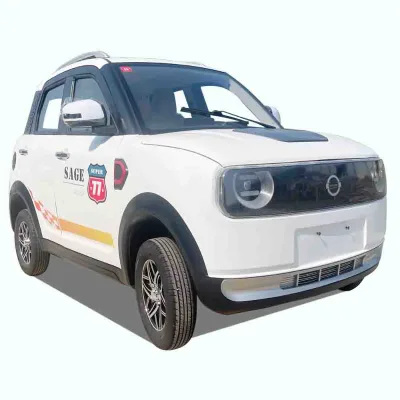
Small and Budget-Friendly Electric Car New Auto Vehicle for Urban Travel
$3850.00 - $4043.00
MOQ: 1 Pieces

Compact Electric Vehicle: Spacious 5-Seater for Eco-Friendly Driving
$3850.00 - $4043.00
MOQ: 1 Pieces


Electric Vehicles High Speed EV Car Family Car Electric Cars Adults Vehicle
$12000.00 - $20000.00
MOQ: 1 Sets



Comprehensive Sourcing Guide
Strategic Sourcing Guide for Luxury Small SUV Electric Vehicles
The global shift toward electrification has redefined the luxury compact SUV segment, creating a complex landscape for B2B procurement professionals. Buyers seeking a "Luxury Small SUV Electric Vehicle" must navigate a market where specifications vary significantly between models, and where the definition of "luxury" is increasingly tied to battery density, software integration, and chassis dynamics rather than traditional leather and wood trim alone. This guide synthesizes available product data and industry standards to provide a disciplined framework for sourcing these vehicles, ensuring that procurement decisions are grounded in verified technical realities rather than marketing assertions.
Technical Architecture and Performance Specifications
When evaluating electric SUVs in the luxury category, the primary technical differentiators lie in powertrain efficiency, battery architecture, and vehicle dimensions. Based on observed market data, luxury electric SUVs typically feature a curb weight ranging between 2315 kg and 2434 kg, reflecting the substantial mass of high-capacity battery packs required for extended range. The overall dimensions for this class generally align with an overall length of approximately 4825 mm to 4880 mm, a width between 1970 mm and 1980 mm, and a height around 1601 mm to 1620 mm. These dimensions are critical for warehouse logistics and parking infrastructure planning.
The powertrain configuration for these vehicles is predominantly rear-wheel drive (RWD), utilizing an automatic gearbox to optimize torque delivery. Performance metrics indicate a maximum power output of 230 kW, generating a maximum torque of 370 N·m. While some data points suggest a maximum horsepower of 313 PS, the acceleration capability for high-performance variants in this segment can reach 0-100 km/h in approximately 1.93 seconds, though this figure represents a specific high-end configuration rather than a baseline standard. Buyers must verify that the claimed acceleration figures correspond to the specific trim level and battery configuration selected.
Battery technology is the cornerstone of the electric SUV value proposition. The observed data highlights the use of Ternary Lithium battery models with an energy density of 180 Wh/kg. Capacity varies significantly across models, with observed ranges from 82.16 kWh to 90.38 kWh. This variance directly impacts the endurance mileage, which is recorded between 610 km and 650 km in specific configurations. Charging infrastructure compatibility is equally vital; fast charging capabilities are observed to reach 80% energy capacity in 0.25 hours, while slow charging cycles typically require between 8 and 10.5 hours. Procurement teams must ensure that the vehicle's charging voltage and current requirements align with the destination charging infrastructure, particularly for fleet deployments where 72V systems or higher power requirements (>800W) may be specified for auxiliary systems.
Compliance, Certification, and Regulatory Standards
Navigating the regulatory landscape is a non-negotiable aspect of sourcing luxury electric vehicles. The market data indicates that compliant units often carry certifications such as CE, EEC, and CCC. These certifications are essential for market entry in Europe, China, and other regulated jurisdictions. The "Medium" or "medium-size" classification noted in product standards suggests that buyers must verify the specific regulatory class applicable to their target market, as vehicle classification dictates tax rates, insurance premiums, and usage restrictions.
Furthermore, the product origin is a critical compliance factor. Many units in this segment originate from China, specifically from regions like Shandong. When sourcing from this origin, buyers must rigorously verify that the manufacturer holds valid ISO management certifications, which are frequently cited in the supply chain. The presence of an OEM acceptance clause indicates that many manufacturers are open to customization, but this must be balanced against the need for maintaining homologation status. Any customization, such as changes to the braking system or interior atmosphere lighting, must not void existing certifications.
The brake systems for these vehicles are typically configured as 4-wheel disk brakes, a standard safety requirement for vehicles with a maximum speed of 200 km/h. Buyers should request test reports confirming that the braking performance meets the specific safety standards of the destination country, particularly regarding wet and dry stopping distances. Additionally, the vehicle's classification as a BEV (Battery Electric Vehicle) or Hybrid Electric Vehicle must be clearly defined, as this affects eligibility for government incentives and tax credits in various regions.
Cost Drivers and Pricing Dynamics
The pricing structure for luxury small SUV electric vehicles is highly volatile, with observed ranges spanning from $71 to $50,560 USD. This wide disparity is not indicative of a single product line but rather reflects the aggregation of different vehicle classes, from entry-level electric utility vehicles to high-performance luxury SUVs. The minimum order quantity (MOQ) typically ranges from 1 to 24 units, offering flexibility for small fleet operators while requiring bulk commitments for larger deployments.
Several factors drive the cost of these vehicles. First, the battery capacity is a primary cost driver; units with 90.38 kWh batteries will command a significantly higher price than those with 82.16 kWh packs. Second, the level of autonomy and driver assistance systems influences pricing. Vehicles equipped with Class L2 assistance driving features, which include adaptive cruise control and lane-keeping assist, are priced at a premium compared to manual or semi-autonomous variants. Third, the packing method, such as CBU (Completely Built Unit), affects logistics costs. CBU units require specialized shipping containers, with a 40HQ container typically holding 8 units, impacting the per-unit landed cost.
Buyers must also consider the "Endurance Mileage" and "Running Mileage" as cost indicators. While some data suggests a running mileage of 600 km, this may refer to a specific test cycle or a used vehicle condition. For new vehicles, the warranty coverage on the battery and motor is a crucial component of the total cost of ownership. Procurement contracts should explicitly define the warranty terms for the battery energy density and capacity retention over time.
Typical Applications and Operational Use Cases
The versatility of luxury small SUV electric vehicles makes them suitable for a diverse range of applications. The spacious interior, with a rear trunk capacity ranging from 500 to 1325 liters and a front trunk (frunk) of 90 liters, supports both passenger transport and light cargo operations. This dual utility is particularly valuable for corporate fleets that require a single vehicle type for executive transport and delivery services.
The vehicle's dimensions and turning radius, influenced by a wheelbase of 2940 mm, make it ideal for urban environments where maneuverability is key. The maximum speed of 200 km/h allows for highway travel, while the electric powertrain provides the low-end torque necessary for city stop-and-go traffic. The "Open" and "Closed" body types observed in the data suggest that buyers can source both standard SUVs and potentially specialized variants for specific use cases, such as open-top luxury tours or enclosed security transport.
For fleet operators, the customization options available allow for branding and specific interior configurations. The variety of interior atmosphere lights and the ability to customize the vehicle's appearance enable companies to align the fleet with their corporate identity. However, the "Medium" standard classification implies that these vehicles may not be suitable for heavy-duty off-road applications, and buyers should verify the ground clearance and suspension specifications for their intended terrain.
Supplier Evaluation and Quality Control Protocols
Evaluating suppliers in the electric vehicle sector requires a multi-dimensional approach. Buyers should prioritize suppliers who demonstrate transparency in their manufacturing processes and provide verifiable data on battery health and assembly quality. The presence of an OEM acceptance policy is a positive indicator of a supplier's flexibility, but it must be accompanied by a robust quality control framework.
Quality control protocols should include a rigorous inspection of the battery pack, including a check of the energy density (180 Wh/kg) and the integrity of the Ternary Lithium cells. Buyers should request third-party test results for the braking system, ensuring that the 4-wheel disk brakes meet the required safety standards. Additionally, the electrical system, including the 72V voltage architecture and power output (>800W), must be tested for stability and safety under load.
The "New" condition of the vehicles is a critical factor, but buyers must verify the manufacturing date and storage conditions to prevent battery degradation. The "CBU" packing method requires careful inspection of the vehicle's exterior for shipping damage. A comprehensive quality control checklist should cover the interior atmosphere lighting, the functionality of the L2 assistance driving systems, and the accuracy of the odometer readings.
Long-Term Procurement and Lifecycle Management
Sourcing electric vehicles is not a one-time transaction but a long-term commitment that involves lifecycle management. The "Endurance Mileage" of 650 km and the "Running Mileage" of 600 km suggest that battery health is a primary concern over the vehicle's lifespan. Buyers should negotiate service agreements that include battery health monitoring and replacement guarantees. The fast charging capability of 0.25 hours for 80% energy is a significant operational advantage, but frequent fast charging can accelerate battery degradation, and procurement contracts should address this trade-off.
The "Place of Origin" in China and the "prod_origin" data indicate that supply chain resilience is a key consideration. Buyers should diversify their supplier base to mitigate risks associated with geopolitical tensions or logistics disruptions. The "Customization" option allows for future-proofing the fleet, but any modifications must be documented to ensure they do not void warranties or certifications.
Finally, the "Class of Assistance Driving: L2" feature will likely become more advanced over time. Buyers should consider the software update capabilities of the vehicle to ensure that the driver assistance systems can be upgraded to meet future regulatory requirements. The "Product Name: Energy Electric Car" and "prod_model: Avatr" designations highlight the importance of brand identity in the luxury segment, but buyers must ensure that the brand's long-term viability and support infrastructure are robust.
Conclusion
Sourcing luxury small SUV electric vehicles requires a meticulous approach that balances technical specifications, regulatory compliance, and cost efficiency. By focusing on verified data such as battery capacity, charging times, and certification status, buyers can make informed decisions that align with their operational needs. The wide range of observed prices and specifications underscores the importance of detailed due diligence, ensuring that the selected vehicles meet the rigorous standards expected in the luxury automotive market. As the electric vehicle landscape continues to evolve, maintaining a disciplined procurement strategy will be essential for success.
FAQs
What battery capacity options exist for luxury small SUV electric vehicles?
Observed battery capacities range from 82.16 kWh to 90.38 kWh depending on the specific model configuration. Buyers should verify the exact capacity against their required endurance mileage, which varies between 610 km and 650 km.
Which certifications are required for importing these electric vehicles?
Compliant units typically carry CE, EEC, and CCC certifications to meet regulatory standards in Europe and China. Procurement teams must verify that the manufacturer holds valid ISO management certifications to ensure supply chain reliability.
How fast can these vehicles charge to 80 percent energy capacity?
Fast charging capabilities allow these vehicles to reach 80 percent energy capacity in approximately 0.25 hours. Slow charging cycles typically require between 8 and 10.5 hours depending on the specific charging infrastructure and battery state.
Can buyers customize the interior and exterior of these electric SUVs?
Customization is available for many models, allowing for specific interior atmosphere lighting and branding options. However, any modifications must not void existing certifications or compromise the vehicle's homologation status for the target market.
What is the typical minimum order quantity for these luxury electric vehicles?
The minimum order quantity typically ranges from 1 to 24 units, offering flexibility for small fleet operators. Larger deployments may require bulk commitments, with a 40HQ container typically holding 8 completely built units.
Which drive configuration is standard for these luxury electric SUVs?
The powertrain configuration is predominantly rear-wheel drive utilizing an automatic gearbox to optimize torque delivery. Some data points indicate a maximum power output of 230 kW with a maximum torque of 370 N·m.