Source Machine Vision Fixed Focal Lens for inspection, automation, and monitoring
Compare 30 Machine Vision Fixed Focal Lens options with varying focal lengths and sensor sizes. Buyers can evaluate specifications like aperture, thread types, and working temperatures to select the right lens for industrial applications.
Key considerations
Products List


Telecentric Lenses for Machine Vision Precise Dimension and Defect Inspection
$1.00 - $100.00
MOQ: 1 Pieces

Comprehensive Sourcing Guide
Strategic Sourcing Guide for Machine Vision Fixed Focal Lenses
Understanding the Technical Landscape of Fixed Focal Optics
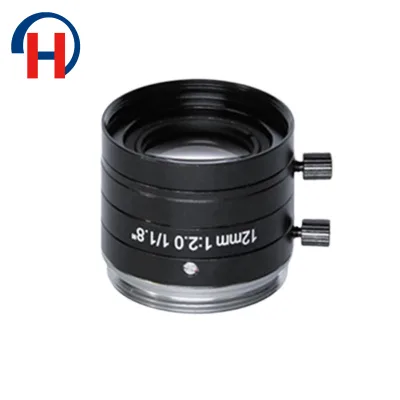
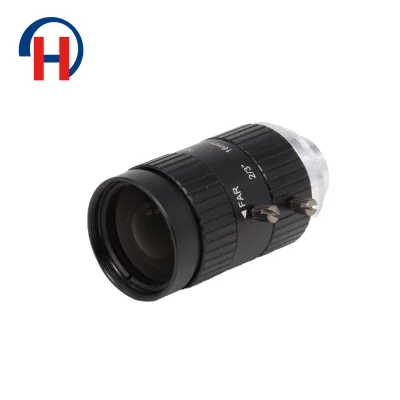
When sourcing machine vision fixed focal lenses, buyers must first distinguish between the specific optical architectures available in the current market. The provided data indicates a diverse range of focal lengths and sensor formats, which directly dictates the field of view and working distance for any given application. For instance, specific models in the observed inventory feature a focal length (FL) of 35mm, paired with a 2/3" (11mm) imager sensor, while other configurations offer a 12mm FL designed for a larger 1.2" (19.3mm) sensor. These variations are not merely cosmetic; they determine the magnification ratio and the depth of field inherent to the lens.
The aperture, defined by the F-number (Fno), is another critical technical parameter. The observed product attributes reveal a range of Fno values, including 1.4, 2.0, and 2.8. A lower Fno, such as 1.4, suggests a lens capable of gathering more light, which is essential for low-light industrial environments or high-speed capture scenarios where shutter speeds must be minimized. Conversely, an Fno of 2.8 offers a deeper depth of field, which may be preferable for applications requiring a larger range of focus distances to remain sharp. Buyers must verify that the specific lens selected matches the light sensitivity of their camera sensor and the ambient lighting conditions of the deployment site.
Furthermore, the mechanical interface is a non-negotiable aspect of compatibility. The data highlights a C-Mount interface as a standard offering, which is the industry norm for many machine vision cameras. However, the physical thread specifications vary significantly across models. Some units are specified with an M30.5×P0.5 thread, while others utilize M25.5×P0.5 or M28.5×P0.5 threads. The flange back distance, a critical dimension for ensuring the lens focuses correctly at infinity, also varies, with observed values ranging from 12.7mm to 17.526mm. Procurement teams must cross-reference these mechanical dimensions with their camera housing specifications to avoid the need for costly adapter rings or custom machining.
Optical Performance and Spectral Characteristics
Beyond mechanical fit, the optical performance metrics define the utility of the lens in specific inspection tasks. The spectral response is a key differentiator. Several models in the catalog exhibit a wavelength range of 420~1000nm, indicating a broad sensitivity that covers the visible spectrum and extends into the near-infrared (NIR). This characteristic is particularly valuable for applications involving NIR illumination, such as material sorting or security scanning, where the lens must transmit light beyond the visible red spectrum. Buyers should verify if their specific application requires this extended range or if a standard visible-light lens suffices.
Distortion control is another vital performance metric. The data notes a TV distortion of less than 0.1% for certain models. In machine vision, particularly for metrology and precise measurement applications, low distortion is paramount. Even minor deviations can lead to significant measurement errors over large fields of view. While the observed data provides a specific threshold for some units, buyers should not assume all fixed focal lenses meet this standard. It is essential to request distortion charts or test data from the supplier for the specific model under consideration to ensure it meets the precision requirements of the project.
The focus range is equally critical for operational flexibility. Observed focus ranges vary from 0.1m to infinity, 0.15m to infinity, and 0.18m to infinity. These minimum focus distances determine the closest working distance at which the lens can achieve a sharp image. For applications requiring close-up inspection of small components, a shorter minimum focus distance is advantageous. Additionally, the control mode is listed as "Manual" for the observed units, implying that autofocus mechanisms are not present. This is typical for fixed focal lenses used in controlled environments where the working distance is static. Buyers must confirm that manual focus adjustment is sufficient for their workflow or if they require a lens with a different focusing mechanism.
Compliance, Standards, and Environmental Durability
When evaluating machine vision lenses, compliance with environmental and physical standards ensures reliability in harsh industrial settings. The observed product attributes specify a working temperature range of -20~+60℃. This range is a standard benchmark for industrial electronics and optics, ensuring that the lens remains functional in unheated warehouses or outdoor installations where temperatures fluctuate. However, buyers should verify if their specific deployment environment exceeds these limits, as extreme cold can affect lubrication in focus mechanisms, and extreme heat can degrade optical coatings.
Physical standards are also documented in the supply data. The products adhere to specific diameter standards, such as Φ 36mm, Φ 30mm, and Φ 47mm. These dimensions are crucial for system integration, particularly when fitting lenses into compact camera housings or robotic arms with limited clearance. The back focus and flange back measurements must align with the camera's sensor plane to prevent optical aberrations. Furthermore, the standard packaging is listed as "Carton," which is a baseline for shipping protection. For high-precision optics, buyers should inquire about additional protective packaging options, such as foam inserts or vacuum sealing, to prevent damage during transit, especially for lenses with delicate front elements.
While the provided data does not explicitly list third-party certifications like ISO or CE, buyers must treat the absence of such data as a verification point rather than a confirmation of non-compliance. In the machine vision sector, certifications often relate to electromagnetic compatibility (EMC) and safety standards. Procurement teams should request documentation confirming that the lens assembly does not interfere with nearby sensitive equipment and that the materials used meet environmental regulations regarding hazardous substances. The origin of the products is noted as Sichuan, which provides a geographical context for the supply chain but does not inherently dictate quality; verification of the manufacturer's quality management system remains necessary.
Cost Drivers and Procurement Economics
The cost of machine vision fixed focal lenses is influenced by a complex interplay of optical complexity, sensor size compatibility, and manufacturing tolerances. The observed price range in the market spans from $0.2 to $10,000 USD. This vast disparity highlights that price is not a linear function of focal length but is heavily dependent on the optical design, the quality of glass elements, and the precision of the mechanical housing. Lenses with larger apertures (lower Fno), such as the F1.4 models, typically command higher prices due to the increased amount of glass required and the tighter tolerances needed to maintain image quality across the aperture.
Minimum Order Quantity (MOQ) is another significant economic factor. The observed MOQ range is between 1 and 1000 units. This flexibility allows buyers to procure single units for prototyping and testing while offering volume pricing for large-scale production deployments. However, the specific MOQ for a given model should be confirmed, as it may vary based on the supplier's production capacity and the customization level required. Customization is listed as "Available" in the product attributes, which can introduce additional costs and lead times. Buyers should weigh the benefits of a customized lens against the standard off-the-shelf options, considering that customization may involve non-recurring engineering (NRE) fees and higher per-unit costs.
The weight of the lens is also a consideration in the total cost of ownership, particularly for robotic applications. Observed weights range from 93g to 203g. Heavier lenses may require more robust mounting solutions or slower robot accelerations, indirectly increasing the cost of the overall system. Additionally, the absence of features such as external flash, red-eye reduction, WiFi, and video capture in the observed models suggests these are pure optical components. This simplifies the design and reduces the cost compared to integrated camera modules, but it also means the buyer must source and integrate these auxiliary components separately.
Typical Applications and System Integration
The technical specifications of these lenses point to a variety of high-value applications in the machine vision sector. The broad wavelength range of 420~1000nm makes these lenses suitable for spectroscopy, NIR inspection, and security applications where invisible light is used to detect defects or authenticate materials. The low distortion specifications (<0.1%) are indicative of use in precision metrology, where accurate dimensional measurements are critical, such as in semiconductor inspection or medical device manufacturing.
The manual focus control and fixed focal length design suggest these lenses are best suited for static inspection stations where the object-to-camera distance is constant. This is common in assembly line quality control, where a lens is mounted at a fixed position to inspect products passing underneath. The varying focus ranges allow for different working distances, enabling the same lens family to be used for both macro inspection of small components and macro-to-mid-range inspection of larger assemblies.
System integration requires careful attention to the interface and thread specifications. The C-Mount interface is widely compatible with many industrial cameras, but the specific thread pitch (e.g., M30.5×P0.5 vs. M25.5×P0.5) must match the camera mount or the adapter used. The absence of video capture and WiFi capabilities confirms that these are standalone optical elements, requiring the buyer to integrate them with a separate image acquisition system. This modularity allows for greater flexibility in system design but places the burden of compatibility verification on the procurement team.
Supplier Evaluation and Quality Assurance
Evaluating suppliers for machine vision lenses requires a rigorous approach to quality assurance. While the data indicates the products originate from Sichuan, buyers should not rely solely on the region of origin. Instead, they must assess the supplier's manufacturing capabilities, specifically their ability to maintain tight tolerances on optical elements and mechanical threads. The variation in thread sizes and flange back distances suggests a diverse product line, and the supplier must demonstrate consistency in producing these variations without compromising optical performance.
Quality control processes should include verification of the optical specifications, such as the Fno, FL, and distortion rates. Buyers should request sample units for testing to validate the claimed performance metrics, particularly the TV distortion and wavelength response. The working temperature range should also be tested under actual operating conditions to ensure the lens does not suffer from thermal drift or mechanical binding.
The availability of customization is a strong indicator of a supplier's flexibility and technical capability. However, buyers must ensure that the customization process includes clear communication channels and defined quality checkpoints. The standard packaging of "Carton" is a baseline, but for high-precision optics, additional protective measures may be necessary. Buyers should inquire about the supplier's packaging standards for high-value or delicate components to prevent damage during shipping.
Long-Term Procurement and Lifecycle Management
Sourcing machine vision lenses is not a one-time transaction but a long-term partnership that requires consideration of lifecycle management. The availability of replacement parts and the stability of the product line are crucial. Given the specific model numbers observed (e.g., 02-008-005, 02-008-056), buyers should verify the product lifecycle status to ensure that the lens will remain available for the duration of their production run. Obsolescence can lead to costly system redesigns or downtime.
The manual focus mechanism, while robust, may require periodic maintenance or recalibration over time. Buyers should consider the ease of access for maintenance and the availability of tools for focus adjustment. The weight and physical dimensions of the lens also impact the long-term stability of the mounting system. Heavier lenses may cause stress on mounting brackets over time, potentially leading to misalignment.
Finally, the cost drivers discussed earlier, such as the MOQ and customization options, should be factored into the long-term procurement strategy. Establishing a volume agreement with a supplier can help stabilize costs and ensure supply continuity. Buyers should also monitor the market for new technologies that may offer improved performance or lower costs, allowing for periodic reviews of the sourcing strategy to maintain competitiveness. By focusing on technical compatibility, quality verification, and supplier reliability, buyers can secure a supply chain that supports the long-term success of their machine vision applications.
FAQs
What focal lengths are available for these fixed focal lenses?
Available focal lengths include 12mm, 16mm, and 35mm depending on the specific model. These options allow buyers to select the appropriate field of view for their sensor size and working distance requirements.
Which aperture values are offered for low-light performance?
The lenses feature aperture values of F1.4, F2.0, and F2.8 to suit different lighting conditions. Lower F-numbers like 1.4 gather more light, which is essential for high-speed capture in dim industrial environments.
Can these lenses operate in extreme temperature ranges?
Yes, the lenses are designed to function within a working temperature range of -20 to +60 degrees Celsius. This ensures reliability in unheated warehouses or outdoor installations where ambient temperatures fluctuate significantly.
What is the minimum focus distance for these optical units?
Minimum focus distances vary by model, ranging from 0.1 meters to 0.18 meters up to infinity. This allows for close-up inspection of small components or mid-range assembly line quality control tasks.
How does the spectral response support near-infrared applications?
Several models exhibit a wavelength range of 420 to 1000 nanometers covering visible and near-infrared light. This broad sensitivity makes them suitable for material sorting and security scanning using invisible illumination.
Which mechanical interfaces are compatible with standard cameras?
The lenses utilize a C-Mount interface which is the industry norm for many machine vision cameras. However, specific thread sizes like M30.5 or M25.5 must be matched to the camera housing for proper fit.