Source Magnesium Glycinate and Malate Capsules for Sleep and Muscle
Compare 30 listings for Magnesium Glycinate and Malate Capsules from verified Chinese manufacturers. Buyers can evaluate specifications, pricing, and customization options for adult sleep, muscle relaxation, and energy support needs.
Key considerations
Products List
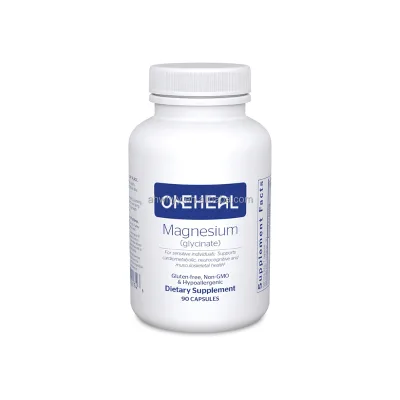

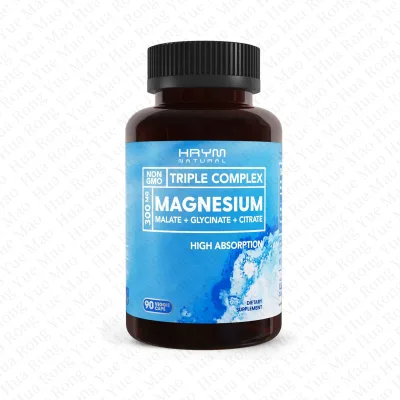


Muscle. Nerve and Enerfy Supplements Magnesium Complex Magnesium Glycinate, Malate, Citrate Capsules
$0.01 - $0.08
MOQ: 100000 Pieces

High Absorption Triple Magnesium Complex Capsule with Magnesium Glycinate Malate and Citrate
$0.01 - $0.05
MOQ: 100000 Pieces

High Absorption Magnesium Supplement Magnesium Bisglycinate Softgel Capsule
$0.01 - $0.05
MOQ: 300000 Pieces



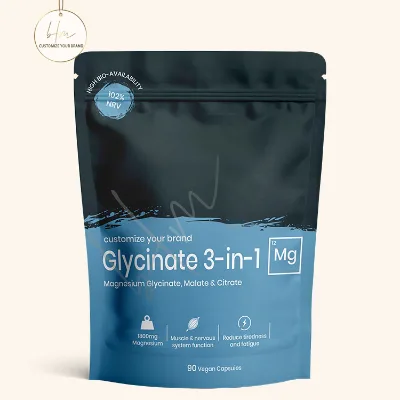
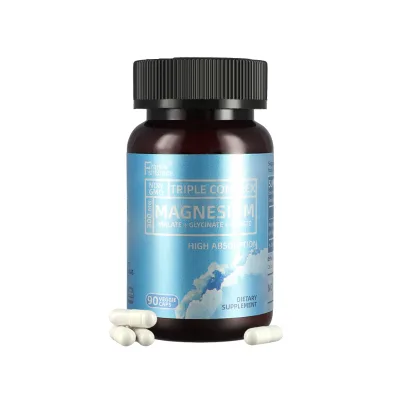
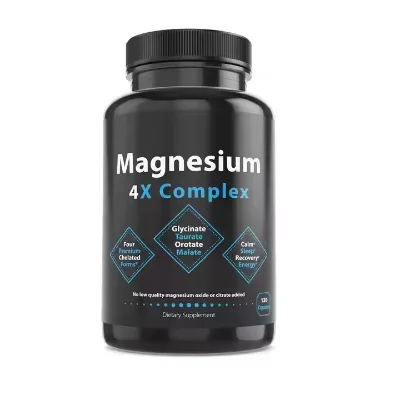
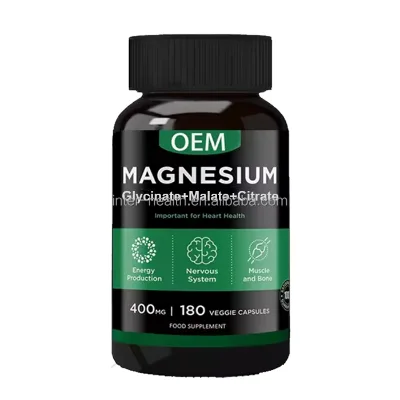


OEM Super Magnesium Supplement Vitamin Citrate Threonate Magnesium Complex Capsules
$0.02 - $0.03
MOQ: 100000 Capsules


Comprehensive Sourcing Guide
Strategic Sourcing Guide for Magnesium Glycinate and Malate Capsules
Understanding Product Specifications and Formulations
When sourcing Magnesium Glycinate and Malate Capsules, buyers must first establish a clear understanding of the technical specifications that define the product's identity and efficacy. The core market offers a variety of formulations, ranging from pure magnesium glycinate to complex blends that include magnesium malate, glycine, and citric acid. The primary dosage form observed in the current supply landscape is the capsule, available in both gelatin and vegetarian shell options to accommodate diverse dietary requirements.
The physical specifications of these supplements vary significantly based on the manufacturer's capabilities. Standard bottle sizes typically include 60, 90, and 120 capsules, while bulk packaging options may offer quantities up to 1,000 pills per bag. The single package dimensions are critical for logistics planning; observed data indicates a standard single package size of approximately 15x10x15 cm, though some listings note variable dimensions such as "XX cm" pending specific inquiry. The net weight of a single unit is generally recorded around 0.500 kg for the gross weight of the package, which influences shipping cost calculations.
Ingredient specifications are a primary differentiator in this category. While some products list "Magnesium" as the main ingredient, more specific listings identify "Magnesium Glycinate" or a "Triple Magnesium Complex" containing magnesium malate, glycine, and citric acid. The potency specifications can range from 500mg to 1500mg per serving, or be customized entirely to client needs. The flavor profile is predominantly unflavored or natural, ensuring the capsules do not impart a strong taste, which is essential for consumer compliance. Buyers should verify the exact elemental magnesium content and the specific salt form (glycinate vs. malate) as these directly impact bioavailability and intended physiological effects, such as muscle relaxation, sleep support, and energy production.
Regulatory Compliance and Certification Verification
In the B2B supplement sector, regulatory compliance is not merely a formality but a prerequisite for market access and brand safety. The manufacturing facilities supplying these capsules must adhere to rigorous quality management systems. The most frequently cited certifications in the supply chain include Good Manufacturing Practice (GMP), Hazard Analysis and Critical Control Points (HACCP), and ISO 22000. Additional certifications such as Halal and ISO standards are also common, indicating a facility's ability to serve international markets with diverse religious and safety requirements.
Buyers must treat these certifications as evidence of a supplier's operational maturity rather than guaranteed attributes of every single product listing. The presence of GMP and HACCP certification suggests that the facility has established protocols for contamination control, process validation, and record-keeping. ISO 22000 specifically addresses food safety management, which is vital for oral supplements. When evaluating potential partners, procurement teams should request valid, up-to-date certificates and verify their scope to ensure they cover the specific manufacturing lines for magnesium capsules.
The origin of the product is another critical compliance factor. The supply chain for these items is heavily concentrated in China, with specific manufacturing hubs identified in Anhui and Guangdong provinces. While these regions are established centers for dietary supplement production, buyers must ensure that the specific factory location aligns with their import regulations and any trade restrictions that may apply to the destination country. Furthermore, the "OEM" (Original Equipment Manufacturer) and "ODM" (Original Design Manufacturer) status indicates that the supplier is capable of customizing the formula, label, and packaging, but this capability must be validated against the supplier's actual licensing and legal standing to produce private label goods.
Cost Drivers and Pricing Dynamics
The pricing structure for Magnesium Glycinate and Malate Capsules is influenced by a complex interplay of factors, including raw material costs, manufacturing complexity, and order volume. The observed price range in the market is extremely broad, spanning from $0.01 to $6,500 USD. This variance is not indicative of a single product type but rather reflects the difference between a single unit sample price and a bulk container purchase, or potentially different product tiers and packaging configurations.
A primary driver of cost is the Minimum Order Quantity (MOQ). The market data shows an MOQ range from 1 unit to 300,000 units. Suppliers offering low MOQs, such as 1 unit for sampling, typically charge a premium per unit to cover setup and administrative costs. Conversely, suppliers with high-volume capabilities may offer significantly lower unit costs for orders approaching the upper end of the range. Buyers should note that the "Sample" availability varies; some suppliers offer samples free of charge, while others require a specific inquiry to arrange sample delivery, which may involve shipping fees.
Additional cost factors include the customization level. Custom formulas, specific capsule shell types (gelatin vs. vegetarian), and unique packaging designs (bottles, bulk bags, or custom boxes) will increase the unit price compared to standard off-the-shelf products. The shelf life of the product, observed to be between 24 months and 36 months (3 years), also impacts pricing; longer shelf-life formulations may require more advanced stabilization technologies or higher-quality raw materials, influencing the final cost. Buyers must request detailed quotations that break down unit costs, tooling fees, and shipping terms to accurately compare total landed costs across different suppliers.
Typical Applications and Target Demographics
Magnesium Glycinate and Malate Capsules are marketed for a wide array of health and wellness applications, driven by the specific physiological benefits of the magnesium salts. The primary efficacy claims observed in the market include improvements in memory, sleep quality, and sedation. Magnesium glycinate is particularly noted for its high bioavailability and gentle effect on the stomach, making it a preferred choice for sleep support and anxiety reduction. Magnesium malate, often combined with glycine and citric acid in complex formulas, is frequently associated with muscle relaxation and energy production, addressing fatigue and physical recovery.
The target demographic for these products is predominantly adults. While some listings broadly state "All" or "Unisex" as applicable groups, specific product attributes highlight "Adult" and "Middle-Aged and Elderly people" as the primary consumer base. Crucially, several product specifications explicitly list "Children" and "Newborn" as not applicable people, indicating that these formulations are not intended for pediatric use without specific medical supervision. This distinction is vital for compliance with labeling laws in various jurisdictions.
Beyond general wellness, the functional positioning of these supplements extends to beauty products and general health maintenance. The "Beauty Products" classification suggests a marketing angle focused on skin health or anti-aging benefits, although the core mechanism remains the systemic support provided by magnesium. The dosage regimen is typically standardized at 2 capsules per serving, taken once a day. This consistent dosing structure simplifies consumer adherence and allows for predictable supply chain planning for retailers. Buyers should align their product selection with the specific health claims they intend to make in their target markets, ensuring that the formulation supports the desired efficacy profile.
Supplier Evaluation and Quality Control Protocols
Selecting a reliable supplier for magnesium capsules requires a rigorous evaluation process that goes beyond price comparison. The first step is verifying the supplier's ability to provide the specific product specifications required, such as the model number (e.g., HRYM-Magnesium-1 or Magnesium Glycinate) and the exact ingredient profile. Buyers should assess the supplier's customization capabilities, as the market data confirms that formulas can be tailored "as Your Request" and shells can be selected as gelatin or vegetarian.
Quality control is paramount in the supplement industry. Buyers must inquire about the supplier's internal testing protocols and their adherence to the stated certifications (GMP, HACCP, ISO). A robust quality control system should include raw material testing, in-process controls, and finished product testing for potency, purity, and microbial contamination. The storage method is also a key indicator of quality; suppliers should demonstrate a commitment to storing products in cool, dry, and sealed environments to maintain the integrity of the magnesium compounds over the 24 to 36-month shelf life.
When evaluating suppliers, buyers should also consider the lead time and logistics capabilities. While specific lead times are not universally standardized in the provided data, the ability to handle large orders (up to 300,000 units) suggests a mature supply chain. The "Single package size" and "Single gross weight" data points are essential for calculating freight costs and warehouse space requirements. Buyers should request a sample of the final product to verify the physical attributes, such as color (white or custom), capsule integrity, and dissolution rate, before committing to a large order.
Long-Term Procurement and Strategic Considerations
For buyers looking to establish a long-term partnership, the strategic considerations extend beyond the initial transaction. The availability of OEM and ODM services allows brands to build a unique identity in the market, but this requires a supplier that is flexible and responsive to changing market demands. The "Customization" attribute confirms that suppliers are willing to adapt to client needs, but the buyer must define these needs clearly to avoid production delays or quality issues.
Shelf life management is another critical long-term factor. With observed shelf lives ranging from 24 months to 36 months, buyers must plan their inventory turnover to ensure that products are sold before expiration. This is particularly important for international shipments where transit times can be significant. A supplier with a consistent 3-year shelf life offers more flexibility for stockpiling and global distribution compared to those with shorter stability periods.
Finally, buyers should consider the scalability of the supply chain. The wide range of MOQs (1 to 300,000) indicates that suppliers can support both startup brands and established enterprises. However, as order volumes grow, the buyer should negotiate terms that protect against price volatility and ensure consistent quality. The "Sample" process, whether free or paid, serves as a low-risk entry point for testing the supplier's responsiveness and product quality. By systematically evaluating technical specs, certifications, cost structures, and application fit, buyers can secure a reliable supply of Magnesium Glycinate and Malate Capsules that meet their specific business objectives.
FAQs
What are the main ingredients in these capsules?
The main ingredients typically include magnesium glycinate, magnesium malate, glycine, and citric acid. Some formulations list pure magnesium glycinate, while others offer a triple magnesium complex blend to support muscle relaxation and energy production.
Who are the applicable people for this supplement?
These capsules are primarily intended for adults, including middle-aged and elderly people. They are explicitly not applicable for children and newborns, ensuring safety for the specific adult demographic targeted by the manufacturer.
What is the recommended dosage for daily intake?
The standard dosage is two capsules per serving, taken once a day. This consistent regimen supports efficacy claims such as improved memory, sleep quality, and sedation without requiring complex scheduling for the consumer.
Can I request custom formulas or packaging options?
Yes, customization is available for formulas, capsule shells, and packaging types. Suppliers offer OEM and ODM services allowing clients to specify gelatin or vegetarian shells, bottle or bulk packing, and unique ingredient specifications to meet brand needs.
What certifications do the manufacturing facilities hold?
Manufacturing facilities typically hold GMP, HACCP, and ISO 22000 certifications. Additional certifications like Halal and ISO standards are also common, indicating compliance with rigorous food safety and quality management systems for international markets.
Where are these magnesium capsules manufactured?
Products originate from manufacturing hubs in China, specifically Anhui and Guangdong provinces. These regions are established centers for dietary supplement production, offering a concentrated supply chain for Magnesium Glycinate and Malate Capsules.
What is the shelf life of the product?
The shelf life ranges from 24 months to 36 months depending on the specific formulation. Proper storage in a cool, dry, and sealed place is required to maintain product integrity throughout this period.