Source Magnesium Alloy Inside and Outside Corner Trowel Set for plastering, drywall, and corner finishing
Find 30 listings for the Magnesium Alloy Inside and Outside Corner Trowel Set designed for wall corner decoration and plastering tasks. Buyers can compare blade materials, handle types, and customization options from suppliers in Shandong, China.
Key considerations
Products List


6 Piece Stainless Steel Finishing Trowel Set, Plastering Trowel with Wooden Handle
$0.80 - $0.90
MOQ: 1000 Pieces


Stainless Steel Modernization Corner Trowel Concrete Tools Set Corner Trowel
$1.20 - $2.00
MOQ: 1000 Pieces

Hand Tool Set Floor Wall Trowel Construction Tools Bucket Bricklaying Plaster Trowel
$1.20 - $2.00
MOQ: 1000 Pieces


Wholesale Cement Smoothing Ruler Push and Pull Large Trowel Portable Trowel
$80.00 - $140.00
MOQ: 1 Pieces
Comprehensive Sourcing Guide
Strategic Sourcing Guide for Magnesium Alloy Inside and Outside Corner Trowel Sets
The construction and finishing trades rely heavily on specialized hand tools to achieve precise wall corner treatments. When sourcing a Magnesium Alloy Inside and Outside Corner Trowel Set, buyers must navigate a landscape where material composition, blade geometry, and manufacturing origin significantly impact performance. While the core keyword specifies magnesium alloy, the available market data reveals a diverse array of trowel types, including carbon steel, foam sponge, and A3 steel variants. This guide provides a disciplined framework for evaluating suppliers, verifying technical specifications, and ensuring procurement quality without relying on unverified claims.
Understanding Material Composition and Structural Integrity
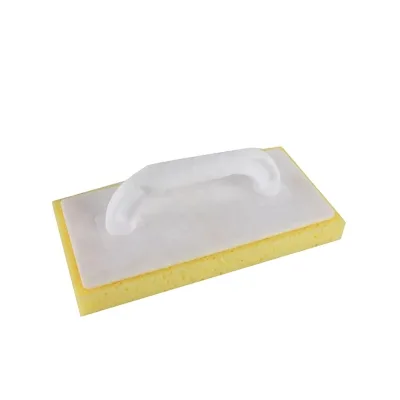
The primary differentiator in trowel procurement is the blade material. The requested magnesium alloy offers a distinct advantage in weight reduction compared to traditional steel options, which is critical for reducing operator fatigue during extended plastering or drywall finishing sessions. However, the provided product data indicates a complex market where Carbon Steel and A3 steel are also prevalent. Carbon steel trowels, often featuring a half-polished or painted finish, provide durability but may be heavier. Conversely, foam sponge trowels, with thicknesses ranging from 2cm to 2.5cm, serve a different function entirely, focusing on texture application rather than structural corner smoothing.
When evaluating a magnesium alloy set, the buyer must verify that the alloy composition is explicitly stated in the product specifications. The data shows that some suppliers list "A3 steel" or "Aluminum allor" (likely a typo for aluminum alloy) alongside magnesium options. It is essential to distinguish between these materials to ensure the tool meets the specific weight and rigidity requirements of the project. The handle material is another critical structural component; observed data lists wood, plastic, and wooden/plastic combinations. A secure connection between the magnesium blade and the handle is vital to prevent detachment under torque. Buyers should request cross-sectional images or material certificates to confirm the alloy grade, as generic terms like "aluminum" or "steel" do not guarantee the specific mechanical properties required for professional corner work.
Technical Specifications and Dimensional Standards
Precision in trowel dimensions is non-negotiable for achieving uniform corner angles. The observed product data highlights specific standard sizes, such as 150*50mm and 75MM 150MM, which likely correspond to standard inside and outside corner profiles. For a magnesium alloy set, the blade thickness is a key performance indicator. The data notes a specific thickness of 1.1mm for carbon steel variants; buyers should seek equivalent thickness data for magnesium models to ensure sufficient rigidity without excessive flex.
The teeth shape and edge geometry also dictate the tool's application. The market data includes "Square Teeth" and "Flat Edge" configurations. While square teeth are common for specific texturing or gripping applications, a standard corner trowel typically requires a continuous flat edge to create a smooth 90-degree angle. The "Inside or Outside" style attribute confirms that a complete set must include tools designed for both concave and convex corners. Buyers must verify that the set includes both sizes and that the dimensions match the standard 150mm or 75mm profiles observed in the data. Additionally, the product size specifications, such as 12"x4" or 4*12 inch, indicate the overall footprint of the tool, which affects the width of the corner being finished.
| Specification Category | Observed Data Points | Verification Requirement for Magnesium Alloy |
|---|---|---|
| Blade Material | Carbon Steel, A3, Foam Sponge, A3 Steel | Confirm explicit "Magnesium Alloy" designation |
| Blade Thickness | 1.1mm (Carbon Steel), 2cm/2.5cm (Sponge) | Request specific thickness for magnesium variant |
| Standard Size | 150*50mm, 75MM 150MM | Verify set includes both 75mm and 150mm profiles |
| Edge Type | Flat, Square Teeth | Confirm flat edge for corner smoothing |
| Handle Material | Wood, Plastic, Wooden/Plastic | Assess ergonomics and grip security |
| Origin | Shandong, China; Shandong Linyi | Verify specific factory location for logistics |
Compliance, Certification, and Origin Verification
The origin of the product plays a significant role in supply chain transparency and compliance. The supplied data consistently points to "Shandong, China" and specifically "Shandong Linyi" as the production hubs. Linyi is a known manufacturing center for hand tools, but this concentration requires buyers to perform due diligence on individual supplier capabilities rather than relying on regional generalizations. The HS code 3926909090 is listed in the data, which typically categorizes plastic articles and other articles of plastics. This is a critical flag for buyers; if the product is magnesium alloy, the HS code should likely fall under metal categories (e.g., Chapter 76 for aluminum or similar for magnesium). A discrepancy between the material claim (magnesium) and the HS code (plastic) suggests a potential data error or misclassification that must be resolved before finalizing a contract.
Regarding certifications, the provided facts do not list specific safety or quality certifications (such as ISO 9001 or CE marks). Buyers must explicitly request these documents. The absence of listed certifications in the raw data means that compliance cannot be assumed. The "prod_standard" field lists dimensions (150*50mm) rather than industry standards like ASTM or EN. Therefore, the buyer must define the applicable industry standard for their region and require the supplier to certify that the magnesium alloy trowel meets those specific dimensional and material tolerances. Without this verification, the risk of receiving non-compliant goods increases significantly.
Cost Drivers and Economic Factors
The price range observed in the market spans from $0.30 to $140.00 USD, a variance that reflects the difference between basic carbon steel tools, specialized foam sponges, and potentially premium magnesium alloy sets. The lower end of the spectrum likely corresponds to simple, mass-produced steel or sponge tools, while the higher end may include specialized alloy sets with ergonomic handles and custom packaging. The MOQ (Minimum Order Quantity) ranges from 1 to 5000 units, with specific data points showing an MOQ of 2000 PCS for sponge trowels. For a magnesium alloy set, the MOQ will likely be higher due to the complexity of the alloy casting process compared to stamped steel.
Cost drivers for magnesium alloy tools include the raw material cost of the alloy, the precision of the casting or forging process, and the finishing treatments (polished vs. painted). The data mentions "Customization" is available, which can include logo printing, custom packaging (OPP Bag+Carton or Inner Box+Outer Carton), and specific handle materials. These customizations add to the unit cost but can be essential for branding and market differentiation. Buyers should be aware that while the base price of a magnesium trowel might be higher than a steel alternative, the long-term value comes from reduced fatigue and increased durability. However, the "Sample: Free" attribute observed in the data suggests that buyers can test the product before committing to large orders, which is a crucial risk mitigation strategy in the face of price volatility.
Supplier Evaluation and Capacity Assessment
Evaluating a supplier for magnesium alloy trowels requires a focus on production capacity and delivery reliability. The data indicates a daily output capacity of 2000 PCS/Day for sponge trowels, but this figure cannot be extrapolated to magnesium alloy production without confirmation. The lead time varies, with observed delivery times of 20 days and 30 days. These timelines are influenced by the complexity of the alloy processing and the current order volume. A supplier claiming a 20-day lead time for a custom magnesium set must demonstrate the ability to source the raw alloy and manage the casting workflow within that window.
Payment terms observed include T/T (Telegraphic Transfer), which is standard for B2B transactions in this region. Buyers should negotiate payment terms that protect their interests, such as a deposit followed by payment upon inspection or shipment. The "Customized" attribute implies that the supplier is capable of adapting to specific buyer requirements, but this flexibility must be balanced against their ability to maintain quality control. When evaluating suppliers, buyers should prioritize those who can provide a clear breakdown of their production process, from alloy sourcing to final packaging. The specific mention of "Shandong Linyi" suggests a cluster of manufacturers; buyers should verify if the specific factory has a dedicated line for magnesium products or if they are a generalist trading company reselling goods from other factories.
Quality Control and Long-Term Procurement Considerations
Quality control for magnesium alloy trowels must address specific failure modes, such as corrosion, blade warping, and handle detachment. Unlike steel, magnesium is susceptible to oxidation if not properly coated or treated. The data lists "Half Polished" and "Painted" finishes for steel tools; buyers must ensure the magnesium alloy receives a comparable protective finish to prevent degradation during use. The "Flat Edge" and "Square Teeth" attributes highlight the importance of edge consistency. A quality control protocol should include random sampling of the blade edge to ensure it remains perfectly straight and free of burrs that could damage the wall surface.
Long-term procurement considerations involve the lifecycle of the tool. A magnesium alloy set should offer a balance of lightness and strength that outperforms steel in terms of user comfort. However, the buyer must verify the warranty terms and the availability of replacement parts, such as handles or blades. The "Custom Logo" and "Customized" options suggest that branding is a key part of the value proposition for many buyers. In a competitive market, a durable, well-branded magnesium trowel set can become a staple in a contractor's toolkit. To ensure long-term success, buyers should establish a relationship with a supplier who can provide consistent quality over multiple production runs, rather than relying on one-off transactions. The ability to maintain the "150*50mm" and "75MM 150MM" standards across batches is essential for professional consistency.
In conclusion, sourcing a Magnesium Alloy Inside and Outside Corner Trowel Set requires a meticulous approach to verifying material claims, dimensional standards, and supplier capabilities. The market data presents a wide variety of options, from carbon steel to foam sponge, necessitating careful filtering to identify true magnesium alloy products. By focusing on the specific technical attributes, origin verification, and quality control protocols outlined in this guide, buyers can secure high-performance tools that meet the rigorous demands of modern construction and finishing work. The absence of explicit certification data in the raw facts underscores the need for proactive due diligence, ensuring that every procurement decision is grounded in verified evidence rather than assumption.
FAQs
What blade materials are available for corner trowels?
Available blade materials include carbon steel, A3 steel, and foam sponge. While magnesium alloy is the target, the market currently lists these specific alternatives with varying finishes like half-polished or painted.
Which standard sizes are offered for corner trowel sets?
Standard sizes observed include 150*50mm and 75MM 150MM profiles. These dimensions correspond to inside and outside corner applications, ensuring the tool fits standard wall angles for plastering work.
Can buyers request custom packaging for these tools?
Yes, customization is available for packaging options such as OPP bags, cartons, or inner boxes with outer cartons. Buyers can also request custom logos to be printed on the tools or packaging.
What is the typical lead time for delivery?
Delivery times observed range from 20 to 30 days depending on the specific product and order volume. Buyers should verify the exact lead time with the supplier before finalizing the purchase agreement.
Where are these trowel tools manufactured?
The products originate from Shandong, China, with specific manufacturing hubs noted in Shandong Linyi. This region is a known center for hand tool production, though specific factory locations vary by supplier.
What handle materials are used for these trowels?
Handle materials include wood, plastic, or a combination of wooden and plastic. The connection between the handle and blade is critical, and buyers should verify the material quality for durability.
What is the minimum order quantity for sponge trowels?
The minimum order quantity for sponge trowels is 2000 pieces. Other product types may have different MOQs, so buyers must confirm the specific requirement for the magnesium alloy variant they seek.