Source Magnetic Stripe Laying Machine for Bank Cards, ID Cards, and Membership Cards
Compare 30 magnetic stripe laying machines from verified suppliers in China. These units support PVC and ABS materials, offer PLC control, and are designed for high-precision card production with customizable sheet formats.
Key considerations
Products List


Rolling Magnetic Stripe Laying Machine for Magnetic PVC Cards Overlay Making
$1.00 - $100.00
MOQ: 1 Pieces


Magnetic Stripe Card Production Machine PVC Film Magnet Strip Laying Machine
$46500.00 - $49000.00
MOQ: 1 Pieces

Tape-Laying Machine for Magnetic Tape Magnetic Stripe Laying/Mounting Machine
$46500.00 - $49000.00
MOQ: 1 Pieces

Automatic 8.4mm 12.7mm ISO Magnetic Stripe Card Magnetic Tape Laying Machine
$30000.00 - $78000.00
MOQ: 1 Pieces

Fully Automatic Magnetic Strip Laying Machine Sheet Magnet Tape Laying Machine
$46500.00 - $49000.00
MOQ: 1 Pieces

Card Film Magnet Strip Laying Machine Automatic Magnetic Tape Laying Machine
$46500.00 - $49000.00
MOQ: 1 Pieces
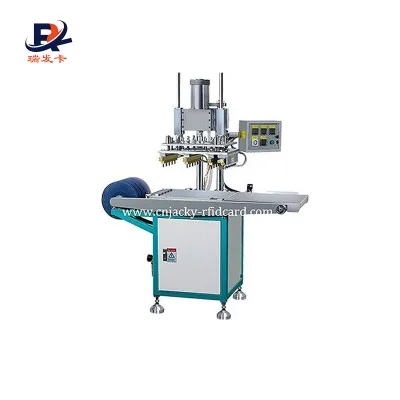
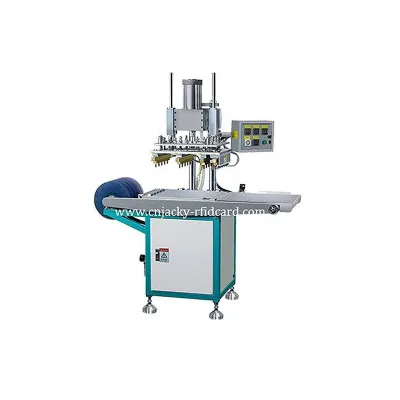


Automatic Magnetic Tap Laying Machine for Magnetic Stipe Overlay Plastic Card
$38235.00 - $38500.00
MOQ: 1 set


Comprehensive Sourcing Guide
Strategic Sourcing Guide for Magnetic Stripe Laying Machines
Understanding Core Technical Specifications and Machine Variants
When sourcing a Magnetic Stripe Laying Machine, buyers must first navigate the diverse technical configurations available in the current market. The core function of these machines is to integrate magnetic stripes onto PVC films, sheets, or composite materials to produce functional cards for banking, membership, and identification purposes. Based on observed product data, the industry offers distinct models, such as the WT-007BCT and WT-008BCT, which cater to different production scales and material thickness requirements. A critical technical differentiator is the product thickness capability, which generally spans from 0.2mm to 0.8mm. This range allows manufacturers to produce standard ID cards as well as thicker, more durable access cards.
The control architecture is another pivotal specification. Modern units typically employ a PLC (Programmable Logic Controller) combined with a servo system. This combination ensures high precision in the laying process, minimizing errors in stripe alignment. Temperature control accuracy is equally vital, with observed specifications indicating a tolerance of ±2ºC. This precision is necessary to ensure the adhesive bonds correctly without damaging the magnetic stripe or the substrate. Furthermore, the machines are designed to handle specific sheet formats, with a maximum sheet width of 580mm being a common standard across several models. The available sheet configurations often include 3x8, 4x8, and 5x5 options, providing flexibility for various card sizes.
The processing materials are strictly defined by the machine's design. These units are engineered to work with PVC film, PVC sheets, and magnetic stripes. The magnetic stripe type must align with industry standards, specifically referencing ISO/IEC 7811 for high and lower density stripes. The stripe amount per card can vary, with some configurations supporting 5 to 8 pieces, allowing for multi-stripe applications. The productivity rates observed in the market range from 8 to 12 meters per minute, with specific output capacities reaching between 230 to 400 sheets per hour depending on the model and configuration.
Operational Parameters and Power Requirements
Evaluating the operational parameters is essential for integrating these machines into an existing production facility. The power requirements vary significantly between models, reflecting their intended throughput and automation levels. Some units operate on a 3kW power rating with a voltage of 220V AC at 50Hz, suitable for smaller workshops or specific regional power grids. In contrast, larger industrial models may require a 10kW power supply operating at 380V AC/50Hz. Buyers must verify the electrical infrastructure of their facility before procurement to avoid costly retrofits.
The air source requirement is another critical operational constraint. Most observed models require an air pressure of 6 Kg/Cm² (or 6 Kg/C㎡). It is important to note that some specifications explicitly state "No Water" for the air source, indicating that the pneumatic systems must be dry to prevent corrosion or malfunction within the precision mechanisms. The weight of these machines also varies, with some models weighing approximately 200kg, while larger industrial units with dimensions like L3800W1600H1950MM will be significantly heavier, requiring reinforced flooring.
Automation levels are a key differentiator in the operational workflow. The market offers "Full-Automatic" grades, which minimize human intervention. These machines typically require only one operator to manage the loading and monitoring of the process. The temperature control range is another operational feature, with some units capable of settings from 0 to 400ºC, allowing for versatility in processing different adhesive types and material combinations. The physical dimensions of the machines also dictate the floor space required, ranging from compact units like L1200W700H1500mm to large-scale production lines exceeding L3300W1400H1950mm.
Compliance, Standards, and Certification Verification
Compliance with international standards is non-negotiable for manufacturers producing cards for financial or government use. The primary standard referenced in the product data is ISO/IEC 7811, which governs the physical characteristics and magnetic stripe specifications for identification cards. Buyers must ensure that the machine's output consistently meets the high-density and lower-density requirements defined by this standard. While the product data mentions compliance with ISO/IEC 7811, buyers should not assume this is a blanket certification for all listed products. Instead, they must request specific test reports or certification documents from the supplier to verify that the machine's output has been validated against these standards.
Beyond the ISO standard, buyers should verify the machine's adherence to local safety and electrical standards. The voltage and frequency specifications (e.g., 220V/50Hz or 380V/50Hz) must align with the electrical codes of the country where the machine will be installed. Additionally, the "Automatic Grade" of the machine implies a level of safety interlock and operational logic that should be verified against local occupational safety regulations.
It is crucial to distinguish between the machine's capability to produce compliant cards and the machine itself being certified. The product data indicates that the machine is designed to produce cards that "Accord With Iso/Iec7811," but this is a functional description, not necessarily a certification of the hardware. Buyers should treat the mention of standards as a design intent and demand proof of performance. This includes requesting calibration certificates for the temperature control systems and alignment sensors to ensure that the ±2ºC accuracy and stripe width tolerances (such as 12.7mm or 6.35mm) are maintained over time.
Cost Drivers and Pricing Structure Analysis
The pricing for magnetic stripe laying machines is highly variable, with observed ranges spanning from $1 to $78,000. This wide disparity is driven by several key factors, including the level of automation, the size of the machine, and the complexity of the control systems. A machine priced at the lower end of the spectrum likely represents a semi-automatic or smaller unit with basic PLC control, whereas the higher-end prices correspond to full-automatic systems with advanced servo drives, larger footprints, and higher productivity rates.
The material compatibility is another cost driver. Machines capable of handling a broader range of materials, such as PVC/ABS composite materials, PVC, and ABS, often command a premium price due to the versatility and precision required to process these different substrates. Similarly, the ability to handle multiple stripe amounts (5 to 8 pieces) and various stripe widths adds to the complexity and cost of the unit.
Buyers should also consider the packaging and shipping costs, which can significantly impact the total landed cost. The observed data lists various packing methods, including vacuum packing, standard shipping wooden boxes, and export wooden boxes. For international shipments, air freight and sea freight options are available, with the choice depending on the urgency and the size of the machine. The location of the origin, primarily Shenzhen and Hubei in China, influences the logistics costs and lead times. Buyers must factor in these logistics costs when comparing the base price of the machine against the total cost of ownership.
Typical Applications and Production Scenarios
The primary application of magnetic stripe laying machines is the production of PVC magnetic cards. These cards are ubiquitous in the banking sector, used for debit and credit cards that require magnetic stripe data storage. The machines are also essential for creating membership cards for retail, hospitality, and loyalty programs, where the magnetic stripe is used for quick data retrieval at point-of-sale terminals. Additionally, these machines are utilized in the manufacturing of identification cards for corporate access control, government IDs, and student identification, where the magnetic stripe serves as a secure data carrier.
The versatility of the machines allows them to handle different card formats, including 3x8, 4x8, and 5x5 inch sheets. This flexibility makes them suitable for manufacturers who produce a diverse range of card products. The ability to lay magnetic stripes with high precision ensures that the cards function reliably in various environments, from high-security banking terminals to low-traffic membership scanners.
The production scenarios also vary based on the output requirements. High-volume manufacturers may opt for machines with productivity rates of 8-12 meters per minute and outputs of up to 400 sheets per hour. These machines are ideal for mass production runs where consistency and speed are paramount. Conversely, smaller operations or those producing custom, low-volume cards may choose machines with lower output capacities but greater flexibility in material handling. The "Full-Automatic" nature of many units allows for continuous operation with minimal operator intervention, making them suitable for 24/7 production environments.
Supplier Evaluation and Quality Control Protocols
When evaluating suppliers, buyers should focus on the consistency of the product attributes and the transparency of the technical data. The presence of specific model numbers like WT-007BCT and WT-008BCT suggests a structured product line, which is a positive indicator of a mature manufacturing process. Buyers should verify the origin of the machines, with Shenzhen and Hubei being the primary locations mentioned. While these locations are known for manufacturing, buyers should not assume quality based solely on geography; instead, they should request detailed technical specifications and performance data for the specific model they intend to purchase.
Quality control protocols should be a central part of the supplier evaluation. Buyers must verify that the supplier has a robust system for testing temperature control accuracy, stripe alignment, and material bonding strength. The ±2ºC temperature control accuracy is a specific claim that should be validated through third-party testing or on-site demonstrations. Additionally, the warranty period, typically listed as 1 year, should be clearly defined in terms of coverage for parts and labor.
The packaging and shipping methods are also indicators of a supplier's attention to detail. The use of export wooden boxes and vacuum packing suggests a commitment to protecting the machine during transit. Buyers should ensure that the supplier provides clear instructions for unpacking and installation, as improper handling can lead to damage that voids the warranty.
Long-Term Procurement and Maintenance Considerations
Long-term procurement considerations extend beyond the initial purchase price to include maintenance, spare parts availability, and operational efficiency. The warranty period of 1 year is a standard offering, but buyers should inquire about the availability of spare parts after the warranty expires. Given the precision nature of the machines, components such as servo motors, PLC modules, and temperature sensors may require replacement over time.
The power and air source requirements should be considered in the context of long-term operational costs. Machines requiring 380V power or specific air pressures may incur higher utility costs or require additional infrastructure investments. Buyers should also evaluate the energy efficiency of the machine, particularly if it will be running continuously. The 3kW and 10kW power ratings indicate significant energy consumption, and buyers should factor this into their total cost of ownership calculations.
Finally, the customization options available, such as the ability to adjust the stripe amount or sheet format, offer long-term value. As market demands evolve, the ability to reconfigure the machine for new card types or materials can extend the useful life of the equipment. Buyers should ensure that the supplier provides training and technical support to maximize the utility of these customization features. By carefully evaluating these long-term factors, buyers can make informed decisions that ensure the continued success of their card production operations.
FAQs
What materials can this machine process?
The machine processes PVC film, PVC sheet, and magnetic stripes. It also supports paper card, ABS, Pet, and PVC/ABS composite materials for versatile card production.
How precise is the temperature control system?
Temperature control accuracy is maintained within ±2ºC. This precision ensures proper adhesive bonding without damaging the magnetic stripe or the substrate material during operation.
Which control system ensures high precision?
The system utilizes PLC Control combined with a Servo System. This architecture guarantees high precision in the laying process, minimizing errors in stripe alignment and card formation.
Can the machine handle different sheet formats?
Yes, it supports available sheet formats including 3x8, 4x8, and 5x5 inches. The maximum sheet width capability is 580mm to accommodate various card sizes.
What is the typical productivity rate?
Productivity ranges from 8 to 12 meters per minute. Specific output capacities can reach between 230 to 400 sheets per hour depending on the model configuration and material.
How much air pressure is required for operation?
The machine requires an air source of 6 Kg/Cm². The system must use dry air with no water to prevent corrosion or malfunction within the precision pneumatic mechanisms.
What is the warranty period for the unit?
The standard warranty period is 1 year. This coverage typically applies to parts and labor, ensuring support for the machine's operational reliability during the initial year.