Source Makeup Brush Storage Box for Salon, School, Office
Compare 30 verified options for a Makeup Brush Storage Box designed for salons, schools, and offices. These plastic containers offer flexible storage solutions with customizable features and various dimensions to meet specific organizational needs.
Key considerations
Products List
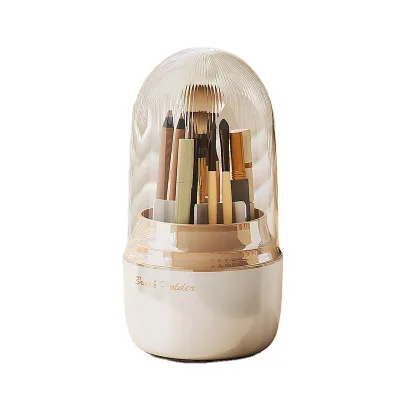


Acrylic Makeup Holder Brush Storage Box Three-Compartment Pencil Organizer
$1.00 - $1.65
MOQ: 100 Pieces


Irregular Shape Acrylic Makeup Holder Brush Storage Box Three-Compartment
$1.00 - $1.65
MOQ: 100 Pieces




Comprehensive Sourcing Guide
Strategic Sourcing Guide for Makeup Brush Storage Solutions
The global demand for organized beauty tools has elevated the category of makeup brush storage boxes from simple accessories to essential components of professional salon workflows and personal vanity setups. For B2B procurement professionals, sourcing these items requires a nuanced understanding of material science, dimensional precision, and regulatory compliance. This guide synthesizes available market data to provide a disciplined framework for evaluating suppliers and selecting products that meet rigorous operational standards. The focus remains on evidence-based attributes, ensuring that procurement decisions are grounded in verified product specifications rather than marketing assertions.
Material Composition and Functional Design
The foundation of any effective storage solution lies in the material selection, which dictates durability, weight, and chemical resistance. Current market observations indicate a strong prevalence of Polyethylene Terephthalate (PET) and general plastic formulations for makeup storage containers. PET is frequently cited as the primary material due to its balance of clarity, strength, and recyclability. When evaluating potential suppliers, buyers must verify the specific polymer grade, as not all plastics offer identical resistance to cosmetics solvents or cleaning agents.
Functional design is equally critical. The observed product attributes highlight "Flexible" as a key design characteristic, suggesting that high-quality units may incorporate hinge mechanisms or collapsible structures to maximize space efficiency. However, other product data points to "Hard" and "Injection" molding techniques, indicating a segment of the market focused on rigid, durable containers. The distinction between "Flexible" and "Hard" designs often correlates with the intended use case: flexible designs may suit travel or compact storage, while rigid injection-molded units are preferred for stationary salon environments. Procurement teams should request physical samples to validate whether the claimed flexibility or hardness aligns with the tactile reality of the product.
Technical Specifications and Dimensional Precision
Precision engineering is a non-negotiable requirement for storage boxes that must accommodate various brush sizes and shapes. The supplied data reveals specific dimensional tolerances, with some products adhering to a strict standard of less than ±1mm. This level of precision is vital for ensuring that lids fit snugly and that internal dividers align correctly without gaps. In contrast, other entries list tolerances of ±1cm, which suggests a lower tier of manufacturing quality suitable for bulk, non-critical storage.
Buyers must scrutinize the dimensional specifications provided in the product model data. For instance, specific models like "Q-04-1" and "PC1065" come with defined packing dimensions (e.g., 13.51324.5 Cm or 2082.5cm). These figures are essential for calculating logistics costs and warehouse capacity. The "Rectangular" and "Rectangle" shapes are dominant, offering efficient stacking capabilities. However, the presence of "Size: S/M/L" options indicates that suppliers may offer modular sizing. Procurement teams should verify if the dimensional tolerance applies to the internal cavity or the external footprint, as this distinction impacts how many units can be packed into a master carton.
Compliance, Certification, and Safety Standards
In the cosmetics and personal care sector, compliance is paramount. The market data explicitly mentions "EEC" certification for certain products. While the specific scope of this certification requires verification against current EU regulations, its presence indicates that the manufacturer has undergone some form of conformity assessment. Buyers should not assume that all listed products possess this certification; it must be confirmed on a per-supplier basis.
Furthermore, the "Disposable: Non-Disposable" attribute is a critical safety and sustainability indicator. Makeup storage boxes are intended for long-term use, and the confirmation of non-disposable status ensures that the product meets durability expectations. The "Customized" and "Customer Logo" attributes suggest that many suppliers offer branding services, which often require additional compliance checks regarding ink safety and material interaction with the logo application process. Suppliers must provide documentation proving that any custom printing or molding processes adhere to relevant safety standards for items that come into contact with beauty tools.
Cost Drivers and Minimum Order Quantities
Understanding the cost structure of makeup storage boxes is essential for budgeting and negotiation. The observed price range in the market spans from $0.05 to $29.50 USD, a wide variance that reflects differences in material quality, complexity of design, and order volume. The lower end of this spectrum likely corresponds to simple, single-layer pencil boxes or basic rectangular containers, while the higher end may include complex multi-tier systems, custom branding, or specialized materials like high-grade PET.
Minimum Order Quantity (MOQ) is another significant cost driver. The data shows a broad MOQ range from 1 to 2000 units, with specific product models citing MOQs of 100 or 300 units. This variability allows buyers to tailor their procurement strategy based on their immediate needs. For startups or small salons, suppliers with an MOQ of 1 or 100 offer low-risk entry points. Conversely, large distributors may leverage the higher volume tiers to negotiate better unit prices. It is crucial to note that the "Customization" attribute often correlates with higher MOQs, as setting up custom molds or printing lines incurs fixed costs that suppliers pass on to the buyer.
Typical Applications and Usage Scenarios
The versatility of makeup storage boxes is evident in the diverse usage scenarios identified in the market data. These products are explicitly noted as suitable for "Salon" environments, where durability and professional aesthetics are required. The "Western, Chinese, Japanese" style options suggest that design preferences vary significantly by region, and suppliers must be able to adapt their product lines to meet local aesthetic trends.
Beyond salons, the data indicates applications in "School & Office" settings, particularly for "Pencil Box" variants that double as makeup organizers. The "Single Layer" design is highlighted for these educational or office contexts, where simplicity and ease of access are prioritized over complex organization. Additionally, the "Waterproof" feature is a key selling point for products used in "Kitchen Supply" or bathroom environments, protecting brushes from moisture and spills. Buyers should align their product selection with the specific environment where the storage will be deployed, ensuring that the "Functional Design" matches the environmental challenges of the location.
Supplier Evaluation and Quality Control Protocols
Selecting the right supplier requires a rigorous evaluation process that goes beyond the initial product listing. The "Place of Origin" data points to "GUA" and "Zhejiang" in China, regions known for plastic manufacturing. However, buyers must verify the specific factory capabilities, as "GUA" and "Zhejiang" represent broad geographic areas with varying levels of industrial maturity. The "Technic" and "Technics" attributes, such as "Heating" and "Injection," indicate the manufacturing processes used. Buyers should request detailed process maps to ensure that the injection molding or heating techniques employed are consistent with the claimed dimensional tolerances.
Quality control should focus on the "Weight" and "Dimensional Tolerance" metrics. The data lists weights ranging from 1 gram to 353 grams, a massive disparity that underscores the need for weight verification. A product claiming to be 353 grams but weighing significantly less may indicate the use of inferior materials or hollow structures that compromise durability. Similarly, the "Weight Tolerance" of less than ±1% is a high standard that buyers should demand for premium products. Regular third-party inspections should be scheduled to verify that the "Customized" logos and "Style" elements are applied correctly and that the "Prod Packing" dimensions match the specifications provided.
Long-Term Procurement and Supply Chain Resilience
Sourcing makeup storage boxes is not a one-time transaction but a strategic partnership that requires long-term planning. The "Customization" availability suggests that successful procurement involves developing a product line that can evolve with market trends. Buyers should establish clear communication channels with suppliers to ensure that changes in design, such as the transition from "Fashion" to "Lovely" styles, can be implemented without disrupting the supply chain.
The "Prod Standard" and "Prod Model" consistency are also vital for inventory management. Products like "qjs-117-014" or "PC1065" serve as unique identifiers that help maintain order accuracy. Buyers should insist on a standardized naming convention and clear documentation of the "Prod Packing" details to prevent shipping errors. Furthermore, the "On Request" options for packing and standards indicate flexibility, but this flexibility must be managed carefully to avoid delays. Establishing a framework for lead times and production schedules, even if not explicitly stated in the initial data, is essential for maintaining a reliable supply of these critical beauty accessories. By focusing on these evidence-based factors, B2B buyers can secure a robust supply of high-quality makeup brush storage solutions that meet both functional and aesthetic requirements.
FAQs
What material is used for the Makeup Brush Storage Box?
The primary material used is PET plastic, which offers clarity and strength. Some variants also utilize general plastic formulations. This selection ensures durability against cosmetics solvents and cleaning agents while maintaining a lightweight profile for easy handling.
Can I customize the logo on the storage container?
Yes, customization is available for customer logos on these products. Suppliers typically offer branding services, but buyers must verify that ink safety and material interaction comply with relevant safety standards for items contacting beauty tools before finalizing orders.
What is the minimum order quantity for these boxes?
Minimum order quantities vary, with specific models requiring 100 or 300 units. Some suppliers offer lower entry points starting from 1 unit, while bulk tiers may reach up to 2000 units. Customization often correlates with higher MOQs due to setup costs.
How precise are the dimensional tolerances of the containers?
High-quality units adhere to a strict dimensional tolerance of less than ±1mm. Lower tier products may list tolerances of ±1cm. Buyers should verify if this applies to the internal cavity or external footprint to ensure proper stacking and lid fit.
Which certifications are available for the plastic storage boxes?
Certain products explicitly mention EEC certification, indicating a conformity assessment. However, not all listed items possess this, so buyers must confirm it per supplier. Compliance is critical for cosmetics sectors to ensure safety and regulatory adherence for long-term use.
Where are these storage containers manufactured?
Products originate from locations such as GUA and Zhejiang in China. These regions are known for plastic manufacturing, but buyers should verify specific factory capabilities. The place of origin influences production techniques like injection molding or heating processes used in fabrication.