Source Makeup Case Mold for Car, Household Appliances, and Furniture
Find 30 verified options for Makeup Case Mold designed for injection moulding with custom features. Buyers can compare specifications like cavity count, material, and certification to select the right supplier for automotive, appliance, or furniture applications.
Key considerations
Products List

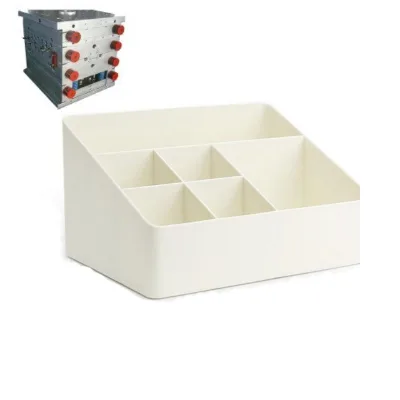
Makeup Compact Case Skincare Plastic Part Cosmetic Housing Injection Mold
$850.00 - $10000.00
MOQ: 1 Sets


Makeup Kit Cosmetic Set Organized Box Injection Plastic Mold for Kids Girls
$1000.00 - $1100.00
MOQ: 1 Sets


Comprehensive Sourcing Guide
Strategic Sourcing Guide for Makeup Case Molds
Navigating the procurement landscape for makeup case molds requires a rigorous understanding of the intersection between cosmetic industry aesthetics, functional durability, and high-precision manufacturing. The core keyword "Makeup Case Mold" refers to the specialized tooling used to produce the plastic or composite housings that protect and present cosmetic products. Buyers must distinguish between the mold itself—a high-value capital asset—and the final molded product, which often serves as the primary packaging for cosmetics. This guide synthesizes observed market data and technical specifications to provide a disciplined framework for sourcing, ensuring that procurement decisions are grounded in verified facts rather than speculative claims.
Technical Specifications and Manufacturing Capabilities
The foundation of a successful Makeup Case Mold lies in its technical architecture. Based on observed product attributes, the industry standard for shaping mode is predominantly Injection Mould. This process is critical for achieving the high precision required for cosmetic packaging, where tight tolerances ensure that lids fit securely and components align perfectly. The production of these molds often utilizes UG (Unigraphics) as the design software, indicating a reliance on advanced CAD/CAM systems for creating complex geometries.
A critical technical differentiator is the Mould Cavity configuration. The data indicates a prevalence of Single Cavity molds for specific high-value applications, though multi-cavity setups are common in mass production. The Runner system is frequently identified as a Cold Runner, which is essential for minimizing material waste and ensuring clean part ejection, particularly when using materials like Aluminum or specific polymers. The Surface Finish Process is typically Polishing, a step that directly impacts the aesthetic quality of the final makeup case, ensuring a smooth, defect-free appearance that meets consumer expectations.
The Mould Base is another vital specification. Suppliers often offer bases from recognized manufacturers such as LKM, DME, and Hasco, adhering to the HASCO standard. This standardization ensures compatibility with global injection molding machines and facilitates easier maintenance. The Tool Function is described as Fully Automatic, suggesting that the molds are designed for integration into automated production lines, which is necessary for meeting high-volume demands in the cosmetics sector. The Injection Cycle Time is observed in the range of 50~60 Seconds, a metric that directly influences production throughput and unit economics.
Material Selection and Structural Integrity
Selecting the appropriate material for the mold and the resulting case is paramount. While the mold itself is typically made of hardened steel, the final product specifications often highlight Aluminum as a primary material for the case, offering a premium feel and durability. The Hardness of the material is noted as Partial Hard, which balances structural rigidity with the ability to absorb impact without cracking. For the case corners, materials may include ABS or Metal, providing enhanced protection for the contents.
The Shape of the mold product is frequently Box Type, designed to house various cosmetic items securely. A specific observed model, HM-202529, features a Button fastener and a Double Open feature, demonstrating the complexity of the mechanisms that must be molded. The Waterproof attribute is a common requirement, ensuring that the makeup case can withstand travel conditions and protect contents from moisture. The External finish often utilizes an Aluminum Frame, reinforcing the structural integrity while providing a sleek, modern aesthetic.
Compliance, Certification, and Standards Verification
In the cosmetics industry, compliance is not merely a regulatory hurdle but a market entry requirement. Buyers must verify that the mold and the resulting products adhere to relevant safety and environmental standards. Observed certifications include RoHS and ISO, which are critical for ensuring that materials do not contain restricted hazardous substances and that the manufacturing process meets international quality management benchmarks. The TSISO certification is also noted, indicating a specific adherence to technical standards often required for automotive or high-precision industrial applications, which can be extrapolated to high-end cosmetic manufacturing.
The Standard for the product is often listed as As customized or Depends on Customer's Requirements, reflecting the bespoke nature of many cosmetic packaging projects. However, specific mold standards like HASCO provide a baseline for dimensional accuracy and interchangeability. Buyers should explicitly request documentation for REACH compliance, even if it is not universally listed in every product entry, as this regulation is increasingly mandatory for products entering the European market. The prod_standard is frequently defined by the customer, meaning the supplier must demonstrate flexibility in meeting specific regulatory frameworks.
Cost Drivers and Economic Considerations
The cost of a Makeup Case Mold is influenced by several dynamic factors. The MOQ (Minimum Order Quantity) for the final product can range significantly, with observed values starting as low as 50 units and extending up to 12,000. This variability suggests that buyers can source for both prototyping and mass production, but the unit cost will fluctuate based on volume. The Production Name for such items is often generic, such as Aluminum Case, but the complexity of the mold design, including features like Custom Foam (soft or hard) and Lock mechanisms with keys, will drive the initial tooling investment.
The Mould Life is a critical economic factor, with observed ranges spanning 50-500 Million Shots or lasting 5-6 Years, and in some cases, up to 10 Years. A longer mold life justifies a higher initial capital expenditure, as it reduces the frequency of tool replacement and maintenance costs. The Sample Order is generally Accepted, allowing buyers to validate the mold's output before committing to large-scale production. The Package for the final product often involves a Bubble Bag+ Master Carton combination, which adds to the logistics cost but ensures product safety during transit.
Typical Applications and Market Segmentation
Makeup case molds serve a diverse range of applications beyond simple storage. The Application field lists Car, Household Appliances, Electronic, Hardware, Commodity, Home Use, and Furniture, indicating that the technology is versatile. However, for the specific core keyword, the primary application is Cosmetics display and storage. The Usage scenarios include Household, Professional, and Camping & Traveling, highlighting the need for ruggedness and portability.
The Brand Name associated with some products, such as Hqc, suggests that OEM customization is a significant market segment. The Feature set includes Endurable and High Precision, which are non-negotiable for luxury cosmetic brands. The Gender specification, such as Female, indicates that marketing and design are often tailored to specific demographics, influencing the aesthetic choices in the mold design. The Product Model codes, such as TZ_MU and AM-1, serve as unique identifiers for different design iterations, allowing buyers to track specific configurations.
Supplier Evaluation and Quality Control Protocols
Evaluating a supplier for makeup case molds requires a multi-faceted approach. Buyers should verify the Customization availability, as the Customized attribute is a high-confidence fact for many suppliers. The OEM Custom status being Yes confirms that suppliers are equipped to handle private label projects. The Installation method is noted as Mobile, which may refer to the portability of the final case or the flexibility of the mold setup.
Quality control should focus on the Surface Finish and dimensional accuracy. The Process Combination Type is often Single-Process Mode, meaning the mold is designed to complete the part in one cycle, reducing the risk of assembly errors. Buyers must inspect the Fastener mechanisms, such as the Button type, to ensure they function smoothly over the Mould Life cycle. The Dimension of the product, observed as 322226, serves as a reference point for size verification, though buyers must confirm that these dimensions align with their specific packaging needs.
Long-Term Procurement and Lifecycle Management
Long-term success in sourcing makeup case molds depends on managing the lifecycle of the tooling. The prod_packing for the mold itself is often a Wooden Case, ensuring safe transport and storage. The Standard for the mold is custom, which implies that the buyer and supplier must maintain clear communication regarding any changes or updates. The Design Software used, UG, should be compatible with the buyer's internal systems to facilitate future modifications.
Buyers should also consider the Production Name and External features when planning for brand consistency. The Foam insert, which can be Custom Foam, Soft or Hard, is a critical component for protecting the cosmetics inside. The Lock mechanism, often included with Key, adds a layer of security that must be reliable over years of use. By understanding the Mould Life and Injection Cycle Time, buyers can accurately forecast production capacity and plan for maintenance schedules, ensuring that the supply chain remains uninterrupted.
Comparative Analysis of Mold Attributes
To assist in decision-making, the following table summarizes key attributes observed in the market for makeup case molds. This comparison highlights the variability in specifications that buyers must navigate.
| Attribute Category | Observed Specification | Variability Notes |
|---|---|---|
| Shaping Mode | Injection Mould | Standard for high precision |
| Mould Cavity | Single Cavity | Common for high-end/custom runs |
| Runner System | Cold Runner | Preferred for material efficiency |
| Surface Finish | Polishing | Essential for cosmetic aesthetics |
| Material (Case) | Aluminum | Premium feel, durable |
| Certification | RoHS, ISO, TSISO | Varies by target market |
| Mould Life | 50-500 Million Shots | Dependent on steel quality |
| Cycle Time | 50~60 Seconds | Influences production speed |
| Customization | Available / Yes | Core requirement for most buyers |
| Packaging | Wooden Case / Carton | Depends on product type |
This table underscores that while there are standard practices, the specific configuration of a Makeup Case Mold is highly dependent on the buyer's unique requirements. The Customized nature of the product means that no two molds are identical, and the procurement process must be tailored to the specific design, material, and volume needs of the project. By adhering to these observed facts and maintaining a rigorous evaluation process, buyers can secure high-quality molds that meet the demanding standards of the cosmetics industry.
FAQs
What shaping mode is used for makeup case molds?
The industry standard shaping mode is Injection Mould. This process ensures high precision required for cosmetic packaging where tight tolerances guarantee secure lid fits and perfect component alignment.
Which certifications are commonly available for these molds?
Common certifications include RoHS, ISO, and TSISO. These verify that materials do not contain restricted hazardous substances and that manufacturing processes meet international quality management benchmarks.
Can buyers request customized foam inserts for the cases?
Yes, custom foam inserts are available in soft or hard varieties. These inserts are critical for protecting cosmetics inside the case and can be tailored to specific product shapes.
What is the typical mould life for high-precision tools?
The mould life typically ranges from 50 to 500 million shots. This duration can extend to 5-6 years or even 10 years depending on steel quality and maintenance protocols.
How is the surface finish typically achieved on these molds?
The surface finish process is typically Polishing. This step directly impacts the aesthetic quality of the final makeup case, ensuring a smooth, defect-free appearance that meets consumer expectations.
What is the minimum order quantity for aluminum cases?
The minimum order quantity starts at 50 units. This allows buyers to source for both prototyping and mass production, though unit costs will fluctuate based on the final volume ordered.
Which design software is used for creating these molds?
UG (Unigraphics) is the primary design software used. This indicates a reliance on advanced CAD/CAM systems for creating complex geometries required for high-precision cosmetic packaging components.