Source CE Crinkle Paper Shredder for Recycling, Office, and Manufacturing
Find and compare 30 CE Crinkle Paper Shredder models from Chinese manufacturers. Evaluate key specifications such as cut speed, power consumption, and material width to select the right industrial cutter for your paper waste management needs.
Key considerations
Products List


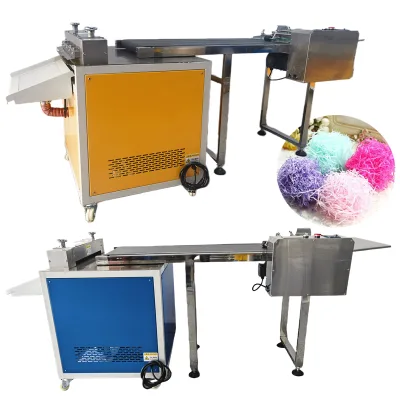


Crinkle Cut Paper Shredder Machine Shredder Paper Crinkle Cutting Machine
$3350.00 - $3450.00
MOQ: 1 Sets


Industrial Paper Shredder for Crinkle Cut Paper Shredder Machine for Gift Box
$3350.00 - $3450.00
MOQ: 1 Sets
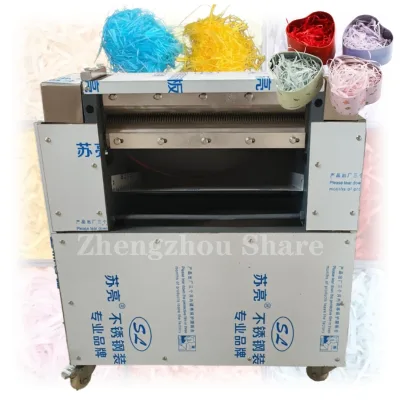
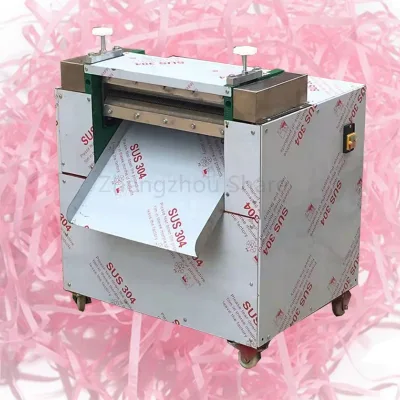


Commercial Paper Shredder Machine Crinkle Shredder Paper Cutting Machine
$1650.00 - $1750.00
MOQ: 1 Sets


Crinkle-Cut-Paper-Shredder Crinkle Shredder Machine Shredding Waste Paper Shredder Equipment
$1500.00 - $2500.00
MOQ: 1 Pieces
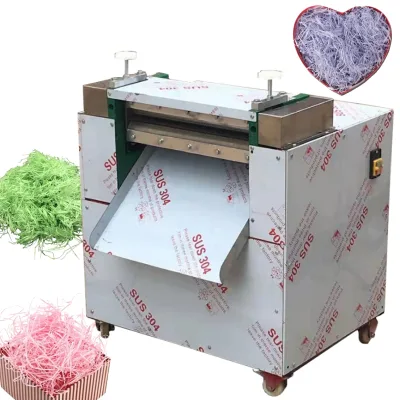

Low Price Paper Crinkle Paper Shredder Small Waste Paper Shredding Machine
$1800.00 - $2600.00
MOQ: 1 Pieces


Wood Shredder/Plastic Shredder/Paper Shredder/Tires Two Shaft Shredder
$24000.00 - $50000.00
MOQ: 1 Pieces
Comprehensive Sourcing Guide
CE Crinkle Paper Shredder Sourcing Guide
Sourcing industrial-grade paper shredders certified for the European market requires a disciplined approach to technical verification and supplier qualification. The term "crinkle paper shredder" often refers to specialized cutting mechanisms designed to produce uniform, textured strips from paper rolls or sheets, a process distinct from standard cross-cut shredding. Buyers must navigate a landscape where machine models vary significantly in capacity, power consumption, and physical footprint. The presence of CE certification is a critical baseline indicator, suggesting that the equipment meets essential health, safety, and environmental protection requirements for sale within the European Economic Area. However, certification alone does not guarantee operational suitability for high-volume manufacturing environments.
This guide provides a structured framework for evaluating these machines based on observed market data and standard procurement practices. It focuses on distinguishing between different model series, understanding the implications of power and speed specifications, and verifying the integrity of supplier claims. By adhering to the evidence-based observations provided, procurement specialists can mitigate risks associated with mismatched equipment capabilities, unexpected downtime, and non-compliant documentation. The goal is to transform raw listing data into actionable intelligence for making informed purchasing decisions.
Product Scope and Observed Listing Signals
The current market for these machines reveals a diverse range of models, primarily identified by alphanumeric codes such as SD-PS500, EM-PS500, EM-PS300, and SD-PS300. These designations typically correlate with specific cutting widths and roll diameter capacities, indicating that buyers must match the machine’s physical constraints to their incoming material specifications. For instance, observed listings show maximum material widths ranging from 290mm to 480mm, while maximum roll diameters are capped at 600mm. This variation necessitates a careful audit of the buyer’s existing paper stock dimensions to ensure compatibility, as exceeding the maximum width or diameter can lead to mechanical jams or motor overload.
Listing signals also highlight significant variations in machine weight and power consumption, which are critical for facility planning and utility integration. Observed net weights range from 240kg to 880kg, reflecting differences in structural robustness and motor size. Power ratings are predominantly listed at 3.2kW, though some entries indicate higher capacities up to 6kW, suggesting different tiers of throughput capability. Additionally, the feed mode is consistently described as "Full Automatic," implying integrated roll handling systems that reduce manual intervention. Buyers should treat these attributes as observational data points that require validation against their specific production line requirements, rather than universal standards for all available units.
Technical Specifications to Verify
Voltage and phase requirements are paramount when integrating these shredders into existing factory infrastructure. Observed data indicates a split in electrical standards, with some models requiring a 3-phase, 380V supply, while others support 1/2/3 phase configurations at 220V/380V with 50/60 Hz flexibility. This discrepancy is a common source of installation errors; therefore, buyers must verify the exact voltage and phase requirements for the specific model under consideration before finalizing the purchase. Mismatched electrical specifications can result in immediate equipment failure or voided warranties, making this the first technical checkpoint in the verification process.
Cutting performance metrics, including speed and shred type, must be aligned with downstream processing needs. The observed cut speed is listed as less than 3000mm per minute, which provides a baseline for throughput estimation but does not account for material density or roll tension variables. The cut mode is specified as "Strip-Cut," which is suitable for recycling or bulk disposal but may not meet security standards for sensitive document destruction. Buyers should verify the actual shred size and consistency, as well as the shredding ability measured in sheets or rolls per minute, to ensure the machine meets the required output volume without creating bottlenecks in the production workflow.
Compliance and Safety Documentation
CE certification is a mandatory requirement for selling and operating machinery within the European Union, and its presence on product listings serves as a primary compliance indicator. However, buyers must request the official Declaration of Conformity and the technical file to verify that the certification covers the specific model and serial number being purchased. It is essential to confirm that the certification includes all relevant directives, such as the Machinery Directive and Low Voltage Directive, and that it has been issued by a recognized notified body if required by the machine’s risk classification. Relying solely on a logo without supporting documentation exposes the buyer to regulatory penalties and liability issues.
Additional certifications and quality management standards provide further assurance of manufacturing rigor. Some listings mention ISO 9001 and RoHS compliance, indicating adherence to quality management systems and restrictions on hazardous substances. Buyers should verify these claims by requesting valid certificate copies and checking their expiration dates. Furthermore, the availability of machinery test reports is a positive signal, suggesting that the supplier conducts pre-delivery performance validations. Procurement teams should explicitly request these test reports to review actual performance data, such as motor temperature stability and cutting accuracy, before approving the order.
Cost Drivers and Commercial Terms
The observed price range for these machines spans from $1,500 to $50,000, reflecting a wide disparity in build quality, automation level, and brand reputation. This broad range indicates that price is not a reliable proxy for capability alone; instead, it correlates with specific features such as computerized control systems, warranty length, and after-sales support packages. Buyers should analyze the cost structure in relation to the machine’s power consumption, weight, and packing requirements to understand the total cost of ownership. Lower-priced units may lack advanced diagnostic features or robust structural components, leading to higher maintenance costs over time.
Commercial terms, including minimum order quantities (MOQ) and packaging standards, also influence the final acquisition cost. Observed listings show an MOQ of 1 unit, which is typical for industrial machinery and allows for flexible pilot purchases. Packaging is described as either a "Wooden Box" or "Standard Export Wooden Case Package," which is crucial for protecting the machine during international shipping. Buyers should clarify who bears the cost and responsibility for export packaging and freight insurance, as improper packaging can lead to transit damage. Additionally, warranty terms, often listed as one year, should be reviewed to determine coverage for core components like the engine and motor, as well as the availability of spare parts.
Supplier Qualification and Quality Control
Supplier location and origin play a significant role in logistics planning and communication efficiency. Observed data points to origins in Wenzhou and Henan, China, regions known for manufacturing industrial equipment. While these locations are established hubs, buyers should verify the supplier’s specific factory capabilities and production capacity, which is listed as 25m/min for some models. This figure represents a theoretical maximum and should be validated through site audits or video inspections to ensure the supplier can consistently meet quality standards. Understanding the supplier’s scale helps in assessing their ability to handle customizations and provide timely support.
Quality control processes should be explicitly defined in the purchase agreement. The "New" condition and "Computerized" attributes suggest modern manufacturing practices, but buyers must insist on a detailed quality inspection protocol. This includes verifying the condition of core components, such as the engine, and ensuring that all safety guards and emergency stops are functional upon delivery. Buyers should also inquire about the supplier’s process for handling defects or performance shortfalls during the warranty period. Establishing clear channels for technical support and spare parts supply is essential for minimizing downtime and ensuring the long-term reliability of the shredding operation.
Long-Term Procurement Checks
Sustainability and energy efficiency are increasingly important factors in industrial procurement. The electric driven type and specific power ratings of 3.2kW or 6kW should be evaluated against the buyer’s energy costs and sustainability goals. Buyers should consider the machine’s efficiency under load and its ability to operate continuously without overheating, which can be inferred from the machinery test reports and warranty terms. Investing in a machine with higher initial efficiency can yield significant savings over its operational lifespan, particularly in high-volume production environments.
Finally, buyers must plan for the end-of-life management and potential upgrades of the equipment. The "Customization Available" attribute suggests that suppliers may offer modifications to meet evolving production needs, such as different cutting widths or automated feeding systems. Procurement teams should maintain a relationship with the supplier to access these upgrade options and ensure compatibility with future machinery expansions. Additionally, understanding the recyclability of the machine’s components, in line with RoHS standards, can facilitate responsible disposal or refurbishment at the end of the machine’s useful life, aligning with broader corporate environmental responsibilities.
FAQs
What is the cutting speed of this machine?
The cutting speed is less than 3000mm per minute. This specification applies to the SD-PS500 model which features a full automatic feed mode and strip-cut capability for paper materials.
Can the machine handle wide paper rolls?
Yes, it can process materials up to 480mm in width. The maximum roll diameter supported is 600mm, making it suitable for large industrial paper processing tasks requiring high capacity.
What certifications does the shredder hold?
The machine holds CE certification and ISO 9001 standards. Some models also include RoHS compliance, ensuring they meet international safety and quality requirements for industrial manufacturing environments.
How much does the machine weigh?
The net weight is 770kg with a gross weight of 880kg. Other models vary, with some weighing 260kg or 800kg depending on the specific configuration and power requirements.
Is customization available for this equipment?
Customization is available for this paper cutting shredder machine. Buyers can request specific modifications to meet unique production needs while maintaining the standard electric driven type and computerized operation.
What is the power consumption of the unit?
The power rating is 3.2 Kw for standard models. Some variants operate at 6 Kw and support voltage options of 220V or 380V across single, two, or three-phase configurations.
Where is the machine manufactured?
The product originates from Wenzhou, China, with some units produced in Henan. These locations supply new condition machines with a one-year warranty and provided machinery test reports.