Source Manual Indoor Vacuum Pump for Labs, Homes, and Industry
Compare 30 Manual Indoor Vacuum Pump options from verified suppliers. These units suit laboratory, residential, and industrial applications with varying flow rates and vacuum degrees.
Key considerations
Products List


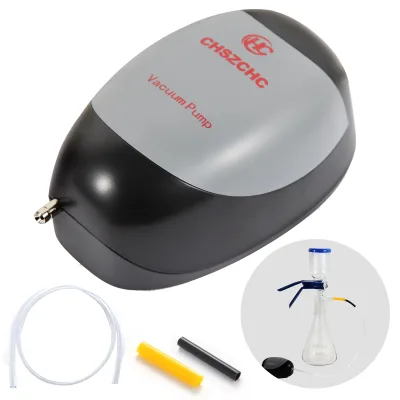


Comprehensive Sourcing Guide
Strategic Sourcing Guide for Manual Indoor Vacuum Pump Systems
Procuring a Manual Indoor Vacuum Pump requires a nuanced understanding of the intersection between mechanical design, operational environment, and supply chain reliability. While the term "manual" often implies a hand-operated mechanism, the modern B2B market frequently categorizes compact, low-power vacuum solutions under this umbrella due to their portability and lack of complex automation. Buyers must navigate a landscape where product attributes vary significantly between models, ranging from oil-free diaphragm designs to gear-based systems. This guide synthesizes available product data and industry standards to provide a disciplined framework for evaluating potential suppliers and specifications without relying on unverified claims or external assumptions.
Technical Specification Analysis and Operational Parameters
The foundational step in sourcing involves a rigorous analysis of technical specifications. In the current market, vacuum pumps are rarely defined by a single metric. Instead, buyers must evaluate a matrix of attributes including vacuum degree, pressure ratings, flow rates, and power requirements. Based on observed product data, the vacuum degree can range from low vacuum to high vacuum configurations, depending on the specific model and intended application. For instance, certain units are rated for a maximum vacuum of 0.02 Mpa, while others may be classified under high vacuum categories. This distinction is critical because a pump suitable for general laboratory use may fail in applications requiring deeper vacuum levels.
Pressure ratings further complicate the selection process. Some units operate at low pressure conditions, specifically noted around 0.02, while others are designed for high-pressure differentials. The flow rate is another pivotal variable; observed data indicates flow rates as low as 5L/min or 6L, which suggests these units are optimized for small-scale or intermittent operations rather than continuous industrial throughput. The power source is predominantly electric, with voltage specifications commonly listed as 220V/110V, indicating adaptability for various regional power grids. However, the presence of diesel fuel attributes in some listings suggests a hybrid market where portable, engine-driven units exist alongside electric models. Buyers must verify the specific power source for their intended indoor environment, as diesel operation is generally unsuitable for indoor spaces due to exhaust emissions.
The motor type also varies significantly across the supply base. Options include DC Brush, Brushless, and Coreless Brushless motors. The choice here impacts noise levels, maintenance frequency, and lifespan. For indoor applications, brushless motors are often preferred for their longevity and reduced electromagnetic interference. Additionally, the structure of the pump, such as gear pump or diaphragm configurations, dictates the maintenance profile. Oil-free designs are a prominent feature in many listings, offering a cleaner operation essential for sensitive environments like laboratories or food processing facilities. The maximum head of 1m observed in some data points suggests limitations in lift capability, which must be factored into the system design to ensure the pump can overcome the static head of the piping.
Compliance, Certification, and Safety Standards
Navigating the compliance landscape is essential for B2B procurement, particularly when importing equipment for use in regulated industries. While specific certification statuses for every unit cannot be asserted without direct verification, the market generally acknowledges the importance of standards such as CE. Buyers should treat certification as a verification requirement rather than an automatic attribute of the product listing. The presence of a CE mark, for example, indicates conformity with health, safety, and environmental protection standards for products sold within the European Economic Area, but its absence does not necessarily imply non-compliance with local regulations in other regions.
When evaluating a supplier, procurement teams must request valid documentation for any claimed certifications. This includes checking for ISO standards related to quality management and environmental safety. The product standards listed in the market data often reference specific model codes like "Sk-A" or "TM30A-A," which may serve as internal quality benchmarks. However, these are not universal industry standards. Buyers should verify if the manufacturer adheres to recognized international standards for vacuum pump safety, such as IEC standards for electrical equipment.
Safety features are particularly relevant for indoor use. The "Oil-Free" attribute observed in many listings is a significant safety and environmental benefit, eliminating the risk of oil contamination in the vacuum line and reducing fire hazards associated with oil leaks. Furthermore, the "Dry" working conditions noted in some specifications suggest that these pumps are designed to operate without liquid lubrication, which simplifies maintenance and reduces the risk of fluid spills in indoor settings. Buyers must also consider the noise levels, as "Compact Size" and "High Efficiency" often correlate with lower acoustic output, though specific decibel ratings should be requested from the supplier.
Cost Drivers and Pricing Dynamics
Understanding the cost structure of vacuum pumps is vital for budgeting and total cost of ownership (TCO) analysis. The observed price range in the market is exceptionally broad, spanning from 10 to 100,000 USD. This variance is driven by several factors, including the complexity of the pump design, the materials used, the brand reputation, and the level of customization. A unit priced at the lower end of the spectrum is likely a standard, off-the-shelf model with minimal features, while high-end models may include advanced control systems, specialized materials for corrosion resistance, or custom engineering.
The Minimum Order Quantity (MOQ) is another significant cost driver, with observed ranges from 1 to 500 units. Suppliers with lower MOQs may charge a premium per unit due to the higher administrative and logistical costs associated with smaller batches. Conversely, larger orders can often negotiate better pricing, but this requires a commitment to volume that may not suit all buyers. The supply ability, noted as 10,000 sets per year for some manufacturers, indicates the capacity to handle large orders, but buyers must verify if this capacity is consistent or if it fluctuates based on raw material availability.
Packaging and logistics also contribute to the final cost. The "Standard Export Wooden Case" and "cartons" mentioned in product details suggest that packaging is tailored to protect the equipment during transit. However, the single gross weight of 12.000 kg for certain units highlights the importance of freight costs in the overall budget. Buyers should calculate the landed cost, including shipping, insurance, and import duties, rather than focusing solely on the unit price. The "Single package size" of 23x23x12 cm provides a baseline for logistics planning, but variations in dimensions for different models must be accounted for in warehouse and shipping strategies.
Typical Applications and Industry Fit
The versatility of vacuum pumps is evident in the wide array of applications listed in the market data. These range from "Small Laboratory Vacuum Pump" specific uses to broader industrial sectors. The "Other, Automotive Industry, Biofuel Industry, Commercial Buildings, Developing World Water Solutions, District Energy, Drinking Water Treatment, Family Homes, Food And Beverage Industry, Hvac OEM, Industrial Boilers, Industrial Utilities" list demonstrates that these pumps are not limited to a single niche. In the automotive and biofuel sectors, pumps may be used for fluid transfer or degassing processes. In commercial buildings and HVAC OEM contexts, they are likely utilized for condensate removal or air handling system maintenance.
For indoor applications, the "Family Homes" and "Commercial Buildings" segments are particularly relevant. Here, the "Oil-Free" and "Compact Size" features are paramount to ensure the equipment does not disrupt the indoor environment. The "Maritime" application listed suggests robustness against harsh conditions, which may be beneficial for indoor industrial settings with high humidity or corrosive atmospheres. The "Food And Beverage Industry" application requires pumps that meet strict hygiene standards, often necessitating stainless steel components and easy-to-clean designs.
The "More Application" data, citing "Industrial Pressure and Vacuum Applications, Gas or," indicates that these pumps are often part of larger systems. Buyers must ensure compatibility with existing infrastructure. For example, the "Function" listed as "Electronic Type, Field Bus" suggests that some models can be integrated into automated control systems, which is crucial for modern industrial facilities. The "Working Way" of "Continuous or Intermittent Work" allows flexibility in operation, enabling the pump to be used for both steady-state processes and batch operations.
Supplier Evaluation and Verification Protocols
Evaluating a supplier requires a systematic approach to verify their claims and capabilities. The product origin data indicates a concentration in "Anhui" and "Guangdong, China," which are known manufacturing hubs. However, buyers should not assume that all products from these regions meet the same quality standards. The "Brand name" "haocheng" is observed in the data, but buyers must exercise caution in relying on brand reputation alone without independent verification of the manufacturer's track record.
Key evaluation criteria include the supplier's ability to provide customization. The "Customization: Available" and "Customized support: OEM, ODM" attributes suggest that many suppliers are willing to tailor products to specific needs. Buyers should assess the supplier's engineering capabilities and their history of successful custom projects. The "Product name" and "prod_model" variations, such as "SK-A" and "TM30A-A," indicate a diverse product line, but buyers must ensure the specific model meets their technical requirements.
Logistics capabilities are also critical. The "Port of dispatch" listed as "shenzhen, guangzhou, shanghai, hongkong" provides flexibility in shipping routes, but buyers should verify the supplier's experience with international logistics and their ability to handle documentation and customs clearance. The "Supply Ability" of 10,000 sets per year is a positive indicator, but buyers should request references or case studies to confirm that the supplier can consistently meet this capacity without compromising quality.
Quality Control and Long-Term Procurement Considerations
Ensuring product quality is a continuous process that extends beyond the initial purchase. The "Lifetime" data, showing ranges of 15,000 hours, 10,000 hours, and 3,000 hours, highlights the variability in product durability. Buyers should request detailed testing reports or warranty terms that specify the expected lifespan under normal operating conditions. The "Features" listed as "Oil-Free, Compact Size, Corrosionresistant, Mainten" suggest a focus on reliability and ease of maintenance, but these claims must be validated through independent testing or third-party inspections.
Long-term procurement considerations include the availability of spare parts and technical support. The "Structure" of the pump, whether it is a gear pump or diaphragm type, influences the availability of replacement components. Buyers should inquire about the supplier's inventory management and their ability to provide timely support for repairs. The "More Features" of "High Efficiency, Can Be Mounted in Any Place" indicate design flexibility, but buyers must ensure that the mounting requirements are compatible with their facility's layout.
Finally, the "Working Conditions" of "Dry" operation suggest that these pumps are designed for specific environments. Buyers should verify that their operational environment matches these conditions to avoid premature failure. The "Pressure" and "Vacuum Degree" specifications must be regularly monitored to ensure the pump continues to perform within the required parameters. By maintaining a proactive approach to quality control and supplier relationship management, buyers can mitigate risks and ensure the long-term success of their vacuum pump procurement strategy.
Comparative Analysis of Key Product Attributes
To facilitate decision-making, the following table summarizes the key attributes observed in the market data, highlighting the variability that buyers must navigate.
| Attribute Category | Observed Variations | Sourcing Implication |
|---|---|---|
| Vacuum Degree | Low Vacuum, High Vacuum | Must match specific process requirements; do not assume universal capability. |
| Pressure Rating | 0.02, Low Pressure | Verify compatibility with system pressure limits. |
| Flow Rate | 5L/min, 6L | Suitable for small-scale or intermittent use; check against throughput needs. |
| Power Source | Electric (220V/110V), Diesel | Diesel unsuitable for indoor; electric requires voltage verification. |
| Motor Type | DC Brush, Brushless, Coreless | Brushless preferred for indoor noise and longevity. |
| Oil Content | Oil-Free, Oil or Not | Oil-free essential for clean indoor environments. |
| Origin | Anhui, Guangdong, China | Verify specific manufacturer capabilities; region does not guarantee uniform quality. |
| Customization | OEM, ODM Available | High flexibility for tailored solutions; requires clear specification. |
| Lifetime | 3,000 to 15,000 Hours | Significant variance; request warranty and maintenance data. |
| Packing | Wooden Case, Cartons, OEM | Affects shipping cost and protection; verify for fragile components. |
This table underscores the necessity of a detailed specification sheet for every procurement decision. Buyers should not rely on general market trends but must demand specific data for each unit they intend to purchase. By adhering to these disciplined sourcing practices, organizations can secure reliable vacuum pump systems that meet their operational needs while minimizing risk and ensuring compliance with all relevant standards.
FAQs
What vacuum degree does the SK-A model provide?
The SK-A model provides a low vacuum degree suitable for general laboratory and industrial utility applications. This specification ensures it meets basic suction needs without the complexity of high-vacuum systems required for specialized gas processing.
Can I customize the pump with OEM or ODM support?
Yes, customization is available with support for both OEM and ODM services. Buyers can request specific modifications to the product design or branding to align with their unique operational requirements and brand identity.
What is the maximum vacuum pressure rating for this pump?
The maximum vacuum pressure rating is 0.02 Mpa, which is classified as low pressure. This limit makes the unit ideal for applications like water circulating or small-scale laboratory tasks rather than deep vacuum extraction.
How is the pump packaged for international shipping?
The pump is packed in a standard export wooden case or carton packaging depending on the specific model. This robust packaging ensures the unit remains protected during transit to ports like Shenzhen, Guangzhou, or Shanghai.
Which motor types are available for this vacuum pump?
Available motor types include DC Brush, Brushless, and Coreless Brushless options. These choices allow buyers to select a motor that best fits their noise tolerance and maintenance schedule for indoor environments.
What is the minimum order quantity for these pumps?
The minimum order quantity ranges from 1 to 500 units depending on the supplier and customization level. This flexibility allows small buyers to test the product while accommodating larger industrial procurement needs.
Is the pump oil-free and suitable for indoor use?
Yes, the pump features an oil-free design which is safe for indoor environments like laboratories and homes. This attribute prevents oil contamination and reduces fire hazards associated with traditional oil-lubricated mechanical pumps.