Source Manual Pouch Cell Manufacturing Line for Energy Storage
Find and compare 30 listings for a Manual Pouch Cell Manufacturing Line designed for lithium-ion battery production. Evaluate specifications, customization options, and supplier capabilities to identify the right equipment for your energy storage needs.
Key considerations
Products List


Lithium Ion Battery Manufacturing Machine Pouch Cell Production Line
$400000.00 - $1000000.00
MOQ: 1 Pieces

New Battery Cell Production Line for Pouch Cell Research Battery Cell Production Line
$8000.00 - $50000.00
MOQ: 1 Pieces


Lithium Battery Cell Assembly Machine Production Line for Pouch Cell
$100000.00 - $5000000.00
MOQ: 1 Pieces


Advanced Battery Cell to Pack Production Line for Lithium Battery
$11000000.00 - $25000000.00
MOQ: 1 Sets
Shenzhen Bluesea Intelligent Manufacturing Technology Co., Ltd.


Cylindrical Cell Making Car Battery Line Production Pouch Battery Assembly Pack Line
$200000.00 - $250000.00
MOQ: 1 Sets


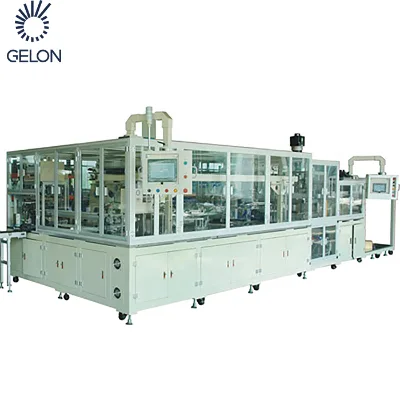
Lithium Ion Battery Pouch Cell Production Line 5ah/10ah/50ah Pouch Cell Battery pilot Line
$1834516.51 - $2038351.68
MOQ: 1
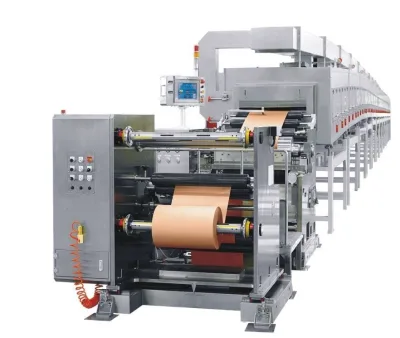
Lithium Ion Battery Pouch Battery Production Line 5ah/10ah/50ah Pouch Cell Battery pilot Line
$1834516.51 - $2038351.68
MOQ: 1


New Turnkey Linear Type Pouch Cell Automated Line with Manual Labor Reduction
$1000000.00 - $1500000.00
MOQ: 1 Pieces

High-Speed Intelligent Automated Production Line for Pouch Cell & Module Manufacturing
$300000.00 - $500000.00
MOQ: 1 Pieces

New Robust Linear Type Pouch Cell Automated Line with Cell Loading Processing
$1000000.00 - $1500000.00
MOQ: 1 Pieces

New Compact Linear Type Pouch Cell Automated Line with Reduced Factory Footprint
$1000000.00 - $1500000.00
MOQ: 1 Pieces

New High Linear Type Pouch Cell Automated Line with Weight Dimensional Checks
$1000000.00 - $1500000.00
MOQ: 1 Pieces

Turnkey Modular Battery Production Line for Safe Pilot Cell Manufacturing
$40000.00 - $70000.00
MOQ: 1 Pieces


Pouch Cell Assembly Equipment for Lithium Ion Battery Production Line
$50000.00 - $500000.00
MOQ: 1 Pieces
Comprehensive Sourcing Guide
Manual Pouch Cell Manufacturing Line Sourcing Guide
Procuring a manual or semi-automatic pouch cell manufacturing line requires a nuanced understanding of the intersection between human oversight and automated precision. While the core keyword suggests a "manual" approach, the current market landscape for lithium-ion battery production is dominated by automatic or semi-automatic systems that integrate manual stations for specific, high-precision tasks. Buyers must recognize that a purely manual line is rarely sufficient for modern energy density requirements, whereas a semi-automatic line offers a flexible middle ground. This guide focuses on navigating the procurement of such systems, emphasizing the verification of automation levels, component quality, and after-sales support structures that are critical for long-term operational success.
The decision to source a semi-automatic or flexible production line often stems from a need for customization and lower initial capital expenditure compared to fully automatic high-speed lines. These systems are particularly relevant for research and development labs, small-batch production, or prototyping phases where flexibility is paramount. Buyers should evaluate how the "manual" aspect integrates with automated core components like PLCs and motors. The goal is not to eliminate automation but to strategically place human intervention where it adds value, such as in final inspection or complex assembly steps, while relying on machinery for repetitive, high-torque, or precision-critical processes.
Product Scope and Observed Listing Signals
The observed product scope for battery production lines in the current market is diverse, ranging from complete automatic battery production lines to specialized parts production lines and flexible assembly systems. Listings frequently highlight "Automatic Battery Production Line" and "Flexible Production" capabilities, indicating that even systems marketed with manual elements often rely on sophisticated underlying automation. Buyers should look for keywords such as "Intelligent Manufacturing" and "Flow Production Line," which suggest a structured workflow rather than a chaotic assembly process. The presence of "Customizable" attributes confirms that these lines can be tailored to specific cell formats, including pouch, prismatic, and coin cells, allowing for a degree of manual adaptability within an automated framework.
Observed listing signals also reveal a strong emphasis on the condition and origin of the machinery, with most products listed as "New" and originating from manufacturing hubs in China, particularly Guangdong. The price range observed is broad, spanning from $8,000 to $25,000,000, which reflects the vast difference between small-scale lab equipment and full-scale industrial plants. Buyers must carefully distinguish between a "Lab Research" unit and a "Commercial Production" line. The minimum order quantity (MOQ) is typically low, ranging from 1 to 5 units, suggesting that these are high-value, custom-engineered assets rather than off-the-shelf commodities. This low MOQ allows for smaller pilot lines but requires rigorous due diligence on the supplier's ability to deliver consistent quality across multiple units.
Technical Specifications to Verify
When evaluating technical specifications, the first priority is to verify the automation level and the specific role of manual intervention. Buyers should confirm whether the system is truly semi-automatic or if it is an automatic line with manual loading/unloading stations. Key components such as PLCs, engines, bearings, and motors are frequently cited as core elements; their quality directly impacts the line's reliability and precision. It is essential to request detailed schematics that show how these components interact with manual workstations. The "Transmission Type" should be clarified as either battery-specific or flexible, depending on whether the line is dedicated to one cell type or capable of switching between pouch, prismatic, and coin cells.
Weight and capacity are critical physical constraints that must be verified against the buyer's facility infrastructure. Observed weights range from 500 kg for smaller components to 50,000 kg for full production lines, which has significant implications for floor loading and foundation requirements. Buyers must also verify the "Machinery Capacity" and whether it can be customized to meet specific throughput targets. The "Voltage" specifications should be confirmed as customizable to match local power grids, and the "Production Scope" should be clearly defined as either a complete line or a parts production line. Understanding these physical and electrical parameters ensures that the equipment can be physically installed and operated safely within the existing plant environment.
Compliance and Safety Documentation
Compliance and safety are non-negotiable aspects of sourcing battery manufacturing equipment, given the hazardous nature of lithium-ion battery production. The CE certification is a common standard observed in listings, indicating that the equipment meets European health, safety, and environmental protection standards. However, buyers must verify that the CE marking is valid and accompanied by the necessary technical documentation, including the Declaration of Conformity. It is crucial to ensure that all safety interlocks, emergency stops, and ventilation systems are integrated into the design, particularly for manual stations where operators are in close proximity to chemical and electrical hazards.
Beyond CE, buyers should inquire about other relevant safety standards and certifications that may apply in their local jurisdiction. The "After-Sales Service" and "Video Technical Support" provisions are vital for maintaining compliance over the life of the equipment. Buyers should verify that the supplier provides comprehensive operation manuals that include safety protocols and emergency procedures. Additionally, the "Video Outgoing-Inspection" service offered by some suppliers can be a valuable tool for verifying that the equipment meets safety standards before shipment. This remote inspection allows buyers to visually confirm the presence of safety features and the overall build quality, reducing the risk of receiving non-compliant machinery.
Cost Drivers and Commercial Terms
The cost of a battery production line is driven by several key factors, including the level of automation, the quality of core components, and the degree of customization required. Fully automatic lines with high throughput and advanced intelligence features will command a premium price, while semi-automatic or manual-heavy lines may offer a lower entry point but potentially higher long-term operational costs due to labor and lower consistency. Buyers should analyze the total cost of ownership, including installation, training, and maintenance, rather than focusing solely on the initial purchase price. The observed price range of $8,000 to $25,000,000 highlights the importance of defining the exact scope of the project to avoid budget overruns.
Commercial terms such as warranty, payment terms, and shipping conditions are critical components of the procurement agreement. A standard one-year warranty is commonly offered, but buyers should negotiate for extended coverage on critical components like PLCs and motors. The "After Warranty Service" options, such as online support, should be clearly defined in terms of response times and availability. Shipping and packaging are also significant cost drivers; equipment is typically packed in wooden boxes or standard export packaging, which must be robust enough to protect sensitive machinery during transit. Buyers should clarify who is responsible for import duties, customs clearance, and on-site installation to avoid unexpected expenses.
Supplier Qualification and Quality Control
Supplier qualification is a critical step in ensuring the reliability and longevity of the battery production line. Buyers should verify the supplier's manufacturing capabilities, including their production scope and experience in the lithium-ion battery industry. The presence of an "Overseas Service Center" is a strong indicator of a supplier's commitment to long-term support, particularly for international buyers. Buyers should request references from previous clients and, if possible, visit the supplier's facility to assess their quality control processes. The "Video Outgoing-Inspection" service can be a useful preliminary step, but a physical inspection or third-party verification is often necessary for high-value equipment.
Quality control should extend beyond the final product to include the supply chain and component sourcing. Buyers should inquire about the origins and quality standards of core components such as PLCs, bearings, and motors. The "Custom Made" nature of many production lines means that quality can vary significantly between batches; therefore, establishing clear quality benchmarks and acceptance criteria is essential. Buyers should also verify the supplier's ability to provide comprehensive training and technical support, as the complexity of battery manufacturing equipment requires skilled operators and maintenance personnel. A supplier with a strong track record in "Intelligent Manufacturing" and "Flexible Production" is more likely to deliver a system that meets evolving production needs.
Long-Term Procurement Checks
Long-term procurement success depends on the supplier's ability to provide ongoing support and adaptability to changing market conditions. Buyers should establish a clear communication channel for technical support and spare parts ordering, ensuring that downtime is minimized in the event of equipment failure. The "After-Sales Service Provided" should include not just video support but also on-site assistance if necessary, particularly for complex troubleshooting. Buyers should also consider the scalability of the production line; as demand grows, the ability to upgrade or expand the line without significant disruption is a valuable feature.
Finally, buyers should regularly review the performance of the production line against initial expectations and adjust maintenance and operational procedures as needed. Keeping detailed records of maintenance, repairs, and performance metrics can help identify potential issues before they become critical. The "Flexible Production" and "Customizable" attributes of the equipment should be leveraged to adapt to new cell formats or production requirements. By maintaining a proactive approach to supplier relationship management and equipment maintenance, buyers can ensure that their investment in a manual or semi-automatic pouch cell manufacturing line continues to deliver value over its entire lifecycle.
FAQs
What is the warranty period for the battery production line?
The warranty period is 1 year for the listed battery production lines. This coverage applies to the automatic and semi-automatic models available from Chinese manufacturers, ensuring initial operational support for new equipment.
Can the production line be customized for specific needs?
Yes, customization is available for the battery production lines. Buyers can request flexible production setups and custom-made standards to match specific manufacturing requirements for lithium-ion or pouch cell applications.
Which certifications do the battery machines hold?
The products hold CE certification as a documented standard. This compliance ensures the machinery meets specific safety and operational requirements for industrial use in energy and mining sectors.
How is the equipment packed for international shipping?
The equipment is packed in wooden boxes or standard export packages. This packaging method protects the machinery during transit from China to global destinations, ensuring safe delivery of heavy components.
What after-sales services are provided for the line?
After-sales services include video technical support and overseas service centers. Buyers can access online support and video outgoing inspections to maintain the automatic production line effectively after purchase.
What is the minimum order quantity for the production line?
The minimum order quantity ranges from 1 to 5 units depending on the specific model. This flexibility allows buyers to start with small batches while accessing automatic battery production capabilities.
Where are the battery manufacturing machines manufactured?
The machines are manufactured in Guangdong, China. This location serves as the primary origin for the automatic and semi-automatic production lines supplied to global markets for lithium-ion battery making.