Source Manual Press Handle Pepper Mill for Home, Restaurant, Catering
Compare 30 Manual Press Handle Pepper Mill options from verified suppliers in China. Evaluate features like eco-friendly design, stainless steel cores, and customization capabilities to find the right seasoning grinder for your business needs.
Key considerations
Products List
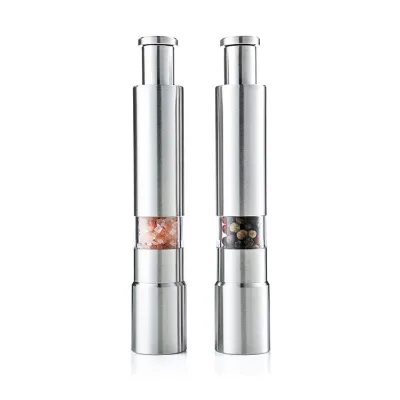
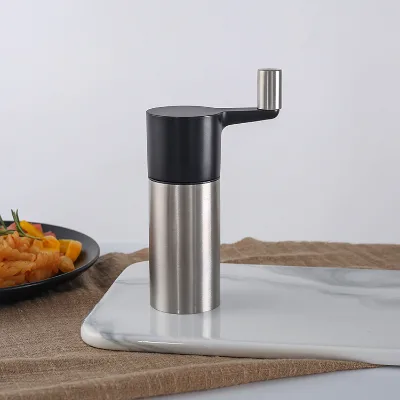


Wholesales Good Quality Manual Spice Grinder Glass Bottle Wood Pepper Mill
$1.45 - $1.95
MOQ: 500 Pieces


Comprehensive Sourcing Guide
Strategic Sourcing Guide for Manual Press Handle Pepper Mills
Understanding the Manual Press Handle Mechanism and Market Position
The Manual Press Handle Pepper Mill represents a distinct segment within the broader spice grinding market, differentiating itself from traditional rotary knob mechanisms through its specific actuation method. In this category, the primary operational characteristic involves a handle that is pressed or squeezed to engage the grinding mechanism, rather than twisting the body of the mill. This design choice often targets users seeking ergonomic advantages or a specific tactile experience in the kitchen. Based on current market observations, these units are frequently categorized under "Mills" with a specific "Mills Type" designation of Salt & Pepper Mills, though some variations may exist for nutmeg or other dry herbs.
The core functionality relies on a robust internal core, typically constructed from stainless steel to ensure durability and corrosion resistance against salt and moisture. The external housing materials vary, with metal and wood being the most common observations in the current supply landscape. For instance, specific models feature a "Silver" or "Stainless Steel" finish, while others utilize wood for a more traditional aesthetic. The operation mode is explicitly defined as "Press Handle" in high-confidence product data, distinguishing it from the "rotary knob" operation found in competing product lines. This mechanical distinction is critical for buyers defining their product requirements, as it influences the internal gear ratio and the force required by the user to grind spices effectively.
Technical Specifications and Physical Dimensions
When evaluating manual press handle pepper mills, precise technical specifications are paramount for inventory planning and logistics. The physical dimensions of these units can vary significantly depending on the intended capacity and design. Observed data indicates that single package sizes can range from compact units measuring 4x4x16 cm to larger configurations up to 10x10x18 cm. The overall product size for specific models has been recorded at 2.7x15 cm or 64x203 mm, suggesting a variety of form factors from slim, minimalist designs to more substantial, heavy-duty units.
Capacity is another critical technical parameter that directly impacts the utility of the mill. Buyers must verify the internal volume, as observed ranges include capacities of 20ml, 60ml, and 100ml. A 20ml capacity unit is typically suited for travel or small households, whereas a 100ml capacity mill is better suited for high-volume home kitchens or commercial catering environments. The weight of the single unit also varies, with recorded single gross weights ranging from 0.250 kg to 0.670 kg. This weight difference is often correlated with the material density; for example, all-metal constructions generally weigh more than wood-and-metal hybrids. The grinder core material is consistently noted as stainless steel, which is essential for maintaining sharpness and preventing rust when grinding hygroscopic spices like salt or pepper.
Compliance, Certification, and Material Safety
For B2B procurement, particularly in the food-contact category, verifying compliance with international safety standards is non-negotiable. The supply chain for manual pepper mills often includes products that have undergone rigorous testing to meet specific regulatory requirements. High-confidence data indicates that certain models in this category carry certifications such as LFGB (German Food and Feed Code), FDA (US Food and Drug Administration), and CE/EU (European Conformity). These certifications are vital for market access in Europe and North America, ensuring that the materials used in the mill do not leach harmful substances into food.
The material composition plays a significant role in achieving these certifications. While the grinding core is universally stainless steel, the housing materials must also be food-safe. Observed materials include "Metal" and "Wood," both of which require specific treatment to meet LFGB or FDA standards. Buyers should explicitly request test reports confirming that the wood finish is treated with food-safe oils or varnishes and that any metal coatings are non-toxic. Additionally, the "Eco-Friendly" attribute observed in several product listings suggests a growing trend toward sustainable sourcing and manufacturing processes. This attribute often aligns with certifications that verify the environmental impact of the production cycle, though buyers must verify the specific criteria used to label a product as eco-friendly, as this term is not universally standardized without supporting documentation.
Cost Drivers, MOQ, and Pricing Dynamics
The pricing structure for manual press handle pepper mills is influenced by several dynamic factors, including material costs, customization levels, and order volume. The observed listed price range in the current market spans from $0.25 to $4.67 USD per unit. This wide variance is primarily driven by the complexity of the mechanism, the quality of the stainless steel core, and the finish of the external housing. A basic metal unit with a simple press mechanism will likely fall at the lower end of this spectrum, while a premium wood-finished unit with a customized logo and higher capacity may command prices near the upper limit.
Minimum Order Quantity (MOQ) is a significant cost driver that affects the total cost of ownership for buyers. The market data reveals a broad MOQ range, from as low as 2 pieces for sample or trial orders up to 20,000 pieces for large-scale manufacturing runs. Specific models show MOQs of 2 pcs, 100 pcs, 500 pcs, and 100 pcs, indicating that suppliers offer flexible entry points for different buyer sizes. However, buyers must be aware that lower MOQs often come with a higher unit price, while bulk orders typically unlock significant cost reductions. The "Selling Units" are generally listed as "Single item," which simplifies inventory management but requires careful calculation of total volume to meet supplier MOQ thresholds.
Supplier Evaluation and Customization Capabilities
Selecting the right supplier requires a deep dive into their customization capabilities and operational flexibility. The market data highlights that "Customized Logo" acceptance is a standard feature, with "Laser" engraving being a specific method mentioned for branding. This allows buyers to brand the mill with their corporate identity or private label, a crucial step for building brand equity in the retail sector. Furthermore, the support for "OEM & ODM" (Original Equipment Manufacturing and Original Design Manufacturing) indicates that suppliers are willing to collaborate on design modifications, not just branding.
Geographic origin is another key factor in supplier evaluation. The majority of the observed products originate from "Zhejiang, China" and "Anhui, China," regions known for their robust manufacturing infrastructure in kitchenware and metalworking. The "Port" of shipment is frequently identified as "Ningbo Sea Port," which is a major logistics hub in China. Buyers should verify the supplier's capacity to handle "Custombox" or "White Box" packaging, as the standard "Color Box" may not always align with specific retail requirements. The ability to support "Customization" extends beyond logos to include potential modifications in size, capacity, and color, such as the "Black" or "Stainless Steel" finishes observed in the market.
Quality Control and Long-Term Procurement Strategy
Implementing a robust quality control (QC) strategy is essential for maintaining product integrity in the Manual Press Handle Pepper Mill category. Given the mechanical nature of the "Press Handle" operation, the longevity of the spring mechanism and the stability of the grinding core are critical. Buyers should establish clear acceptance criteria for the "Operation Mode," ensuring that the handle returns to its original position smoothly after each press and that the grinding consistency is uniform. The "Advantage" of being "easy to use" and "energy saving" must be validated through physical testing rather than relying solely on marketing claims.
For long-term procurement, buyers should consider the "Stocked" status of products. Items marked as "Stocked" offer faster lead times, which is beneficial for replenishing inventory quickly. However, for custom orders involving logos or specific packaging, lead times will naturally increase. The "Single gross weight" and "Single package size" data provided are essential for calculating shipping costs and optimizing container loading. A systematic approach to supplier evaluation should include requesting samples to test the "Grinder Core Material" and the "Material" of the housing for durability. Additionally, verifying the "Certification" status of each batch ensures that the products remain compliant with changing international regulations.
Comparative Analysis of Product Variants
To assist in decision-making, the following table summarizes the key variations observed in the Manual Press Handle Pepper Mill market, highlighting the differences in specifications that influence procurement choices.
| Feature | Variant A (Compact) | Variant B (Standard) | Variant C (Premium) |
|---|---|---|---|
| Operation Mode | Press Handle | Press Handle | Rotary Knob (Note: Distinct) |
| Material | Metal | Wood | Metal |
| Capacity | 20ml | 60ml | 100ml |
| Size | 2.7*15cm | 64*203mm | 10X10X10cm (Package) |
| MOQ | 2 pcs | 100 pcs | 500 pcs |
| Certification | LFGB, FDA, CE/EU | LFGB, FDA, CE/EU | LFGB, FDA, CE/EU |
| Color | Silver | Stainless Steel | Black |
| Package Size | 4X4X16 cm | 10X10X18cm | 10X10X10 cm |
| Weight | 0.250 kg | 160g | 0.670 kg |
Note: The "Rotary Knob" variant is included for comparison to highlight the distinction in operation modes, as the core keyword specifically targets "Press Handle" mechanisms. Buyers must ensure they are sourcing the correct mechanism type.
Final Procurement Considerations and Verification Steps
In conclusion, sourcing manual press handle pepper mills requires a meticulous approach that balances technical specifications, compliance requirements, and cost efficiency. Buyers must verify that the "Press Handle" mechanism functions smoothly and that the stainless steel core is of sufficient quality to prevent rust and ensure longevity. The wide range of MOQs and price points offers flexibility, but it also necessitates careful financial planning to optimize order volumes.
When engaging with suppliers, it is imperative to confirm the "Customization" options, including logo placement and packaging types, to ensure alignment with brand standards. The presence of certifications like LFGB, FDA, and CE/EU provides a baseline for safety, but buyers should always request current test reports for specific production batches. Finally, understanding the logistical details, such as the "Ningbo Sea Port" origin and the specific package dimensions, will help in accurate freight cost estimation and supply chain planning. By adhering to these evidence-based guidelines, buyers can secure a reliable supply of high-quality manual press handle pepper mills that meet both functional and regulatory expectations.
FAQs
How does the manual press handle mechanism operate?
The mechanism operates by pressing a handle to engage the grinding core, rather than twisting the body. This design offers an ergonomic advantage for users seeking a specific tactile experience in the kitchen. The internal stainless steel core ensures durability against moisture and salt corrosion during use.
What certifications do these mills typically hold?
Many models in this category hold LFGB, FDA, and CE/EU certifications to ensure food safety. These standards verify that materials like metal and wood do not leach harmful substances. Buyers should request current test reports to confirm compliance for specific production batches before placing large orders.
Which capacity options are available for these grinders?
Available capacities range from 20ml for travel use up to 100ml for high-volume kitchens. A 60ml option is also common for standard home applications. Selecting the right capacity depends on whether the mill is intended for personal use or commercial catering environments.
Can suppliers provide customized logos on the mills?
Yes, suppliers accept customized logos, often using laser engraving for branding. OEM and ODM support is available for design modifications beyond simple branding. Buyers can specify packaging types like white boxes or custom boxes to align with their retail requirements.
What is the minimum order quantity for these products?
Minimum order quantities vary significantly, ranging from 2 pieces for samples to 20,000 pieces for bulk runs. Specific models may require 100 or 500 pieces as a baseline. Lower MOQs often result in higher unit prices, while bulk orders unlock cost reductions.
How are these mills packaged for shipping?
Products are typically packed in color boxes, white boxes, or custom packaging options. Single package sizes vary from 4x4x16 cm to 10x10x18 cm depending on the model. Buyers should verify the specific packing dimensions to optimize container loading and shipping costs.
Where are these mills manufactured and shipped from?
Most units originate from manufacturing hubs in Zhejiang and Anhui, China. Shipments are frequently processed through the Ningbo Sea Port. This geographic concentration ensures robust manufacturing infrastructure for kitchenware and metalworking components.