Source Mechanical Living Room Quartz Heater for Hotel, Household, Commercial
Compare 30 Mechanical Living Room Quartz Heater options featuring quartz heating elements, manual controls, and overheat protection. These portable units suit hotel, commercial, and household applications with power ranging from 400W to 2000W.
Key considerations
Products List




Comprehensive Sourcing Guide
Sourcing Guide for Mechanical Living Room Quartz Heaters
Understanding Core Technical Specifications
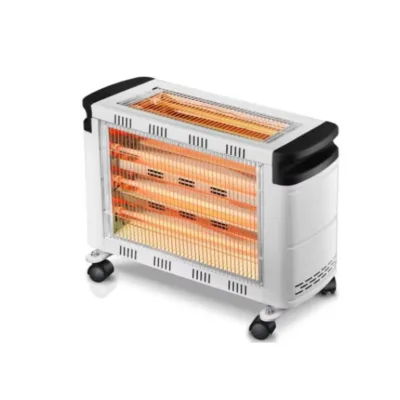
When evaluating mechanical living room quartz heaters, buyers must first establish a clear understanding of the fundamental technical attributes that define performance and safety. The core heating mechanism for these units relies on quartz tubes, which are distinct from other heating elements due to their ability to emit infrared radiation efficiently. In the current market, the heating element is consistently identified as quartz, often configured with multiple bulbs to distribute heat across specific areas. Observed configurations in available inventory indicate units may feature either two or ten bulbs, suggesting a wide variance in output capacity depending on the specific model number, such as the JQH-80 or NSB-200C.
Power consumption is a critical specification that directly correlates with heating range and energy efficiency. Data indicates that power ratings for these devices typically fall between 400W and 2000W. Specifically, models are observed with power settings of 400W, 800W, and a high-power variant at 2000W. The heating power range is generally categorized between 1500W and 1999W for higher-output units. This power variance dictates the effective heating area; for instance, specific models are designed to cover a heating range of 10 to 19 square meters. Buyers should verify the wattage against the intended room size, as underpowered units will fail to maintain comfort in larger living spaces, while overpowered units may lead to unnecessary energy costs.
The control mechanism is a defining feature of this product category. These units are predominantly characterized by manual control methods, often utilizing mechanical switches rather than digital interfaces. The control type is explicitly listed as mechanical or manual control, allowing users to select between low and high heat settings. This simplicity is a key selling point for buyers seeking durable, user-friendly devices that do not rely on complex circuitry. Additionally, the design often supports both desktop and freestanding installation, offering portability for use in living rooms, hotels, or commercial spaces. The physical dimensions and weight are also relevant; net weights are observed around 2.1 kg, and packaging dimensions for shipping are typically standardized around 35.5 x 20 x 45.5 cm.
Compliance and Certification Verification
Navigating the regulatory landscape is essential for importing mechanical quartz heaters, particularly when targeting international markets. The supply chain data indicates that specific certifications are available for certain models, with SASO (Saudi Standards, Metrology and Quality Organization) explicitly mentioned as a certification standard for some units. This suggests that suppliers may possess the necessary documentation for Middle Eastern markets. However, buyers must not assume that all listed products automatically carry every certification. The presence of SASO in the product attributes does not guarantee that a specific batch or model number holds this status without direct verification.
Safety is paramount in electric heating appliances. The product attributes highlight the inclusion of safety valves and overheat protection mechanisms as standard features. These components are critical for preventing fire hazards and ensuring the device shuts down if temperatures exceed safe limits. The heating range and power settings must align with local electrical standards, which vary significantly by region. While some background information mentions CE certification, this should be treated as a potential attribute rather than a confirmed fact for every unit. Buyers must request valid, current test reports from the supplier to confirm compliance with local safety standards, such as UL in North America or GS in Europe, rather than relying on general claims.
The origin of the products is primarily China, with specific manufacturing hubs noted in Zhejiang and Cixi. The port of dispatch is frequently identified as Ningbo. When verifying compliance, buyers should ensure that the supplier can provide the necessary documentation for the specific model being ordered, including the certificate of origin and test reports from accredited laboratories. The warranty period is typically listed as one year, which serves as a baseline for after-sales support, but the specific terms and coverage should be detailed in the purchase agreement.
Cost Drivers and Pricing Structures
The pricing for mechanical living room quartz heaters is influenced by several variables, including power output, material composition, and customization levels. The observed price range in the market spans from $2.90 to $500.00 USD. This wide disparity indicates that the product category includes both basic, low-wattage units and more robust, high-wattage models with advanced features or premium materials. The material composition is a significant cost driver; while some units are constructed with polypropylene (PP), others utilize metal, which generally commands a higher price point due to durability and heat resistance.
Minimum Order Quantity (MOQ) is another critical factor affecting the total cost of procurement. The observed MOQ ranges from 1 to 1000 units. For buyers seeking to test the market or fulfill small-scale needs, suppliers offering an MOQ of 1 are advantageous. However, for large-scale commercial procurement, negotiating a lower unit price by increasing the order volume to the 1000-unit range is a standard strategy. The supply ability of manufacturers is substantial, with some capable of producing 120,000 pieces per month, indicating that volume discounts are likely available for large orders.
Customization is a major component of the cost structure. The product attributes confirm that customization is available, including OEM and ODM services. Buyers requesting custom branding, specific color options (white or customized), or tailored packaging (color box) should anticipate higher unit costs compared to standard off-the-shelf models. The lead time for customized orders is typically 30 to 45 days after the order and artwork are confirmed. This timeline must be factored into the total cost of ownership, as expedited shipping or rush production fees may apply if the standard lead time is insufficient for the buyer's schedule.
Typical Applications and Usage Scenarios
Mechanical quartz heaters are versatile heating solutions designed for a variety of environments. The primary application areas identified include living rooms, hotels, and commercial spaces. The heating design often supports multiple heating faces, with some models offering 2 to 3 faces of heating to maximize coverage in a room. This feature makes them particularly suitable for open-plan living areas where heat distribution is crucial. The installation type is described as portable, allowing the unit to be moved easily between rooms or locations as needed.
The specific application also dictates the required specifications. For household use, a unit with a heating range of 10 to 19 square meters and a power setting of 800W to 2000W is typically sufficient. In commercial settings like hotels, durability and safety features become more critical. The presence of overheat protection and safety valves is non-negotiable in these environments. Additionally, the ability to provide free spare parts as part of the after-sales service is a significant advantage for commercial buyers who require minimal downtime.
The energy type is exclusively electric, which simplifies installation as no gas lines or ventilation systems are required. The power source is plug-in, making these units compatible with standard electrical outlets. However, buyers must ensure that the electrical infrastructure in the target location can handle the load, especially for high-wattage models operating at 2000W. The design supports both desktop and freestanding configurations, offering flexibility in placement. For instance, a freestanding unit might be preferred for large living rooms, while a desktop model could be ideal for smaller offices or hotel rooms.
Supplier Evaluation and Selection Criteria
Selecting the right supplier requires a rigorous evaluation process that goes beyond the initial product listing. Buyers should prioritize suppliers who demonstrate transparency in their manufacturing capabilities and quality control processes. The supply ability of 120,000 pieces per month suggests that large manufacturers are available, but buyers must verify if the supplier has the capacity to handle their specific order volume without compromising quality. The location of the supplier, specifically in Zhejiang and Cixi, China, indicates a concentration of manufacturing expertise in this region, but buyers should still conduct due diligence on the specific factory's track record.
Customization capabilities are a key differentiator among suppliers. Since OEM and ODM services are available, buyers should assess the supplier's ability to meet specific design requirements, such as custom colors or branding. The lead time of 30 to 45 days for customized orders is a standard benchmark, but buyers should confirm if this timeline is realistic for their specific needs. The availability of free spare parts and a one-year warranty are also important indicators of a supplier's confidence in their product quality.
Communication and responsiveness are critical factors in supplier selection. Buyers should evaluate how quickly and clearly a supplier responds to inquiries regarding technical specifications, certification status, and shipping logistics. The port of dispatch being Ningbo is a common logistical point, but buyers should verify if the supplier offers alternative shipping options or if they can handle customs clearance efficiently. The ability to provide detailed product documentation, including test reports and certification copies, is a strong indicator of a reliable supplier.
Quality Control and Long-Term Procurement
Ensuring consistent quality is essential for maintaining customer satisfaction and minimizing returns. Buyers should implement a robust quality control strategy that includes pre-shipment inspections. Given the mechanical nature of these heaters, checking the functionality of the manual controls, the integrity of the quartz tubes, and the effectiveness of the safety valves is crucial. The observed net weight of 2.1 kg and specific packaging dimensions (35.5 x 20 x 45.5 cm) should be verified to ensure that the products match the agreed-upon specifications.
Long-term procurement considerations involve building a sustainable relationship with the supplier. The warranty period of one year provides a baseline for after-sales support, but buyers should negotiate extended warranty terms or service level agreements if the order volume is significant. The availability of free spare parts is a valuable asset for long-term maintenance, reducing the total cost of ownership. Buyers should also consider the energy efficiency of the units, as models with energy-saving modes and adjustable thermostats can offer significant cost savings over time.
Finally, buyers should monitor market trends and technological advancements in the quartz heater industry. While mechanical controls are currently standard, the market may shift towards more advanced digital controls in the future. Staying informed about these trends will help buyers make strategic decisions about their product portfolios. By focusing on technical specifications, compliance, cost drivers, and supplier reliability, buyers can successfully source high-quality mechanical living room quartz heaters that meet their specific needs and market demands.
FAQs
What power settings are available for these heaters?
These units typically offer low and high heat settings with power options ranging from 400W to 2000W. Specific models like the NSB-200C operate at 2000W, while others may use 400W or 800W configurations depending on the required heating range.
Can I customize the color and branding of the product?
Yes, customization is available for both color and branding through OEM and ODM services. Buyers can select white or customized colors, and suppliers offer tailored packaging options like color boxes upon confirmation of artwork.
What is the lead time for customized orders?
The standard delivery time is 30 to 45 days after the order and artwork are confirmed. This timeline applies to customized units requiring specific branding or design modifications beyond standard inventory items.
Which certifications are available for these quartz heaters?
Some models are certified with SASO for specific markets, though other certifications like CE are mentioned as potential attributes. Buyers must verify specific test reports for each batch to ensure compliance with local safety standards.
How much does the product weigh and what are its dimensions?
The net weight is observed around 2.1 kg, with standard packaging dimensions of 35.5 by 20 by 45.5 cm. These physical specifications ensure the units are portable and suitable for desktop or freestanding installation in living rooms.
What safety features are included in the design?
The heaters include overheat protection and safety valves to prevent fire hazards and ensure safe operation. These mechanisms are standard features designed to shut down the unit if temperatures exceed safe limits during use.
Where are these heaters manufactured and shipped from?
Products originate from manufacturing hubs in Zhejiang and Cixi, China, with dispatch ports typically located in Ningbo. This location data helps buyers estimate shipping logistics and verify the origin of the goods before placing orders.