Source Metallic Pigment Aluminum Pellet for Textile Ink and Paint
Find 30 verified options for Metallic Pigment Aluminum Pellet tailored for textile, ink, and paint applications. Buyers can compare specifications like particle size, purity, and packaging across suppliers in China to select the right material for industrial needs.
Key considerations
Products List


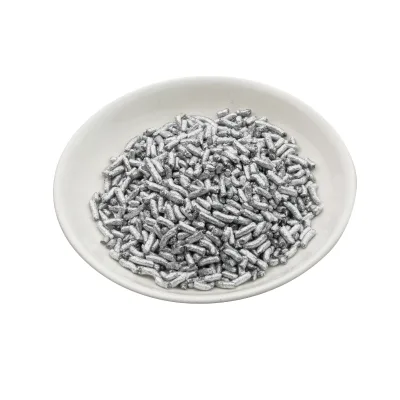
Hot Sale Safety and Environmental Protection Aluminum Pellets for Inks for Food Packaging
$11.72 - $16.82
MOQ: 1 kilograms

99.99% Pure Al Alumina Shots Aluminum Particles Granules Aluminium Pellet
$500.00 - $700.00
MOQ: 1 Tons
Comprehensive Sourcing Guide
Strategic Sourcing Guide for Metallic Pigment Aluminum Pellet Procurement
The procurement of metallic pigment aluminum pellets represents a critical decision point for industries ranging from high-performance coatings to advanced electronics manufacturing. Buyers navigating this market must distinguish between generic aluminum powders and specialized pelletized forms designed for specific dispersion and optical properties. The available product landscape indicates a diverse array of specifications, including models such as M-1020, AL0010, and AL0018, alongside specialized variants like SF-718 and the XK-Al 02. Understanding the nuances of these product codes is the first step in aligning procurement with technical requirements. The market offers products originating primarily from regions like Anhui, China, with a wide variance in packaging and physical form factors. This guide provides a structured approach to evaluating suppliers and specifications without relying on unverified claims, ensuring that procurement decisions are grounded in observable product attributes and established industry practices.
Technical Specifications and Physical Attributes
When sourcing metallic pigment aluminum pellets, the primary focus must be on the physical and chemical attributes that dictate performance in the final application. The supplied data reveals a significant divergence in product types, ranging from "Natural" to "Synthetic" classifications. This distinction is vital for buyers, as synthetic variants often offer more consistent particle size distributions and purity levels compared to natural sources. The observed product models, such as API-685, API-605, and API-645, suggest a catalog of specialized formulations. A critical attribute to verify is the solubility profile; while some entries list "Insolubility," others indicate "Solubility," a contradiction that requires immediate clarification with the supplier to ensure the material meets the intended chemical resistance requirements.
Particle size and mesh count are equally critical determinants of the pigment's behavior in suspension. The data highlights a specific product with a particle size range of 10-100 microns and a mesh count of 200. This level of granularity is essential for applications requiring specific opacity or metallic luster. Furthermore, the availability of forms such as "Target, Wire, Segment, Granule, Ingot, Sheet" alongside the standard pellet form indicates that the supply chain supports various processing needs. Buyers must verify if the "Aluminum Mirror Powder" designation applies to their specific model, as this implies a specific surface finish and reflectivity that may not be present in all aluminum pellets. The standard dimensions of 35cm*50cm and custom sizes like D3x3mm or D6x6mm further illustrate the need for precise dimensional verification before ordering.
Compliance, Certification, and Regulatory Standards
Navigating the regulatory landscape is a non-negotiable aspect of sourcing industrial chemicals and pigments. The provided product facts list several certifications, including FDA, EEC, SGS Approval, ISO9001:2015, CE, ISO, and TUV. However, these certifications are attached to specific product models and should not be assumed to apply universally across all aluminum pellets. For instance, the FDA and EEC approvals are particularly relevant for applications involving food, cosmetics, or consumer goods, whereas CE and TUV are more pertinent for industrial and electronic components.
Buyers must exercise caution regarding the "ASTM 11" reference found in the background data, as it is listed as low-confidence and should not be cited as a definitive standard for any specific transaction. Instead, procurement teams should request current, valid certificates of analysis (CoA) and certificates of compliance (CoC) for every batch purchased. The presence of a "Standard" field listing EEC and SGS suggests that these are common benchmarks, but the specific standard number or version must be confirmed. For applications in the electronics, medical, or aviation sectors, the purity levels are paramount. The data indicates purity ranges of 99.9%-99.99% and 99.99%-99.999%, but these figures must be validated against the specific model number, as lower purity grades may be available for non-critical industrial uses.
Cost Drivers and Pricing Dynamics
The pricing structure for metallic pigment aluminum pellets is influenced by a complex interplay of factors, including purity, particle size, packaging, and order volume. The observed price range in the market spans from $1 to $8,500 USD, a variance that reflects the difference between bulk raw materials and high-purity, specialized formulations. This wide range underscores the importance of defining the exact technical requirements before requesting a quote, as a generic pellet will cost significantly less than a 99.999% pure variant intended for medical or aviation use.
Minimum Order Quantities (MOQ) also play a significant role in cost efficiency. The data shows an MOQ range from 1 unit to 1,000 units, with specific mentions of 100g for high-purity samples and 25kg drums for bulk industrial supply. Buyers should note that smaller MOQs, such as the 100g vacuum packages, often carry a higher unit cost but are essential for R&D and quality testing. Conversely, bulk orders in 25kg paper pails or drums may offer economies of scale but require storage capacity and inventory management. The "Free Sample" policy observed in several listings can be a strategic tool to validate quality before committing to larger volumes, effectively reducing the risk associated with high-value purchases.
Typical Applications and Usage Scenarios
The versatility of aluminum pellets is evident in the diverse usage categories listed in the product data. These applications span the Textile, Ink, Paint, Plastic, Cosmetic, Food, Ceramic, and Electronics sectors. The specific model AL0010 and AL0018, for example, are noted for use in Textile, Ink, Paint, and Plastic, suggesting their suitability for general industrial coating and coloring. In contrast, products with higher purity ratings and specific certifications like FDA are targeted toward Cosmetic and Food applications, where safety and non-toxicity are paramount.
The "Application" field explicitly lists Electronics, Industrial, Medical, and Aviation, indicating that certain grades of aluminum pellets are engineered for high-performance environments. In the electronics sector, the material may be used for conductive inks or thermal management solutions, requiring precise particle sizes and high purity. For the aviation and medical industries, the material must meet stringent safety and durability standards. The "Aluminum Mirror Powder" designation points to applications requiring high reflectivity, such as automotive finishes or decorative plastics. Buyers must match the specific usage claim of the product model to their end-use requirements, ensuring that the pigment will not degrade under the specific environmental conditions of the final product.
Supplier Evaluation and Operational Reliability
Evaluating a supplier for metallic pigment aluminum pellets requires a deep dive into their operational capabilities and logistical reliability. The data indicates that suppliers offer customization, with options for custom sizes and packaging. The "Sample Policy" of offering free samples is a positive indicator of supplier confidence, but it should be part of a broader evaluation strategy. Buyers should assess the supplier's ability to maintain consistent quality across batches, especially given the observed variations in solubility and purity claims.
Logistics and delivery timelines are critical components of supplier evaluation. The observed lead time of 15-18 days provides a baseline for planning, but this can vary based on the specific model and location. The origin of the products, primarily Anhui, China, suggests a concentration of manufacturing in this region, which buyers should consider when calculating shipping costs and potential supply chain disruptions. Packaging is another key factor; options range from 25kg paper pails and drums to vacuum-sealed 100g, 500g, and 1000g packages. The choice of packaging, such as "Wooden Case" or "Carton or Wooden Case Outside," impacts the protection of the material during transit and storage. A reliable supplier will provide clear documentation on packaging standards to ensure the integrity of the aluminum pellets is maintained.
Quality Control and Long-Term Procurement Strategy
Implementing a robust quality control (QC) protocol is essential for mitigating risks in the procurement of metallic pigments. Given the observed contradictions in attributes like solubility and the wide range of purity levels, buyers must establish a rigorous incoming inspection process. This should include verifying particle size distribution, mesh count, and chemical composition against the provided CoA. The availability of specific models like APP-520 and APP-516 suggests that there are distinct product lines, and mixing these without verification could lead to performance failures.
Long-term procurement strategies should focus on building relationships with suppliers who demonstrate consistency in quality and transparency in their specifications. The "Customization" attribute indicates that suppliers are willing to adapt their products to specific needs, which can be a significant advantage for specialized applications. However, this requires clear communication of requirements and regular quality audits. Buyers should also consider the total cost of ownership, including the cost of potential rework or product failure due to substandard materials. Establishing a framework for regular re-qualification of suppliers and batches will ensure that the supply chain remains resilient and capable of meeting evolving market demands.
Comparative Analysis of Product Models
To facilitate decision-making, the following table summarizes key observable attributes of the various product models mentioned in the sourcing data. This comparison highlights the diversity in specifications and helps buyers identify the most suitable options for their specific needs.
| Product Model | Type | Primary Usage | Packaging | Key Certification | Purity Range |
|---|---|---|---|---|---|
| M-1020 | Natural | Textile, Ink, Paint, Plastic | 25 Kg in Paper Pails/Cartons | EEC, SGS | Not Specified |
| AL0010 / AL0018 | Synthetic | Ink, Paint, Plastic | Drums or Cartons | FDA, EEC, SGS | Not Specified |
| YT0002 | Natural | Cosmetic, Paints | 25kg/Drum | FDA, EEC, SGS | Not Specified |
| ST50085 | Synthetic | Textile, Paper, Leather, Ink, Paint, Plastic, Food, Cosmetic, Ceramic | 20kg/Drum | CE, ISO, TUV | Not Specified |
| SF-718 | Synthetic | Electronics, Industrial, Medical, Aviation | 100g, 500g, 1000g Vacuum Package | ISO9001:2015 | 99.9%-99.99% |
| XK-Al 02 | Synthetic | Electronics, Industrial | Vacuum Inside, Carton/Wooden Case | CE, ISO, TUV | 99.99%-99.999% |
| Aluminum Pigment | Synthetic | General Industrial | Drums or Cartons | EEC, SGS | Not Specified |
| APP-520 / APP-516 | Synthetic | General Industrial | 20kg/Drum | Not Specified | Not Specified |
| API-685 / API-605 / API-645 | Synthetic | General Industrial | Not Specified | Not Specified | Not Specified |
This table serves as a reference point for buyers to cross-reference their requirements with the available product data. It is crucial to note that while the table lists specific attributes, buyers must verify these details with the supplier for each specific order, as product specifications can change or vary by batch. The diversity in packaging and certification levels underscores the need for a tailored approach to procurement, ensuring that the selected aluminum pellets meet the exact technical and regulatory demands of the intended application.
FAQs
What certifications are available for metallic pigment aluminum pellets?
Available certifications include FDA, EEC, SGS Approval, ISO9001:2015, CE, ISO, and TUV. These vary by product model, so buyers must verify specific certificates for their intended application like food or electronics.
How is Metallic Pigment Aluminum Pellet typically packaged?
Packaging options include 25kg drums, paper pails, vacuum-sealed bags, and wooden cases. Specific models may use 100g vacuum packages for high purity or 25kg paper pails for bulk industrial supply.
Which product models offer customization for metallic pigment aluminum pellets?
Customization is available for various models including M-1020, AL0010, and XK-Al 02. Buyers can request specific sizes like D3x3mm or D6x6mm and tailored packaging to meet unique processing needs.
Can I get free samples of metallic pigment aluminum pellets?
Yes, a free sample policy is observed for several product listings. This allows buyers to validate quality and specifications before committing to larger orders with minimum quantities ranging from 100g to 1000 units.
What is the lead time for Metallic Pigment Aluminum Pellet orders?
The standard delivery lead time is 15 to 18 days. This duration may vary based on the specific product model, order volume, and the supplier's location in regions like Anhui, China.
What purity levels are available for metallic pigment aluminum pellets?
Purity levels range from 99.9% to 99.999% depending on the product grade. Higher purity variants are often designated for electronics, medical, or aviation applications requiring strict quality control.