Source Mini Electric Car for City, Golf Course, and Campus
Explore 30 listings for the Mini Electric Car featuring AWD, electromagnetic braking, and lithium-ion batteries. Buyers can compare models like T01 and S1-6 with varying power sources and certifications for city or golf course applications.
Key considerations
Products List


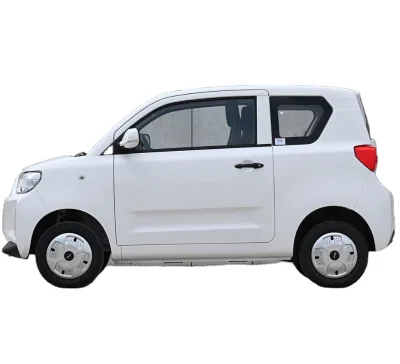

Electric Car Mini New Energy Micro Vehicles Electric Vehicle Electric Car
$1500.00 - $2000.00
MOQ: 1 Pieces


$1700.00 - $1800.00
MOQ: 1 Pieces


Eco-Friendly Compact Electric Car Mini New EV for Adults with Five Doors
$3850.00 - $4043.00
MOQ: 1 Pieces


Mini Electric Vehicle New EV Car with Exceptional Space and High Efficiency
$3850.00 - $4043.00
MOQ: 1 Pieces


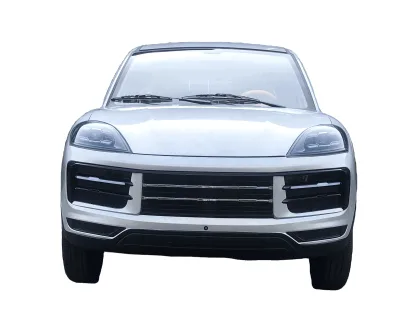
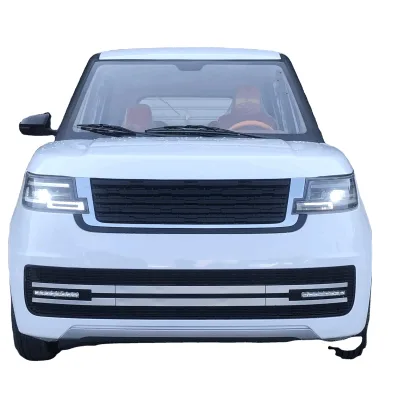
SUV Electric Carelectric Car Electric Car SUV Electric Car Low Speed Cars
$4080.00 - $4300.00
MOQ: 4 Pieces



Comprehensive Sourcing Guide
Sourcing Guide for Mini Electric Vehicles
The global demand for compact, efficient urban mobility solutions has accelerated the emergence of the Mini Electric Car as a distinct procurement category. For B2B buyers, navigating this market requires a disciplined approach that distinguishes between general observations and verified product specifications. The available data indicates a diverse range of offerings, from closed-body city cars to open-body utility vehicles, all sharing a common electric powertrain foundation. This guide outlines the critical technical, compliance, and operational factors necessary for a successful procurement strategy, relying strictly on observed product attributes and established industry standards.
Technical Specifications and Powertrain Architecture
When evaluating mini electric vehicles, the primary technical differentiator lies in the powertrain configuration and chassis design. The observed product landscape reveals a clear segmentation based on intended use. Some listings describe a "Mini" body style with a "Closed" body type, featuring four seats and an automatic gearbox. These units typically utilize an electromagnetic braking system and are powered by a lithium-ion battery. In contrast, other entries categorize the product as a "Buggy/Golf Cart" with an "Open" body type, often featuring a single seat configuration or specialized seating arrangements like "Type:FCEV" noted in specific datasets.
The power output varies significantly across these categories. Observed motor power ranges from 650W to over 800W, with some specific models listing a range of 600-1700W. Voltage systems are equally varied, with 60V and 72V configurations appearing in the market data. Displacement metrics, while traditionally associated with combustion engines, are listed in some contexts as greater than 4000CC, likely referring to equivalent power output or specific regulatory classifications rather than literal engine volume. Buyers must verify the actual wattage and voltage requirements against their local infrastructure capabilities.
Suspension systems also play a crucial role in ride quality and durability. The data highlights a "Front Macpherson Independent Suspension" as a standard feature in several models, which is beneficial for stability on uneven surfaces. Gradeability is another critical performance metric, with observed specifications indicating a capability of 20-30%, ensuring the vehicle can handle moderate inclines in urban or golf course environments.
Compliance and Certification Verification
Navigating the regulatory landscape is perhaps the most complex aspect of sourcing electric vehicles. The market data presents a wide array of certifications, ranging from regional standards to international safety marks. Common certifications observed include EEC, CE, DOT, EPA, ISO, and CCC. The presence of multiple certifications in a single listing, such as "EEC,CE,DOT,CCC,EPA," suggests a high level of compliance, but buyers must verify that these certifications apply to the specific model and voltage configuration they intend to purchase.
Management certifications are also present, with "GSV" (Global Safety Verification) appearing in the data. This indicates that the supplier may adhere to specific safety management protocols, which is a positive indicator for supply chain reliability. However, the absence of specific test results or performance claims in the general data means buyers cannot assume every listed product meets these standards without direct verification.
Standards related to dimensions and production are equally important. Observed product standards include numerical codes like 3380, 1499, and 1610, as well as dimensional specifications such as 300015101630 mm and 23009701200 mm. These figures likely represent length, width, and height constraints for specific vehicle classes. Buyers should cross-reference these dimensions with their intended storage and operational environments to ensure compatibility.
Cost Drivers and Pricing Dynamics
The pricing structure for mini electric vehicles is influenced by several factors, including body style, power output, and customization options. The observed price range in the market spans from $468 to $21,500 USD. This vast disparity reflects the difference between basic utility carts and more sophisticated, fully enclosed city cars with advanced features.
Key cost drivers include the battery technology and the complexity of the body structure. Vehicles with "Lithium - Ion Battery" power sources generally command higher prices than those with alternative energy storage, though the specific chemistry and capacity are not detailed in the general data. Customization availability is another significant factor; listings explicitly stating "Customization: Available" and "OEM/ODM: Yes" often carry a premium due to the engineering and tooling costs involved in tailoring the vehicle to specific brand or functional requirements.
Packaging methods also impact the final landed cost. Options range from "Naked" packing to "Container" shipping and "Iron Frame" reinforcement. The choice of packaging affects shipping efficiency and the risk of damage during transit, which must be factored into the total cost of ownership.
Typical Applications and Operational Scenarios
The versatility of mini electric vehicles allows them to serve a wide range of applications. The data explicitly identifies "City" and "Golf Course" as primary application scenarios. For urban environments, the closed-body, four-seat models with automatic gearboxes are ideal for short-distance commuting and last-mile delivery. Their compact dimensions, such as the 2300mm length, facilitate maneuverability in tight spaces.
In recreational and institutional settings, the open-body "Buggy/Golf Cart" models are preferred. These vehicles, often featuring warning lights and UV-resistant sunshade roofs, are designed for leisure and maintenance tasks on golf courses or large campuses. The "Naked" or "Standard Export Package" configurations suggest these units are often shipped for local assembly or immediate deployment in controlled environments.
The "Mini car" and "Mini EV car" designations further reinforce the dual nature of this market, catering to both personal mobility and commercial utility. Buyers should align their selection with the specific terrain and usage intensity of their intended application, as the 20-30% gradeability and suspension types are optimized for specific conditions.
Supplier Evaluation and Origin Analysis
Geographic origin is a consistent factor in the sourcing data, with "China" and specifically "Shandong Jinan" and "Jiangsu" identified as primary production hubs. These regions are known for their established manufacturing ecosystems for electric vehicles and components. The presence of "Brand Name: BAW" in the data indicates that some suppliers operate under established automotive brands, while others may be OEM manufacturers.
When evaluating suppliers, buyers should prioritize those with clear OEM/ODM capabilities and a history of meeting international certifications. The "MOQ" (Minimum Order Quantity) varies from 1 piece to 50 pieces, offering flexibility for both small pilot projects and large-scale fleet deployments. The "Selling Units" being listed as "Single item" suggests that even low-volume orders are accommodated by many suppliers.
However, the lack of specific lead time data in the provided facts means buyers must directly inquire about production schedules. The "Place of Origin" being listed as "Shandong, China" or "Jiangsu" provides a baseline for logistics planning, but actual shipping times will depend on the specific supplier's capacity and the chosen shipping method.
Quality Control and Long-Term Procurement
Ensuring product quality requires a rigorous verification process. Buyers should not rely solely on the listed certifications but should request third-party test reports for braking systems, battery safety, and structural integrity. The "Electromagnetic" braking system and "Front Macpherson Independent Suspension" are specific features that should be validated through physical inspection or video demonstration.
Long-term procurement considerations include the availability of spare parts and the durability of the "Iron Frame" or "Standard Export Package" components. The "UV - Resistant Sunshade Roof" is a specific exterior feature that suggests a focus on longevity in outdoor environments, but the actual resistance rating should be confirmed.
Furthermore, the "Customization" aspect offers a pathway for long-term partnership. Suppliers willing to engage in OEM/ODM projects can help buyers adapt the vehicle to evolving regulatory or operational needs. However, buyers must ensure that any customizations do not compromise the vehicle's compliance with local safety standards.
Comparative Analysis of Vehicle Classes
To assist in decision-making, the following table summarizes the key distinctions between the observed vehicle classes based on the provided data.
| Feature | Mini Closed-Body City Car | Open-Body Buggy/Golf Cart |
|---|---|---|
| Body Style | Mini, Closed | Buggy/Golf Cart, Open |
| Seats | 4 | Variable (often 1-2) |
| Power Source | Lithium - Ion Battery | Lithium - Ion Battery |
| Motor Power | >800W (Typical) | 600-1700W Range |
| Voltage | 60V / 72V | 60V / 72V |
| Suspension | Front Macpherson Independent | Not Specified |
| Primary Use | City Commuting | Golf Course / Leisure |
| Exterior Features | UV - Resistant Sunshade Roof | Warning Lights |
| Packaging | Container / Standard Export | Iron Frame / Naked |
This comparison highlights that while both classes share a common electric foundation, their design priorities diverge significantly. The closed-body model prioritizes passenger comfort and urban integration, while the open-body model focuses on utility and recreational access.
Final Procurement Considerations
Sourcing mini electric vehicles requires a balance between technical specifications, regulatory compliance, and cost efficiency. Buyers must approach each supplier with a clear understanding of their specific needs, verifying that the observed attributes align with their operational requirements. The wide range of certifications and standards available in the market provides a robust framework for ensuring safety and quality, but active verification is essential.
By focusing on the core attributes of power, body style, and certification, and by leveraging the flexibility of OEM/ODM partnerships, buyers can secure a supply chain that delivers reliable, compliant, and cost-effective electric mobility solutions. The diversity of the market, from 1-piece orders to large container shipments, ensures that there is a suitable option for almost any procurement scale, provided the buyer conducts due diligence on the specific product details.
FAQs
What certifications do mini electric cars typically have?
Mini electric cars often carry EEC, CE, DOT, EPA, and ISO certifications. Some listings also include CCC and GSV management certifications, but buyers must verify that these apply to the specific model and voltage configuration before purchasing.
How much does a Mini Electric Car cost?
The price range for mini electric cars spans from 468 to 21500 USD. This variation reflects differences between basic utility carts and sophisticated enclosed city cars with advanced features like lithium-ion batteries and custom body styles.
Which power source is used in these vehicles?
These vehicles primarily use Lithium-Ion batteries as their power source. Motor power ratings vary from 650W to over 800W, with voltage systems commonly available in 60V and 72V configurations to suit different operational needs.
Can I customize the Mini Electric Car design?
Yes, customization is available for many Mini Electric Car models. Suppliers often accept OEM and ODM requests, allowing buyers to tailor specifications, though this may involve additional engineering costs and tooling requirements.
What is the minimum order quantity for these cars?
The minimum order quantity ranges from 1 piece to 50 pieces depending on the supplier. Many vendors offer single-item selling units, making them accessible for small pilot projects as well as larger fleet deployments.
Where are these mini electric cars manufactured?
These vehicles are primarily manufactured in China, with specific origins in Shandong Jinan and Jiangsu. Buyers should account for these locations when planning logistics, though actual lead times require direct inquiry with the supplier.