Source Mini Electric Guitar Bridge for Bass, Strat, and Tele models
Compare 30 Mini Electric Guitar Bridge options from verified manufacturers. Buyers can evaluate materials like brass and steel, specifications such as string spacing, and customization services for electric and bass guitar applications.
Key considerations
Products List


China Customized CNC Machining Black Nickel Brass Electric Guitar Bridge
$6.00 - $30.00
MOQ: 10 Pieces


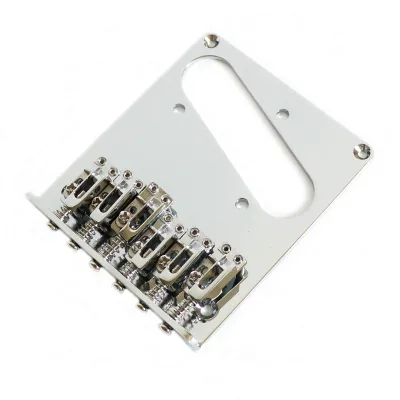
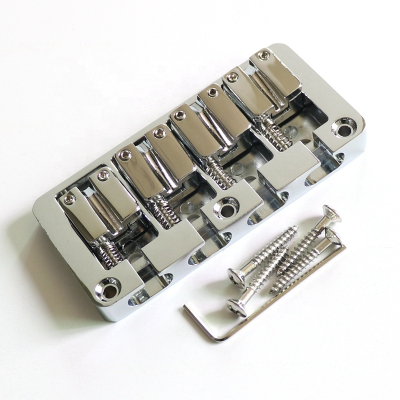
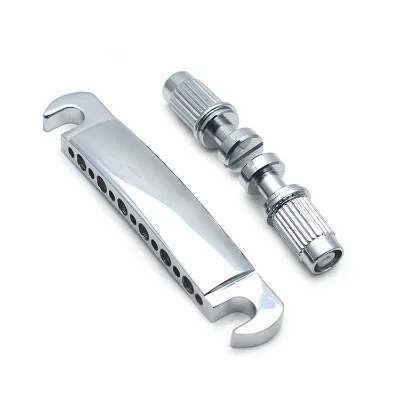
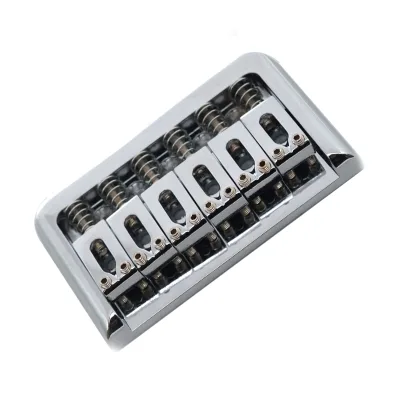
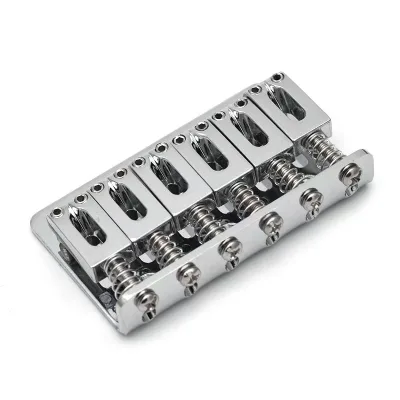
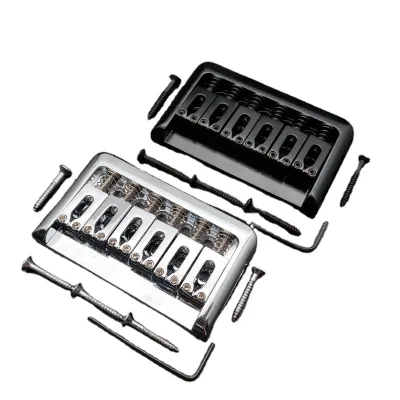
Comprehensive Sourcing Guide
Strategic Sourcing Guide for Mini Electric Guitar Bridges
The global market for electric guitar components continues to evolve, with a specific niche emerging around compact and specialized bridge assemblies. For procurement professionals and instrument manufacturers, the "Mini Electric Guitar Bridge" represents a critical component that balances structural integrity with space-constrained design. This guide provides a disciplined, evidence-based approach to sourcing these components, focusing on technical specifications, material capabilities, and supply chain reliability without relying on unverified market claims.
Technical Specifications and Component Architecture
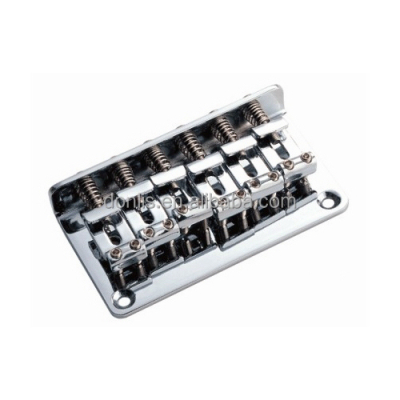
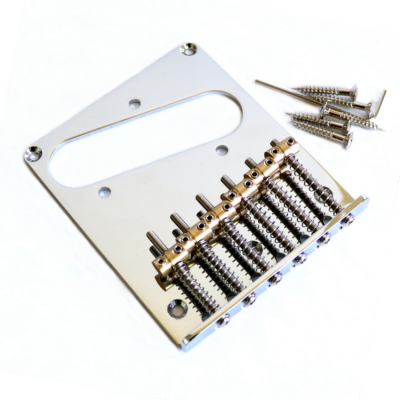
Understanding the precise technical architecture of a Mini Electric Guitar Bridge is the first step in defining procurement requirements. Unlike standard full-size bridges, these components often feature reduced dimensions while maintaining the functional geometry required for string tension and intonation. The core structural element typically involves a baseplate and a saddle assembly. In observed product data, specific models such as the GR221 and STB002 demonstrate distinct configurations. The GR221 is identified as a "String Saddle Bass Electric Guitar Bridge," indicating its application in bass instruments where string spacing and mass are critical variables. Conversely, the STB002 is described as a "Wrapover Guitar Bridge," suggesting a design where strings pass over the bridge rather than through it, a common feature in compact electric guitar designs.
Material composition is a primary differentiator in performance. The supplied facts indicate that base materials can include Aluminum, Brass, Steel, and Titanium. The saddle material, which directly contacts the strings and influences tone, varies significantly across models. For instance, the GR221 utilizes a Zinc Alloy saddle, while the BSB401 model specifies a Solid Brass saddle. The TW002-BK model lists a generic "Alloy" saddle. These material choices directly impact the density, hardness, and acoustic resonance of the bridge. Procurement teams must verify the specific alloy composition for each batch, as "Alloy" is a broad term that may encompass various metal mixtures with differing mechanical properties.
Dimensional tolerances are equally critical. High-precision machining is evident in the observed data, with a stated tolerance of +/- 0.005mm. This level of precision is essential for ensuring that the string spacing aligns perfectly with the fretboard width and that the saddle height is adjustable within a narrow range. The string spacing for specific models is documented as 52.5mm for the GR221 and 57mm for the SFB001-BK. The SFB001-BK is also noted as a "4 String" style, whereas the GR221 is associated with bass applications. These variations mean that a single "mini" specification does not exist; rather, buyers must match the specific model number to the instrument's physical requirements.
Manufacturing Processes and Material Capabilities
The production of high-quality guitar bridges relies heavily on advanced machining techniques. The observed product data consistently points to Computer Numerical Control (CNC) processes as the standard for manufacturing these components. Specifically, the capabilities listed include CNC Machining, CNC Turning, CNC Milling, and CNC Lathe operations. These processes allow for the complex geometries required in wrapover and fixed bridges, ensuring that the saddle slots are cut with the necessary precision to prevent string slippage and maintain tuning stability.
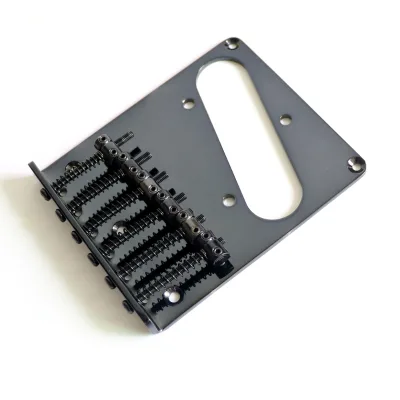
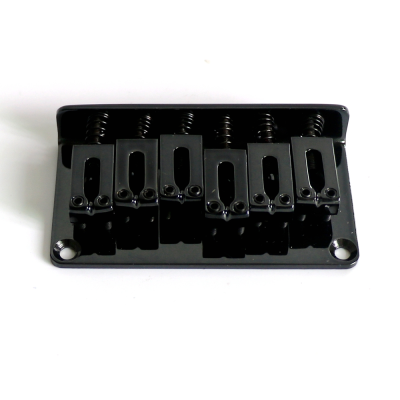
The choice of material is often dictated by the intended finish and the specific acoustic goals of the instrument. The GR221 is described with a Chrome finish, while the STB002 and TW002-BK models feature a Black Matte finish. The TLB013 model is described as a "Black Nickel Brass Electric Guitar Bridge," indicating a plating process over a brass base. The availability of Titanium and Steel as material capabilities suggests that suppliers can accommodate requests for high-strength, lightweight, or corrosion-resistant components. However, buyers must verify that the specific finish (e.g., Matte, Chrome, Black Nickel) is applied consistently across the production run, as variations in plating thickness can affect the lifespan and appearance of the component.
Customization is a significant factor in this sector. The data indicates that customization is "Available" for certain models, while others, such as the TOM002-BK, are listed as "Non-Customized." This distinction is vital for procurement planning. If a buyer requires a specific string spacing, baseplate dimension, or unique material blend, they must target suppliers who explicitly offer OEM and ODM services. The TLB013 entry mentions "OEM ODM Free Sample" services, highlighting a pathway for custom development. Conversely, standard models like the STB002 may only be available in fixed configurations.
Compliance, Certification, and Quality Standards
In the B2B procurement of musical instrument components, compliance with international standards ensures product reliability and safety. The observed data reveals a mix of certification statuses. The HKAA3236 model explicitly lists standards including ISO9001-2008, SGS, and IAF. These certifications indicate that the manufacturer adheres to established quality management systems and third-party verification processes. The presence of ISO9001-2008 suggests a commitment to consistent quality control throughout the production cycle.
However, not all listed products carry the same level of documented certification. The TLB013 model lists "Nostandard" under the "Standard or Nonstandard" category, which requires careful interpretation. This does not necessarily imply a lack of quality but rather that the product is manufactured to a non-standard, custom specification rather than a pre-existing industry standard. Buyers must verify whether "Nostandard" refers to the absence of a specific certification or simply the custom nature of the product. In cases where specific certifications are not listed, procurement teams should request evidence of quality control protocols, such as in-process inspection reports or final acceptance testing data.
The origin of the products is another critical compliance factor. The data indicates that the majority of these components originate from China, with specific mentions of Guangdong as a production hub. Guangdong is a well-established manufacturing center for musical instrument hardware, known for its supply chain density. However, buyers should verify the specific factory location and ensure that the supplier can provide documentation regarding labor practices and environmental compliance, as these are increasingly important in global supply chains.
Cost Drivers and Pricing Dynamics
The pricing of mini electric guitar bridges is influenced by several key variables, including material costs, machining complexity, and order volume. The observed price range in the market data spans from $0.09 to $220. This wide disparity reflects the difference between basic, mass-produced components and high-end, custom-engineered assemblies. The lower end of the range likely corresponds to standard models with simple geometries and common materials like zinc alloy or basic steel. The higher end of the range may involve specialized materials such as titanium, complex CNC machining processes, or custom finishes.
Minimum Order Quantity (MOQ) is a significant cost driver. The observed MOQ range is between 6 and 100 pieces. A model like the GR221 has an MOQ of 10 pieces, while others may require 50 or 100 pieces per carton. Buyers must align their order volumes with these thresholds to optimize unit costs. Ordering below the MOQ often results in significantly higher per-unit prices or may not be feasible at all. Additionally, the lead time impacts cost; standard items may have a lead time of 30 days, while sample orders can be delivered in 10-25 days, and batch goods in 20-35 days. Rush orders or small sample runs typically incur premium charges.
Supplier Evaluation and Operational Reliability
Evaluating a supplier for mini electric guitar bridges requires a multi-faceted approach. The data highlights several key operational attributes that serve as indicators of supplier capability. Shipping methods are listed as "Ocean or Airplane," with specific carriers like UPS and DHL mentioned for sample deliveries. This flexibility is crucial for buyers who need to balance cost against speed. For bulk orders, ocean freight is typically the most economical choice, while air freight is reserved for urgent sample requests or small batch replenishments.
Packing standards are also a critical indicator of supplier professionalism. The observed packing methods include "Polybag+Carton," "50PCS/Carton," "100PCS/Carton," and "Standard Export Carton, Inner: PP Bubble Bag." The use of PP bubble bags for inner protection suggests a focus on preventing damage during transit, which is essential for delicate metal components. Buyers should verify that the packing method matches the fragility of the specific bridge model. For instance, a chrome-finished bridge may require more robust protection than a matte-finished one to prevent scratching.
The availability of services such as "Free Sample" is a valuable tool for supplier evaluation. The TLB013 entry explicitly offers free samples, allowing buyers to physically inspect the quality, finish, and fit of the component before committing to a large order. This service reduces the risk of receiving substandard goods and allows for technical validation of the bridge against the instrument's specifications.
Quality Control and Long-Term Procurement Strategy
Implementing a robust quality control (QC) strategy is essential for maintaining product consistency. The observed tolerance of +/- 0.005mm sets a high bar for precision. Buyers should request QC reports that verify this tolerance for every batch. Visual inspection for finish defects, such as uneven plating or surface scratches, should be part of the acceptance criteria. The "Customize" standard mentioned in the data suggests that buyers can define their own quality parameters, but this requires clear communication and documented specifications.
Long-term procurement considerations involve building a relationship with suppliers who can scale production while maintaining quality. The lead time of 30 days for standard orders and 20-35 days for batch goods indicates a production cycle that requires advance planning. Buyers should avoid relying on last-minute orders, as this can lead to supply chain disruptions. Furthermore, the availability of OEM and ODM services means that buyers can work with suppliers to develop proprietary designs, creating a competitive advantage in the market.
Comparative Analysis of Bridge Models
To facilitate decision-making, the following table summarizes the key attributes of the observed models, highlighting their distinct characteristics and applications.
| Model Number | Primary Type | Material (Saddle/Base) | Finish | String Spacing | MOQ | Key Application |
|---|---|---|---|---|---|---|
| GR221 | String Saddle Bass | Zinc Alloy | Chrome | 52.5mm | 10 PCS | Bass Electric Guitar |
| STB002 | Wrapover | Not Specified | Matte | Not Specified | 50 PCS/Carton | Electric Guitar |
| TW002-BK | Electric Guitar | Alloy | Black | Not Specified | 100 PCS/Carton | Electric Guitar |
| SFB001-BK | 4 String | Not Specified | Black | 57mm | Not Specified | 4-String Electric |
| BSB401 | Electric Guitar | Solid Brass | Not Specified | 54mm | Not Specified | Electric Guitar |
| TLB013 | Electric Guitar | Black Nickel Brass | Black Nickel | Not Specified | Not Specified | Electric Guitar |
| HKAA3236 | Acoustic/Electric | Not Specified | Not Specified | Not Specified | Not Specified | Acoustic/Electric |
This comparison underscores the diversity within the "Mini Electric Guitar Bridge" category. Buyers must carefully match the model specifications to their specific instrument requirements, paying close attention to string spacing and material composition. The variation in MOQ and packing also suggests that procurement strategies should be tailored to the specific model being sourced.
Conclusion
Sourcing mini electric guitar bridges requires a meticulous approach that balances technical precision with supply chain reliability. The market offers a wide range of options, from standard zinc alloy bridges to custom titanium assemblies. By focusing on verified specifications, understanding the implications of material and machining choices, and rigorously evaluating supplier capabilities, buyers can secure high-quality components that meet the demands of modern instrument manufacturing. The data provided serves as a foundational reference, but continuous verification of quality standards and production capabilities remains essential for long-term success.
FAQs
What materials are used for mini electric guitar bridges?
Bridges are typically made from Aluminum, Brass, Steel, or Titanium. The saddle may use Zinc Alloy, Solid Brass, or generic Alloy depending on the specific model selected for the instrument.
Which models offer customization services?
Customization is available for certain models like the GR221, while others such as the TOM002-BK are non-customized. Buyers requiring specific dimensions or finishes should verify OEM and ODM capabilities before ordering.
What is the typical lead time for batch goods?
Standard batch goods usually require 20 to 35 days for delivery. Sample orders are faster, taking between 10 and 25 days, while standard production cycles often list a 30-day lead time.
How is the string spacing defined for these bridges?
String spacing varies by model, with options like 52.5mm for the GR221 and 57mm for the SFB001-BK. Buyers must match these specific measurements to their instrument's fretboard width for proper fit.
Can I find bridges with ISO9001 certification?
Yes, specific models like the HKAA3236 comply with ISO9001-2008 standards. This certification indicates adherence to quality management systems, though not all listed products carry the same documented certification status.
What are the minimum order quantities for these parts?
Minimum order quantities range from 6 to 100 pieces depending on the supplier and model. Some items require 10 pieces minimum, while others are packed in cartons of 50 or 100 units.