Source Modern Blank Acrylic Menu Holder for Restaurants
Compare 30 Modern Blank Acrylic Menu Holder options from verified suppliers in China. Buyers can evaluate customization, sizes, and pricing for use in restaurants, supermarkets, and convenience stores. These units feature adjustable heights, double-sided displays, and various imprint methods to suit diverse promotional needs.
Key considerations
Products List




Comprehensive Sourcing Guide
Modern Blank Acrylic Menu Holder Sourcing Guide
Procurement teams evaluating modern blank acrylic menu holders must first distinguish between fixed and adjustable configurations to match specific venue requirements. The observed product data indicates a mix of fixed rotary models and units with adjustable height features, suggesting that buyers should verify the mounting mechanism before finalizing orders. Selecting the wrong mechanism can lead to installation failures or an inability to adapt to changing menu sizes, making this initial technical distinction critical for operational success.
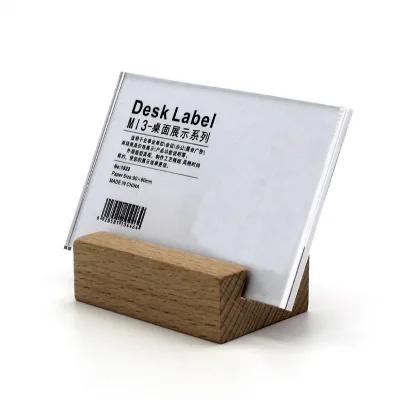
Buyers should also scrutinize the material composition, as listings explicitly mention both pure acrylic and composite options involving wood. While acrylic offers superior clarity and durability for high-traffic environments like supermarkets, the presence of wood components may alter the aesthetic appeal or structural weight. Understanding these material variances ensures that the selected holder aligns with the intended display environment, whether it is a modern café requiring a sleek look or a traditional shop needing a sturdier, heavier base.
Product Scope and Observed Listing Signals
The market for these display units reveals a significant variation in minimum order quantities, ranging from 100 pieces to 1000 pieces depending on the specific model and customization level. This disparity requires buyers to carefully align their inventory needs with supplier constraints, as smaller orders may be limited to standard sizes while larger volumes often unlock custom branding options. Procurement strategies must account for these thresholds to avoid unexpected costs or the inability to secure the desired quantity for a single project launch.
Listing signals also highlight diverse packaging standards, with options ranging from individual OPP bags to bulk carton shipments containing 100 pieces per unit. The choice of packaging directly impacts logistics costs and on-site handling efficiency, particularly for venues receiving large shipments. Buyers must confirm whether the supplier provides protective inner packaging to prevent scratching during transit, as the transparent nature of acrylic makes surface damage a common risk that can compromise the final presentation quality.
Technical Specifications to Verify
Verification of imprint dimensions is essential, as observed listings specify "Big" imprint sizes suitable for detailed graphics but may not suit compact menu designs. Buyers need to confirm the exact printable area relative to the physical dimensions of the holder to ensure that logos and text remain legible without being cut off or distorted. This step prevents costly reprints and ensures that the visual hierarchy of the menu remains intact when displayed on counters or tables.
The structural build method, identified as "Connect" in the data, implies a specific assembly process that may require on-site construction or pre-assembly by the supplier. Procurement teams must clarify whether the unit arrives fully assembled or as a kit requiring user installation, as this affects labor costs and setup time. Additionally, verifying the side configuration, such as double-sided display capabilities, ensures the unit meets the visibility requirements for high-traffic areas where customers approach from multiple angles.
Compliance and Safety Documentation
While some listings reference CE standards, the absence of universal certification claims necessitates a rigorous request for specific test reports from the supplier. Buyers should not assume compliance based on general market knowledge but must demand documentation proving that the acrylic material meets flammability and chemical safety standards for the target market. This due diligence is particularly important for indoor commercial spaces where fire codes and material safety regulations are strictly enforced by local authorities.
Documentation regarding the product origin, specifically noting locations like Wenzhou, Zhejiang, and Guangdong, should be cross-referenced with import regulations and trade agreements. Different manufacturing regions may have varying environmental compliance standards that affect the final product's eligibility for sale in specific jurisdictions. Procurement teams must verify that the supplier can provide a Certificate of Origin and any necessary material safety data sheets to ensure smooth customs clearance and regulatory adherence.
Cost Drivers and Commercial Terms
The unit price range observed between 0.01 and 12.5 USD indicates that cost is heavily influenced by customization levels, material thickness, and order volume. Buyers should anticipate that lower price points typically correspond to standard, non-customized items with minimal branding, while higher costs reflect custom logos, specific sizes, or premium material blends. Understanding this correlation helps in budgeting accurately and negotiating effectively with suppliers who may offer tiered pricing structures based on these variables.
Commercial terms regarding shipping methods, such as air or sea freight, significantly impact the total landed cost and delivery timeline. Sea freight is generally more economical for large orders but requires longer lead times, whereas air freight offers speed at a premium. Procurement teams must calculate the total cost of ownership by factoring in these logistics expenses alongside the unit price, ensuring that the chosen shipping method aligns with the project's urgency and budgetary constraints.
Supplier Qualification and Quality Control
Supplier qualification should focus on their ability to handle custom logo applications, as silk screen printing and custom logo options are frequently cited in the product data. Buyers must assess the supplier's quality control processes for these printing methods to ensure color accuracy and adhesion durability, which are critical for brand consistency. A supplier with robust QC measures will minimize the risk of defective units that could damage the client's reputation upon installation.
Quality control also extends to the physical integrity of the product, given that the items are described as "New" and "Light Weight." Buyers should request samples to test the structural stability of the fixed or adjustable mechanisms and verify that the acrylic does not crack or warp under normal use. Establishing a clear quality acceptance criteria before mass production begins is essential to prevent the receipt of substandard goods that fail to meet the functional requirements of the venue.
Long-Term Procurement Checks
Long-term procurement success depends on verifying the supplier's capacity to maintain consistent product standards over time, especially when reordering custom models. Buyers should establish a protocol for periodic quality audits to ensure that subsequent batches match the initial sample in terms of material quality and print fidelity. This proactive approach mitigates the risk of supply chain disruptions and ensures that the visual presentation of the menu remains consistent across multiple orders.
Finally, buyers must monitor the supplier's responsiveness to changes in product specifications, such as size adjustments or new material requirements. The ability to accommodate custom sizes and specific design requests is a key differentiator for long-term partnerships. Establishing clear communication channels and updating technical specifications regularly ensures that the procurement process remains agile and responsive to evolving market demands and venue needs.
FAQs
Can I get a custom logo on the acrylic menu holder?
Yes, you can get a custom logo printed on the product using silk screen printing or custom logo methods. The supplier accepts OEM requests and offers customization for the logo design. This allows you to brand the menu holder effectively for your specific promotional or retail needs.
What is the minimum order quantity for these menu holders?
The minimum order quantity varies by supplier, with observed values ranging from 100 pieces to 1000 pieces. Some listings specify an MOQ of 1000 pieces, while others accept orders starting at 100 pieces. You should verify the specific MOQ with the manufacturer before placing your order.
Where are these acrylic menu holders manufactured?
These products originate from various locations in China, including Wenzhou, Zhejiang, and Guangdong. The specific place of origin depends on the individual supplier you choose. All listed products are confirmed to be manufactured within China, ensuring local availability for export.
What materials are used to make the menu holder?
The menu holders are primarily made from plastic or acrylic, with some options combining acrylic and wood. The material choice depends on the specific model and supplier. These materials ensure durability and a clear display for documents in indoor settings like shops or supermarkets.
How are the products packed for shipping?
Products are packed in boxes, carton boxes, or OPP bags depending on the supplier. Some listings specify 1 piece per OPP bag with 100 pieces per carton. Shipping methods include air or sea freight, ensuring safe delivery of the menu holders to your destination.
Are these menu holders suitable for indoor use?
Yes, these menu holders are designed specifically for indoor display purposes. They are ideal for use in shops, supermarkets, and convenience stores to display documents. The fixed rotary design and light weight make them stable and easy to place on counters or tables.
What certifications do the menu holders have?
Some products meet CE standards, while others follow specific customer requirements. The material standards may also include acrylic specifications. It is important to check the specific product listing for the exact certification details relevant to your market or regulatory needs.