Source Moisture Proof Aluminum Foil Film for Food Packaging, Cup Use, and Plate Use
Explore 30 listings for Moisture Proof Aluminum Foil Film suitable for food packaging, cups, and plates. Buyers can compare customized sizes, alloy 8011 materials, and heat transfer printing options from verified Chinese manufacturers.
Key considerations
Products List


Manufacturing Custom Film Food Grade Easy to Tear Aluminum Foil Sealing Film
$1800.00 - $3000.00
MOQ: 1000 Tons


Premium Aluminum Foil Insulation Film for Versatile Applications
$0.07 - $0.42
MOQ: 6000 Square Meters

Premium Aluminum Foil Insulation Film for Lamination Applications
$0.07 - $0.42
MOQ: 6000 Square Meters

Laminating Film Aluminum Foil Polyethylene PE Film Multi Layers Film Composite Film
$0.07 - $0.42
MOQ: 6000 Square Meters


Premium Aluminum Foil Laminated PE Film for Ultimate Packaging Solutions
$0.07 - $0.42
MOQ: 6000 Square Meters

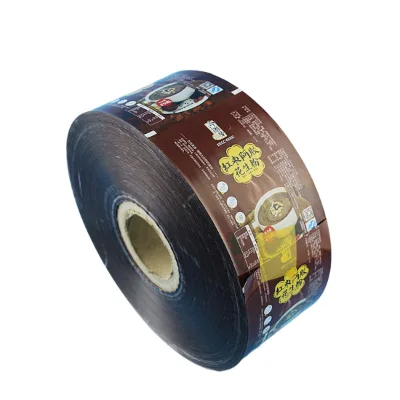


Moisture Proof Clear Protective Film and Protection Film for Aluminum
$0.08 - $0.40
MOQ: 100 Square Meters

Premium Self-Adhesive Aluminum Protection Film for Lasting Preservation
$0.08 - $0.40
MOQ: 100 Square Meters


Composite Laminated Film and Aluminum Foil Food Packaging Bag Film Roll
$0.10 - $0.20
MOQ: 50000 Meters
Comprehensive Sourcing Guide
Strategic Sourcing Guide for Moisture Proof Aluminum Foil Film
Understanding Technical Specifications and Material Composition
When sourcing Moisture Proof Aluminum Foil Film, buyers must first distinguish between the various material architectures available in the global market. The core keyword implies a composite structure designed to provide an absolute barrier against moisture, oxygen, and light, which is critical for preserving product integrity. Based on available market data, the material composition often involves a multi-layer lamination process. A common high-performance configuration observed in the industry includes a structure of PET/AL/NY/PE, where PET (Polyester) serves as the structural support, AL (Aluminum) provides the primary moisture and light barrier, NY (Nylon) offers puncture resistance and tensile strength, and PE (Polyethylene) acts as the heat-sealable inner layer.
Another significant variant utilizes Pulp as a base material, often processed into a thick foil configuration. This approach is frequently seen in applications requiring specific rigidity or biodegradability, though the primary moisture barrier still relies on the aluminum layer. The aluminum alloy itself is a critical specification; the 8011 alloy is a standard choice for these applications, offering an optimal balance of formability and barrier properties. The product model often cited in this context is "8011 O," indicating the annealed temper of the aluminum, which ensures the material remains soft and pliable for rolling and subsequent converting processes.
Surface treatment is another vital technical parameter. The surface state is typically described as "Double light Aluminum Foil," indicating a high degree of reflectivity and a smooth finish that enhances the barrier properties. The surface finish is often "Bright," which is essential for applications where light reflection is a factor, such as in food packaging where light-induced degradation must be prevented. The thickness of the foil is a variable specification, often described as "Thick Foil" in certain industrial contexts, though exact micron measurements should be verified against specific order requirements. The rolling characteristics of the material are designed to facilitate continuous processing, allowing the film to be wound into large rolls for efficient manufacturing integration.
Compliance, Certification, and Quality Standards
In the B2B procurement of Moisture Proof Aluminum Foil Film, verifying compliance with international standards and certifications is non-negotiable. The industry relies heavily on third-party validation to ensure that the materials meet safety and performance benchmarks. Buyers should look for suppliers who hold certifications such as SGS and ISO (often listed as ISOISO in supplier data). These certifications indicate that the manufacturing facility adheres to rigorous quality management systems and that the product has undergone independent testing for specific properties.
While specific standard numbers like ASTM D3985 or ASTM F1249 are sometimes referenced in broader industry discussions, buyers must exercise caution. These standards should not be assumed to apply to every listed product without explicit confirmation from the supplier. Instead, the procurement strategy should focus on verifying that the supplier's "prod_standard" aligns with the buyer's specific regulatory requirements. For instance, some suppliers list a standard width of 1000mm, while others offer fully "Customized" dimensions. The ability to customize the standard width and thickness is a key differentiator in the market.
Furthermore, the certification status must cover the entire supply chain, from the raw aluminum alloy to the final lamination process. The presence of an ISO certification suggests a commitment to consistent quality control, but it does not guarantee that every batch will meet specific performance claims without testing. Buyers should request current certificates and verify their validity dates. Additionally, the "Factory: Yes" attribute in supplier profiles indicates a direct manufacturing source, which often allows for better traceability and quality assurance compared to trading companies. However, the buyer must still validate that the factory's internal quality control protocols match the external certification claims.
Cost Drivers and Pricing Dynamics
The pricing of Moisture Proof Aluminum Foil Film is influenced by a complex interplay of material costs, processing requirements, and order volume. The observed price range in the market is exceptionally wide, spanning from $0.07 to $3000 per unit, reflecting the diversity of product types, from small samples to large industrial rolls. This variance is primarily driven by the thickness of the aluminum layer, the complexity of the multi-layer structure (e.g., PET/AL/NY/PE vs. simpler laminates), and the surface treatments applied.
Order Volume is a significant cost driver. The Minimum Order Quantity (MOQ) can range from 1 unit to 50,000 units, with a specific industry benchmark often cited as 500 Square Meters for standard orders. Purchasing below this threshold may result in significantly higher per-unit costs or may not be feasible depending on the supplier's production capacity. Conversely, larger orders often benefit from economies of scale, reducing the effective cost per square meter.
Additional cost factors include the customization level. While "Customized" specifications are widely available, they often incur higher setup costs and longer lead times compared to standard stock items. The choice of alloy, such as 8011, also impacts the base material cost. Furthermore, the packaging method plays a role; options like "Carton," "Waterproof OPP Bags," or "Four Layers Corrugated Case" add to the overall cost but are essential for protecting the product during transit. The "Heat Transfer Printing" method, often used for decorative applications, adds another layer of cost due to the specialized machinery and ink requirements involved.
Typical Applications and Functional Requirements
Moisture Proof Aluminum Foil Film serves a multitude of applications across various industries, driven by its superior barrier properties. The primary application is "Food Packaging," where the film protects against moisture, oxygen, and light to extend shelf life. Specific uses include "Food Take" containers, cups, and plates. The material's ability to withstand heat sealing (often using a CPP layer) makes it ideal for packaging hot foods or beverages. The "Industrial Use" category extends beyond food to include "Agriculture," "Apparel," and "Pharmaceutical" sectors, where moisture control is equally critical.
In the decorative sector, the film functions as a "Heat Transfer Film" (HTF) for transferring designs onto "Plastic, Glass, Wood, Metal, etc." substrates. This application leverages the film's "Opaque" transparency and the ability to print "up to 10 colors" with high precision. The "Function: Decorative" attribute highlights the versatility of the material in branding and aesthetic applications. The "Peelability" characteristic, often specified as "<7n," is crucial for applications where the film must be easily removed or peeled after the transfer process, ensuring a clean finish without residue.
The "Rolling Characteristics" and "Type: Roll" format make the material suitable for high-speed automated packaging lines. The "Surface State: Double light Aluminum Foil" ensures that the film reflects light effectively, which is beneficial for protecting light-sensitive products. The "Basic Level: KPET" and "Functional Layer: VMPET" indicate the presence of vacuum metalized polyester layers, which enhance the barrier properties and provide a metallic appearance. These functional layers are essential for applications requiring both high barrier performance and aesthetic appeal.
Supplier Evaluation and Selection Criteria
Selecting the right supplier for Moisture Proof Aluminum Foil Film requires a thorough evaluation of their capabilities, reliability, and alignment with buyer needs. The "Factory: Yes" attribute is a strong indicator of a direct manufacturer, which often translates to better control over quality and pricing. However, buyers must verify the supplier's location, with "China" being a prominent origin for these products. Understanding the logistics from this region is essential for planning.
Key evaluation criteria include the supplier's ability to meet specific "prod_model" requirements, such as "8011 O," "greensource," or "kangde2-3." These model numbers often correspond to specific product lines or proprietary technologies. The "Design: Cusomized" attribute suggests that the supplier can accommodate unique design requests, which is vital for branded products. Buyers should also assess the "Transportation Time," which is typically cited as 10-15 days, and the "Time Od Delivery," which can be as short as 7 days for urgent orders.
Payment terms are another critical factor. The standard term observed is a "30% Deposit," which is common in international trade but requires careful financial planning. The "Relative Products" such as "Heat Transfer Machine" indicate that some suppliers offer a complete ecosystem, potentially simplifying the procurement process for buyers needing both the film and the application equipment. The "prod_packing" options, ranging from "Bubble Film Packaging" to "Carton," should be evaluated based on the fragility of the product and the shipping conditions.
Quality Control and Performance Verification
Quality control is paramount when sourcing Moisture Proof Aluminum Foil Film, as defects can lead to product failure and financial loss. Buyers should implement a rigorous verification process that includes checking the "Peelability" values, ensuring they meet the specified "<7n" threshold if required for their application. The "Surface State" must be inspected for consistency, ensuring the "Double light Aluminum Foil" finish is uniform across the roll.
The "Layered" structure, particularly the "Functional Layer" of VMPET, should be verified through visual inspection or testing to ensure there are no pinholes or delamination issues. The "Transparency: Opaque" characteristic should be confirmed to ensure the film provides the necessary light barrier. For heat transfer applications, the "Method: Heat Transfer Printing" quality must be assessed, checking for color consistency and adhesion strength.
Buyers should also verify the "Industrial Use" claims by testing the film in their specific environment. For example, if the film is intended for "Pharmaceutical" use, it must be tested for compatibility with the specific packaging process and storage conditions. The "Certification" status should be cross-referenced with the actual product batch to ensure that the certified quality standards are maintained in production. Regular audits of the supplier's quality control procedures are recommended to maintain long-term consistency.
Long-Term Procurement Considerations and Sustainability
Sourcing Moisture Proof Aluminum Foil Film is not just a one-time transaction but a long-term partnership that requires strategic planning. The "Customization" availability allows for product evolution, but buyers must consider the long-term implications of design changes on production efficiency and cost. The "Standard: Customized" option offers flexibility but may require more time for setup and validation.
Sustainability is an emerging consideration in the industry. While the "Pulp" material option suggests a potential for biodegradable solutions, the "PET/AL/NY/PE" structure is less environmentally friendly. Buyers should inquire about the recyclability of the materials and the supplier's environmental policies. The "Function: Decorative" aspect often involves complex multi-layer structures that can be difficult to recycle, so buyers should weigh the aesthetic benefits against environmental impact.
Lead time stability is another long-term factor. The "Transportation Time" of 10-15 days and "Time Od Delivery" of 7 days are subject to change based on global logistics conditions. Buyers should build buffer time into their supply chain planning to mitigate potential delays. The "Payment: 30% Deposit" term should be negotiated to align with the buyer's cash flow, especially for large orders. Finally, maintaining a relationship with a supplier who offers "Relative Products" like heat transfer machines can streamline operations and reduce the complexity of managing multiple vendors.
FAQs
What materials are used in Moisture Proof Aluminum Foil Film?
The film typically uses a multi-layer structure of PET, aluminum, nylon, and PE. Some variants also utilize pulp as a base material. This composition ensures a strong barrier against moisture and oxygen for food packaging applications.
Can I get customized dimensions for this aluminum foil film?
Yes, customized specifications are available for the product dimensions and thickness. Buyers can request specific widths or lengths to match their machinery. The standard width often cited is 1000mm, but custom orders are supported.
Which certifications do manufacturers of this film usually hold?
Manufacturers often hold SGS and ISO certifications to validate their quality management systems. These certifications indicate that the production process meets international safety and performance benchmarks. Buyers should verify current certificates for specific batches.
How long is the transportation time for orders from China?
The typical transportation time ranges from 10 to 15 days for standard orders. Urgent deliveries may be completed within 7 days depending on the supplier's capacity. This duration covers the logistics from the factory in China to the destination.
What is the minimum order quantity for purchasing this film?
The minimum order quantity is often set at 500 square meters for standard orders. However, some suppliers may accept orders as low as one unit for samples. Larger volumes typically benefit from better pricing and economies of scale.
Which payment terms are standard for these aluminum foil products?
The standard payment term observed is a 30 percent deposit before production begins. This is common in international trade for manufacturing orders. Buyers should confirm the balance payment schedule with the specific supplier before finalizing the contract.
How is the surface finish of the aluminum foil described?
The surface state is commonly described as double light aluminum foil with a bright finish. This high reflectivity enhances the barrier properties against light and moisture. The rolling characteristics ensure the material remains pliable for converting processes.