Source Moisture Proof Compostable Food Wrap for Home, Supermarket, Agriculture
Compare 30 listings for Moisture Proof Compostable Food Wrap suitable for home, supermarket, and agricultural packaging. Buyers can evaluate specifications like size, thickness, and certifications from verified Chinese manufacturers offering OEM and custom packaging options.
Key considerations
Products List


100% Compostable Cling Wrap Eco Friendly Food Wrap Biodegradable Cling Wrap
$0.02 - $0.05
MOQ: 50000 Pieces


Eco-Friendly Biodegradable Compostable Plastic Food Packaging Dry Food Packaging
$0.28 - $0.30
MOQ: 10000 Pieces


Plastic-Free Stretch Film Wrap, Compostable Heavy Duty Shrink Wrap Roll
$3768.12 - $4057.97
MOQ: 1 Tons
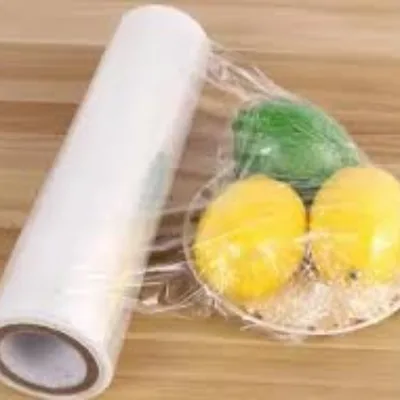
Eco Friendly Cling Film Plastic Wrap for Sustainable Food Storage Sandwich Wrapping
$0.01 - $0.10
MOQ: 10000 Minimum


Comprehensive Sourcing Guide
Strategic Sourcing Guide for Moisture Proof Compostable Food Wrap
The global shift toward sustainable packaging has elevated the demand for moisture-proof compostable food wrap, a material that balances functional performance with environmental responsibility. For B2B procurement professionals, navigating this category requires a rigorous understanding of material science, regulatory compliance, and supply chain logistics. The following guide synthesizes available product attributes and industry standards to provide a structured approach for sourcing high-quality, eco-friendly cling wraps. Buyers must distinguish between generic plastic films and certified compostable alternatives, ensuring that the selected products meet both operational needs and sustainability mandates.
Material Composition and Technical Specifications
The foundation of any successful sourcing strategy lies in verifying the material composition and technical specifications. In the current market, Polyvinyl Chloride (PVC) is frequently cited as a base material for various cling wraps, though its environmental profile differs significantly from compostable alternatives. However, the specific requirement for "compostable" food wrap often points toward bio-based polymers such as Polylactic Acid (PLA) or blends designed to degrade under specific conditions. When evaluating product listings, buyers should observe that materials are often described with attributes like "Soft" hardness and "Transparent" visibility, which are critical for consumer appeal and product monitoring.
Technical dimensions vary widely across suppliers, necessitating precise specification matching. Observed data indicates that widths typically range from 30cm to 45cm, with lengths extending from 30m up to 600m depending on the roll configuration. Specific models, such as those designated by codes like IO071 or CW-02, may offer standard dimensions like 30cm x 30m or 45cm x 500m, while others accept fully customized sizing. Thickness is another critical variable; for high-performance compostable films, thicknesses are often observed to be under 20 microns, which impacts both the material's tensile strength and its biodegradation rate. Buyers must verify that the "Soft" texture does not compromise the film's ability to adhere to surfaces, as the self-adhesive property is listed as ranging from "Medium" to "High" depending on the specific formulation.
Compliance and Certification Verification
Compliance is the most critical differentiator in the compostable packaging sector. Unlike conventional plastics, compostable wraps must undergo rigorous testing to prove they meet specific environmental standards. The supply chain data highlights several key certifications that serve as benchmarks for quality and safety. Buyers should prioritize suppliers who can provide documentation for EN13432 and ASTM D6400, which are the primary international standards for compostable plastics. Additionally, the BPI (Biodegradable Products Institute) certification is a crucial indicator of market acceptance in North America.
When reviewing supplier profiles, procurement teams must verify that the "Certificate" field explicitly lists these standards rather than generic environmental claims. The presence of certifications like EN13432 and ASTM 6400d suggests that the product is designed to break down in industrial composting facilities within a specific timeframe. It is essential to note that "compostable" does not automatically mean "biodegradable" in all environments; the product must meet the specific criteria of the relevant standard. Furthermore, for food contact applications, the material must be "Food Grade," a claim that should be supported by the supplier's test reports. Buyers should request current certificates for every batch to ensure that the production line has not deviated from the certified formulation.
Cost Drivers and Pricing Structures
Understanding the cost structure of compostable food wrap is vital for budgeting and margin analysis. The price range for these products can be substantial, with observed listings spanning from $0.01 to over $4,000, reflecting the vast difference between small sample orders and bulk industrial shipments. Several factors drive these costs, including the raw material source (e.g., PLA vs. PVC blends), the complexity of the certification process, and the scale of production.
The Minimum Order Quantity (MOQ) is a significant cost driver. Data indicates that MOQs can range from 200kg to 50,000 rolls, with some suppliers requiring a base of 200kg or 5,000 rolls to initiate production. Higher MOQs generally correlate with lower unit costs, making them suitable for large-scale retailers or manufacturers. Conversely, suppliers offering lower MOQs may charge a premium to cover setup costs for smaller batches. Buyers should also consider the "Customization" factor; accepting customized logos, sizes, or packaging types often incurs additional fees. The "Packaging Type" also influences cost, with options ranging from standard boxes (e.g., 4 rolls per box) to promotional packaging or bulk export cartons. When negotiating, procurement teams should clarify whether the quoted price includes the cost of the certification documentation and whether the price is fixed or subject to raw material fluctuations.
Typical Applications and Usage Scenarios
The versatility of moisture-proof compostable food wrap allows it to serve a wide array of applications across different industries. The primary usage category is "Home," where consumers seek sustainable alternatives for food storage. However, the scope extends significantly into commercial sectors. The "Supermarket" sector utilizes these wraps for pre-packaged produce, deli items, and bakery goods, where the "Moisture Proof" feature is essential for extending shelf life. In the "Agriculture" sector, the material is used for covering crops or protecting soil, leveraging its biodegradable nature to reduce plastic waste in farming operations.
Specific product attributes align with these use cases. For instance, the "Tableware" and "Cookware" applications suggest that the wrap is suitable for direct food contact in kitchen environments. The "Promotional" usage indicates that the material can be branded for marketing campaigns, a feature supported by the "Accept Customized Logo" attribute. When selecting a product, buyers must match the "Hardness" and "Self-adhesive" properties to the intended application. A "Soft" and "High" self-adhesive wrap is ideal for sealing irregular food shapes in a home or supermarket setting, whereas a "Medium" adhesive might be preferred for industrial agricultural covers where repositioning is required. The "Industrial Use" classification further confirms that these products are engineered for heavy-duty applications beyond simple household storage.
Supplier Evaluation and Operational Capabilities
Evaluating suppliers requires a deep dive into their operational capabilities and production standards. The origin of the product is a key indicator of supply chain reliability; data points to "China" and specifically "Anhui Wuhu" as production hubs. While these locations offer competitive manufacturing capabilities, buyers must verify the supplier's capacity to maintain consistent quality across large volumes. The "OEM" (Original Equipment Manufacturer) and "ODM" capabilities are critical for brands seeking private label solutions. Most suppliers in this category list "OEM" as "Acceptable" or "Accepatable," indicating a willingness to customize branding and packaging.
The "Processing Type" is another vital metric. "Blow Molding" is a common manufacturing process for these films, and buyers should ensure the supplier utilizes modern equipment to maintain uniform thickness and strength. The "Sample" availability is a crucial step in the evaluation process; reputable suppliers should provide samples for testing before committing to a bulk order. This allows buyers to verify the "Moisture Proof" claims and the actual compostability of the material. Additionally, the "Product Packing" details, such as "1 roll/box, 20 boxes/CTN," help in planning logistics and warehousing. Buyers should also check if the supplier offers "Standard Export Carton" packaging to ensure the product arrives in optimal condition.
Quality Control and Long-Term Procurement Strategy
Implementing a robust quality control (QC) framework is essential for maintaining the integrity of compostable products. The "Feature" list highlights "Moisture Proof" and "Water Soluble" as key attributes, which can sometimes be contradictory depending on the intended end-of-life scenario. Buyers must clarify whether the product is designed to be water-soluble for specific industrial processes or simply moisture-resistant for food storage. The "Thickness" specification, often listed as less than 20 microns, requires precise QC monitoring to ensure the film does not tear during application.
For long-term procurement, buyers should establish a partnership model that includes regular audits and performance reviews. The "Standard" field, which may list sizes like S/M/L/XL or specific dimensions like 30cm x 3000cm, should be part of a formal quality agreement. Suppliers should provide batch-specific test results to confirm that the "Certificate" status remains valid for each shipment. Furthermore, the "Brand Name" and "Type" (e.g., "Cling Wrap") should be consistent across all orders to maintain brand integrity. Buyers should also consider the "Lead Time" and "MOQ" flexibility when planning inventory. A supplier that can accommodate "Customized" orders with reasonable lead times will be more resilient to market fluctuations. Finally, the "Logo" customization option should be integrated into the QC process to ensure that branding is applied correctly without compromising the material's compostability.
Conclusion
Sourcing moisture-proof compostable food wrap requires a balanced approach that prioritizes technical performance, regulatory compliance, and supply chain reliability. By carefully analyzing material specifications, verifying certifications like EN13432 and ASTM D6400, and understanding the cost drivers associated with MOQs and customization, buyers can make informed decisions. The diverse applications ranging from home use to agricultural needs highlight the versatility of these products, but they also demand a high level of due diligence. Ultimately, the success of a procurement strategy in this sector depends on selecting suppliers who can consistently deliver high-quality, certified products that meet the evolving demands of the sustainable packaging market.
FAQs
What certifications do Moisture Proof Compostable Food Wrap products have?
Products often carry EN13432, ASTM 6400d, and BPI certifications to verify compostability. These standards ensure the material breaks down in industrial composting facilities, meeting international requirements for food-grade packaging safety and environmental compliance.
How is the thickness of the cling wrap specified?
Thickness is typically listed as under 20 microns for high-performance films. This dimension impacts tensile strength and biodegradation rates, ensuring the material remains soft and transparent while providing necessary moisture protection for food storage applications.
Which customization options are available for the packaging?
Suppliers accept customized logos, sizes, and packaging types like boxes or export cartons. Options include 4 rolls per box or 1 roll per box with 20 boxes per carton, allowing buyers to tailor the product for promotional or standard retail use.
Can I order samples before committing to a bulk purchase?
Yes, suppliers provide samples for testing moisture proof claims and compostability. This step allows buyers to verify the soft texture and self-adhesive properties before placing larger orders that may require minimum quantities of 200kg or 5000 rolls.
What are the standard dimensions for the product rolls?
Standard widths range from 30cm to 45cm with lengths varying from 30m to 600m. Specific models may offer sizes like 30cm by 30m or 45cm by 500m, while fully customized sizing is also accepted to meet specific operational needs.
Where are the manufacturers of this product located?
Production origins are primarily in China, with specific hubs noted in Anhui Wuhu. These locations offer competitive manufacturing capabilities for blow molding processes, ensuring consistent quality and capacity for large-scale orders of compostable food wrap.
What is the minimum order quantity for bulk purchases?
Minimum order quantities vary, with some suppliers requiring 200kg or 5000 rolls. Higher MOQs generally correlate with lower unit costs, making them suitable for large retailers, while smaller batches may incur setup premiums for customization and production.