Source Morandi Space Themed Indoor Playground for Parks, Schools, Hotels
Compare 30 listings for the Morandi Space Themed Indoor Playground designed for commercial amusement parks, kindergartens, and game rooms. Buyers can evaluate customization options, safety certifications, and pricing based on specific design requirements.
Key considerations
Products List

Space Themed Indoor Playground for Kids with Adventure Activities
$110.00 - $180.00
MOQ: 30 Square Meters


Children's Space Themed Indoor Playground with Climbing Features
$110.00 - $180.00
MOQ: 30 Square Meters


Fun-Filled Space-Themed Indoor Playground for Children with Slide
$98.00 - $299.00
MOQ: 1 Square Meters


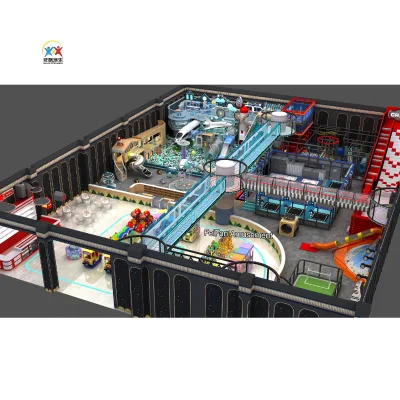


Commercial Indoor Playground Equipment Space Playground for Kids
$90.00 - $155.00
MOQ: 1 Square Meters


Ultimate Multi-Activity Indoor Playground for Family Fun Experiences
$150.00 - $300.00
MOQ: 10 Square Meters


Enjoy Worry-Free Fun at Morandi Fun Zone, a CE-Certified Indoor Playground!
$50.00 - $150.00
MOQ: 10 Square Meters


2024 Newly Designed Indoor Playground, Space-Themed Children’ S Indoor Playground
$60.00 - $80.00
MOQ: 12 Square Meters


Comprehensive Sourcing Guide
Morandi Space Themed Indoor Playground Sourcing Guide
Procuring a space-themed indoor playground requires a strategic balance between aesthetic customization and rigorous safety engineering. The "Morandi" designation typically refers to a specific color palette characterized by muted, desaturated tones, which contrasts with the vibrant, high-contrast visuals often associated with traditional space themes. Buyers must verify whether suppliers can execute this specific aesthetic while maintaining the structural integrity required for high-traffic commercial environments. The observed market data indicates a wide variance in product models, such as KB-IP-S-124 and FF1000YX3, suggesting that customization is not merely cosmetic but extends to structural design and capacity.
This guide focuses on evidence-based procurement decisions for commercial operators, including amusement parks, hotels, and educational facilities. The core keyword highlights a niche segment where visual branding intersects with functional play equipment. Buyers should approach this category with the understanding that "space theme" implies specific structural elements like tunnels, climbing walls, and multi-level platforms, while "Morandi" dictates the finish and color strategy. The following sections detail how to navigate technical specifications, compliance requirements, and commercial terms to secure a reliable supply chain for these specialized installations.
Product Scope and Observed Listing Signals
The current market for space-themed indoor playgrounds exhibits significant diversity in manufacturing processes and material standards. Listings indicate the use of rotational molding and injection molding technologies, which produce different surface finishes and durability profiles. Buyers should observe that products are often described as "New" with a service life ranging from 6 to 10 years, depending on the quality of the underlying materials such as galvanized pipes, EPE foam, and fire-retardant plywood. The observed price range of $50 to $450,000 USD reflects the spectrum from small modular units to large-scale, multi-floor installations, necessitating a clear definition of project scale before engaging with suppliers.
Customization is a dominant feature in this category, with many suppliers offering tailored designs based on client dimensions and branding requirements. The observed minimum order quantities (MOQ) range from 1 to 88 units, indicating flexibility for both single large installations and bulk procurement of smaller components. However, buyers must distinguish between standard catalog items and fully custom projects, as the latter often involve longer lead times and higher engineering costs. The presence of models like KB-IP-S-106 and KB-IP-S-126 suggests that suppliers maintain a library of base structures that can be adapted with different colors, slides, and climbing features to match the desired space theme.
Technical Specifications to Verify
Structural integrity is paramount when evaluating space-themed playgrounds, particularly those designed for multiple floors. Buyers must verify the use of galvanized pipes for the main framework, as these provide the necessary corrosion resistance and load-bearing capacity for high-traffic areas. The internal padding and climbing surfaces should be constructed from high-density EPE foam, PVC foam, or PE netting, all of which contribute to impact absorption and user safety. It is critical to confirm that the plywood used in construction is fire-retardant, as this is a non-negotiable requirement for commercial indoor facilities in most jurisdictions.
The functional layout of the playground should align with the target age group, which typically spans from 1 to 15 years old in commercial settings. Buyers should request detailed 3D installation instructions, teaching videos, and photo guides to ensure that the supplier provides comprehensive support for assembly. The maximum capacity of the structure, often cited around 500kg for specific components, must be validated against the expected foot traffic and simultaneous usage patterns. Additionally, the inclusion of features such as slides, climbing walls, and turning tunnels should be mapped to the available floor space to ensure optimal flow and prevent bottlenecks during peak hours.
Compliance and Safety Documentation
Safety certification is the primary gatekeeper for commercial indoor playgrounds, with CE marking being a widely recognized standard in many international markets. Buyers must insist on documentation that proves compliance with relevant safety standards, such as EN1176 for playground equipment, although specific standard references should be verified against local regulations. The presence of ISO 9001 certification indicates that the supplier adheres to quality management systems, which is a positive indicator of consistent manufacturing practices. However, buyers should not assume that all listed certifications apply to every product model; each unit must be individually validated for compliance.
RoHS compliance is another critical consideration, particularly for plastic components and coatings, ensuring that hazardous substances are minimized in the materials used. Buyers should request test reports for fire retardancy, particularly for the plywood and foam materials, to verify that they meet local fire codes. The warranty period, typically one year, should be clearly defined in the contract, covering both structural defects and material degradation. It is advisable to clarify whether the warranty extends to the color fastness of the Morandi palette, as fading can detract from the aesthetic appeal over time.
Cost Drivers and Commercial Terms
The cost of a space-themed indoor playground is driven by several key factors, including the size of the installation, the complexity of the design, and the quality of materials used. Buyers should expect pricing to be calculated on a per-square-meter or per-design basis, with significant variations depending on the inclusion of specialized features like interactive digital elements or complex climbing structures. The observed MOQ of 1-88 units suggests that smaller orders may carry a premium due to setup and engineering costs, while larger orders benefit from economies of scale in material procurement and production.
Commercial terms such as EXW (Ex Works) or FOB (Free on Board) from Guangzhou are common in this sector, indicating that buyers are responsible for logistics and insurance from the point of origin. Lead times typically range from 20 to 25 days for production, but this can extend for custom designs requiring additional engineering and prototyping. Buyers should budget for installation costs, which may include on-site supervision by the supplier or reliance on local contractors guided by 3D instructions. It is essential to clarify whether the quoted price includes all necessary accessories, such as netting, padding, and mounting hardware, to avoid unexpected additional expenses.
Supplier Qualification and Quality Control
Supplier qualification should begin with a thorough review of their manufacturing capabilities and quality control processes. Buyers should verify that the supplier has experience in producing space-themed installations, as this requires specific expertise in creating immersive environments that are both visually engaging and structurally sound. The origin of the products, often listed as Wenzhou or Guangzhou in China, indicates established manufacturing hubs with specialized knowledge in playground equipment. Buyers should request references from previous commercial projects to assess the long-term performance and durability of the installed equipment.
Quality control measures should include pre-shipment inspections to verify that all components match the approved design specifications. Buyers should confirm that the supplier uses bubble bags, black foam padding, and plastic film for packaging to prevent damage during transit. The use of cotton cloth and bubble film for additional protection is also a positive indicator of careful handling. It is advisable to establish a clear protocol for handling damaged goods or missing parts, including the supplier's response time and replacement policy, to minimize downtime during installation.
Long-Term Procurement Checks
Long-term procurement success depends on the supplier's ability to provide ongoing support and maintenance services. Buyers should inquire about the availability of spare parts, such as replacement foam pads, netting, and hardware, to ensure that the playground can be maintained in optimal condition over its 8-10 year service life. The supplier should be willing to provide technical support for any issues that arise during installation or operation, including troubleshooting structural or functional problems. A clear communication channel for post-sale support is essential for resolving issues quickly and maintaining a safe play environment.
Regular audits of the installed equipment should be conducted to check for wear and tear, particularly in high-traffic areas. Buyers should establish a maintenance schedule that includes cleaning, inspection of structural connections, and replacement of damaged components. The supplier should provide guidance on proper cleaning agents and methods to preserve the Morandi color palette and prevent material degradation. By maintaining a proactive approach to maintenance and support, buyers can extend the lifespan of the playground and ensure a consistent return on investment.
FAQs
What customization options are available for the playground?
Customization is available for design and size to meet specific requirements. The product features a space theme and allows for tailored dimensions, ensuring the playground fits your unique space and design preferences while maintaining safety standards.
Which certifications does the indoor playground hold?
The playground holds CE, GS, ISO, TUV, and ROHS certifications. These standards ensure the product meets international safety and quality requirements, making it suitable for commercial use in various regions including amusement parks and kindergartens.
How long is the warranty period for this equipment?
The warranty period is one year for the indoor playground. This coverage applies to the structural integrity and components, providing buyers with assurance regarding the durability and quality of the space-themed equipment during its initial operational phase.
What is the typical delivery time for orders?
The delivery time ranges from 20 to 25 days after order confirmation. This lead time accounts for production using technologies like rotational moulding or injection molding, depending on the specific model selected by the buyer for their project.
Can the playground be customized with a specific logo?
Yes, logo design services are available for customization. Buyers can request specific branding to be integrated into the space-themed design, allowing for a unique look that aligns with their commercial venue or brand identity requirements.
What materials are used in the construction of the playground?
Materials include galvanized pipes, EPE foam, fire-retardant plywood, PVC foam, and PE net. These components ensure the structure is durable, eco-friendly, and safe for children aged 3 to 12 years or up to 15 years depending on the model.
Where is the product manufactured and shipped from?
The product originates from Wenzhou or Guangzhou in Guangdong, China. Shipping terms include EXW Guangzhou or FOB, and the items are packed with cotton cloth, bubble film, and black foam padding to ensure safe transit to the destination.