Source Mosque Sound System Tube Amplifier for KTV, AV, Professional
Find 30 Mosque Sound System Tube Amplifier units from verified manufacturers. Compare models like FP9000 and FP10000Q featuring 2 or 4 channels, AB/D conductive modes, and dual voltage options for KTV, AV, and professional audio applications.
Key considerations
Products List


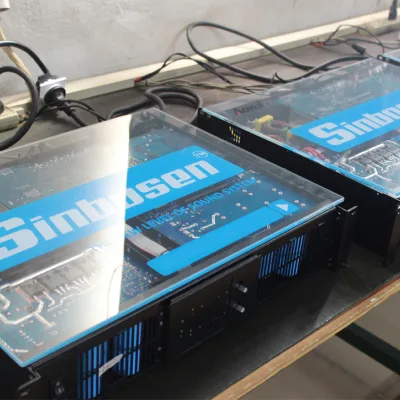

4 Channel Amplifiers 4*1300watts Power Amplifier \Audio Amplifiers \Stage Amplifiers
$200.00 - $1500.00
MOQ: 2 Pieces


Comprehensive Sourcing Guide
Strategic Sourcing Guide for Mosque Sound Systems and Tube Amplifiers
Procuring audio equipment for religious and community centers requires a nuanced understanding of acoustic requirements, reliability standards, and specific technical configurations. When sourcing a mosque sound system, the focus often shifts toward amplifiers that can deliver clear, sustained audio for recitations and speeches while maintaining a professional aesthetic. The term "tube amplifier" in this context often refers to specific circuit topologies or legacy terminology used in product listings, yet the actual market for professional AV and KTV systems frequently blends tube aesthetics with modern transistor efficiency. Buyers must navigate product descriptions carefully to distinguish between true vacuum tube technology and solid-state designs that may be marketed with similar terminology. This guide provides a disciplined approach to evaluating these systems based on observed market data, ensuring that procurement decisions are grounded in verified specifications rather than marketing claims.
Technical Architecture and Amplification Topologies
The core of any mosque sound system is the power amplifier, which must drive speakers with sufficient headroom to handle dynamic speech and musical accompaniment without distortion. In the current market, product listings for professional amplifiers often present a mix of "Tube Type" and "Transistor" classifications. It is critical for buyers to verify the actual conductive mode and element number. Some observed listings specify a "Push-Pull Amplifier" configuration, which is a standard topology for achieving high power output with reduced harmonic distortion. Other entries explicitly state "Transistor Amplifier" or "Tube Amplifier," indicating the active component technology used.
The conductive mode is another vital technical parameter. Data indicates that professional units often operate in "Class AB" or "Class D" modes. Class AB amplifiers are known for a balance between efficiency and sound quality, making them suitable for general public address applications. Conversely, Class D amplifiers offer higher efficiency and lower heat generation, which is beneficial for equipment running for extended periods during long religious gatherings. The "Element Number" field in product specifications often lists "Monoamplifier" or "Push-Pull," which dictates the channel configuration. For a mosque environment, a multi-channel system is typically preferred to ensure even coverage across large prayer halls.
Frequency response is a non-negotiable metric for clarity. Verified data shows units capable of a frequency response range from 20Hz to 34kHz. This range exceeds the standard human hearing limit of 20Hz to 20kHz, suggesting that the amplifier can reproduce the full spectrum of vocal harmonics and instrumental overtones without rolling off high frequencies. This is particularly important for recitations where the subtle nuances of the voice must be preserved. Buyers should look for specifications that confirm a flat frequency response within this range to avoid coloration of the audio signal.
Power Supply and Voltage Flexibility
One of the most significant logistical challenges in sourcing international audio equipment is voltage compatibility. Mosque sound systems are often installed in regions with varying electrical standards. The market data reveals that many professional amplifiers are designed with dual voltage capabilities, explicitly stating that "110V or 220V Are Available." This flexibility is essential for procurement teams managing installations in different countries or regions with distinct power grids.
The internal power supply design also impacts reliability. Specifications indicate the use of high-capacity capacitors, such as "3300UF, 200V" units, which are crucial for smoothing the rectified AC voltage and providing stable power during peak demand. Large capacitors help prevent voltage sag when the amplifier drives low-impedance loads, ensuring that the sound remains consistent even during high-volume passages. Additionally, the "Low Impedance" stability is a key performance indicator. Some units are rated for loads as low as "2.67 Ohms," which allows them to drive multiple speaker cabinets in parallel without overheating or triggering protection circuits.
Thermal management is equally critical for continuous operation. Professional amplifiers often include multiple cooling fans, with some models specifying "4PCS Fans" to ensure adequate airflow. The heatsink material is another factor; "Pure Copper" heatsinks are observed in high-end listings, offering superior thermal conductivity compared to aluminum. This ensures that the amplifier can dissipate heat effectively during long sessions, reducing the risk of thermal shutdowns. Buyers should verify the cooling mechanism and heatsink material in the product specifications to ensure the unit can handle the thermal load of a full-day event.
Compliance, Certification, and Safety Standards
When sourcing equipment for public assembly spaces, compliance with international safety and environmental standards is mandatory. Product listings for professional amplifiers frequently cite adherence to "CE" and "RoHS" standards. The CE marking indicates conformity with health, safety, and environmental protection standards for products sold within the European Economic Area, while RoHS (Restriction of Hazardous Substances) ensures that the device does not contain specific hazardous materials. These certifications are not merely marketing badges; they are legal requirements for importing and selling electronics in many jurisdictions.
Furthermore, the "Product Standard" field often specifies the channel configuration, such as "2CH" or "4CH," which relates to the internal circuit design and safety isolation. Buyers must ensure that the specific model they select carries the relevant certifications for their target market. For instance, if the mosque is located in a region requiring specific electrical safety approvals, the supplier must provide documentation proving that the unit meets those local codes. The "Warranty" period is also a proxy for manufacturer confidence; a "2 Years" warranty is a common offering for professional-grade equipment, indicating a commitment to product longevity and after-sales support.
Packaging, Logistics, and Physical Dimensions
The physical characteristics of the amplifier significantly impact shipping costs and installation logistics. Professional audio equipment is heavy and fragile, requiring robust packaging. Observed specifications list packing dimensions of approximately "58X18X56cm" or "483X88X396mm" for the unit itself. The packaging material is often described as "Double Corrugated Carton" or "Flight Case," which provides protection against impact and moisture during transit. For high-value installations, a "Flight Case" is preferred as it offers superior protection and can be reused for future events.
The weight and dimensions of the unit also influence the mounting strategy. A typical professional amplifier measures around "483X88X396mm," which fits standard 19-inch rack configurations. This form factor allows for easy integration into server racks or dedicated audio cabinets within the mosque's technical room. Buyers should calculate the total weight of the system, including the amplifier and speakers, to ensure that the installation site can support the load. The "Structure" of the enclosure, often listed as "Closed Enclosure," suggests a sealed design that protects internal components from dust and humidity, which is beneficial in environments with varying air quality.
Application Scenarios and System Integration
The intended usage of the amplifier dictates the system architecture. Product attributes frequently list "Professional" and "AV, KTV System" as the primary use cases. While "KTV" (Karaoke) systems are designed for entertainment, the underlying technology for high-fidelity amplification is similar to that required for mosque sound systems. The key difference lies in the signal processing and speaker placement. A mosque system requires a "Pre-amplifier" and "Post Amplifier" combination to manage input sources, such as microphones and digital media players, and to drive the main speaker array.
The "Sound Channel" configuration is critical for spatial audio distribution. Listings show options for "2CH" (stereo) and "4CH" (quadraphonic) systems. For a large prayer hall, a multi-channel setup is often necessary to ensure that the audio is evenly distributed to all corners of the room. The "Amplification Type" is typically "Active," meaning the amplifier includes its own power supply and does not rely on external power modules. This simplifies the installation process and reduces the number of components that could fail.
Supplier Evaluation and Quality Assurance
Evaluating suppliers requires a focus on transparency and the ability to provide detailed technical documentation. The "Made in China" origin is a common attribute for professional audio equipment, with specific manufacturing hubs in "Guangdong China." Buyers should verify the supplier's ability to provide a "Customization" service, as mosque sound systems often require specific input/output configurations or branding. The availability of "Customization" indicates that the supplier is flexible and willing to tailor the product to the specific needs of the client.
Quality control is paramount in the procurement process. Buyers should request test results for Total Harmonic Distortion (THD), with some specifications noting a value of "<0.1%" at 20Hz - 20kHz for 1W. This metric is a strong indicator of audio purity. Additionally, the Signal-to-Noise Ratio (SNR) is a critical factor; observed values range from "81-90dB," which ensures that the background noise floor is low enough to not interfere with quiet passages of speech or music. Buyers should insist on seeing these test reports before finalizing an order to ensure the equipment meets the required performance standards.
Long-Term Procurement and Maintenance Considerations
Sourcing a mosque sound system is a long-term investment that requires careful planning for maintenance and lifecycle management. The "Warranty" period, typically "2 Years," is a baseline expectation, but buyers should also inquire about the availability of spare parts and the supplier's support network. The "Conductive Mode" and "Tube Type" specifications should be reviewed to understand the maintenance requirements; for instance, true tube amplifiers may require periodic tube replacement, whereas transistor amplifiers generally have longer lifespans with minimal maintenance.
The "Input Impedance" of the amplifier, often listed as "20 Kohms," should be compatible with the microphones and other input devices used in the mosque. Mismatched impedance can lead to signal loss or distortion. Furthermore, the "Usage" field, which often includes "KTV System" and "Professional," suggests that the equipment is versatile and can be repurposed for other community events. This versatility adds value to the procurement decision, ensuring that the investment serves multiple functions over time.
Comparative Analysis of Key Specifications
To facilitate decision-making, the following table summarizes the key technical attributes observed in the market for professional amplifiers suitable for mosque sound systems. This comparison highlights the variability in specifications and helps buyers identify the features that align with their specific requirements.
| Attribute | Observed Specification Range | Relevance to Mosque System |
|---|---|---|
| Conductive Mode | Class AB, Class D | Determines efficiency and heat management |
| Voltage | AC 110V, AC 220V | Must match local power grid standards |
| Frequency Response | 20Hz - 34kHz | Ensures full vocal and instrumental clarity |
| Output Channels | 2CH, 4CH | Dictates speaker distribution and coverage |
| Low Impedance | 2.67 Ohms Load Stable | Allows driving multiple speakers in parallel |
| THD (1W) | <0.1% | Indicates low distortion for clear speech |
| SNR | 81-90dB | Ensures low background noise |
| Heatsink Material | Pure Copper | Superior thermal dissipation for long events |
| Warranty | 2 Years | Standard protection period for professional gear |
| Certifications | CE, RoHS | Mandatory for safety and environmental compliance |
Final Procurement Recommendations
In conclusion, sourcing a Mosque Sound System Tube Amplifier requires a meticulous review of technical specifications, compliance documentation, and supplier capabilities. Buyers must prioritize units that offer dual voltage support, robust cooling systems, and verified low-distortion performance. The distinction between "tube" and "transistor" technology should be clarified based on the specific product listing, as the market often uses these terms interchangeably or to describe hybrid designs. By focusing on the observed data points such as frequency response, impedance stability, and certification status, procurement teams can make informed decisions that ensure the long-term reliability and acoustic excellence of the mosque's audio infrastructure. The integration of professional-grade amplifiers with appropriate speaker systems will provide a foundation for clear, impactful communication within the community.
FAQs
Can this amplifier work with 110V and 220V power grids?
Yes, the unit supports both 110V and 220V voltage options for global compatibility. This flexibility ensures safe operation in regions with different electrical standards without requiring external transformers.
What is the frequency response range for clear audio reproduction?
The amplifier delivers a frequency response from 20Hz to 34kHz for full-spectrum clarity. This extended range preserves vocal nuances and instrumental overtones essential for recitations and speeches in large halls.
Which certification standards do these professional amplifiers meet?
Selected models comply with CE and RoHS standards for safety and environmental protection. These certifications are mandatory for importing electronics into many jurisdictions and ensure compliance with international safety codes.
How does the cooling system manage heat during long events?
The unit features four cooling fans and pure copper heatsinks for efficient thermal dissipation. This robust design prevents overheating during extended operation, ensuring reliability for all-day religious gatherings and events.
Can the supplier provide customization for specific system needs?
Customization is available to tailor the amplifier to specific input or output configurations. Buyers can request adjustments to meet unique acoustic requirements or branding needs for their specific mosque installation project.
What is the warranty period for this professional equipment?
The product comes with a standard two-year warranty covering manufacturing defects and performance issues. This coverage reflects the manufacturer's confidence in the longevity and reliability of the professional-grade audio components.
Which packaging type protects the unit during international shipping?
Units are shipped in double corrugated cartons or durable flight cases for maximum protection. This robust packaging prevents damage from impact and moisture during transit, ensuring the equipment arrives in perfect condition.