Source Multifunction Black Laser Printer for offices, schools, and clinics
Explore 30 listings for the Multifunction Black Laser Printer suitable for offices, schools, and clinics. Buyers can compare specifications, prices, and customization options to find the right equipment for daily industrial and document printing needs.
Key considerations
Products List


Non Ink Coding Machine Fiber Laser Printer with Multi-Language (EC-laser)
$12000.00 - $30000.00
MOQ: 1 Pieces

High Speed Automatic Printing Machine Fiber Laser Printer (EC-laser)
$12000.00 - $30000.00
MOQ: 1 Pieces


10.4 Inches Touch Screen Expiry Date Printing Fiber Laser Printer (EC-laser)
$12000.00 - $30000.00
MOQ: 1 Pieces


Non Contact Fiber Laser Printer with High Marking Speed (EC-laser)
$12000.00 - $30000.00
MOQ: 1 Pieces




Comprehensive Sourcing Guide
Strategic Sourcing Guide for Multifunction Black Laser Printers
Understanding Core Technical Specifications and Printing Technologies
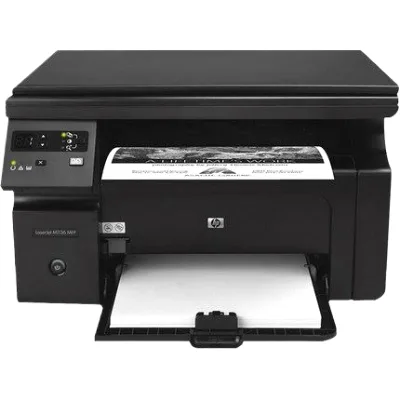
When sourcing a Multifunction Black Laser Printer, the primary objective is to identify equipment that balances high-volume output with reliable document processing capabilities. The technical landscape for these devices is defined by specific printing mechanisms and functional integrations. In the current market, buyers encounter various technologies, including thermal inkjet, continuous inkjet, and solid inkjet systems, though the core requirement for a "black laser" unit implies a reliance on electrostatic toner transfer rather than liquid ink droplets. The supplied data indicates that multifunction units often support a broad range of applications, including photo printing, barcode generation, document management, and card printing. However, for a dedicated black laser solution, the focus must remain on the efficiency of the laser jet classification and the precision of the toner application.
A critical technical differentiator is the printing mode. While some observed products support both automatic and manual paper integration, a robust multifunction laser printer should prioritize automatic feeding mechanisms to handle high-volume workflows without constant user intervention. The interface type is another vital specification; while infrared and HDMI interfaces appear in various device categories, a standard office laser printer typically requires wired or wireless network printing capabilities to function effectively in a connected enterprise environment. The maximum printable size is another observable constraint; while some units support A4 formats, others may be limited to smaller dimensions. Buyers must verify that the selected model supports the standard A4 paper size, which is the industry norm for general office documentation, ensuring compatibility with existing paper stocks and filing systems.
Furthermore, the physical dimensions and operational characteristics are essential for facility planning. Observed specifications include dimensions such as 307(W)x 283(D)x 261(H)mm, which suggests a compact footprint suitable for desktop environments. However, other industrial-grade units may feature significantly larger dimensions, such as 326521151340(mm), indicating heavy-duty machinery. For a standard Multifunction Black Laser Printer, the goal is often a balance between a compact design and a robust cooling system. Air cooling is a common specification for these devices, ensuring that the internal laser assembly and fuser unit do not overheat during sustained operation. The absence of 3D capabilities and the specific aspect ratios observed in some listings confirm that these devices are strictly 2D document processors, focusing on clarity and speed rather than spatial imaging.
Compliance, Certification, and Regulatory Standards
Navigating the compliance landscape is a non-negotiable step in the procurement of industrial and office equipment. The safety and environmental standards of a Multifunction Black Laser Printer must be rigorously verified to ensure the device meets the regulatory requirements of the destination market. The supplied data highlights the CE standard as a relevant certification for certain products in this category. The CE marking indicates conformity with health, safety, and environmental protection standards for products sold within the European Economic Area. Buyers should explicitly request proof of CE certification for any unit intended for use in Europe or for export to markets that recognize this standard.
Beyond the CE mark, other standards may apply depending on the specific application and region. For instance, electrical safety standards and electromagnetic compatibility (EMC) regulations are critical for devices that interface with network infrastructure. While the provided text mentions specific numerical dimensions as standards (e.g., 326521151340(mm)), these are likely physical specifications rather than regulatory certifications. Buyers must distinguish between physical dimensions and actual compliance marks. It is essential to verify that the manufacturer can provide valid test reports or certificates from accredited bodies. In the absence of specific certification data for every listed model, the procurement strategy should include a mandatory requirement for the supplier to submit current certification documents prior to order confirmation.
Additionally, the origin of the product plays a role in compliance. Products originating from Wenzhou, Zhejiang, or Guangzhou, China, are common in the global supply chain. However, the country of origin does not automatically guarantee compliance with international standards. Buyers should ensure that the manufacturing facility adheres to ISO quality management systems, even if not explicitly listed in the initial product description. The packaging standards, such as "Export Packing in Standard Wooden Cases" or "Carton Box Packing," also contribute to the safe transit of the equipment, but they do not replace the need for operational safety certifications. A thorough compliance check involves verifying that the device's electrical components, laser safety classes, and chemical usage (toner) meet the specific regulations of the buyer's jurisdiction.
Cost Drivers and Pricing Structure Analysis
The financial planning for a Multifunction Black Laser Printer procurement is influenced by a complex array of cost drivers beyond the initial purchase price. The observed price range in the market spans from $115 to $30,000, reflecting the vast disparity between entry-level desktop units and high-end industrial printing systems. This wide variance is primarily driven by the printing speed, duty cycle capacity, and the complexity of the multifunction capabilities. A unit priced above $500 per piece typically indicates a more advanced model with higher durability, faster processing speeds, and enhanced network connectivity features. Conversely, lower-priced units may be suitable for low-volume, single-function tasks or smaller office environments.
The total cost of ownership (TCO) is a more accurate metric than the sticker price. While the initial investment is significant, the long-term costs are heavily influenced by consumables and maintenance. The supplied data mentions "Non-ink" supplies for certain laser jet classifications, which refers to toner cartridges. The cost and availability of these consumables are critical factors. Some models utilize a "Split Type Cartridge" system, which may offer different cost structures compared to integrated units. Buyers should investigate the cost per page (CPP) for the specific model, as this metric often determines the profitability of the device over its lifespan.
Other cost drivers include the optional accessories and the complexity of the installation. Features such as "Duplex Printing Device" (automatic two-sided printing) and "Automatic Grade: Fully Automatic" systems add to the initial hardware cost but can significantly reduce paper consumption and labor time. The packaging requirements, such as "Wooden" cases versus "Carton" boxes, may also impact shipping costs, particularly for international procurement. Furthermore, the "Customized" nature of some products implies that bespoke configurations could incur additional engineering or setup fees. Buyers must evaluate whether the customization is necessary for their specific workflow or if a standard model offers a more cost-effective solution.
Typical Applications and Operational Workflows
The versatility of multifunction black laser printers makes them suitable for a diverse range of applications, from general office administration to specialized industrial tasks. The supplied data identifies usage scenarios including "Photo Printer," "Barcode Printer," "Document Printer," and "Card Printer." However, for a dedicated black laser unit, the primary application is typically high-volume document processing, including contracts, invoices, and internal memos. The "Daily Industrial" and "Food, Drug, Daily Industrial, Chemical Products" classifications suggest that these machines are also employed in manufacturing and logistics sectors for labeling and tracking purposes.
In a corporate setting, the ability to perform Print, Copy, Scan, and Fax functions in a single unit streamlines operations. The "On-Line" working patterns observed in some listings indicate that these devices are designed to integrate seamlessly into networked environments, allowing multiple users to access the printer simultaneously. The "Wired/Wireless Network Printing" capability is essential for modern offices where mobile devices and laptops need to send print jobs without physical connections. The "Automatic Two-sided Printing" feature is particularly valuable for reducing paper waste and saving storage space, making it a standard requirement for environmentally conscious organizations.
For industrial applications, the "Continuous Inkjet" and "Solid Inkjet" technologies mentioned in the data may be relevant for specific marking and coding tasks, such as printing barcodes on packaging or labeling products in a factory. The "Small Volume, Low Noise, Simple" features suggest that some models are designed for quiet office environments, while others may prioritize robustness and speed for industrial floors. The "Optimum Resolution" and "LED Backlight Display" specifications, while more common in display technology, highlight the importance of clarity in the user interface and print output. Buyers should match the application requirements with the specific technical capabilities of the printer, ensuring that the device can handle the volume and quality demands of their specific workflow.
Supplier Evaluation and Geographic Considerations
Selecting the right supplier is as critical as selecting the right machine. The supplied data indicates that products originate from key manufacturing hubs in China, specifically Wenzhou, Zhejiang, and Guangzhou. These regions are known for their concentration of printing and packaging machinery manufacturers. When evaluating suppliers, buyers should prioritize those with a proven track record in exporting to their target market. The presence of "Customized" options suggests that suppliers are capable of tailoring products to specific client needs, which is a positive indicator of flexibility and customer service.
Supplier reliability can be assessed through their adherence to packaging and shipping standards. The use of "Export Packing in Standard Wooden Cases" or "Carton Box Packing" demonstrates an awareness of international logistics requirements. Buyers should verify the supplier's ability to handle "Automatic Grade: Fully Automatic" systems, which may require specialized installation and training. The "Working Patterns: On-Line" specification implies that the supplier should provide robust technical support for network integration.
It is also important to consider the supplier's capacity for customization. The "Special Requirement: Customized" attribute indicates that many suppliers are open to modifying products. However, buyers must clearly define their requirements to avoid delays or misunderstandings. The "Optional Accessories" such as the "Duplex Printing Device" should be evaluated for compatibility and availability. A supplier that offers a wide range of accessories and customization options is likely to be more responsive to changing business needs. Finally, buyers should request references or case studies from other clients in similar industries to validate the supplier's performance and reliability.
Quality Control and Long-Term Procurement Strategy
Ensuring the long-term reliability of a Multifunction Black Laser Printer requires a proactive approach to quality control and maintenance planning. The "Air Cooling" system and "Automatic Duplex Printing" features are indicators of design quality, but they must be validated through rigorous testing. Buyers should insist on quality assurance protocols that include stress testing of the cooling system and verification of the duplex mechanism's durability. The "Split Type Cartridge" design should be examined for ease of replacement and potential leakage risks.
Long-term procurement considerations extend beyond the initial purchase. Buyers should establish a relationship with the supplier that includes access to spare parts and technical support. The "Non-ink" supplies mentioned for laser jet printers require a steady supply chain to ensure uninterrupted operations. Negotiating a long-term supply agreement for toner and other consumables can help stabilize costs and prevent stockouts. Additionally, the "Customized" nature of some products means that future maintenance may require specific parts or expertise, making it crucial to maintain open communication with the supplier.
The "CE" standard and other certifications should be re-verified periodically to ensure continued compliance, especially if regulations change. Buyers should also monitor the "Optimum Resolution" and print quality over time, as wear and tear can affect output. Implementing a regular maintenance schedule, including cleaning the laser assembly and checking the cooling system, will extend the lifespan of the device. By focusing on these quality control measures and strategic planning, buyers can ensure that their investment in a Multifunction Black Laser Printer delivers consistent value and performance over the long term.
FAQs
What printing technologies are available for multifunction black laser printers?
Available technologies include thermal inkjet, continuous inkjet, and solid inkjet systems. While laser jet classification is standard for black printing, the specific model determines the exact mechanism used for toner transfer and document processing efficiency.
Which certifications should I verify for these printers?
The CE standard is a relevant certification observed for certain models in this category. Buyers must request proof of CE certification and other safety documents to ensure compliance with health and environmental protection standards for the destination market.
How does the price range vary for these devices?
The observed price range spans from 115 to 30000 USD depending on the model and capacity. Units priced above 500 USD typically offer advanced features like higher durability and faster processing speeds compared to entry-level desktop units.
Can these printers support automatic two-sided printing?
Yes, many models support automatic two-sided printing to reduce paper waste. Some units also offer duplex printing devices as optional accessories, enhancing functionality for high-volume document processing workflows in office or industrial environments.
Where are these printers typically manufactured?
Products originate from key manufacturing hubs in China, specifically Wenzhou, Zhejiang, and Guangzhou. Buyers should verify the specific origin and ensure the manufacturing facility adheres to quality management systems regardless of the listed location.
What packaging options are available for export?
Packaging includes wooden cases, carton boxes, and export packing in standard wooden cases. The choice depends on the product size and shipping requirements, with some units requiring robust protection for heavy-duty industrial machinery.
Which paper sizes can these printers handle?
The maximum printable size for many units is A4, which is the industry norm for office documentation. Buyers must verify that the selected model supports standard paper stocks to ensure compatibility with existing filing systems and paper supplies.