Source Natural Diamond Geological Survey Reamer for Drilling
Compare 30 Natural Diamond Geological Survey Reamer options for core drilling, reaming, and mineral exploration. Buyers can review specifications like model types, hardness ratings, and material compositions to select suitable tools for geological survey applications.
Key considerations
Products List


Suits Varied Ground Conditions and Provides Higher Sample Quality Diamond Reamer
$50.00 - $150.00
MOQ: 10 Pieces


Superior Core Recovery Precision Core Sampling Nwt Hwt Diamond Drill Reamers
$50.00 - $150.00
MOQ: 10 Pieces


Tracked Geotechnical Survey Spindle Borehole Exploration Diamond Core Drilling Rig
$3500.00 - $10000.00
MOQ: 1 SET




High-Performance Drilling Machine for Geological Surveys and Research
$58800.00 - $68800.00
MOQ: 1 set


Comprehensive Sourcing Guide
Strategic Sourcing Guide for Natural Diamond Geological Survey Reamers
Understanding the Core Product and Technical Specifications
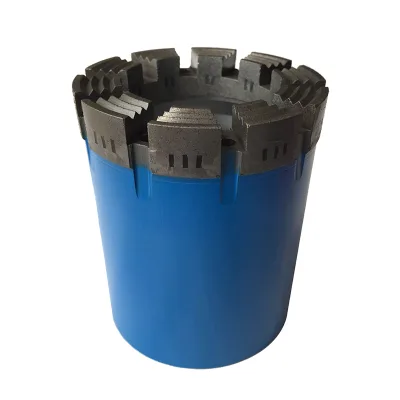
When sourcing a Natural Diamond Geological Survey Reamer, buyers must first distinguish the specific component from the broader category of core bits. The product in question is technically defined as a "Diamond Reaming Shell" or simply a "Reamer," designed specifically for the reaming application within geological exploration. Unlike the primary cutting bit, the reamer's function is to maintain the borehole diameter and ensure the stability of the drill string during the extraction process. The fundamental material composition is diamond, which can be sourced as either natural or synthetic, though the specific keyword focus implies a preference for natural diamond varieties for their specific wear characteristics in hard strata.
The technical architecture of these reamers is defined by a rigorous set of model standards. The observed market data indicates a wide array of standardized models, including the AQ, BQ, NQ, NQ3, HQ, HQ3, PQ, and PQ3 series. These designations are not arbitrary but represent specific industry-standard diameters and thread configurations used globally in geological drilling. Furthermore, the product specifications list additional model variations such as T36, T46, T56, T66, T76, T86, and the T256 through T6116 series, alongside NTW, BTW, and HTW variants. A buyer must verify that the supplier's inventory aligns with the specific model required for their drilling rig. The thread types available include Pi, Metric, and Dcdma, necessitating a precise match with the existing drill string hardware.
The physical properties of the reamer are critical for performance in geological survey environments. The hardness of the diamond segments is rated on a scale of F1 to F12, a range that allows buyers to select the appropriate abrasion resistance for the specific geological strata they are targeting. The cutting edge is described as sharp, and the surface finish is smooth, which contributes to reduced friction and efficient drilling. The product is characterized as "Impregnated," suggesting that the diamond particles are embedded within a metal matrix, a common configuration for reamers designed to withstand the high heat and mechanical stress of rotary drilling. The weight of the associated drilling equipment, which often includes these reamers, ranges from 30 to 165 kg, indicating the substantial nature of the machinery involved.
Compliance, Standards, and Certification Verification
In the realm of geological survey equipment, compliance is not merely a bureaucratic hurdle but a safety and performance imperative. While the supplied data mentions ISO9001 and CE as background elements, buyers must treat these with a high degree of scrutiny. The absence of a specific certification status in the primary product facts means that a buyer cannot assume a supplier is ISO9001 certified or that their products carry CE marking without direct verification. The procurement process must include a request for valid, current certificates from the supplier.
The product standards listed in the data, such as BQ, NQ, HQ, PQ, and their "3" variants (HQ3, NQ3, BQ3, PQ3), serve as the primary technical benchmarks. These standards define the dimensional tolerances and thread specifications that ensure interoperability between different manufacturers' equipment. When evaluating a supplier, the buyer should demand documentation proving that the reamers conform to these specific model standards. The data also references a "Standard" field listing Nq/Hq/Pq, which reinforces the need for strict adherence to these dimensional profiles.
Furthermore, the origin of the product is a critical compliance factor. The supplied facts consistently indicate that the products originate from Wuxi, China, or generally China. While this is a major manufacturing hub, buyers must verify the specific factory location and ensure that the export compliance of the supplier meets the regulations of the buyer's home country. The "Condition" of the product is listed as "New," which is a standard expectation, but buyers should verify that "New" implies unused, factory-fresh inventory rather than refurbished goods. The payment terms, typically TT or LC, also play a role in compliance, as Letters of Credit provide a layer of financial security and verification of the transaction's legitimacy.
Cost Drivers and Pricing Structure Analysis
The pricing for natural diamond geological survey reamers is highly variable, influenced by the complexity of the model, the type of diamond used, and the quantity ordered. The observed price range in the market spans from $1 to $125,000 USD. This vast disparity is not indicative of a single product line but rather reflects the difference between small, specialized reaming shells and complete, high-end drilling assemblies or bulk orders of premium models. A reamer priced at the lower end of this spectrum is likely a smaller model, perhaps an AQ or BQ size, with standard natural diamond impregnation. Conversely, the upper end of the price range likely corresponds to larger, more complex models like the PQ or PQ3 series, which require more material and precise engineering, or potentially complete drilling rigs that include the reamer as a component.
The Minimum Order Quantity (MOQ) is another significant cost driver. The observed MOQ range is between 1 and 10 units. This flexibility allows small exploration teams to purchase single units for immediate field needs, while larger mining operations can leverage bulk ordering to negotiate better unit economics. Buyers should be aware that ordering at the lower end of the MOQ range might result in a higher per-unit cost compared to ordering at the higher end. The "Customization" attribute being available suggests that buyers can request specific modifications, such as unique thread types or specific diamond hardness grades (F1-F12), but these customizations will inevitably increase the cost and potentially the lead time.
The material composition is a primary determinant of value. The distinction between "Natural and Synthetic" diamond types is crucial. Natural diamonds, often preferred for their specific fracture properties in hard rock, typically command a premium over synthetic alternatives. However, the data indicates that both types are available. Buyers must balance the cost of natural diamonds against the expected wear life and drilling efficiency. The "Advantage" of being "Wear Resistant" and having "High Heat Resistance" are features that justify a higher price point, as they reduce the frequency of bit changes and downtime in the field.
Typical Applications and Operational Context
The primary application for these reamers is geological exploration and mineral exploration. The product is explicitly designed for "Geological Drilling and Mineral Exploration" and is used in the "Geological Survey" industry. The drilling way is specified as "Rotary," which is the standard method for core drilling in hard rock and soil with some rocks. The reamers are integral to the process of reaming, ensuring that the borehole remains open and stable as the core barrel extracts the geological sample.
The operational context is defined by the drilling stratum. The data indicates that the equipment is suitable for "Soil with Some Rocks," suggesting versatility in varying geological conditions. However, the depth capability is noted as "<30m" for certain configurations, which implies that these specific reamers are optimized for shallow to medium-depth exploration rather than deep mining operations. For deeper drilling, buyers must verify if the specific model (e.g., PQ3) supports greater depths or if the <30m limitation applies only to the lighter, gasoline-engine-driven units. The engine type listed is "Gasoline Engine," which is typical for portable, mobile drilling rigs used in remote survey locations.
The reamers are used in conjunction with other core bits, including Surface Set Core Bits, TSP Core Bits, and PDC Core Bits. This indicates that the reamer is part of a larger system where different tools are selected based on the specific rock hardness and drilling phase. The "Useage" of the product is noted as "Carbon Bit" in one context, which may refer to the specific application or a related component, but the primary function remains "Core Drilling" and "Reaming." The sharp cutting edge and smooth surface finish are essential for maintaining the integrity of the core sample and preventing the borehole from collapsing in unstable strata.
Supplier Evaluation and Quality Control Protocols
Evaluating a supplier for natural diamond geological survey reamers requires a multi-faceted approach that goes beyond simple price comparison. The first step is verifying the supplier's ability to meet the specific model standards. Given the extensive list of models (AQ, BQ, NQ, HQ, PQ, and their variants), a supplier must demonstrate a robust inventory or manufacturing capability to produce these specific sizes. The "Customization" attribute suggests that the supplier should be willing to engage in a technical dialogue to ensure the reamer matches the buyer's specific rig requirements.
Quality control is paramount, given the harsh conditions of geological drilling. Buyers should request detailed specifications regarding the "Surface Finish" and "Coating." The data mentions "Natural Diamond or Man-Made Diamond" as coating options, and a "Smooth" surface finish. These attributes must be verified through visual inspection or third-party testing reports. The "Hardness" rating of F1-F12 is a critical quality metric; buyers should ensure that the supplier provides a certificate of hardness for the specific batch being purchased. The "Wear Resistant" advantage should be backed by historical performance data or test results, although specific test results are not provided in the source data.
The packaging is another indicator of supplier professionalism. The data lists "Carton/Wooden Case" and "Nude/Wooden Case/Carten" as packing options. For international shipping, a wooden case is generally preferred to protect the delicate diamond segments from impact damage. Buyers should verify that the packaging is suitable for the weight of the product, which can range up to 165 kg for the associated equipment. The "Condition" being "New" must be confirmed upon delivery, and the packaging should be inspected for signs of tampering or damage.
Long-Term Procurement and Supply Chain Considerations
Sourcing natural diamond geological survey reamers is not a one-time transaction but part of a long-term supply chain strategy. The "Payment Term" of TT or LC indicates that financial terms are negotiable, and buyers should consider the impact of these terms on their cash flow. For long-term contracts, establishing a Letter of Credit (LC) can provide security for both parties, ensuring that payment is made only upon the delivery of goods that meet the agreed specifications.
The "Lead Time" is not explicitly provided in the data, but the availability of customization suggests that lead times may vary. Buyers should anticipate longer lead times for custom orders or specific model requests. The "Origin" being China is a significant factor in logistics. Buyers must factor in shipping costs, customs duties, and potential delays in the supply chain. The "Location" of Wuxi, China, is a known industrial center, which may facilitate faster production but requires careful logistics planning for international delivery.
Sustainability and ethical sourcing are increasingly important in the mining and geological sectors. While the data does not explicitly mention ethical diamond sourcing, buyers should inquire about the origin of the natural diamonds used in the reamers. Ensuring that the diamonds are conflict-free and sourced responsibly can be a critical requirement for compliance with corporate social responsibility (CSR) policies. The "Advantage" of being "Wear Resistant" and "Durable" contributes to long-term cost savings by reducing the frequency of replacement, which in turn reduces waste and the environmental impact of frequent manufacturing cycles.
Comparative Analysis of Model Specifications
To assist buyers in selecting the right reamer, the following table summarizes the key model variations and their typical applications based on the provided data. This comparison highlights the diversity of the product line and the importance of matching the model to the specific drilling requirements.
| Model Series | Standard Designation | Typical Application | Key Features |
|---|---|---|---|
| AQ, BQ, NQ | Standard Core Sizes | Shallow Geological Survey | High precision, standard thread types |
| HQ, NQ3, HQ3 | Extended Diameter | Medium Depth Drilling | Enhanced wear resistance, F1-F12 hardness |
| PQ, PQ3 | Large Diameter | Deep Exploration & Mining | High heat resistance, robust construction |
| T-Series (T36-T86) | Specialized Models | Specific Strata Conditions | Custom thread types, variable hardness |
| NTW, BTW, HTW | Regional Standards | Localized Survey Needs | Compatible with specific rig types |
This table underscores that there is no "one-size-fits-all" solution. The selection of the correct model depends on the drilling depth, the rock hardness, and the specific rig configuration. Buyers must carefully cross-reference their operational needs with the model specifications to ensure optimal performance and safety.
Final Procurement Recommendations
In conclusion, sourcing natural diamond geological survey reamers requires a meticulous approach that balances technical specifications, cost considerations, and supplier reliability. Buyers must prioritize the verification of model standards, diamond hardness, and surface finish to ensure the reamers meet the rigorous demands of geological exploration. The wide range of models and the availability of customization offer flexibility, but they also necessitate a deep understanding of the specific drilling environment. By adhering to the standards outlined in this guide and conducting thorough due diligence, buyers can secure high-quality reamers that enhance the efficiency and safety of their geological survey operations. The focus should remain on the observable facts: the model numbers, the material properties, and the origin of the product, ensuring that all procurement decisions are grounded in verified data rather than unconfirmed claims.
FAQs
What models are available for natural diamond geological survey reamers?
Available models include AQ, BQ, NQ, NQ3, HQ, HQ3, PQ, and PQ3 series. Additional variations like T36 through T6116 and NTW variants are also offered to match specific drilling rig requirements.
Can I customize the thread type for my drilling rig?
Customization is available for thread types including Pi, Metric, and Dcdma. Buyers must verify compatibility with their existing drill string hardware before requesting specific modifications.
What is the hardness range for the diamond segments?
The hardness of the diamond segments ranges from F1 to F12. This scale allows buyers to select the appropriate abrasion resistance for the specific geological strata they are targeting.
Where are these natural diamond geological survey reamers manufactured?
Products originate from Wuxi, China, or generally China. Buyers should verify the specific factory location to ensure export compliance meets the regulations of their home country.
What is the minimum order quantity for these reamers?
The minimum order quantity ranges from 1 to 10 units. This flexibility allows small exploration teams to purchase single units while larger operations can leverage bulk ordering for better economics.
How are these reamers packaged for international shipping?
Packaging options include Carton, Wooden Case, or Nude shipping. A wooden case is generally preferred to protect the delicate diamond segments from impact damage during transit.
What payment terms are accepted for these geological survey tools?
Accepted payment terms are typically TT or LC. Letters of Credit provide a layer of financial security and verification of the transaction's legitimacy for international buyers.