Find Nitrided Welding Platform for Assembly, Fabrication, and Repair
Source 30 Nitrided Welding Platform options with steel or cast iron construction and customizable sizes. Buyers can compare hole spacing, thickness, and treatment details to select the right fixture for welding and assembly tasks.
Key considerations
Products List


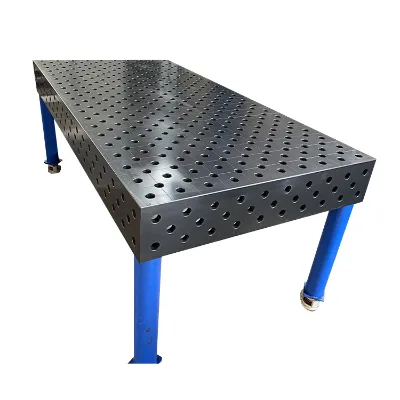
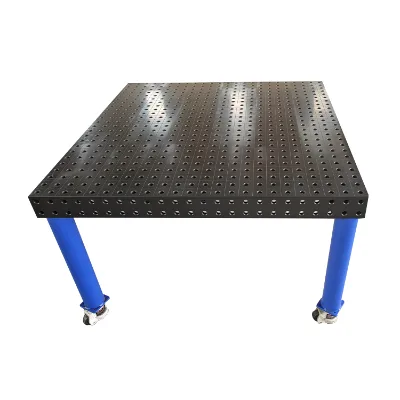
59"*59" Nitrided Welding Table Metal Fabrication Welding Soldering Station
$500.00 - $3000.00
MOQ: 1 Pieces


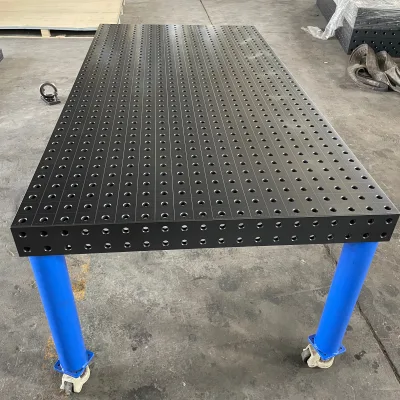
Durable Nitrided 3D Welding Platform for Engineering Machinery Welding
$620.00 - $2850.00
MOQ: 1 Pieces

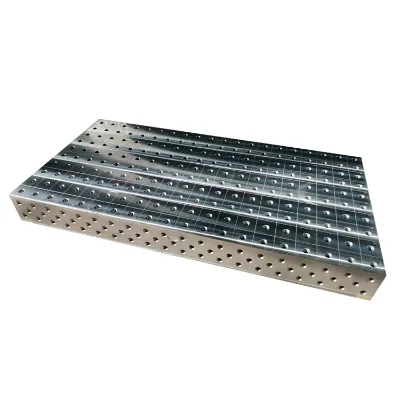
Nitrided Surface 2D Flexible Welding Table Anti-Wear Welding Fixture Platform
$620.00 - $2850.00
MOQ: 1 Pieces

2D Flexible Welding Platform for Hydraulic Equipment Frame Welding Manufacturing
$620.00 - $2850.00
MOQ: 1 Pieces


High Flatness 2D Modular Welding Platform for Welding & Inspection Work
$620.00 - $2850.00
MOQ: 1 Pieces



Comprehensive Sourcing Guide
Strategic Sourcing Guide for Nitrided Welding Platforms
The global manufacturing landscape increasingly relies on precision welding fixtures to maintain structural integrity and operational efficiency. Among the various types of welding tables available, the Nitrided Welding Platform stands out for its superior surface hardness and resistance to wear. This guide provides a comprehensive, evidence-based approach for procurement professionals seeking to source these critical assets. By focusing on verified technical attributes, material compositions, and compliance frameworks, buyers can navigate the market with confidence, ensuring that the selected equipment meets rigorous industrial standards without relying on unverified marketing claims.
Technical Architecture and Surface Engineering
The core differentiator of a Nitrided Welding Platform lies in its surface treatment process. Nitriding is a thermochemical process that diffuses nitrogen into the steel surface, creating a hard, wear-resistant layer without significantly altering the dimensions of the part. In the context of welding tables, this treatment is critical for maintaining flatness and preventing the accumulation of spatter, which can compromise fixture accuracy over time. The supplied data indicates that the surface finish for these platforms is often described as "Normal/Nitrided," with specific references to a "Nitriding Process." This suggests that while standard tables may receive a basic finish, high-performance units are explicitly treated to enhance durability.
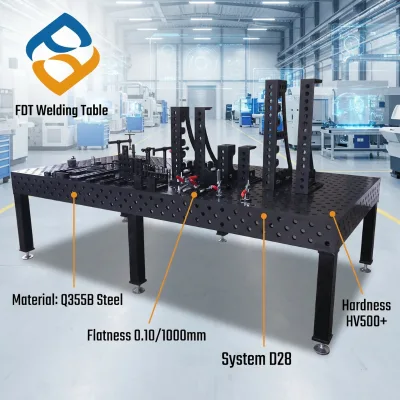
The structural composition of these platforms typically involves a steel or cast iron base. The material specification "Q355" is frequently cited for steel variants, offering a balance of strength and weldability essential for heavy-duty applications. For applications requiring superior vibration damping and thermal stability, cast iron remains a preferred choice. The platform structure is generally defined as a "Platform" type, designed to support the weight of workpieces and fixtures while maintaining rigidity. A critical dimension to verify is the thickness of the table surface. Data points indicate thicknesses ranging from 12mm to 25mm, with 25mm being a common specification for heavy-duty models. Thicker surfaces provide greater resistance to thermal distortion during welding, ensuring that the grid remains true even under intense heat exposure.
Hole Grid Systems and Dimensional Precision
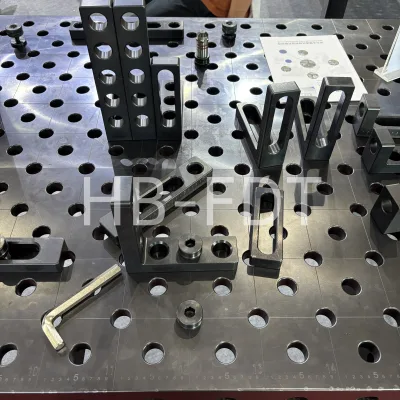
The functionality of a welding platform is governed by its hole grid system, which allows for the flexible positioning of clamps, vises, and other fixtures. The supplied facts highlight two primary hole diameter systems: the 16mm system and the 28mm system. The 28mm system, often associated with the "D28" model designation, is designed for heavier clamping forces and larger workpieces. Conversely, the 16mm system offers finer granularity for lighter assembly tasks. The hole spacing, or pitch, is another vital parameter. Buyers will encounter configurations with a 50mm pitch or a 100mm pitch. The 50mm spacing allows for more precise fixture placement, while the 100mm spacing is suitable for larger, more general-purpose setups.
Dimensional tolerance is a non-negotiable aspect of precision welding tables. The provided specifications note a hole diameter tolerance of ≤0.14mm. This tight tolerance ensures that pins and clamps fit securely without excessive play, which could lead to misalignment of the workpiece. The table height is another standard consideration, with observed values around 200mm. This height is ergonomically designed to reduce operator fatigue while providing sufficient clearance underneath for cable management or additional storage. The overall footprint of the table varies, with standard models available in dimensions such as 1000x2000mm, 1200x2400mm, 1500x1500mm, and 1500x3000mm. Customization is explicitly available, allowing buyers to request non-standard dimensions to fit specific production lines or workshop layouts.
Compliance, Certification, and Regulatory Standards
When sourcing industrial equipment, verifying compliance with international standards is essential for risk mitigation. The supplied data confirms that many of these welding platforms carry the CE certification, indicating conformity with health, safety, and environmental protection standards for products sold within the European Economic Area. This certification is a strong indicator that the manufacturer adheres to specific directives regarding machinery safety. However, buyers must exercise caution regarding other standards. While background information mentions ISO 9606 and EN 1090, these are not explicitly confirmed as standard certifications for every listed product in the provided facts. ISO 9606 relates to welding personnel qualification, and EN 1090 covers the execution of steel structures; neither is a direct product certification for the table itself.
Therefore, procurement teams should verify the specific scope of the CE certificate provided by the supplier. It is prudent to request documentation that explicitly states the applicable machinery directives. Additionally, the origin of the product is a factor in compliance. The supplied facts indicate that the products originate from Jiangsu, China, a major manufacturing hub. While this location is a source of high-volume production, buyers should ensure that the specific batch they are purchasing has undergone the necessary quality audits to meet the CE requirements. For markets outside the EEA, buyers must cross-reference local regulations to ensure that the CE mark, or equivalent local certifications, are recognized and sufficient for legal operation.
Cost Drivers and Economic Considerations
The pricing of nitrided welding platforms is not uniform and is driven by several variable factors. The observed price range in the market spans from 500 to 3666 USD, reflecting the diversity in size, material, and treatment. The primary cost driver is the table size; a 1000x2000mm unit will naturally cost less than a 1500x3000mm unit due to the increased material volume. Material composition also plays a significant role. Tables constructed from cast iron may command a different price point compared to those made from Q355 steel, depending on the specific alloy properties and manufacturing costs. The surface treatment is another critical cost factor. A standard "Normal" finish is less expensive than a specialized "Nitrided" treatment, which requires additional processing time and energy.
Minimum Order Quantity (MOQ) is another economic consideration. The data indicates an MOQ of 1 set, which is highly favorable for small to medium-sized enterprises or for initial prototyping phases. This low barrier to entry allows buyers to test the quality of a single unit before committing to larger orders. Lead times are also a factor in the total cost of ownership. A typical production duration of 20 days is noted, which should be factored into project scheduling. Transport costs, specifically sea shipment, are standard for these heavy items and should be included in the total landed cost calculation. Buyers should also consider the packaging, which is typically a wooden case or wooden package, designed to protect the table during transit but adding to the overall shipping weight and volume.
Application Scenarios and Operational Versatility
Nitrided welding platforms are versatile tools designed for a wide range of industrial applications. The primary function is identified as "Welding and Assembly," making them suitable for fabrication shops, shipbuilding, heavy machinery manufacturing, and structural steel construction. The "Welding Fixture" classification highlights their role not just as a work surface, but as an integral part of the fixturing system. The availability of adjustable legs, caster wheels, and square legs allows these platforms to be adapted to various floor conditions and mobility requirements. For instance, caster wheels facilitate movement within a large workshop, while adjustable legs ensure stability on uneven ground.
The 3D welding table variant, mentioned in the specifications, suggests applications where complex, multi-angle welding is required. These tables often feature a grid system that supports fixtures in three dimensions, allowing for the assembly of complex structures without the need for additional jigs. The hole distance of 50mm or 100mm provides the flexibility to position clamps at precise intervals, accommodating workpieces of varying shapes and sizes. The voltage specifications of 110V/220V indicate that these platforms may be integrated with powered clamping systems or auxiliary equipment, requiring compatibility with the local power grid. The customization option allows manufacturers to tailor the table to specific workflow needs, such as integrating specific hole patterns or adding integrated storage drawers.
Supplier Evaluation and Quality Assurance Protocols
Evaluating a supplier for nitrided welding platforms requires a rigorous approach to quality assurance. Buyers should prioritize suppliers who can provide clear evidence of the nitriding process, including process parameters and hardness test results. While the supplied facts mention the "Nitrided" treatment, the depth and uniformity of the nitride layer are critical for long-term performance. Buyers should request test reports that verify the surface hardness and the absence of cracks or delamination. The material certification for Q355 steel or cast iron should also be verified to ensure the chemical composition meets the required standards.
The production origin, Jiangsu, China, is a known hub for this equipment, but the specific factory's track record is what matters. Buyers should inquire about the supplier's quality control procedures, including in-process inspections and final acceptance testing. The packaging method, typically a wooden case, should be evaluated for its ability to protect the table during long-distance sea shipment. Moisture protection and shock absorption are essential to prevent rust or physical damage before the product reaches the buyer. Furthermore, the supplier's ability to provide after-sales support, including technical assistance for fixture design and maintenance, is a valuable asset. The availability of spare parts, such as replacement pins or clamps compatible with the 16mm or 28mm systems, should also be confirmed to ensure long-term operational continuity.
Long-Term Procurement and Lifecycle Management
Sourcing a Nitrided Welding Platform is a long-term investment that impacts daily operations for years. The durability of the nitrided surface is a key factor in the lifecycle cost. A properly treated table resists wear from repeated clamping and welding spatter, reducing the need for resurfacing or replacement. The standard duration of 20 days for production suggests a streamlined manufacturing process, but buyers should consider the lead time implications for future expansion or replacement needs. If a facility plans to scale up, establishing a relationship with a supplier capable of handling larger orders or custom modifications is essential.
Maintenance is another aspect of lifecycle management. While the nitrided surface is resistant to corrosion and wear, regular cleaning and inspection are necessary to maintain performance. Buyers should develop a maintenance schedule that includes checking the flatness of the table and the integrity of the hole grid. The ability to customize the table means that future modifications can be made to adapt to new production requirements, extending the useful life of the asset. By focusing on high-quality materials, verified certifications, and robust surface treatments, procurement professionals can ensure that their investment in nitrided welding platforms delivers consistent value and supports the strategic goals of their manufacturing operations.
FAQs
What is the standard hole diameter for nitrided welding platforms?
The standard hole diameters are 16mm and 28mm systems. The 28mm system is often designated as D28 for heavier clamping, while the 16mm system suits lighter tasks. Both systems maintain a hole diameter tolerance of less than or equal to 0.14mm for precision.
Can I customize the dimensions of a Nitrided Welding Platform?
Yes, customization is available for specific production needs. Standard sizes include 1000x2000mm, 1200x2400mm, and 1500x3000mm, but buyers can request custom dimensions. The platform structure remains a rigid steel or cast iron base regardless of the size.
How long is the lead time for a Nitrided Welding Platform order?
The typical production duration is 20 days. This lead time applies to standard orders and may vary for highly customized requests. Buyers should account for this duration alongside sea shipment transport times when planning their procurement schedule.
Which certification is standard for these nitrided welding platforms?
The CE certification is a standard requirement for these platforms. This indicates conformity with health, safety, and environmental protection standards for the European Economic Area. Buyers should verify the specific scope of the certificate provided by the supplier.
What is the minimum order quantity for a Nitrided Welding Platform?
The minimum order quantity is one set. This low barrier allows small to medium enterprises to test quality before larger commitments. The price varies depending on the specific size and material chosen for the single unit.
How is the surface of a Nitrided Welding Platform treated?
The surface undergoes a nitriding process to create a hard, wear-resistant layer. This treatment prevents spatter accumulation and maintains flatness during welding. Some units may have a normal finish, but high-performance models explicitly use the nitriding process.
What materials are used to construct nitrided welding platforms?
Platforms are constructed from steel or cast iron. Steel variants often use Q355 material for strength and weldability, while cast iron offers superior vibration damping. The table thickness typically ranges from 12mm to 25mm depending on the model.