Source Nissan Car Starter for trucks, buses, and commercial vehicles
Compare 30 available Nissan Car Starter options with varying power ratings, driving types, and voltage specifications. Buyers can evaluate models like HOWO371 and VG1560090001 for different vehicle applications.
Key considerations
Products List



$90.00 - $110.00
MOQ: 20 Pieces


$90.00 - $110.00
MOQ: 20 Pieces

$90.00 - $110.00
MOQ: 20 Pieces
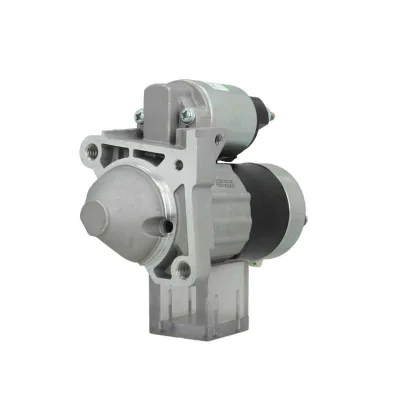


12V 2.5kw 13t Dsn1493 Starter for Toyota for Denso Engine Starter Motor
$40.00 - $55.00
MOQ: 30 Pieces


Comprehensive Sourcing Guide
Strategic Sourcing Guide for Nissan Car Starter Components
The global automotive aftermarket relies heavily on the consistent supply of critical engine starting systems, with the Nissan Car Starter representing a high-volume category for B2B procurement. Buyers entering this market must navigate a complex landscape of technical specifications, supply chain variables, and quality assurance protocols. The following guide synthesizes available market data and industry standards to provide a structured approach for sourcing starter motors, focusing on the specific attributes observed in current listings and the broader requirements for reliable procurement.
Technical Specifications and Component Variability
Understanding the technical diversity of starter motors is the first step in any successful sourcing strategy. The market does not offer a single "universal" starter; rather, it presents a wide array of models tailored to specific engine configurations and vehicle generations. Data from current product listings reveals significant variation in power output, driving mechanisms, and electrical characteristics. For instance, observed specifications include power ratings ranging from 1.2 kW to 1.7 kW, indicating that procurement teams must match the motor's output precisely to the engine's compression ratio and displacement.
The driving type is another critical differentiator. Listings show a mix of technologies, including "Sliding Armature," "Inertia Intermeshing," and "Deceleration" drives. Each type offers distinct advantages regarding engagement speed and gear longevity. A sliding armature design may be preferred for specific high-torque applications, while deceleration drives are often utilized to reduce the rotational speed of the pinion gear before engagement, ensuring smoother operation. Furthermore, the number of teeth on the pinion gear varies, with observed counts of 8 and 9 teeth. This dimension must align perfectly with the engine's flywheel ring gear to prevent mechanical failure.
Electrical parameters are equally vital. The standard voltage for these systems is consistently observed at 12V, yet the internal resistance and DC form differ. Some units are identified as "Permanent Magnet Starter Motors," while others are classified as "Common Starter Motors." Resistance values have been noted around 2.0±0.3Ω, a figure that buyers should verify against their specific electrical system requirements. The spigot diameter, which ensures proper alignment with the engine block, also varies, with observed measurements of 61.0 mm and 76.0 mm. Procurement teams must cross-reference these physical dimensions with the vehicle's service manual to avoid fitment issues.
Compliance, Standards, and Certification Verification
In the B2B automotive sector, compliance is not merely a formality but a prerequisite for market entry and liability protection. While specific certification bodies are not universally mandated for every component, adherence to recognized industry standards is essential. Product listings frequently reference standards such as "Standard" or specific dimensional requirements like "11MM23MM4MM," which likely pertain to mounting flanges or shaft tolerances. However, buyers must exercise caution and not assume that a listed "Standard" designation implies full compliance with international safety regulations without independent verification.
The origin of the product plays a significant role in compliance expectations. A substantial portion of the market data indicates origins in China, specifically from regions like Guangdong, Guangzhou, and Hebei. While these regions are major manufacturing hubs, the diversity in production quality necessitates rigorous due diligence. Buyers should verify that suppliers adhere to ISO 9001 quality management systems and that their products meet the specific emission and safety standards of the destination market. For instance, if the target market is North America, compliance with SAE (Society of Automotive Engineers) standards is critical. Similarly, European buyers should look for E-mark certification or adherence to ECE regulations.
It is important to note that some listings mention "By The Customer Needs" regarding product standards. This suggests a high degree of customization capability but also places the onus on the buyer to define the exact compliance requirements clearly in the purchase order. Without explicit contractual language defining the required standards, a supplier may fulfill the order based on their internal baseline, which might not meet the buyer's regulatory obligations. Therefore, the verification process must include requesting third-party test reports that confirm the product's adherence to the specific standards required for the intended application.
Cost Drivers and Pricing Dynamics
The pricing of Nissan car starters is influenced by a complex interplay of material costs, manufacturing complexity, and supply chain logistics. The observed price range in the market spans from $1 to $110 USD, a wide variance that reflects differences in quality, brand reputation, and technical sophistication. The lower end of this spectrum typically corresponds to generic, non-branded units or those with simpler designs, such as common starter motors with standard driving types. Conversely, the higher price points are often associated with specialized components featuring permanent magnet technology, higher power outputs, or integrated control systems like electromagnetic-operated mechanisms.
Material composition is a primary cost driver. The majority of listings identify "Steel" as the primary material, which is standard for housing and gear components. However, the quality of the steel, the precision of the machining, and the inclusion of copper windings versus aluminum alternatives can significantly impact the final cost. Additionally, the inclusion of specific sub-components, such as the "Zhengpeng" clutch pulley or "Yunyi" rectifier bridge, suggests that brand-name internal parts can command a premium. These branded components often imply higher durability and better performance consistency, which justifies the increased price for fleet managers and OEMs.
Order volume and packaging requirements also affect the unit cost. The observed Minimum Order Quantity (MOQ) ranges from 1 to 50 units. Buyers purchasing small quantities may face higher per-unit costs due to the lack of economies of scale. Conversely, bulk orders can leverage lower pricing tiers. Packaging is another variable; options range from "Individual Carton Into Pallet" to "Neutral Box" or "Bubble Bag and Carton Box." Specialized packaging that protects the component during ocean freight or reduces damage rates can add to the cost but may be necessary for long-haul shipping. Buyers should calculate the total landed cost, including shipping and packaging, rather than focusing solely on the unit price, as damage during transit can negate any initial savings.
Typical Applications and Fitment Considerations
The application of Nissan car starters extends across various vehicle models and engine types, requiring precise matching to ensure operational reliability. The product models listed, such as "HOWO371," "VG1560090001," "12027177," and "23300-VK500," serve as unique identifiers that link specific starter designs to particular engine families. The "23300-VK500" designation, for example, likely corresponds to a specific Nissan engine series, while other alphanumeric codes may represent aftermarket equivalents or cross-references for different manufacturers.
When evaluating applications, buyers must consider the rotational direction and gear specifications. Observed data indicates a "Cw" (Clockwise) rotation for certain models, which is standard for most automotive engines. However, the number of teeth (8 or 9) and the spigot diameter (61.0 mm or 76.0 mm) are critical for physical fitment. A mismatch in these dimensions can lead to catastrophic failure of the starter or the engine's flywheel. Furthermore, the control system type, such as "Electromagnetic-Operated," dictates the wiring harness requirements. Buyers sourcing for fleet maintenance must ensure that the replacement starters are compatible with the existing electrical architecture of the vehicle to avoid the need for extensive rewiring.
The versatility of the product line is evident in the variety of models available, ranging from older designations like "1992-95" to more modern part numbers. This suggests that the market supports both legacy vehicle maintenance and newer model repairs. However, the presence of models like "S114-871" and "72271018" indicates a broad catalog that may include parts for commercial vehicles or specialized equipment. Procurement teams should maintain a robust database of part numbers and cross-reference them with the vehicle identification numbers (VINs) of their fleet to ensure accurate selection.
Supplier Evaluation and Quality Assurance
Selecting the right supplier is paramount in the automotive parts industry, where quality inconsistencies can lead to significant downtime and safety risks. The market data indicates a concentration of suppliers in China, with specific hubs in Guangdong and Hebei. While these regions offer competitive pricing and manufacturing capacity, buyers must implement a rigorous supplier evaluation process. Key criteria should include the supplier's history of delivering consistent quality, their ability to provide traceability for components, and their responsiveness to technical inquiries.
Quality control should be a central pillar of the procurement strategy. Buyers should request detailed quality assurance documentation, including material certificates for the steel components and electrical test results for the motors. The observation of specific resistance values (2.0±0.3Ω) and power ratings (1.2 kW to 1.7 kW) suggests that manufacturers have defined tolerances. A reliable supplier should be able to provide batch testing reports that confirm their products fall within these specified ranges. Additionally, the mention of specific internal components like the "Zhengpeng" clutch pulley implies that some suppliers may use branded sub-assemblies, which can be a proxy for quality. Buyers should verify the authenticity of these claims and ensure that the supplier has a direct supply chain with these component manufacturers.
Packaging standards are also an indicator of supplier professionalism. The variety of packaging options, from "Neutral Packing" to "Colourful Packing" and "Bubble Bag and Carton Box," suggests that suppliers have different levels of maturity in their logistics operations. For international buyers, the "Ocean Freight" and "Indivisual Carton Into Pallet" options are critical for ensuring that products arrive in pristine condition. Suppliers who invest in robust packaging demonstrate a commitment to minimizing damage and maintaining product integrity throughout the supply chain.
Long-Term Procurement and Supply Chain Resilience
Sourcing Nissan car starters is not a one-time transaction but a long-term strategic partnership that requires careful planning for supply chain resilience. The observed lead times and MOQs provide insight into the flexibility of the supply chain. With MOQs ranging from 1 to 50 units, buyers have the option to start with small test orders to validate quality before committing to larger volumes. This approach mitigates the risk of receiving defective batches and allows for the establishment of a performance baseline.
Long-term considerations also include the stability of the product specifications. The market shows a mix of "Standard" and "By The Customer Needs" standards, indicating that some suppliers offer customization. For buyers with large fleets, establishing a long-term contract with a supplier who can provide consistent, customized solutions is advantageous. This ensures that replacement parts remain compatible with aging vehicles and that the supply chain is less susceptible to market fluctuations.
Furthermore, buyers should consider the total cost of ownership, which includes not just the purchase price but also the cost of installation, potential downtime, and warranty claims. High-quality starters with proven durability, such as those with permanent magnet technology or specific driving types, may have a higher upfront cost but can result in lower long-term expenses due to reduced failure rates. By focusing on quality and reliability rather than just price, procurement teams can build a more resilient supply chain that supports the operational continuity of their customers' vehicles.
FAQs
What are the standard voltage and power ratings for nissan car starters?
The standard voltage is 12V with power ratings ranging from 1.2 kW to 1.7 kW. Buyers must match these electrical outputs to their specific engine compression ratios to ensure reliable starting performance and prevent system overload.
Which driving types are available for Nissan Car Starter motors?
Available driving types include Sliding Armature, Inertia Intermeshing, and Deceleration mechanisms. Each type offers distinct engagement speeds and gear longevity, so selection depends on the specific application requirements and desired operational smoothness.
Can I find nissan car starters with custom specifications?
Yes, customization is available to meet specific customer needs. Buyers should explicitly define their required standards and dimensions in the purchase order to ensure the supplier produces units that align with their exact technical requirements.
How do spigot diameters vary across Nissan Car Starter models?
Observed spigot diameters vary between 61.0 mm and 76.0 mm. Procurement teams must cross-reference these physical dimensions with the vehicle service manual to avoid fitment issues and potential mechanical failure during installation.
What is the typical price range for Nissan Car Starter units?
The observed price range spans from 1 to 110 USD depending on quality and specifications. Lower prices often reflect generic designs, while higher costs correspond to specialized components like permanent magnet motors or branded internal parts.
Which packaging options are used for shipping nissan car starters?
Packaging options include Ocean Freight, Individual Carton Into Pallet, Neutral Box, and Bubble Bag with Carton Box. The choice affects protection during transit, so buyers should calculate total landed costs including shipping and potential damage rates.