Source No Heat Portable Hair Curls for Salon, Spa, and Home
Find 30 verified options for No Heat Portable Hair Curls suitable for salon, spa, and household use. Compare models like LD2201 and BOJF100, featuring ceramic or plastic materials, manual and automatic types, and customizable packaging to meet your specific sourcing needs.
Key considerations
Products List


High Satisfaction Automatic USB Rechargeable Cordless Curling Iron Portable Hair Curler
$6.27 - $6.29
MOQ: 159 Pieces

Multiple Repurchase Pink Light Heated Styling Iron Brush Ceramic Electric Hair Curler
$8.54 - $8.57
MOQ: 117 Pieces
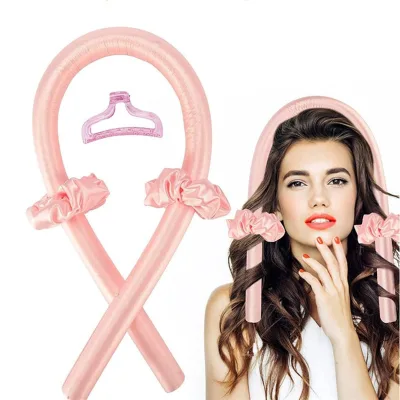


Fully Automatic Electronic Negative Ion Non Damaging and Long-Lasting Portable Hair Curler
$6.15 - $6.21
MOQ: 1000 Pieces

Big Wave Electric Rotation High Value Does Not Hurt The Hair Automatic Curling Iron Curling
$0.84 - $0.87
MOQ: 500 Pieces
Comprehensive Sourcing Guide
No Heat Portable Hair Curls Sourcing Guide
Procurement teams must first distinguish between manual styling tools and automated devices when sourcing no-heat portable hair curls. The observed market data indicates a clear split between manual crimpers and automatic curling mechanisms, with specific models like the LD2201 and LD2127 representing distinct operational categories. Buyers should verify whether the product relies on mechanical tension or passive heat retention, as the supplied facts confirm the existence of both manual and automatic types in the current inventory.
Understanding the intended application environment is critical for selecting the correct unit. The available data explicitly lists "Salon" and "SPA" as primary use cases, suggesting that professional-grade durability is a key requirement for many listings. However, other entries indicate "Household" usage alongside professional applications, meaning buyers must clarify if the tool needs to withstand high-frequency commercial use or if it is designed for occasional personal styling.
Product Scope and Observed Listing Signals
The product scope for no-heat portable hair curls encompasses a variety of form factors, ranging from handheld crimpers to specialized styling attachments. Observed listings reveal specific attributes such as "Mini Hairs Curler Hair Crimper" and devices featuring "Diffuser & Concentrator" nozzles, which serve different styling functions. Buyers should note that materials vary significantly, with some units constructed from ceramic for heat retention while others utilize plastic or acrylic components, directly impacting the final product's feel and performance.
Listing signals also highlight significant customization potential, with many suppliers offering options for custom logos, colors, and packaging. The data shows that colors can range from standard pink and black to champagne and burgundy, allowing brands to align products with specific aesthetic trends. Furthermore, the availability of "Customized Gift Box" packaging suggests that these items are frequently marketed as premium gifts, requiring buyers to consider the unboxing experience as part of the product specification.
Technical Specifications to Verify
Buyers must rigorously verify the physical dimensions and weight of the units to ensure portability meets their logistical needs. The observed specifications include compact sizes such as 1633cm and 1723cm, alongside larger units measuring 2705070mm. Weight is another critical factor, with one observed unit weighing 52g, which is ideal for travel, while other models may be heavier depending on their internal mechanism. Confirming these exact measurements prevents mismatches between the ordered product and the intended retail packaging or shipping constraints.
Electrical and mechanical specifications require careful attention, particularly regarding voltage and power consumption. While some listings specify a voltage range of 110-240V 50-60Hz, others describe the product as purely manual or non-electric. For models that do require power, the observed wattage ranges from 500 to 1000 Watts, which is relevant for devices that may incorporate heating elements or motors. Buyers should confirm whether the "Ionic" feature mentioned in the data is a standard inclusion or a specific model attribute to avoid performance discrepancies.
Compliance and Safety Documentation
Safety compliance is paramount when sourcing electrical or mechanical styling tools, even if the primary mechanism is non-heat. The presence of voltage specifications in the data implies that certain models require electrical safety certifications to operate safely in international markets. Buyers should request documentation proving that the electrical components meet the safety standards of the destination country, as the supplied facts do not explicitly confirm universal compliance status for all listed models.
For non-electric or manual devices, material safety becomes the primary compliance concern. The observed materials include ceramic, plastic, and acrylic, which must be verified for toxicity and durability. While the background notes mention OEKO-TEX, this standard is not explicitly linked to the specific product facts provided. Therefore, procurement teams should independently verify that all materials, especially those in contact with hair and skin, meet relevant chemical safety regulations without assuming certification based on general industry knowledge.
Cost Drivers and Commercial Terms
Cost structures for no-heat portable hair curls are heavily influenced by the level of customization and the complexity of the manufacturing process. The data indicates a wide MOQ range from 1 to 3000 pieces, suggesting that unit costs will vary significantly based on order volume. Buyers seeking lower prices should target high-volume orders, while those requiring small batches may face higher per-unit costs due to the setup fees associated with custom packaging and branding.
Packaging and branding requirements also drive commercial terms. The availability of "Customized Gift Box" and "Standard Package" options means that packaging costs can fluctuate based on the buyer's choice. Additionally, the acceptance of custom logos and colors adds a layer of complexity to the production line. Buyers must negotiate these variables early, as the inclusion of specific colors like pink, black, or champagne, along with custom branding, can impact the final landed cost and lead time.
Supplier Qualification and Quality Control
Supplier qualification should focus on verifying the consistency of product attributes across different batches. The data shows multiple model numbers, such as LD2201, LD2127, and BOJF100, indicating that suppliers may offer a diverse portfolio. Buyers must ensure that the specific model ordered matches the exact specifications provided in the contract, particularly regarding the plate type, material composition, and operational mode. Inconsistent quality between different model lines can lead to customer dissatisfaction and returns.
Quality control protocols must address the mechanical integrity of the devices, especially for automatic models. The distinction between "Disposable" and "Non-Disposable" items suggests that durability expectations vary by product type. For reusable units, buyers should implement strict testing procedures to ensure that the manual or automatic mechanisms function correctly over repeated use. Inspecting the finish of ceramic coatings and the stability of plastic components is essential to maintain the professional reputation of the brand.
Long-Term Procurement Checks
Long-term procurement success depends on maintaining a stable supply chain for replacement parts and consistent product quality. Buyers should establish clear communication channels with suppliers to monitor any changes in material sourcing or manufacturing processes that could affect the product's performance. The observed origin locations, such as Zhejiang, China, provide a baseline for logistics planning, but buyers must remain vigilant about potential supply chain disruptions that could impact lead times.
Continuous market monitoring is necessary to adapt to evolving consumer preferences in the hair care sector. The data reflects trends such as the "South Korean" style and specific color palettes, which may shift over time. Procurement teams should regularly review product listings to identify new features or design updates that could enhance the product line. By staying informed about these trends, buyers can ensure their inventory remains competitive and aligned with current market demands.
FAQs
What materials are used for No Heat Portable Hair Curls?
The products utilize ceramic, plastic, and acrylic combined with fabric materials. Ceramic coating plates are common for heat styling tools, while plastic and acrylic are used for manual crimpers and curlers. These materials ensure durability and safe handling during the hair styling process for both salon and household use.
Can these hair tools be customized for branding?
Yes, customization is available for many of these hair styling products. Buyers can request customized gift boxes, standard packaging, or specific color options like pink, black, or champagne. Logos are also acceptable for branding purposes, allowing businesses to tailor the appearance and packaging to their specific market needs and identity.
What is the typical MOQ for these hair curlers?
The minimum order quantity varies significantly by product model. Some items have an MOQ of just 100 pieces, while others require 3000 pieces. Buyers should check the specific model details, as the range spans from 1 to 3000 units depending on the manufacturer's production capacity and the specific product type selected.
Where are these hair styling products manufactured?
These products are primarily manufactured in Zhejiang, China, and other regions within China. The origin is consistently listed as China for the various models, including manual crimpers and electric curlers. This location indicates the supply chain hub for these specific hair care attributes and styling tools.
Are these hair tools suitable for professional salon use?
Yes, many of these tools are explicitly designed for professional salon and spa applications. They feature attributes like ionic technology, centrifugal blowing modes, and specific voltage ranges suitable for professional environments. Additionally, some models are also suitable for household use, offering versatility for both commercial and personal hair care routines.
What specifications are available for these portable hair curlers?
Specifications vary by model, with sizes ranging from 16x3x3cm to 270x50x70mm. Some models include voltage standards of 110-240V for global compatibility. Others are manual, non-electric devices with specific dimensions like 17x2x3cm. Buyers should review the exact model number to confirm the physical size and technical specifications required.