Source Non Tarnish Silver Finger Rings for Wedding Gift Decoration
Compare 30 listings of Non Tarnish Silver Finger Rings available from Guangdong suppliers. Buyers can evaluate options in 925 sterling silver and stainless steel with customization services for wedding, gift, and decoration purposes.
Key considerations
Products List


Cross Open Rings for Stainless Steel Simple Trendy Adjustable Finger Rings Jewelry
$0.80 - $1.20
MOQ: 200 Pieces
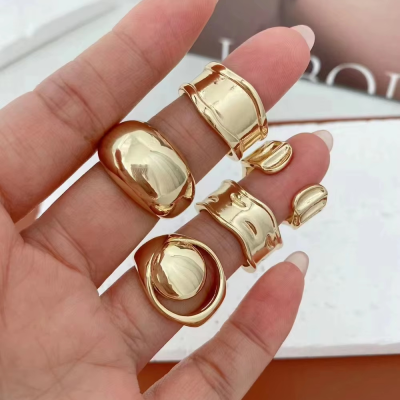


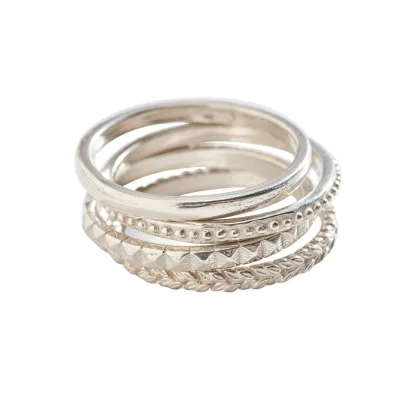


Comprehensive Sourcing Guide
Strategic Sourcing Guide for Non-Tarnish Silver Finger Rings
The global B2B market for non-tarnish silver finger rings presents a complex landscape where material integrity, aesthetic durability, and supply chain reliability intersect. For procurement professionals, the term "non-tarnish" implies a specific set of metallurgical properties and surface treatments designed to resist oxidation and discoloration over time. However, the actual product data available reveals a diverse array of materials, including 925 Sterling Silver and Stainless Steel, alongside various fabrication processes. A successful sourcing strategy requires distinguishing between these material classes, understanding the specific customization capabilities offered by manufacturers, and rigorously evaluating the technical specifications that define product longevity. This guide provides a structured approach to navigating this market, focusing on evidence-based criteria rather than marketing claims.
Material Composition and Metallurgical Standards
The foundation of any non-tarnish ring procurement lies in the verification of the base material. The observed product data indicates a bifurcation in material composition, with listings explicitly citing "925 Sterling Silver" and "Stainless Steel." These are distinct categories with different sourcing implications. 925 Sterling Silver is an alloy containing 92.5% pure silver, often requiring rhodium plating or specific alloying elements to achieve the "non-tarnish" characteristic. Conversely, Stainless Steel is an iron-based alloy known for inherent corrosion resistance, often cited in the data as the material for "Item: Stainless Steel Ring."
When sourcing, buyers must verify the exact alloy composition rather than relying solely on the "Silver" descriptor. The data shows that some products are described as having "Gold Plating" or "Casting" processes, which suggests that the non-tarnish quality may be derived from surface treatments rather than the bulk material alone. For instance, a ring labeled with "Craft: Gold Plating" on a "925 Sterling Silver" base relies on the plating thickness for its tarnish resistance. If the plating wears off, the underlying silver may oxidize. Therefore, procurement specifications must explicitly define whether the non-tarnish property is intrinsic to the metal (as with high-grade stainless steel) or dependent on a plating process (as with gold-plated silver).
Fabrication Processes and Surface Treatments
The durability of a non-tarnish ring is heavily influenced by its fabrication processing. The supplied facts highlight several distinct manufacturing methods, including "Gem Mounting," "Polishing," and "Casting." The "Casting" process, specifically noted with a "Cast Mop Black" craft process in some listings, suggests a method where the metal is poured into a mold, which can affect the surface porosity and subsequent plating adhesion. High-quality non-tarnish rings often undergo rigorous "Polishing" to remove surface imperfections that could trap moisture and accelerate oxidation.
Furthermore, the data indicates a "Fabrication Processing" of "Gem Mounting," which introduces a critical variable: the setting method. If gemstones are mounted using prongs or bezels, the tightness of the setting and the quality of the metal surrounding the stone are vital. A loose setting can allow water and air to penetrate, leading to tarnish at the base of the stone. Buyers should request technical drawings or process flow charts that detail the polishing sequence and the specific type of plating used. The presence of "Craft: Gold Plating" in the data suggests that the thickness of this layer is a key performance indicator. Procurement teams must specify minimum plating thickness requirements in microns to ensure the ring maintains its luster during the intended usage period, whether for "Wedding," "Gift," or "Decoration."
Customization Capabilities and Design Specifications
A significant portion of the market for these rings is driven by the need for customization. The data confirms that "Customization: Available" and "Logo: Customized Logo" are standard offerings, with many suppliers providing "Logo Service: Offered." This allows brands to create unique identities for their jewelry lines. The "Style" attributes observed range from "Simple" and "Fashion" to "Retro," indicating a wide design spectrum. Buyers must align their customization requests with the manufacturer's capabilities. For example, "Gem Mounting" requires a different customization workflow than "Casting."
The "Shape" attributes listed include "Square" and "Round," which dictates the tooling and mold requirements. Customizing a "Square" ring may involve different die costs compared to a "Round" ring. Additionally, the "Product Name" often includes terms like "New Fashion Earings" (noting a potential data inconsistency regarding rings vs. earrings, which requires clarification) or "Prime Ring" and "Cocktail Ring." These classifications affect the target demographic and the complexity of the design. The "Gender" attribute varies between "Unisex," "Female," and "Male," suggesting that sizing and ergonomic design must be tailored to the specific user group. Buyers should ensure that the supplier's customization capabilities cover the full range of required shapes, styles, and gender-specific sizing before committing to an order.
Compliance, Safety, and Allergen Considerations
In the B2B jewelry sector, compliance with safety standards is paramount, particularly regarding skin contact. The data explicitly mentions "Allergic?: No," which is a critical attribute for buyers targeting sensitive skin markets. This claim implies that the materials used, such as the "Stainless Steel" or "925 Sterling Silver," are free from common allergens like nickel or lead. However, without specific certification documents, this remains an observation rather than a guaranteed standard.
Buyers must verify that the "925 Sterling Silver" meets international purity standards and that any plating materials are compliant with regulations such as REACH in Europe or CPSIA in the United States. The "prod_standard" field in the data lists measurements like "45cm+5cm" and "578cm," which appear to refer to packaging or dimensional tolerances rather than material safety standards. This discrepancy highlights the need for buyers to request independent third-party test reports. The "Feature: High Quality" claim is a marketing statement that must be substantiated by lab results confirming the absence of harmful substances. Procurement contracts should mandate that all shipments include a Certificate of Analysis (CoA) verifying the material composition and allergen-free status.
Cost Drivers and Order Volume Dynamics
Understanding the cost structure of non-tarnish rings requires analyzing the relationship between material, customization, and order volume. The observed "MOQ" (Minimum Order Quantity) ranges from "10-200" to specific figures like "50PS" and "100PCS." This variation suggests that suppliers have different thresholds for accepting custom orders. The "Selling Units" are listed as "Single Item," which may indicate that the MOQ applies to the total order value rather than individual units, or it could reflect a drop-shipping model.
The "Place of Origin" is consistently "Guangdong, China" or "China," a region known for a dense network of jewelry manufacturers. This location offers competitive pricing but requires rigorous quality control. The "Service: OEM/ODM" attribute indicates that suppliers are willing to handle both Original Equipment Manufacturing and Original Design Manufacturing. OEM orders typically have lower unit costs due to standardized production runs, while ODM orders involve higher costs due to design development and mold creation. The "Craft" processes, such as "Gold Plating" and "Casting," also influence the final price. Buyers should negotiate based on the total cost of ownership, including the cost of rework or returns due to tarnish issues, rather than focusing solely on the unit price.
Supplier Evaluation and Quality Control Protocols
Evaluating a supplier for non-tarnish rings requires a multi-faceted approach. The data shows a "Product Name" of "New Fashion Earings" alongside ring specifications, which necessitates a verification step to ensure the supplier produces the exact item ordered. A robust supplier evaluation should include a site audit to inspect the "Fabrication Processing" lines. Buyers should look for evidence of "Polishing" stations and plating tanks to verify the claimed processes.
Quality control protocols must be established before production begins. This includes defining acceptance criteria for "Color" variations, such as "Silver," "White," and "Black." The "prod_packing" methods, listed as "OPP Bag" and "PP Bag," are critical for preventing damage during transit. Buyers should specify packaging requirements that include anti-tarnish strips or sealed environments to maintain the product's condition. The "Usage" attributes, including "Wedding," "Gift," and "Decoration," imply different durability requirements. A wedding ring, for instance, is subjected to daily wear and requires a higher standard of finish than a decorative piece.
Long-Term Procurement and Supply Chain Resilience
Sourcing non-tarnish rings is not a one-time transaction but a long-term partnership. The "Service: OEM/ODM" capability suggests that suppliers can adapt to changing market trends, such as the shift from "Simple" to "Retro" styles. However, buyers must ensure that the supplier has the capacity to maintain consistent quality over time. The "Standard" attributes like "US5#-US15#" indicate a range of sizes that must be consistently available.
To mitigate supply chain risks, buyers should diversify their supplier base and maintain a buffer stock of best-selling items. The "Lead time" is not explicitly provided in the data, but the "MOQ" and "Service" attributes suggest that production cycles may vary. Buyers should establish clear communication channels to monitor production status and address any issues with "Customized Logo" application or "Gem Mounting" quality. Long-term success depends on the ability to scale orders up or down while maintaining the "High Quality" standard and ensuring that the "Non-tarnish" properties remain intact throughout the product lifecycle.
Comparative Analysis of Product Attributes
To facilitate decision-making, the following table summarizes the key attributes observed in the market data, highlighting the distinctions between different product types and their implications for procurement.
| Attribute Category | Observed Values | Procurement Implication |
|---|---|---|
| Material | 925 Sterling Silver, Stainless Steel | Verify alloy purity; distinguish between intrinsic and plated resistance. |
| Craft Process | Gold Plating, Casting, Polishing, Gem Mounting | Assess plating thickness and setting security for durability. |
| Customization | Logo Customized, OEM/ODM, Customized Logo | Confirm design capabilities and minimum order thresholds. |
| Shape | Square, Round | Determine tooling requirements and mold costs. |
| Usage | Wedding, Gift, Decoration | Define durability standards based on end-use intensity. |
| Packaging | OPP Bag, PP Bag | Specify anti-tarnish packaging to prevent transit oxidation. |
| Origin | Guangdong, China | Factor in logistics and potential quality control audits. |
| Allergy Status | No (Claimed) | Require third-party testing for nickel and lead content. |
This comparative analysis underscores the need for precise specification in procurement contracts. By aligning technical requirements with observed market capabilities, buyers can secure high-quality non-tarnish silver finger rings that meet both aesthetic and functional expectations. The data suggests a mature market with diverse options, but success relies on the buyer's ability to navigate the nuances of material science, manufacturing processes, and supplier reliability.
FAQs
What materials are used for Non Tarnish Silver Finger Rings?
Products are primarily made from 925 Sterling Silver or Stainless Steel. Some items feature gold plating or casting processes to enhance durability and appearance for wedding or gift usage.
Can I get a customized logo on these rings?
Yes, customized logo services are available for most listings. Buyers can request specific designs for styles like square or round rings, often with OEM or ODM support from Chinese manufacturers.
What is the minimum order quantity for these rings?
Minimum order quantities vary between 10 and 200 pieces depending on the supplier. Specific listings show thresholds like 50 pieces or 100 pieces for stainless steel items with custom features.
Where are these rings manufactured?
The products originate from Guangdong, China. This region hosts factories capable of producing various styles including simple, fashion, and retro designs with different packaging options like OPP or PP bags.
Are these rings safe for sensitive skin?
Some listings explicitly state the rings are not allergic, indicating nickel-free materials. Stainless steel and 925 sterling silver are common choices, though independent testing is recommended for compliance.
What shapes are available for these rings?
Available shapes include square and round designs. These forms are produced using processes like gem mounting or polishing to meet specific style requirements for male, female, or unisex markets.
How are these rings packaged for shipping?
Items are typically packed in OPP bags or PP bags. This packaging protects the rings during transit while maintaining the quality of the silver or stainless steel finish until delivery.