Source Orange Catfish Fishing Line for River, Lake, Ocean
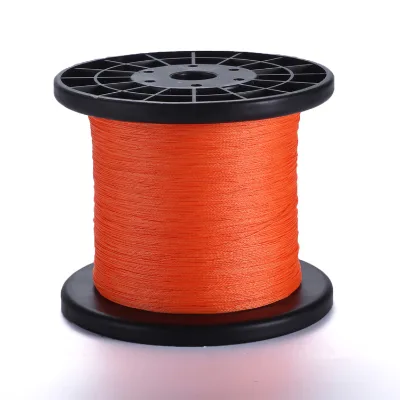
Find and compare 30 listings for Orange Catfish Fishing Line suitable for river, lake, and ocean beach fishing. Buyers can review specifications like PE 8X braided lines, 4-strand weaves, and strength ratings from 30lb to 70lb offered by manufacturers in China.
Key considerations
Products List








Comprehensive Sourcing Guide
Sourcing Guide for Orange Catfish Fishing Line Procurement
Technical Specifications and Material Composition
When sourcing fishing line specifically for catfish applications, the primary focus must be on the material composition and structural integrity of the product. The core keyword "Orange Catfish Fishing Line" implies a need for high visibility in murky waters, which is a common characteristic of catfish habitats. Based on the available product data, the dominant material for these lines is Polyethylene (PE), often marketed as PE Braided Line. This material choice is critical because PE offers a high strength-to-diameter ratio, allowing anglers to use thinner lines that are less visible to fish while maintaining the tensile strength required to land large catfish.
The structural configuration of the line is equally important. The data indicates that these lines are typically braided with specific strand counts, most commonly 4 strands or 8 strands. The 4-strand configuration, often associated with models like "PE 4X," provides a balance of flexibility and knot strength suitable for general freshwater and saltwater catfishing. Conversely, the 8-strand configuration, linked to models such as "PE 8X," generally offers enhanced abrasion resistance and a smoother casting profile, which is beneficial when fishing in heavy cover or rocky environments. The color orange is a functional attribute for catfish fishing, as it provides high contrast against the often silty or dark bottoms where catfish feed.
Length specifications vary significantly depending on the intended use. The product data lists standard lengths such as 50 meters and 100 meters, with some options extending to "etc." for custom requirements. For catfish fishing, which often involves deep drops or long drifts, the ability to source lines in longer lengths or custom cuts is a vital specification. The diameter of the line is another critical metric; standards such as 0.28mm and 0.44mm are observed in the market. Buyers must verify that the diameter aligns with their reel capacity and the target fish size, as catfish can exert significant force during the fight.
Compliance, Certification, and Safety Standards
In the B2B procurement of fishing tackle, verifying compliance and certification is essential for ensuring product safety and marketability. The supplied facts indicate that certain products carry CE and ISO9001 certifications. These certifications are not merely marketing terms but represent adherence to specific quality management systems and safety standards. ISO9001, for instance, confirms that the manufacturer has a documented quality management system in place, which is crucial for consistent production of braided lines. The CE mark suggests compliance with European health, safety, and environmental protection standards, which is a significant factor if the buyer intends to distribute these lines in the European market.
However, it is important to note that certifications are not universal across all listed products. The data explicitly links CE and ISO9001 to specific material types, such as Nylon, while the primary orange catfish lines are Polyethylene. Buyers must therefore exercise caution and not assume that every PE braided line listed carries these certifications. The procurement process requires direct verification of the certificate of analysis or the specific certification document for the batch being ordered. This verification ensures that the line meets the regulatory requirements of the destination market and does not contain prohibited substances.
Furthermore, the product data mentions a standard of "0.28mm" and "0.44mm" under the "prod_standard" attribute. While these appear to be diameter specifications, in a regulatory context, they may also relate to testing standards for tensile strength and elongation. Buyers should request test reports that validate these dimensional standards against industry norms. The absence of specific ASTM or ISO fishing line standards in the provided text means that buyers cannot assert a specific standard without further supplier confirmation. Instead, the procurement strategy should involve a clause in the purchase agreement that mandates the supplier to provide test results verifying the line's strength and diameter against the agreed-upon specifications.
Cost Drivers and Pricing Dynamics
Understanding the cost drivers for orange catfish fishing lines is essential for effective budgeting and negotiation. The observed price range in the market spans from $0.01 to $48.43 USD. This wide variance is driven by several factors, including the number of strands, the total length of the line, the packaging type, and the brand value. The lower end of the price spectrum likely corresponds to shorter lengths, single-strand or 4-strand configurations, and basic packaging. In contrast, the higher price points are associated with premium 8-strand lines, longer lengths (such as 100 meters or more), and specialized packaging like carton boxes that offer better protection during transit.
The Minimum Order Quantity (MOQ) is another significant cost driver. The data shows an MOQ range from 2 to 30,000 units. For small retailers or startups, an MOQ of 2 or 100 pieces allows for low-risk entry into the market. However, larger buyers seeking economies of scale may find that the per-unit cost decreases significantly as the order volume approaches the 30,000-unit threshold. The "Negotiable" and "Customer-Made Package" attributes also play a role in pricing. Custom packaging, such as branded boxes or specific carton dimensions (e.g., 25x11x15 cm), will incur additional tooling and labor costs, which are passed on to the buyer.
Payment terms and trading conditions also influence the final landed cost. The available payment methods include Wire Transfer, Paypal, L/C, and Alipay, offering flexibility for different buyer profiles. The trading terms range from EXW (Ex Works) to DDP (Delivered Duty Paid). Choosing EXW places the responsibility and cost of shipping and insurance on the buyer, while DDP simplifies the process but includes these costs in the product price. Buyers must calculate the total cost of ownership, including freight, insurance, and duties, rather than focusing solely on the unit price. The "High Strength" feature and "High Quality" designation suggest that premium pricing is justified by performance, but buyers must validate these claims through samples before committing to large orders.
Typical Applications and Usage Scenarios
The versatility of orange catfish fishing lines makes them suitable for a wide range of fishing environments. The product data explicitly lists usage scenarios including "Agriculture," "Outdoor Gear," and "Outdoor Fishing." For catfish specifically, the line is designed for use in streams, rivers, lakes, ocean beaches, ocean boats, reservoir ponds, and ocean rock fishing. The "Floating Line" characteristic is particularly relevant for surface or near-surface fishing techniques, which can be effective for catfish in certain conditions. However, catfish are often bottom feeders, so the buoyancy characteristic must be understood in the context of the specific fishing method; a floating line might be used in conjunction with a sinker to reach the bottom.
The "Position" attribute highlights the line's suitability for diverse terrains, from "Stream" and "River" to "Ocean Beach" and "Ocean Rock Fishing." This indicates that the line possesses the necessary abrasion resistance to withstand contact with rocks, logs, and other underwater debris common in catfish habitats. The "8 Strands" and "4 Strands" configurations offer different levels of abrasion resistance, with the 8-strand option generally being more durable for heavy-duty applications. The "High Strength" feature, with specific mentions of 30lb and 70lb ratings, confirms that these lines are engineered to handle the powerful runs of large catfish.
The "Combo Set Offered" attribute, noting a quantity of ≥6, suggests that these lines are often sold in sets, which may include different lengths or strengths to cater to various fishing needs. This is a practical consideration for buyers stocking tackle shops, as offering a range of options allows customers to select the line best suited for their specific fishing style. The "Level" shape attribute implies that the line is designed to lay flat on the reel spool, reducing the risk of tangles and ensuring smooth casting, which is essential for maintaining control during the fight with a large catfish.
Supplier Evaluation and Origin Verification
Evaluating suppliers for orange catfish fishing lines requires a thorough assessment of their origin, capabilities, and reliability. The product data consistently identifies the place of origin as China, with specific mentions of Guangdong as a manufacturing hub. Guangdong is known for its robust textile and fishing tackle industry, making it a logical source for PE braided lines. However, the presence of multiple product models (e.g., PE 4X, PE 8X, X9, X4, FL-1, FL-2, FL-3) from the same origin suggests a diverse product portfolio. Buyers should verify that the supplier has dedicated production lines for the specific models they intend to purchase to ensure quality consistency.
The "OEM/ODM: Welcome" attribute indicates that suppliers are open to custom branding and manufacturing. This is a significant advantage for buyers looking to build their own brand or customize products for specific markets. However, OEM/ODM capabilities require a higher level of supplier engagement and quality control. Buyers should assess the supplier's ability to manage custom packaging, branding, and specific technical requirements. The "Customization: Available" attribute further supports this, suggesting that buyers can request specific lengths, colors, or packaging configurations.
When evaluating suppliers, buyers should also consider the "Ships From: China" and "Location: Sea/River" attributes. These indicate the logistical capabilities of the supplier. A supplier that can ship directly from the port of origin with a track record of handling fishing line exports is preferable. The "Package: Carton Box" and "Single gross weight: 3.0 kg" details provide insight into the shipping logistics. Buyers must ensure that the packaging is robust enough to protect the line during transit, especially for international shipments where humidity and temperature fluctuations can affect the product.
Quality Control and Long-Term Procurement Considerations
Quality control is paramount in the procurement of fishing lines, as the failure of a line during a catch can result in the loss of the fish and potential damage to the fishing gear. The "Quality: High Quality" attribute is a common claim, but buyers must verify this through rigorous testing. The "Strength: 30lb" and "70lb" specifications provide a baseline for tensile strength, but buyers should request independent test reports to confirm these values. The "Single package size: 25X11X15 cm" and "Single gross weight: 3.0 kg" are useful for planning storage and shipping, but they do not guarantee the internal quality of the line.
Long-term procurement considerations involve building a sustainable relationship with suppliers who can deliver consistent quality over time. The "Payment Term" options, including L/C (Letter of Credit), offer financial security for large orders. The "Trading Term" flexibility, ranging from Fob to DDP, allows buyers to manage their supply chain logistics effectively. Buyers should also consider the "Min Order Quantity" of 100PCS as a benchmark for initial orders, balancing the need for inventory with the risk of overstocking.
The "With Ruler or Not: No" attribute suggests that the line does not come with a built-in measuring device, which is typical for braided lines. Buyers should ensure that their distribution strategy includes clear labeling of line length and strength to avoid customer confusion. The "Brand: Haohai" is a specific brand mentioned in the data, but buyers should not rely on a single brand for their entire supply chain. Diversifying suppliers and product models can mitigate risks associated with supply chain disruptions or quality issues.
Strategic Sourcing and Market Alignment
Aligning sourcing strategies with market demands is crucial for the success of Orange Catfish Fishing Line procurement. The "Category: BRAIDED LINE" classification places these products in a competitive segment where performance and price are key differentiators. The "Feature: High Strength" and "Material: Polyethylene" are the primary selling points that buyers should emphasize in their marketing. The "Usage: Agriculture, Outdoor Gear" and "Outdoor Fishing" attributes suggest that these lines have applications beyond just catfish fishing, potentially expanding the market reach.
Buyers should leverage the "Customization: Available" and "OEM/ODM: Welcome" attributes to differentiate their products in the market. Offering custom colors, lengths, or packaging can help capture niche segments of the fishing community. The "Location: Sea" and "Location: River" attributes indicate that the lines are versatile for both freshwater and saltwater environments, which is a significant advantage for suppliers targeting a global market.
In conclusion, sourcing orange catfish fishing lines requires a detailed understanding of the technical specifications, compliance requirements, cost drivers, and supplier capabilities. By focusing on the core attributes of Polyethylene material, high strand counts, and high strength, buyers can identify products that meet the demanding needs of catfish anglers. The provided data offers a solid foundation for making informed procurement decisions, but continuous verification and quality control are essential to ensure long-term success in the market.
FAQs
What material is used for orange catfish fishing lines?
The primary material is Polyethylene, often marketed as PE Braided Line. This material offers a high strength-to-diameter ratio, allowing for thinner lines that remain less visible to fish while maintaining the tensile strength required for large catfish.
Which strand configurations are available for these lines?
Available configurations include 4 strands and 8 strands. The 4-strand option provides flexibility suitable for general fishing, while the 8-strand configuration offers enhanced abrasion resistance and a smoother casting profile for heavy cover or rocky environments.
Can buyers request custom packaging for these fishing lines?
Yes, customization is available including customer-made packages. Buyers can negotiate specific packaging types such as carton boxes, with dimensions like 25x11x15 cm, to suit their branding or logistical needs during international shipping.
What certifications do these fishing line products hold?
Some products carry CE and ISO9001 certifications, though these are linked to specific material types like Nylon. Buyers must verify certificates for the specific Polyethylene batch to ensure compliance with European safety and quality management standards.
How does the minimum order quantity vary for these lines?
The minimum order quantity ranges from 2 to 30,000 units depending on the supplier and product model. Smaller retailers can start with low MOQs, while larger buyers may find better per-unit costs at higher volume thresholds.
What are the typical strength ratings for these braided lines?
Observed strength ratings include 30lb and 70lb options. These ratings confirm the lines are engineered to handle the powerful runs of large catfish, with the specific rating chosen based on the target fish size and fishing conditions.