Source Outdoor Tempered Glass Padel Court for Training, Competition, and Events
Find 30 options for an Outdoor Tempered Glass Padel Court designed for training, competition, and events. Compare specifications such as steel construction, glass thickness, and canopy features to select the right facility for your needs.
Key considerations
Products List


Professional Padel Court Supplier Indoor Outdoor Panoramic Padel Court
$18.88 - $55.00
MOQ: 1 Square Meters


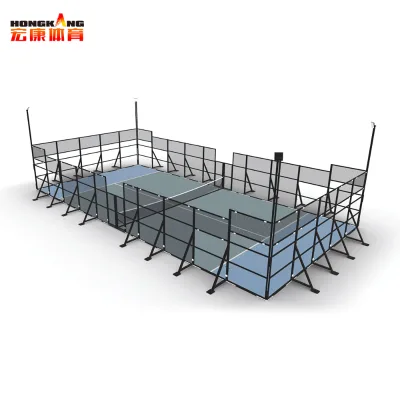


Heavy-Duty Padel Court Paddle Court with 3000mm Tempered Glass and Steel
$8900.00 - $9999.00
MOQ: 1 Pieces

Innovative Padel Court Paddle Court with 3000mm Tempered Glass and Steel
$8900.00 - $9999.00
MOQ: 1 Pieces

Outdoor Panoramic Padel Court with Drainage Holes and Anti-Scratch Tempered Glass
$7250.00 - $12800.00
MOQ: 2 Sets
Comprehensive Sourcing Guide
Outdoor Tempered Glass Padel Court Sourcing Guide
Sourcing an Outdoor Tempered Glass Padel Court requires a disciplined approach to balancing structural integrity, surface performance, and commercial viability. The modern padel market has shifted significantly toward permanent installations that utilize tempered glass for the back and side walls, offering superior durability and a professional aesthetic compared to traditional mesh fencing. Buyers must navigate a complex supply chain that spans from raw material selection to final installation, ensuring that every component meets the rigorous demands of high-impact sports. This guide provides a structured framework for evaluating suppliers, verifying technical specifications, and managing commercial risks associated with these specialized sporting infrastructure projects.
The procurement process begins with a clear definition of the court’s intended use, whether for competitive tournaments, professional training, or recreational facility management. The observed market data indicates a wide variance in product offerings, ranging from basic modular units to fully customized panoramic structures. Buyers should prioritize suppliers who demonstrate transparency in their manufacturing processes and provide detailed technical documentation. Understanding the distinction between standard factory models and custom-engineered solutions is critical, as the latter often involves longer lead times and higher initial costs but offers tailored fit for specific site constraints.
Product Scope and Observed Listing Signals
The current market landscape for outdoor padel courts reveals a diverse array of product configurations, primarily distinguished by their structural materials and surface technologies. High-confidence data points to the prevalence of high-grade steel frames combined with tempered glass panels, a combination that ensures stability and safety for players. Listings frequently highlight models such as the LDK2019 and LDK20021, which represent different structural approaches to the court enclosure. Additionally, products like the CC-BS07 and CH-PC series indicate a segmentation between standard fixed installations and potentially more specialized or modular variants. Buyers should observe that the term "panoramic" often refers to the visual openness provided by the glass walls, a key selling point for premium facilities.
Surface specifications vary significantly across listings, with some products emphasizing shock absorption rates exceeding 53% and vertical deformation metrics around 2.3mm. These figures are critical for player safety and injury prevention, particularly for outdoor courts exposed to varying weather conditions. The observed price range of $17.65 to $14,000 USD suggests a broad spectrum of quality tiers, likely correlating with the thickness of the glass, the grade of the steel, and the type of playing surface installed. Buyers must be cautious of listings that appear disproportionately low, as they may compromise on material thickness or structural reinforcement. The presence of customization options, including logo placement and color schemes like maroon or blue turf, allows for brand alignment but requires careful verification of the customization process and associated costs.
Technical Specifications to Verify
Verifying the technical specifications of the court structure is paramount to ensuring long-term performance and safety. The primary structural component, the main column, is often cited as being made from steel with dimensions such as 1001003mm. Buyers must confirm that the steel grade and wall thickness are sufficient to withstand wind loads and physical impacts, especially for outdoor installations. The tempered glass panels, typically ranging in thickness from 3.5mm to higher standards, must be certified for safety to prevent shattering into hazardous shards. It is essential to request detailed engineering drawings that specify the load-bearing capacity of the frame and the anchoring method for the foundation, as improper installation can lead to structural failure.
The playing surface is another critical technical element that requires rigorous verification. Specifications such as a friction factor of 0.0 and specific shock absorption rates indicate the performance characteristics of the artificial turf or acrylic coating. Buyers should inquire about the environmental protection level of the materials, ensuring they are non-toxic and suitable for outdoor exposure. The durability of the surface, often claimed to last between 3 to 5 years, should be backed by warranty terms and maintenance guidelines. Additionally, the installation method, whether fixed or modular, dictates the long-term stability of the court. Fixed installations generally offer greater stability but require more complex civil works, while modular options may provide easier relocation but potentially less rigidity.
Compliance and Safety Documentation
Compliance with international safety and quality standards is a non-negotiable aspect of sourcing padel courts. While specific certification statuses may vary by supplier, buyers should insist on documentation that demonstrates adherence to recognized quality management systems. The presence of ISO 9001, ISO 45001, and ISO 14001 certifications indicates a supplier’s commitment to consistent quality, occupational health and safety, and environmental management. These certifications are particularly important for large-scale projects where liability and risk management are significant concerns. Buyers should verify the validity of these certificates and ensure they cover the specific manufacturing processes involved in producing the court structures.
Safety documentation must also include detailed information about the tempered glass and structural steel. Tempered glass should meet relevant impact resistance standards, and the steel components should be treated to prevent corrosion, especially for outdoor applications. Buyers should request test reports or third-party verification of the shock absorption and vertical deformation metrics claimed by the supplier. These tests provide objective data on the surface’s ability to protect players from injuries. Furthermore, compliance with local building codes and zoning regulations is essential, particularly regarding the height of the enclosure and the type of foundation required. Buyers should consult with local authorities to ensure that the proposed court design meets all legal requirements before finalizing the purchase.
Cost Drivers and Commercial Terms
Understanding the cost drivers behind outdoor padel court pricing is essential for effective budgeting and negotiation. The primary factors influencing cost include the quality of materials, such as the grade of steel and the thickness of the tempered glass, as well as the complexity of the design. Customization options, such as specific colors, logos, or non-standard dimensions, can significantly increase the final price. The observed MOQ range of 1 to 100 sets suggests that suppliers are flexible, but bulk orders may offer economies of scale. Buyers should request a detailed breakdown of costs, including material, labor, packaging, and shipping, to identify potential areas for negotiation.
Commercial terms, including lead times and payment conditions, also play a crucial role in the procurement process. The typical lead time of 20-30 days indicates a relatively quick turnaround, but this can vary based on customization and order volume. Buyers should negotiate clear delivery schedules and penalties for delays to mitigate project risks. Packaging is another critical aspect, with options ranging from foam to safety four-layer packages involving EPE and weaving sacks. Proper packaging is essential to prevent damage during transit, particularly for fragile glass components. Buyers should ensure that the supplier uses robust packaging methods and that insurance coverage is included for the entire shipping process.
Supplier Qualification and Quality Control
Supplier qualification is a critical step in mitigating procurement risks. Buyers should conduct thorough due diligence on potential suppliers, verifying their manufacturing capabilities, production capacity, and quality control processes. The observed production capacity of 500 sets per month suggests that many suppliers have substantial manufacturing infrastructure, but buyers should confirm that this capacity is dedicated to padel court production and not diluted by other product lines. Site visits or virtual tours can provide valuable insights into the supplier’s operational efficiency and quality standards. Additionally, checking references from previous clients can help assess the supplier’s reliability and after-sales support.
Quality control measures should be integrated into the procurement process from the outset. Buyers should request detailed quality assurance plans that outline inspection points during manufacturing, pre-shipment testing, and final delivery checks. For glass components, visual inspection for defects and verification of thickness are essential. Steel structures should be checked for weld quality and corrosion protection. Buyers should also establish clear communication channels with the supplier to address any issues that arise during production or installation. A proactive approach to quality control can prevent costly delays and ensure that the final product meets the specified requirements.
Long-Term Procurement Checks
Long-term procurement success depends on establishing a sustainable relationship with the supplier and ensuring ongoing support for the padel court. Buyers should negotiate comprehensive warranty terms that cover structural defects, glass breakage, and surface wear. Clear definitions of what constitutes normal wear and tear versus manufacturing defects are essential to avoid disputes. Additionally, buyers should inquire about the availability of spare parts, such as replacement glass panels or steel components, to facilitate quick repairs in case of damage. A reliable supply chain for spare parts is crucial for minimizing downtime and maintaining the court’s operational status.
Maintenance and training are also key components of long-term procurement. Buyers should request detailed maintenance manuals and training sessions for their facility staff to ensure proper care of the court. This includes guidance on cleaning the glass, inspecting the steel structure for corrosion, and maintaining the playing surface. Regular maintenance can extend the lifespan of the court and preserve its performance characteristics. Furthermore, buyers should stay informed about industry trends and technological advancements in padel court construction, as this knowledge can inform future procurement decisions and upgrades. By focusing on these long-term aspects, buyers can maximize the value and longevity of their padel court investment.
FAQs
What is the standard size for an Outdoor Tempered Glass Padel Court?
The standard size is 10 by 20 meters or 11 by 21 meters depending on the specific model configuration. Some units offer customized dimensions to fit available space. The structure typically uses high-grade steel columns measuring 100 by 100 by 3mm for stability. This ensures a professional playing surface that meets competition requirements while allowing for flexible installation options.
Can I customize the logo and color of the padel court?
Yes, customization is available for both logos and colors. Buyers can request a customized logo to be applied to the structure. The court surface may feature specific colors like maroon or blue artificial turf. This allows facility owners to align the court design with their brand identity or facility aesthetic preferences while maintaining structural integrity.
What is the lead time for manufacturing and delivery?
The typical lead time is 20 to 30 days from order confirmation. This period covers production, quality checks, and preparation for shipment. The monthly production capacity is 500 sets, ensuring steady supply for large projects. Buyers should account for this timeframe when planning facility openings or tournament schedules to avoid delays.
How is the padel court packaged for safe transport?
The court is packaged using a safety four-layer package system. The first layer uses EPE foam for cushioning, followed by a weaving sack. Additional protection includes carton and wooden case packaging for larger components. This robust packing method prevents damage during transit and ensures all structural elements arrive in perfect condition for installation.
What materials are used for the court structure and glass?
The structure is built using high-grade steel and tempered glass. The main columns are made of steel to provide durability and stability. The tempered glass walls ensure safety and clear visibility for players. This combination of materials offers a long service life of three to five years or more with proper maintenance, ensuring a reliable playing environment.
Is the padel court suitable for both indoor and outdoor use?
Yes, the court is designed for both indoor and outdoor applications. It features waterproof and soundproof properties to withstand various weather conditions. The structure can be fixed in place for permanent installation. This versatility allows facility operators to deploy the court in diverse environments while maintaining consistent playing standards and safety requirements.