Source Outdoor WiFi Repeater with Lightning Protection for Farms, Warehouses, and Construction Sites
Explore 30 verified options for an Outdoor WiFi Repeater with Lightning Protection designed for farms, warehouses, and construction sites. Buyers can compare specifications like gain, operating temperature, and PoE standards to find the right solution for their network needs.
Key considerations
Products List

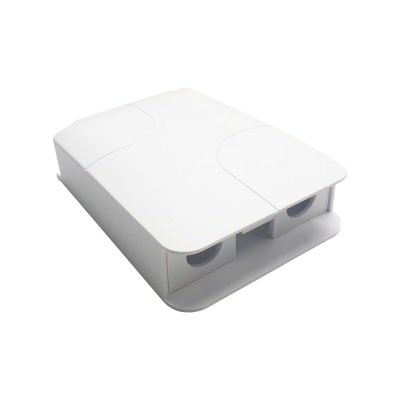

Outdoor Long Distance High Power 850 MHz out of Band Frequency Shift Repeater Signal Repeater
$3214.28 - $3520.41
MOQ: 1 Pieces


Comprehensive Sourcing Guide
Strategic Sourcing Guide for Outdoor WiFi Repeaters with Lightning Protection
Procuring outdoor wireless networking equipment requires a rigorous approach to ensure reliability in harsh environmental conditions. The core keyword "Outdoor WiFi Repeater with Lightning Protection" identifies a specific subset of networking hardware designed to extend signal coverage while withstanding electrical surges and weather exposure. Unlike indoor units, these devices must integrate robust shielding and grounding mechanisms to prevent damage from lightning strikes, which are a primary failure mode for outdoor electronics. Buyers must navigate a complex landscape of technical specifications, certification requirements, and supplier capabilities to secure a solution that maintains network integrity over time. This guide outlines the essential factors for evaluating potential products and suppliers based on verified market data and industry standards.
Technical Specifications and Signal Performance
When evaluating outdoor WiFi repeaters, the primary technical focus must be on the operating frequency bands and the gain capabilities of the device. The market data indicates that viable units typically support dual-band operation, specifically covering the 2.4GHz and 5GHz ranges. For outdoor applications, the operating range often extends from 2.4GHz to 2.5GHz and 5.0GHz to 5.8GHz, ensuring compatibility with the most common wireless standards. A critical specification to verify is the gain, which determines the device's ability to amplify weak signals. Observed products in this category have demonstrated gain figures up to 95dB, a metric that significantly influences the effective coverage area.
Furthermore, the transmission medium and port configuration are vital for integration into existing infrastructure. While some units rely on wireless backhaul, others may utilize cable transmission for the uplink. A common configuration found in high-performance repeaters includes one 10/100Mbps uplink port and multiple PoE (Power over Ethernet) ports, such as three 10/100Mbps PoE ports. This setup allows for flexible deployment where power and data are delivered through a single cable, simplifying installation in remote outdoor locations. The device must also support specific IEEE standards, including 802.11b, g, n, a, and AC, to ensure backward and forward compatibility with various client devices.
Lightning Protection and Environmental Durability
The defining feature of the requested product category is lightning protection. Not all outdoor repeaters include this critical safety feature. Market observations reveal a clear distinction between units listed as "Without Lightning Protection" and those explicitly equipped "With Lightning Protection." For outdoor deployment, selecting a unit with built-in lightning protection is non-negotiable. This feature typically involves internal surge suppression circuits designed to divert high-voltage spikes away from sensitive electronic components.
In addition to electrical protection, the physical durability of the unit must be assessed. The operating temperature range is a key indicator of environmental resilience. Verified specifications show that robust outdoor units can function within a temperature span of -20℃ to 50℃, ensuring performance in both freezing winters and hot summers. The product color, often blue and white in observed listings, may also indicate a specific UV-resistant coating, though the primary focus should remain on the IP rating and material construction. Buyers should verify that the device is rated for outdoor use and is not merely an indoor unit placed outside, as indoor units lack the necessary sealing against moisture and dust.
Compliance, Certification, and Safety Standards
Navigating the certification landscape is essential for ensuring that the purchased equipment meets international safety and environmental standards. The supplied data highlights several recurring certifications, including CE, RoHS, and ISO. The CE mark indicates conformity with health, safety, and environmental protection standards for products sold within the European Economic Area. RoHS compliance ensures that the device is manufactured without specific hazardous materials, which is a standard requirement for electronics in many global markets.
For power delivery systems, the POE standard is a critical compliance point. The observed products adhere to the IEEE 802.3af and IEEE 802.3at standards. These standards define the power levels and safety protocols for power over Ethernet, ensuring that the power source and the repeater communicate correctly to prevent electrical damage. Additionally, some units may carry ISO certifications, which reflect adherence to quality management systems. Buyers must verify that the specific model they intend to purchase holds these certifications, as the presence of a certification on a general product page does not guarantee that every SKU or configuration includes it.
Cost Drivers and Procurement Economics
The cost of outdoor WiFi repeaters with lightning protection varies significantly based on the complexity of the design, the inclusion of surge protection, and the brand positioning. The observed price range in the market spans from $2.50 to $3,520.41. This wide disparity suggests that the market includes both basic signal boosters and high-end, industrial-grade solutions with advanced features. The lower end of the spectrum may represent simple repeaters with minimal protection, while the higher end likely includes units with comprehensive lightning protection, higher gain, and robust industrial enclosures.
Minimum Order Quantity (MOQ) is another economic factor that influences procurement strategy. The data indicates an MOQ range from 1 to 200 units. This flexibility allows buyers to test the market with small orders or commit to larger volumes for deployment projects. Some suppliers explicitly state that small orders are accepted, which is beneficial for pilot programs. However, buyers should be aware that unit prices often decrease as order volume increases. The selling unit is typically listed as a single item, but packaging varies from color boxes to neutral packing or even wooden cases for larger, more fragile industrial units.
Supplier Evaluation and Origin Verification
When selecting a supplier, the origin of the product is a significant indicator of manufacturing capability and supply chain stability. The data points to China as the primary origin, with specific manufacturing hubs identified in Zhejiang and Shenzhen. Shenzhen is particularly notable as a major electronics manufacturing center, often associated with advanced R&D and rapid prototyping capabilities. Zhejiang is also a significant hub for networking hardware production.
Buyers should evaluate suppliers based on their customization capabilities. The market data confirms that customization is available for these products. This allows buyers to tailor specifications, such as branding, packaging, or specific firmware configurations, to meet unique project requirements. However, buyers must verify that the customization does not compromise the core safety features, such as lightning protection. Additionally, the warranty period is a key metric for supplier confidence. A standard warranty of one year is observed in the market, which serves as a baseline for after-sales support. Buyers should inquire about extended warranty options and the specific terms of coverage for outdoor environmental damage.
Quality Control and Long-Term Reliability
Ensuring long-term reliability requires a focus on quality control processes and testing protocols. While specific test results are not provided in the general data, buyers should request documentation regarding the testing of lightning protection circuits. This includes verification of the surge voltage levels the device can withstand and the response time of the protection mechanism. The operating temperature range of -20℃ to 50℃ should be validated through thermal testing reports to ensure the device does not overheat or freeze during operation.
The packaging method also plays a role in quality assurance during transit. Options range from color boxes to wooden cases, with the latter offering superior protection for heavy or sensitive industrial equipment. For outdoor units, the packaging must be robust enough to prevent damage from humidity or physical impact during shipping. Buyers should also consider the "Condition" of the product, which is listed as "New" in the data. This confirms that the units are not refurbished, which is critical for maintaining the integrity of the lightning protection components.
Application Scenarios and Deployment Considerations
The primary application for these devices is in Fiber to the Home (FTTH) networks and large-scale outdoor coverage scenarios. The data explicitly lists "ftth" as a use case, indicating that these repeaters are suitable for extending signals from a central node to remote residential or commercial buildings. The dual-band capability (2.4G and 5G) makes them versatile for handling various types of traffic, from legacy devices to modern high-speed clients.
The specific model numbers observed, such as WD8-009, GW-43C-FSR, and various BT-series models, suggest a diverse product line catering to different power and performance needs. For instance, some models may be designed for high-output scenarios with 27dBm output power, while others focus on compact deployment. When planning a deployment, buyers must consider the physical dimensions of the unit, as some specifications list dimensions like 428328175mm, which may influence mounting options. The "Signal Repeater" and "Wireless Repeater" classifications indicate that these devices can function in various network topologies, including point-to-point or point-to-multipoint configurations.
Summary of Key Verification Points
To summarize the sourcing strategy, buyers must prioritize the following verification steps before finalizing a purchase. First, confirm the explicit presence of "With Lightning Protection" in the product specifications. Second, verify the dual-band support for 2.4GHz and 5GHz frequencies. Third, ensure the device meets the IEEE 802.3af/at POE standards if power over Ethernet is required. Fourth, check for CE, RoHS, and ISO certifications to ensure regulatory compliance. Finally, validate the operating temperature range and the warranty terms to guarantee long-term performance. By adhering to these criteria, buyers can secure reliable outdoor WiFi repeaters that effectively extend network coverage while protecting against the inherent risks of outdoor electrical environments.
| Feature Category | Critical Verification Point | Market Observation / Standard |
|---|---|---|
| Protection | Lightning Protection Status | Must be "With Lightning Protection" |
| Frequency | Operating Bands | 2.4GHz - 2.5GHz; 5.0GHz - 5.8GHz |
| Power | POE Standard | IEEE 802.3af / IEEE 802.3at |
| Environment | Operating Temperature | -20℃ ~ 50℃ |
| Certification | Safety & Compliance | CE, RoHS, ISO |
| Origin | Manufacturing Location | China (Zhejiang, Shenzhen) |
| Warranty | Support Duration | Typically one year |
By systematically applying these criteria, procurement teams can mitigate risks associated with equipment failure and ensure a robust, high-performance wireless infrastructure for outdoor applications.
FAQs
Do outdoor wifi repeaters with lightning protection exist?
Yes, outdoor wifi repeaters with lightning protection are available in the market. Some units explicitly list lightning protection as a feature, while others do not. Buyers must verify this specific attribute before purchase to ensure safety against electrical surges.
What frequency bands do these repeaters support?
These devices typically support dual-band operation covering 2.4GHz and 5GHz frequencies. Specific models operate within ranges of 2.4 to 2.5GHz and 5.0 to 5.8GHz. This ensures compatibility with common wireless standards like IEEE 802.11b/g/n/ac.
Which certifications are required for safe operation?
Common certifications include CE, RoHS, and ISO for safety and environmental compliance. Some units also adhere to the IEEE 802.3af and IEEE 802.3at POE standards. Buyers should confirm these marks are present on the specific model they intend to buy.
Can I find units with specific temperature ranges?
Yes, verified outdoor units function within a temperature range of -20 to 50 degrees Celsius. This range ensures performance in both freezing winters and hot summers. Always check the operating temperature specification to confirm suitability for your local climate.
How are these repeaters packaged for shipping?
Packaging options vary from color boxes to neutral packing and wooden cases. Wooden cases are often used for larger or more fragile industrial units to ensure protection during transit. The specific packaging type depends on the model and supplier configuration.
What is the typical warranty period offered?
A standard warranty of one year is observed in the market for these products. This serves as a baseline for after-sales support and coverage. Buyers should inquire about extended warranty options and specific terms for outdoor environmental damage.