Source Outdoor Wooden Tree House for Garden, Play, and Decor
Explore 30 listings for the Outdoor Wooden Tree House, featuring solid wood construction and eco-friendly materials. Compare customization options, FSC certifications, and lead times from verified Chinese manufacturers to find the right fit for your project; compare the available evidence and request quotations based on your requirements.
Key considerations
Products List


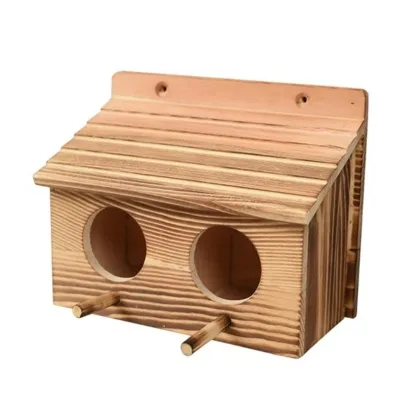
Wood Bird Houses for Outside, Huge Wooden Birdhouses, Multi Door Cedar Birdhouse
$2.35 - $5.25
MOQ: 500 Pieces


Customized Pine Wood Bird House Wooden Decorative Bird House for Garden Decoration
$3.48 - $3.68
MOQ: 500 Pieces



Wooden House Wood Carbin Outdoor Good Quality Beautiful for People Living
$700.00
MOQ: 10 Square Meters


Comprehensive Sourcing Guide
Outdoor Wooden Tree House Sourcing Guide
Buyers evaluating outdoor wooden tree houses must first distinguish between decorative models and functional play structures, as the supplied data reveals a wide spectrum of product types ranging from small birdhouses to large log cabins. The observed listings include items explicitly labeled for "Outdoor" usage with specific applications like "Wooden House" and "Outdoor Gazebo," alongside smaller decorative pieces intended for "Personal Decoration" or "Home Decoration." This distinction is critical because a structure designed for a child's play area requires significantly different engineering and safety standards compared to a standalone garden ornament or a birdhouse intended for "Spring & Autumn" seasonal display.
Procurement teams should also scrutinize the intended customization level, as the market offers both standard "Retro" and "Modern Simple" styles alongside fully "Customized" options. The presence of specific models like "Yamaj-0134" and "ZY-20238168" indicates that suppliers often provide distinct SKUs for different structural needs, such as "Round Wooden Column" components versus complete "House" units. Buyers must verify whether the selected model supports the required load-bearing capacity for human occupancy or if it is strictly a decorative element, ensuring the chosen product aligns with the specific functional requirements of the project site.
Product Scope and Observed Listing Signals
The observed product range demonstrates significant variability in material composition, with listings specifying both "Wood" and "Solid Wood" as primary materials, often derived from "Pine" or other timber sources. This variation directly impacts durability and weather resistance, particularly for structures intended for long-term outdoor exposure. Buyers should note that while some items are described as "Eco-Friendly" and carry "FSC" certification, others may rely on generic "Solid Wood" descriptions without explicit sustainability claims, necessitating a careful review of the material grade before committing to a bulk order.
Listing signals also reveal diverse packaging and shipping configurations, ranging from "Bubble Bag" and "Inner Box" for smaller units to "Mail Box" or "Carton Box" solutions for larger assemblies. The "Standard Packaging" mentioned for specific models suggests that some suppliers offer pre-configured shipping solutions, while others require "Customized" packing arrangements to accommodate unique dimensions or fragile components. Procurement teams must align their logistics planning with these packaging specifications to prevent damage during transit, especially for large structures like the "Outdoor Construction Log House" which may require specialized handling and robust carton reinforcement.
Technical Specifications to Verify
Dimensional accuracy is a primary verification point, as the data includes specific size references like "181211cm" for smaller units and general "M" sizing for others, alongside model numbers that imply distinct physical footprints. Buyers must confirm that the listed dimensions match the intended installation space, particularly for "Outdoor Gazebo" or "Blockhouse" applications where spatial constraints are tight. The presence of "Carving" processes and "Human" or "Round" shapes indicates that aesthetic details vary significantly, requiring precise measurement checks to ensure the final product integrates seamlessly with the existing landscape or architectural design.
Construction methods and structural integrity are equally critical, with listings highlighting "Carving" as a key processing technique and "Solid Wood" as the preferred material for durability. Buyers should verify the joinery methods used for larger assemblies, as the "Outdoor" designation implies exposure to moisture and temperature fluctuations that can compromise weaker connections. The "Formaldehyde Emission Standards" listed as "E" in the data suggest a baseline for chemical safety, but procurement teams must ensure that the specific structural components, such as "Wooden Plywood" or "Pine" logs, meet the necessary load-bearing and weatherproofing requirements for the intended environment.
Compliance and Safety Documentation
Safety compliance is paramount for outdoor wooden structures, especially those intended for human use or children's play, requiring verification of chemical emission standards and material safety. The supplied facts reference "FDA," "Ca65," and "Reach" as available test reports, which are essential for ensuring that the wood treatments and finishes do not release harmful substances into the environment or pose health risks to users. Buyers must request current test reports for the specific model being purchased, as these certifications validate that the product meets international safety thresholds for formaldehyde and other volatile organic compounds.
Environmental and ethical sourcing certifications also play a vital role in the procurement decision, with "FSC" and "BSCI" appearing as available credentials in the market data. These certifications indicate that the wood is sourced from responsibly managed forests and that the manufacturing process adheres to social compliance standards, which is increasingly important for corporate buyers with sustainability mandates. Procurement teams should verify the validity of these certificates for the specific batch of goods, ensuring that the "Eco-Friendly" claims are backed by third-party verification rather than unverified marketing statements.
Cost Drivers and Commercial Terms
Pricing in this category is highly variable, with observed ranges spanning from $2.35 for small decorative items to $18,500 for large, complex structures, reflecting the significant impact of material volume and labor intensity. The cost is driven by factors such as the use of "Solid Wood" versus composite materials, the complexity of "Carving" processes, and the scale of the structure, whether it is a simple "Bird" house or a full "Outdoor Construction Log House." Buyers must analyze the unit price against the total project budget, considering that higher costs often correlate with superior material grades and more rigorous construction techniques.
Commercial terms are heavily influenced by order volume and customization requirements, with Minimum Order Quantities (MOQ) ranging from 1 to 5,000 pieces depending on the supplier and product type. The data indicates a standard MOQ of 500 pieces for certain models, while others may accommodate smaller orders, though this often incurs a "Sample Fee" of $50 or higher. Lead times are also a critical cost factor, with mass production typically requiring 25 to 55 days, meaning that rush orders or custom designs may incur additional premiums or require earlier planning to avoid project delays.
Supplier Qualification and Quality Control
Supplier qualification should focus on verifying the ability to deliver consistent quality across large batches, particularly given the "Customized" nature of many listings and the variability in "Wood" sourcing. Buyers must assess the supplier's capacity to maintain the "Custom" standards required for specific models, ensuring that the "Silk Screen Print," "Laser Engrave," or "Hot Stamp" logo applications are executed with precision and durability. The presence of "Weifang, China" as a production origin suggests a concentration of manufacturing expertise in this region, but buyers should still conduct on-site audits or request detailed quality control protocols to ensure consistency.
Quality control processes must be robust enough to handle the unique challenges of outdoor wooden products, including moisture resistance and structural stability. Buyers should require a detailed inspection plan that covers the "Processing" stages, from raw material selection to final assembly, ensuring that the "Natural Color" or "Multicolor" finishes are applied uniformly and that the "Shape" and "Style" match the approved samples. The ability to provide "Test Reports" for each batch is essential, as it confirms that the finished product meets the specified "Formaldehyde Emission Standards" and other safety requirements before shipment.
Long-Term Procurement Checks
Long-term procurement success depends on establishing a reliable supply chain that can adapt to changing design needs and market demands, particularly for "Customized" outdoor structures. Buyers should prioritize suppliers who demonstrate flexibility in handling "Custom" orders and can maintain consistent quality over multiple production cycles, as the "Outdoor" environment subjects products to continuous wear and tear. Building a relationship with a supplier that offers "Customized" packaging and logo options can streamline future orders and ensure brand consistency across different product lines.
Continuous monitoring of product performance and supplier compliance is essential to mitigate risks associated with long-term outdoor use. Buyers should implement a feedback loop to track the durability of "Solid Wood" structures in various climates and verify that the "Eco-Friendly" and safety certifications remain valid over time. Regular audits of the supplier's production facilities and quality control systems will help ensure that the "Mass Production Lead Time" remains stable and that the product specifications continue to meet the evolving needs of the project.
FAQs
How long does mass production take for outdoor wooden tree houses?
Mass production lead time is typically 25 to 55 days depending on order quantity, design complexity, and current factory schedules. Customization such as carving, laser engraving, or special packaging can extend the timeline. Buyers should confirm the exact schedule with the supplier before placing a purchase order and plan shipping time accordingly.
Can outdoor wooden tree houses be customized with my own logo and packaging?
Yes, customization is available. Suppliers commonly apply logos through silk screen printing, laser engraving, or hot stamping, and packaging can be a mail box, bubble bag with inner box, or a fully customized design. Provide artwork and quantity requirements early, since customized orders usually require sample approval before mass production begins.
What is the typical MOQ for customized wooden tree house products?
The observed MOQ is around 500 pieces for customized wooden items, though some listed products accept orders as low as 1 piece. MOQ depends on the level of customization, materials, and factory capacity. Buyers with lower volumes should negotiate directly, understanding that smaller runs usually raise unit pricing and sample fees.
What certifications and test reports should wooden outdoor products have?
Reliable products carry FSC and BSCI certificates, while test reports for FDA, CA65, and REACH are commonly provided on request. These confirm responsible wood sourcing, social compliance, and chemical safety for destination markets. Always request current certificate copies and recent test reports matching the exact product model before confirming an order.
How are outdoor wooden tree houses packed for shipping?
Common packing methods include bubble bags, inner boxes, cartons, and mail boxes, with customized packaging available on request. Outdoor solid wood structures are usually shipped in standard protective packaging suitable for long-distance transport. Confirm packing details, carton dimensions, and container loading quantities with the supplier, since wooden outdoor structures can be bulky.
What materials are used for outdoor wooden tree houses?
Wooden tree houses and related outdoor structures are typically made from solid wood, including pine, chosen for durability in outdoor use. Eco-friendly finishes and natural colors are common, and formaldehyde emission standards are specified on listed products. Ask suppliers to confirm wood species, treatment, and weather resistance suitable for your climate and installation environment.
Can I order a sample before mass production of a wooden tree house?
Yes, samples are generally available, and a sample fee of around 50 dollars is observed on some listings. Sample cost and time vary by customization level and product size. Approving a sample lets you verify carving quality, material, finish, and packaging before committing to mass production, so request one for complex customized designs.