Source Portable Foldable Windproof Camping Stove for Hiking
Compare 30 listings of Portable Foldable Windproof Camping Stove options suitable for hiking, backpacking, and outdoor cooking. Buyers can evaluate materials, dimensions, and certifications to find the right equipment for all-season use.
Key considerations
Products List

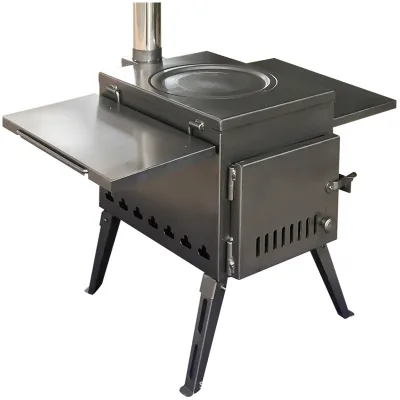


Lightweight Wood Burning Folding Camping Tent Stove Portable Stove for Camping
$4.41 - $5.50
MOQ: 20 Pieces


Portable Outdoor Grilling Heating Camp Stove
$25.90 - $35.90
MOQ: 50 Pieces
Suzhou Tuoshenghe Mechanical and Electrical Technology Co., Ltd.


Comprehensive Sourcing Guide
Strategic Sourcing Guide for Portable Foldable Windproof Camping Stoves
Understanding the Technical Landscape of Portable Stoves
The market for portable foldable windproof camping stoves presents a complex array of technical specifications that buyers must navigate to ensure product suitability. When evaluating potential inventory, the primary observation is the diversity in material composition and structural design. The supplied data indicates that a significant portion of available units are constructed from Cold Rolled Steel or general Metal, with specific references to Stainless Steel for certain high-performance models. This variation in material selection directly influences the stove's durability, weight, and resistance to corrosion in outdoor environments. Buyers should verify the specific metal type for each SKU, as the distinction between standard steel and stainless steel impacts the long-term cost of ownership and maintenance requirements.
Structural dimensions are equally critical for a product defined by its portability. The observed product specifications reveal a wide range of sizes, from compact units measuring 180x180x215mm to larger configurations reaching 55x40x40cm in single package dimensions. Some models are explicitly described as "Portable and Concise," while others are noted as "Foldable Stoves" designed for picnics. The "Windproof" aspect of the core keyword often relies on the integration of specific safety devices, such as flame safety mechanisms, which are listed as a feature in several product entries. However, the absence of a remote control and the presence of manual adjustments, such as the lack of an automatic thermostat in some models, suggest that the windproofing is achieved through physical design and flame regulation rather than electronic automation. Buyers must cross-reference the "Single package size" with the "Weight" attributes, as some units weigh up to 17kg, which may contradict the "portable" expectation for backpacking applications, even if the product is marketed as such.
Compliance and Certification Verification Protocols
In the realm of outdoor equipment, compliance is not merely a formality but a prerequisite for market entry and consumer trust. The supplied product facts highlight specific certifications that serve as indicators of quality and safety. Notably, several listings explicitly mention CE certification, a mandatory conformity mark for products sold within the European Economic Area. This certification suggests that the manufacturer has assessed the product and ensured it meets EU safety, health, and environmental protection requirements. Furthermore, some entries list RoHS (Restriction of Hazardous Substances) certification alongside CE, indicating compliance with regulations regarding the use of specific hazardous materials in electrical and electronic equipment.
However, buyers must exercise caution regarding the interpretation of these certifications. While the data confirms the presence of CE and RoHS on specific models, it does not guarantee that every product in the category holds these credentials. The distinction between "Not Coated" finishing and coated alternatives also plays a role in safety and environmental compliance, as coatings can sometimes contain volatile organic compounds. When sourcing, procurement teams should request valid certification documents for each specific model number, such as the KHL6676 or VDCS180, rather than assuming blanket compliance for the entire product line. The absence of ISO9001, ISO14001, or ISO45001 in the high-confidence facts suggests that while these standards may exist in the broader industry, they should not be assumed for specific listings without direct verification from the supplier. The focus must remain on the explicit certifications provided in the product data to avoid misrepresentation.
Cost Drivers and Pricing Dynamics
The pricing structure for portable camping stoves is influenced by a confluence of material costs, manufacturing complexity, and packaging requirements. The observed price range in the market spans from $0.89 to $118.65 USD, a disparity that reflects the vast differences in product quality, material grade, and feature sets. At the lower end of the spectrum, products likely utilize basic steel construction with minimal finishing, such as the "Not Coated" variants, and simpler packaging solutions. Conversely, the higher price points are associated with advanced features like flame safety devices, specific certifications, and more robust materials like Stainless Steel.
Material composition is a primary cost driver. The transition from general "Metal" or "Cold Rolled Steel" to "Stainless Steel" significantly increases the raw material cost, which is often passed on to the buyer. Additionally, the "Thickness" of the metal, observed at 2mm in some specifications, is a critical factor in determining the stove's heat retention and longevity. Thicker gauges generally command a higher price due to increased material usage and manufacturing time. Packaging also contributes to the final cost; while some units are packed in simple cartons, others utilize specialized cloth bags or larger carton configurations that accommodate the single gross weight of 17.000 kg. The "MOQ" (Minimum Order Quantity) is another variable, with observed ranges from 1 piece to 500 units. Buyers purchasing in smaller quantities may face higher per-unit costs, whereas bulk orders can leverage economies of scale to reduce the price point, though the specific discount structures are not detailed in the provided facts.
Typical Applications and Usage Scenarios
The versatility of portable foldable camping stoves allows them to serve a wide array of applications, from casual picnics to serious outdoor expeditions. The product data explicitly categorizes these stoves for "Outdoor Camping Cooking," "Hiking," "Backpacking," and "Outdoor Equipment" usage. The "All Seasons" attribute suggests that these units are designed to function in various weather conditions, provided the windproof features are effective. The "Fuel" type is identified as "Wood Charcoal," which is a common choice for charcoal grills, offering a distinct flavor profile and high heat output suitable for cooking.
However, the specific application depends heavily on the physical attributes of the unit. For instance, a stove weighing 16kg or 17kg with dimensions of 42x28x28cm is better suited for car camping or base camp scenarios where weight is less of a concern than stability and cooking capacity. In contrast, the "Portable and Concise" models with smaller package sizes are ideal for hikers and backpackers who prioritize weight and volume. The "Foldable" design is a key enabler for these diverse applications, allowing the stove to be compacted for transport and expanded for use. The "Grill Type" classification as "Charcoal Grills" further defines the cooking method, distinguishing these units from gas or liquid fuel stoves. Buyers must align the specific model's weight and dimensions with their target customer's intended use case to ensure product-market fit.
Supplier Evaluation and Origin Analysis
Evaluating suppliers requires a close examination of the origin data and the consistency of product attributes. The supplied facts indicate that the products originate from China, with specific mentions of Hubei and Shenzhen, Guangdong as production hubs. Shenzhen, a major technology and manufacturing center, may be associated with higher-tech features or stricter quality controls, while Hubei represents a broader industrial manufacturing base. The "Place of Origin" is a critical piece of information for buyers assessing supply chain risks and logistics.
When assessing a supplier, buyers should verify the consistency of the "Product Name" and "Model Number" across their catalog. For example, the presence of model numbers like ST01, KHL6676, and VDCS180 suggests a diverse portfolio. A reliable supplier should be able to provide clear documentation linking these model numbers to their specific material and certification claims. The "Customization" attribute being "Available" is a significant advantage for buyers looking to brand products or modify specifications. However, buyers must confirm the extent of this customization, including whether it applies to packaging, color, or structural design. The "Selling Units" being listed as "Single item" indicates that the supplier is capable of handling both retail and wholesale orders, but the "MOQ" of 1 piece versus 500 pieces suggests flexibility in order sizes that buyers should leverage during negotiations.
Quality Control and Long-Term Procurement Considerations
Ensuring consistent quality in portable camping stoves involves rigorous checks on manufacturing processes and material integrity. The "Finishing" attribute, specifically "Not Coated," requires careful quality control to prevent rust and ensure safety during use. Buyers should implement inspection protocols that verify the "Thickness" of the steel, as deviations from the specified 2mm can compromise the stove's structural integrity and heat distribution. The "Safety Device" feature, such as the flame safety mechanism, must be tested to ensure it functions correctly under various wind conditions, as this is a critical safety component for a "windproof" stove.
Long-term procurement considerations also include the durability of the "Packaging." Whether the product is packed in a "Carton" or a "Cloth Bag," the packaging must protect the stove during transit and storage. The "Single gross weight" of 17.000 kg for certain models necessitates robust packaging to prevent damage. Furthermore, the "Installation Type" being "Freestanding" implies that the stove must be stable on uneven terrain, a factor that should be tested during the quality assurance phase. Buyers should also consider the "Overheating Protection" feature, which, while noted as "With Overheating Protection" in some models, requires verification to ensure it meets safety standards. Establishing a long-term relationship with a supplier who can consistently deliver products that meet these technical and safety criteria is essential for maintaining brand reputation and customer satisfaction in the competitive outdoor equipment market.
Comparative Analysis of Key Product Attributes
To facilitate decision-making, the following table summarizes the key differences observed in the product data, highlighting the trade-offs between various models.
| Attribute | Model A (Compact) | Model B (Heavy Duty) | Model C (Standard) |
|---|---|---|---|
| Material | Stainless Steel | Cold Rolled Steel | Metal / Steel |
| Dimensions | 180x180x215mm | 42x28x28cm | 37x237x19cm |
| Weight | 1kg | 16-17kg | 16kg |
| Packaging | Cloth Bag | Carton | Carton |
| Certification | CE, RoHS | CE | CE |
| Features | Portable, Overheating Protection | Flame Safety Device, Foldable | Heat food, Keep warm |
| Origin | Shenzhen, Guangdong | Hubei, China | China |
| MOQ | 1 PCS | 1 piece | 1 piece |
This comparison illustrates that while all models share the core function of outdoor cooking, they cater to different segments of the market. The compact model offers portability and advanced safety features like overheating protection, making it suitable for backpackers. The heavy-duty model, with its significant weight and larger dimensions, is better suited for car camping where stability and cooking capacity are prioritized. The standard model offers a middle ground with basic safety features and a versatile design. Buyers should use this matrix to align their procurement strategy with the specific needs of their target customer base, ensuring that the selected products deliver the expected performance and value.
FAQs
What materials are used for portable foldable windproof camping stoves?
These stoves are constructed from Cold Rolled Steel, general Metal, or Stainless Steel. Buyers must verify the specific metal type for each SKU, as the distinction impacts durability and corrosion resistance in outdoor environments.
Which certifications are available for these camping stove models?
Specific models hold CE and RoHS certifications. Procurement teams should request valid certification documents for each model number rather than assuming blanket compliance for the entire product line to ensure safety standards.
How much does a Portable Foldable Windproof Camping Stove cost?
The price range spans from 0.89 to 118.65 USD. Lower prices reflect basic steel construction, while higher points include advanced features like flame safety devices and robust Stainless Steel materials.
Can I customize the packaging for these outdoor camping stoves?
Customization is available for these products. Buyers should confirm the extent of customization, including whether it applies to packaging, color, or structural design, to ensure it meets their branding needs.
What is the minimum order quantity for these camping stoves?
The minimum order quantity ranges from 1 piece to 500 units. Buyers purchasing in smaller quantities may face higher per-unit costs, whereas bulk orders can leverage economies of scale to reduce the price point.
Where are these portable foldable windproof camping stoves manufactured?
Products originate from China, specifically Hubei and Shenzhen, Guangdong. Shenzhen may be associated with higher-tech features, while Hubei represents a broader industrial manufacturing base for these outdoor equipment units.
What fuel type do these charcoal grills require for operation?
These stoves use Wood Charcoal as their fuel source. This choice offers a distinct flavor profile and high heat output suitable for cooking, distinguishing these units from gas or liquid fuel stoves.