Source Portable FTTH Optical Power Meter with 15MW VFL for FTTH, FTTB, FTTX
Find 30 listings for a Portable FTTH Optical Power Meter with 15MW VFL suitable for FTTH, FTTB, and FTTX networks. Buyers can compare models like HNPON and Skycom, review specifications such as wavelength ranges and accuracy, and evaluate supplier details including origin and certifications.
Key considerations
Products List
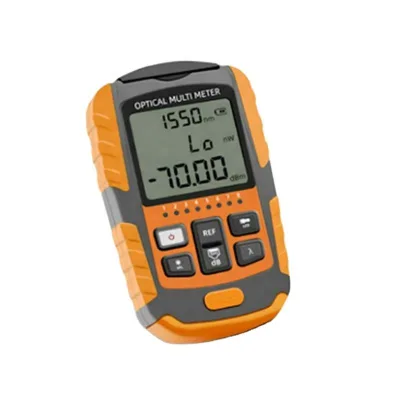
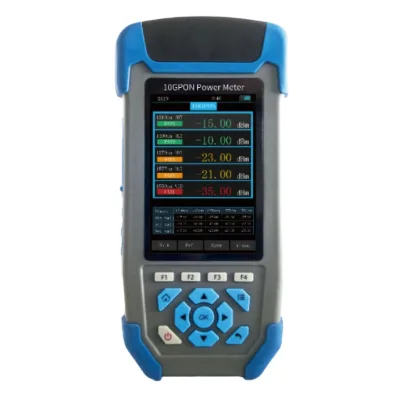
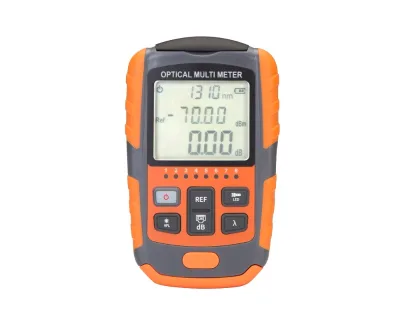
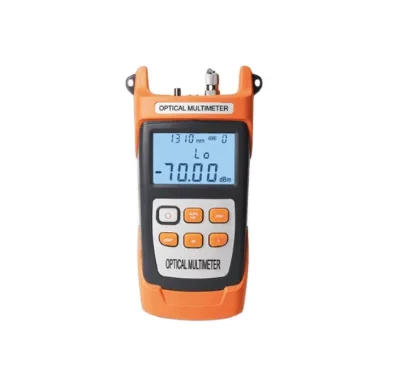
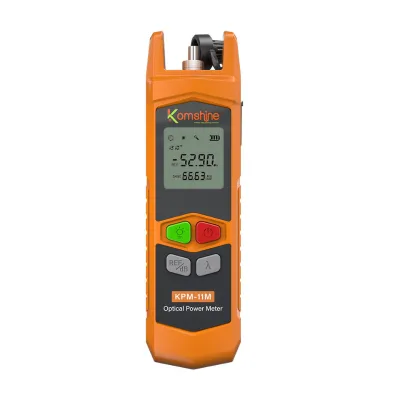
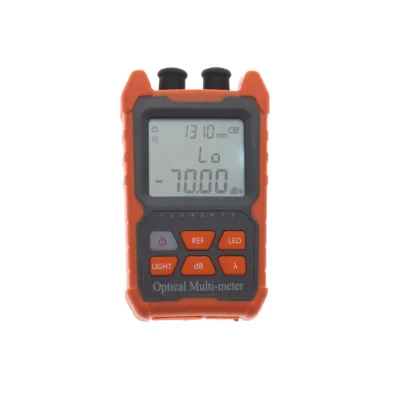


$25.00 - $40.00
MOQ: 1 Pieces


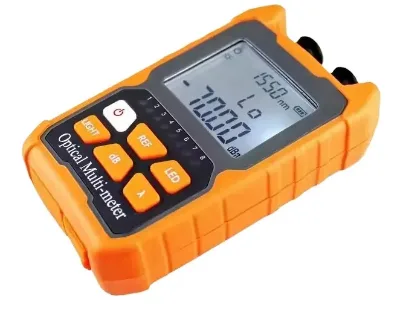


Comprehensive Sourcing Guide
Portable FTTH Optical Power Meter with 15MW VFL Sourcing Guide
Procuring a portable FTTH optical power meter equipped with a 15mW Visual Fault Locator (VFL) requires a clear understanding of the dual functionality inherent in these devices. These tools are essential for field technicians performing Fiber to the Home (FTTH), Fiber to the Building (FTTB), and Fiber to the X (FTTX) network installations and maintenance. The integration of an optical power meter (OPM) and a VFL into a single handheld unit allows for rapid signal verification and fault isolation, significantly reducing downtime during network commissioning and troubleshooting. Buyers must recognize that while the device serves as a primary measurement tool, its effectiveness depends heavily on the accuracy of its power sensing capabilities and the visibility of its fault-finding laser.
The market offers various configurations, ranging from basic OPMs to multi-functional units that may include additional features like Optical Light Sources (OLS) or even electrical testing capabilities. Observations from current listings indicate a diverse range of product names, such as NK260 OPM/OPM+VFL or OLS+OPM+VFL, suggesting that suppliers often bundle multiple functions. However, buyers should not assume that every listed product satisfies all potential use cases. It is critical to verify the specific model number and feature set, as some units may be marketed as general-purpose meters while lacking the specific wavelength calibration or VFL range required for complex PON networks. Understanding these distinctions ensures that the selected tool aligns precisely with the technical demands of the deployment environment.
Product Scope and Observed Listing Signals
Current market observations reveal a wide price range, typically spanning from $0.10 to $499.07 USD, which reflects significant variation in build quality, brand reputation, and feature sets. Minimum Order Quantities (MOQ) are generally low, ranging from 1 to 10 units, making these tools accessible for small contractors and individual technicians as well as large-scale procurement projects. The observed data points to products originating primarily from regions like Hunan and Nanjing in China, with brands such as Hnpon and Skycom being prominent. Buyers should note that while some listings describe the device as a "Multimeter" or "Energy Meter," the core function remains optical measurement, and terminology can sometimes be misleading or overly broad.
Packaging and physical specifications also vary considerably across different suppliers. Some units are packaged in compact boxes measuring 12x8x5 cm with a gross weight of 0.300 kg, while others are larger, measuring 15x15x15 cm and weighing up to 2.000 kg. These differences often correlate with the inclusion of accessories, such as protective cases, calibration certificates, or additional fiber adapters. The display type is consistently digital, providing clear readouts for power levels, but the resolution and accuracy can differ. For instance, some models offer a resolution of 0.01dB, which is crucial for precise loss budgeting in high-density networks. Buyers must carefully review the single package details and weight to ensure the product meets their logistical and operational needs.
Technical Specifications to Verify
When evaluating technical specifications, the wavelength range and calibrated wavelengths are paramount for accurate FTTH measurements. Trusted category knowledge indicates that standard PON networks operate at specific wavelengths, typically 1310nm, 1490nm, and 1550nm, with some systems using 1625nm for monitoring. Buyers should verify that the device is calibrated for these specific wavelengths, as some listings mention ranges like 800-1700nm or specific calibrations at 850nm, 1300nm, 1310nm, 1490nm, 1550nm, and 1625nm. The measurement range is another critical factor, with common specifications citing -70dBm to +6dBm or -50dBm to +26dBm. Ensuring the device covers the expected signal levels in the target network prevents measurement errors and ensures reliable data collection during installation.
The VFL component must also be scrutinized for its output power and wavelength. A 15mW VFL is a common specification, providing sufficient visibility for detecting macro-bends and breaks in single-mode fibers over distances up to 5km, as suggested by some product descriptions. Buyers should confirm the VFL wavelength, typically 650nm, which appears as a visible red light. Additionally, the connector type is essential; many units feature RJ45 ports for electrical testing or standard fiber connectors like FC, SC, or LC for optical measurements. The accuracy of the power meter, often cited as ±0.2dB, directly impacts the reliability of loss measurements. Buyers must ensure that the specified accuracy meets the tolerance requirements of their network design standards to avoid costly rework due to inaccurate loss readings.
Compliance and Safety Documentation
Compliance with international safety and quality standards is a non-negotiable aspect of sourcing electronic test equipment. Buyers should request documentation confirming that the devices meet relevant certifications such as CE, SGS, ISO9001, and RoHS. These certifications indicate that the product adheres to strict guidelines regarding electromagnetic compatibility, environmental safety, and quality management systems. While some listings mention additional standards like CSI or ISO9000, the core certifications provide a baseline for verifying the manufacturer's commitment to quality and safety. It is crucial to ensure that the VFL laser class is appropriate for field use, typically Class 2 or Class 3R, to minimize eye safety risks during operation.
In addition to product certifications, buyers should inquire about the calibration certificates provided with each unit. A traceable calibration certificate ensures that the power meter's readings are accurate and can be traced back to national or international standards. This is particularly important for network operators who need to maintain precise loss budgets and comply with industry regulations. Buyers should also verify the condition of the product, ensuring it is new and not refurbished, unless explicitly stated and accepted. The presence of a digital display and single-phase power requirements, if applicable, should be confirmed to ensure compatibility with the user's operational environment. Proper documentation not only facilitates customs clearance but also provides legal protection and assurance of product reliability.
Cost Drivers and Commercial Terms
Several factors influence the final cost of a portable FTTH optical power meter with a VFL. The brand name, build quality, and included accessories are primary drivers. Premium brands often command higher prices due to better durability, accuracy, and after-sales support. The inclusion of additional features, such as a built-in optical light source or electrical testing capabilities, can also increase the cost. Buyers should compare the total value proposition rather than just the unit price, considering the longevity and reliability of the device. The observed price range of $0.10 to $499.07 USD highlights the importance of balancing cost with quality, as extremely low prices may indicate inferior components or lack of calibration.
Commercial terms, including delivery time and payment conditions, also play a significant role in the procurement process. Some suppliers offer rapid delivery times, such as 3 days, which can be crucial for urgent project requirements. However, buyers should verify if this lead time applies to stock items or requires manufacturing time. Minimum order quantities are generally flexible, allowing for small initial purchases to test the product before committing to larger orders. Buyers should also consider the packaging details, as robust packaging ensures the device arrives in good condition. Clear communication regarding shipping costs, import duties, and warranty terms is essential to avoid unexpected expenses. Understanding these commercial dynamics helps in negotiating favorable terms and ensuring a smooth procurement experience.
Supplier Qualification and Quality Control
Selecting a reliable supplier is critical for obtaining high-quality test equipment. Buyers should prioritize suppliers with a proven track record in the fiber optic industry, as evidenced by their certifications and product range. Verifying the supplier's production capabilities and quality control processes is essential. Suppliers that adhere to ISO9001 standards typically have robust systems in place to ensure consistent product quality. Buyers should also inquire about the supplier's ability to provide customization options, such as branded packaging or specific calibration requirements, if needed. The place of origin, often China, should be considered in the context of the supplier's reputation and export experience.
Quality control measures should extend beyond the initial purchase to include ongoing performance verification. Buyers should establish clear acceptance criteria for the received goods, including visual inspection for damage and functional testing of the power meter and VFL. It is advisable to request sample units for testing before placing bulk orders. Suppliers that offer comprehensive technical support and warranty services are preferable, as they can assist with troubleshooting and calibration issues. Buyers should also consider the supplier's responsiveness and communication skills, as these factors contribute to a positive procurement experience. Building a relationship with a reliable supplier ensures access to high-quality products and timely support, which is vital for maintaining operational efficiency in field operations.
Long-Term Procurement Checks
Long-term procurement success depends on regular performance monitoring and supplier relationship management. Buyers should implement a schedule for periodic calibration and maintenance of their optical power meters to ensure ongoing accuracy. This includes verifying the device's performance against known reference standards and replacing batteries or worn components as needed. Keeping detailed records of calibration dates and results helps in tracking the device's lifecycle and planning for replacements. Buyers should also stay informed about advancements in fiber optic technology, as new standards and equipment may require updated tools. Regularly reviewing the performance of the procured devices against project requirements ensures that the tools remain effective and relevant.
Supplier performance should be evaluated periodically based on product quality, delivery reliability, and after-sales support. Feedback from field technicians is invaluable in assessing the usability and durability of the devices. Buyers should maintain open communication with suppliers to address any issues promptly and explore opportunities for product improvements or new offerings. Building a diversified supplier base can mitigate risks associated with supply chain disruptions. Additionally, buyers should consider the total cost of ownership, including maintenance, calibration, and potential downtime, rather than just the initial purchase price. By focusing on long-term value and reliability, buyers can ensure that their procurement strategy supports the ongoing success of their fiber optic network operations.
FAQs
What is the measurement range of the portable FTTH optical power meter?
The device measures from -70 to +6 dBm and -50 to +26 dBm. This wide range supports various fiber optic testing scenarios. It ensures accurate readings for both weak and strong signals in FTTH and FTTX networks. The meter provides reliable data for network maintenance and installation tasks.
Can this optical power meter detect fiber faults with its VFL?
Yes, the unit includes a Visual Fault Locator with a 5KM range. This feature helps identify breaks, bends, or bad connectors in fiber cables. The integrated VFL allows technicians to quickly locate physical defects without additional tools. It is essential for efficient troubleshooting in complex fiber optic networks.
Which wavelengths are calibrated for accurate power measurements?
The meter is calibrated for 850nm, 1300nm, 1310nm, 1490nm, 1550nm, and 1625nm. These wavelengths cover standard single-mode and multi-mode fiber applications. Accurate calibration ensures precise power readings across different network types. This versatility makes it suitable for diverse FTTH and FTTX deployment environments.
What is the accuracy and resolution of the optical power meter?
The device offers an accuracy of plus or minus 0.2dB and a resolution of 0.01dB. This high precision ensures reliable measurements for critical network testing. The digital display provides clear, easy-to-read results. Technicians can trust these values for maintaining network performance and meeting industry standards.
Where are these optical power meters manufactured and shipped from?
These meters are manufactured in Hunan and Nanjing, China. The products are shipped directly from these locations to global buyers. This origin ensures consistent quality control and manufacturing standards. Buyers can expect reliable delivery from established Chinese production centers for their fiber optic testing needs.
What certifications do these optical power meters hold?
The devices hold CE, SGS, ISO9001, and RoHS certifications. These standards confirm compliance with international safety and quality requirements. Buyers can trust the product for professional use in regulated markets. The certifications ensure the meters meet global industry expectations for reliability and safety.