Source Portable Garlic Crusher and Vegetable Slicer for Radish, Potato, and Onion
Explore 30 listings for the Portable Garlic Crusher and Vegetable Slicer designed for home and commercial use. Buyers can compare models like KXY-JCJ and LV603, featuring stainless steel blades and customizable options for slicing, shredding, and pureeing various vegetables.
Key considerations
Products List
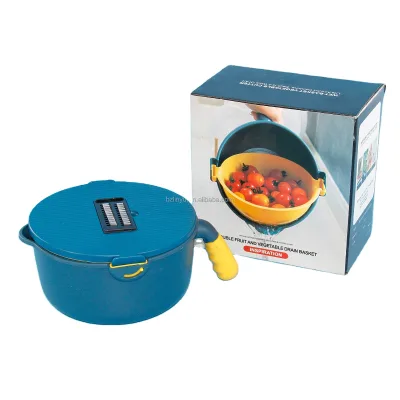


Stainless Steel Manual Crusher - for Onion, Tomato, Potato & Garlic Slicing
$0.65 - $1.06
MOQ: 1000 Pieces


Slicer Fruit Potato Onion Cutter Vegetable Cutter Chopper Vegetable Cutter
$1700.00 - $2000.00
MOQ: 1 Pieces

Popular Fruit and Vegetable Slicers
$50.00 - $55.00
MOQ: 10 Pieces
Hunan Dongfanghong Electromechanical Manufacturing Co., Ltd.

Multifunctional Vegetable Slicer
$50.00 - $55.00
MOQ: 10 Pieces
Hunan Dongfanghong Electromechanical Manufacturing Co., Ltd.

Multifunctional Vegetable Slicer
$50.00 - $55.00
MOQ: 10 Pieces
Hunan Dongfanghong Electromechanical Manufacturing Co., Ltd.


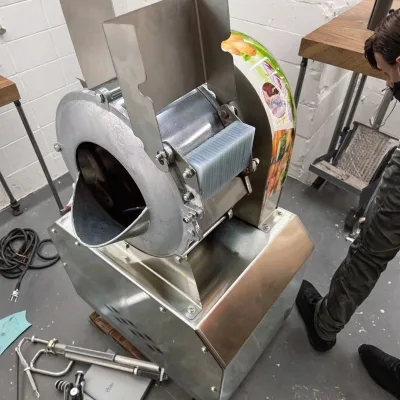

Automatic Garlic Root Cutting Machine / Vegetable Cutter / Garlic Root Cutter
$6599.00 - $8999.00
MOQ: 1 Sets


Comprehensive Sourcing Guide
Strategic Sourcing Guide for Portable Garlic Crushers and Vegetable Slicers
In the global B2B market for kitchen equipment, the demand for portable garlic crushers and vegetable slicers has surged due to the need for efficiency in both commercial kitchens and home food preparation sectors. Sourcing these tools requires a nuanced understanding of product diversity, as the market offers everything from simple manual hand-held devices to industrial-grade electric units. This guide provides a disciplined approach to evaluating suppliers and products, focusing on verified attributes, technical specifications, and compliance standards derived from current market data. Buyers must navigate a landscape where product names and functions often overlap, requiring careful verification of material composition and operational capacity to ensure the selected equipment meets specific procurement needs.
Technical Specifications and Functional Diversity
The first step in sourcing is defining the precise functional requirements. The market for these devices is bifurcated into manual and electric categories, each serving distinct operational scales. Manual units, often described as "Hand Vegetable Slicers" or "Portable Potato and Radish Slicers," rely on user force and mechanical leverage. These are typically constructed from plastic housings with stainless steel cutting blades, designed for high portability and ease of storage. In contrast, electric units, such as those labeled "Vegetable Puree Machine" or "Garlic Grinder Machine," operate on electrical power and offer higher throughput.
When evaluating technical specifications, buyers must distinguish between voltage requirements and power consumption. The supply chain presents units operating on standard household voltages like 220V, as well as industrial voltages like 380V. Power ratings vary significantly, ranging from 0.75KW for smaller commercial units to 1.5KW for heavier-duty processing machines. Capacity is another critical metric; while manual tools have no defined hourly capacity, electric models may boast processing rates up to 500kg/H. Physical dimensions also vary, with some compact units measuring approximately 27.510.82.2cm, while larger industrial slicers can reach dimensions of 9003801000mm. Buyers should verify that the model number, such as KXY-JCJ, VH-D3, or LV603, corresponds to the specific physical and electrical constraints of their facility.
Material Composition and Durability Standards
Material selection is paramount for food safety and long-term durability. The core cutting components of these devices are predominantly made from Stainless Steel 304 or SUS304, a grade widely recognized for its corrosion resistance and suitability for food contact. This material ensures that the blades remain sharp and do not contaminate the food product with rust or harmful metals. However, the structural housing often utilizes plastic, which is noted for being lightweight and cost-effective, though it may not be as durable as metal in high-impact commercial environments.
The raw materials processed by these machines provide insight into their intended use. The equipment is designed to handle a variety of inputs including cucumber, celery, carrot, onion, and specifically dry garlic. The ability to process these items without clogging or excessive wear depends on the blade geometry and the rigidity of the frame. For commercial applications, the "Vegetable Smash" or "Garlic Grinder Machine" functions require robust construction to handle continuous operation. Buyers should request material certificates to confirm the stainless steel grade, as "Stainless Steel" alone is a generic term that does not guarantee the 304 standard required for food-grade applications.
Compliance, Certification, and Safety Standards
Navigating the regulatory landscape is essential for international procurement. The supply chain includes products that carry specific certifications, such as CE, which indicates compliance with European health, safety, and environmental protection standards. While not all listed products explicitly display certification status, the presence of CE on specific models suggests a baseline of electrical safety for the markets they target.
Beyond electrical safety, buyers must verify adherence to local food safety standards in their destination country. The "prod_standard" field in supplier data often lists "customized," which implies that the machine can be built to meet specific regional requirements. However, this requires active verification by the buyer. For instance, the "Peeling Rate (%)" of 95% mentioned in certain product listings is a performance metric that should be validated through third-party testing rather than accepted as a universal guarantee. Similarly, standards regarding the dimensions of the machine, such as 9003801000mm, should be cross-referenced with the actual product standard to ensure the physical footprint matches the operational space available.
Cost Drivers and Pricing Dynamics
The pricing structure for portable garlic crushers and vegetable slicers is highly variable, reflecting the disparity between manual and electric models. The observed price range in the market spans from $0.60 to $8,999. This vast difference is driven primarily by the complexity of the mechanism, the quality of materials, and the power output. Manual "Vegetable Cutter" tools with plastic bodies and simple stainless steel blades fall into the lower end of the spectrum. Conversely, electric "Dry Garlic" processing units with high power ratings (1.5KW), large capacities (500kg/H), and industrial-grade stainless steel construction command premium prices.
Minimum Order Quantity (MOQ) is another significant cost driver. The market shows an MOQ range from 1 unit to 10,000 units. Buyers seeking small batches for testing or niche markets can find suppliers with low MOQs, often starting at 1 unit. However, larger commercial orders may require higher volume commitments to secure favorable pricing tiers. The "Customized" attribute is also a factor; while customization is available, it often incurs additional costs and may affect the unit price. Buyers should analyze the total cost of ownership, including shipping and potential import duties, rather than focusing solely on the unit price.
Supplier Evaluation and Operational Capabilities
Evaluating suppliers requires a focus on their ability to deliver consistent quality and adhere to logistical requirements. The origin of these products is predominantly Hebei, China, a region known for its manufacturing capabilities in kitchenware and food processing machinery. When assessing a supplier, buyers should verify their production capacity and lead times, although specific lead time data is not universally standardized in the provided context.
Key evaluation criteria include the supplier's ability to provide "Custom Color" options and "Customized" packaging solutions. The "prod_packing" field indicates that some units are shipped in "Wooden Case" or "Export Wooden Crates," which is crucial for protecting the machinery during long-distance transit. For commercial clients, the "Application" field often lists "Commercial," suggesting the supplier has experience serving large-scale kitchens. Buyers should request references or case studies to confirm the supplier's track record in delivering "High Efficiency" and "Nice Performance" units that meet the promised specifications.
Quality Control and Performance Verification
Implementing a robust quality control (QC) protocol is essential to mitigate the risks associated with sourcing from a diverse supplier base. Given that product attributes like "Multifunctional" and "Eco-Friendly" are listed, buyers must verify these claims through physical inspection or third-party testing. For example, the "Eco-Friendly" claim should be substantiated by the materials used and the energy efficiency of the electric models.
Performance verification should focus on the specific functions listed, such as "Slice," "Garlic Grinder," and "Vegetable Smash." Buyers should test the "Peeling Rate" and the consistency of the cut size, especially for applications requiring uniform slices for commercial food preparation. The "Waterproof" feature, if claimed, must be tested under operational conditions to ensure safety and longevity. Additionally, the "Capacity" of 500kg/H should be validated under load to ensure the machine does not overheat or degrade in performance during extended use.
Long-Term Procurement and Maintenance Considerations
Sourcing these devices is not a one-time transaction but the beginning of a long-term relationship. Buyers should consider the availability of spare parts, particularly for the "Cutting Blade" and motor components. The "Model Number" serves as a critical identifier for future maintenance; ensuring that the supplier can support the specific model, such as KHL5193 or LV603, is vital.
Maintenance requirements vary based on the material and function. Plastic components may degrade over time, while stainless steel blades require regular sharpening or replacement. The "Customization" available from suppliers can extend the lifecycle of the equipment by allowing for upgrades or modifications. Furthermore, the "Voltage" compatibility (220V vs. 380V) must be aligned with the local power infrastructure to prevent equipment failure. Buyers should also consider the "Usage" environment; units labeled for "Home Kitchen" may not withstand the rigors of a "Commercial" setting, leading to premature failure.
Comparative Analysis of Product Categories
To assist in decision-making, the following table summarizes the key distinctions between the primary product categories found in the market:
| Feature | Manual Hand Slicer | Electric Commercial Unit |
|---|---|---|
| Primary Function | Hand Vegetable Slicer, Radish Grater | Garlic Grinder, Vegetable Puree Machine |
| Material | Plastic Body, Stainless Steel Blade | SUS304 Stainless Steel, Industrial Frame |
| Power Source | Manual Force | 220V or 380V (0.75KW - 1.5KW) |
| Capacity | User Dependent | Up to 500kg/H |
| Dimensions | Compact (e.g., 27.5cm width) | Large (e.g., 900mm length) |
| Typical Application | Home Kitchen, Small Scale | Commercial, High Volume Processing |
| Certification | Varies | CE (Common) |
| MOQ Range | 1 - 10000 | 1 - 10000 |
This comparison highlights that the choice between manual and electric units depends heavily on the scale of operation and the specific food items being processed. While manual slicers offer portability and low cost, electric units provide the efficiency and capacity required for commercial kitchens.
Conclusion
Sourcing portable garlic crushers and vegetable slicers requires a methodical approach that balances technical specifications, material quality, and compliance standards. Buyers must navigate a market with significant variation in product attributes, from simple plastic hand tools to complex industrial machines. By focusing on verified data such as material grades (SUS304), power ratings, and certification status (CE), and by rigorously evaluating supplier capabilities and quality control measures, procurement professionals can secure equipment that meets their operational needs. The wide range of prices and MOQs offers flexibility, but success lies in matching the specific product model to the intended application, ensuring that the investment delivers the promised efficiency and durability.
FAQs
What materials are used for the cutting blades?
The cutting blades are made from Stainless Steel 304 or SUS304 to ensure corrosion resistance and food safety. This material grade is standard for food contact components, unlike generic stainless steel which may not meet the same durability requirements.
Can these machines handle dry garlic processing?
Yes, specific models function as Garlic Grinder Machines designed to process dry garlic efficiently. These units often feature higher power ratings like 1.5KW and capacities up to 500kg/H for commercial throughput.
What voltage options are available for electric models?
Electric models operate on either 220V for standard use or 380V for industrial applications. Buyers must verify the voltage compatibility with their local power infrastructure to prevent equipment failure during operation.
Are customization options available for these slicers?
Customization is available for color, packaging, and specific product standards. Suppliers can accommodate custom requests, though this may affect the unit price and lead time compared to standard inventory items.
Which certifications do the commercial units hold?
Some commercial units carry CE certification, indicating compliance with European safety standards. Buyers should verify this status as not all listed products explicitly display certification in their specifications.
How is the packaging handled for export shipments?
Products are typically packed in wooden cases or export wooden crates to ensure safe transit. This packaging method protects the machinery, especially larger industrial units, during long-distance shipping from the origin.