Source Portable Green Folding Table and Chair Set for Park, Beach, Garden
Find a Portable Green Folding Table and Chair Set among 30 available listings. Buyers can compare specifications, materials, and prices for outdoor use in parks, beaches, and gardens.
Key considerations
Products List


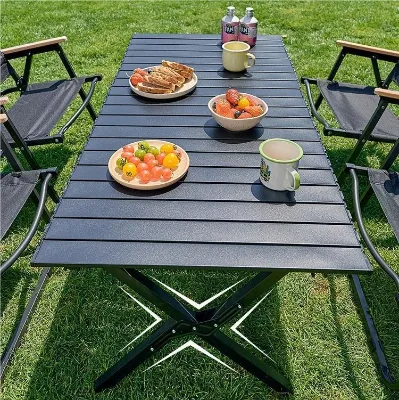
Portable Folding Camping Table and Chair Set with Oxford Fabric Backrest
$15.48 - $16.80
MOQ: 1 Pieces




Comprehensive Sourcing Guide
Strategic Sourcing Guide for Portable Green Folding Table and Chair Sets
The global market for outdoor furniture has seen a sustained shift toward modular, space-efficient solutions that balance durability with aesthetic versatility. For procurement professionals targeting a Portable Green Folding Table and Chair Set, the supply landscape presents a complex array of options ranging from lightweight plastic units to heavy-duty aluminum alloy structures. The core keyword implies a specific functional requirement: portability, a green color scheme, and a folding mechanism suitable for both table and chair components. However, the actual product data reveals a fragmented market where attributes such as material composition, customization levels, and structural design vary significantly across listings. This guide provides a disciplined framework for evaluating these products, ensuring that procurement decisions are grounded in verified specifications rather than marketing generalizations.
Technical Specifications and Material Analysis
When sourcing a Portable Green Folding Table and Chair Set, the primary technical differentiator is the material composition. The observed product data indicates a dichotomy in material availability, with listings explicitly citing "Fabric," "Plastic," and "Aluminum Alloy" as the primary construction elements. For a green folding set intended for outdoor or semi-outdoor use, the choice of material dictates the unit's lifespan, weight, and maintenance requirements.
Products constructed from "Aluminum Alloy" often align with the "Compact Type" structure and "Folded" state attributes observed in the data. Aluminum offers a high strength-to-weight ratio, making it ideal for portable applications where frequent transport is required. In contrast, listings specifying "Plastic" as the material often correlate with "Unpressurized" designs and lower weight classes, suitable for casual beach or park usage. The "Fabric" attribute, while present in the data, typically suggests seating surfaces or specific canopy components rather than the structural frame of a table and chair set.
Buyers must verify the specific structural configuration against the "Standard" dimensions provided in the source data. Observed standards include precise measurements such as "1155994.50cm" and "1807474cm," alongside more generic "Customize" entries. The "Standard" field often contains the assembled dimensions, which are critical for determining if the set fits the intended venue, whether a warehouse, a park, or a beachfront. Furthermore, the "Type" attribute distinguishes between "Single" and "Double" configurations, which directly impacts the seating capacity and table surface area. A "Double" type likely refers to a two-person setup, whereas a "Single" type is designed for individual use.
Compliance, Certification, and Safety Standards
Navigating the regulatory landscape is essential for international procurement, particularly when sourcing from regions like "China" or "Zhejiang, China," which are prominent origins in the data. The supply chain for portable furniture is subject to various safety and environmental certifications. The observed data lists a robust set of certifications including "CE," "RoHS," "CCC," "ISOCB," and "SASO." These certifications are not universal; they indicate that specific products have undergone testing for electrical safety (if applicable), restriction of hazardous substances, and compliance with regional standards.
For a portable green folding set, "CE" certification is a baseline requirement for entry into the European market, ensuring the product meets EU safety, health, and environmental protection requirements. "RoHS" compliance is critical for electronic components or materials that might contain restricted substances, though it is less relevant for purely mechanical folding structures unless they include integrated lighting or electronic mechanisms. "CCC" (China Compulsory Certification) is mandatory for products sold within China, while "SASO" is specific to the Saudi Arabian market.
Buyers should not assume that all listed products possess these certifications. The data shows that certification status is a variable attribute. Procurement teams must request valid, up-to-date certification documents for the specific model number, such as "YTTC01-1" or "LTY-ZDZ-M4," before finalizing an order. Additionally, the "Standard" attribute "1155994.50cm" suggests a specific dimensional compliance that may be tied to safety testing protocols. Verifying that the physical product matches the certified model number is a crucial step to avoid receiving non-compliant goods that could lead to customs delays or legal liabilities.
Cost Drivers and Pricing Dynamics
The pricing landscape for portable green folding table and chair sets is influenced by material costs, customization levels, and packaging requirements. The observed price range in the market spans from $2.57 to $154, a significant variance that reflects differences in quality, scale, and feature sets. The lower end of this spectrum likely corresponds to basic "Plastic" or "Fabric" units with minimal structural reinforcement, while the higher end encompasses "Aluminum Alloy" sets with "Customized" features and "Export Carton" or "Box Packing."
Several factors drive these costs. First, the "Customization" attribute is a major cost driver. Listings indicate both "Customized" and "Non-Customized" options. Products offering "Customized Logo" or specific color requests (like the "Green" requirement) often incur higher unit costs due to the setup and production adjustments required. Second, the "MOQ" (Minimum Order Quantity) ranges from 1 to 1000 units. Buyers purchasing small quantities may face higher per-unit costs, whereas bulk orders can leverage economies of scale. The data also notes "Accept Mix" for MOQ, which allows for flexibility in order composition but may impact the final price calculation.
Packaging is another critical cost component. The data lists "Export Carton," "Cartons," and "Box Packing" as common methods. "Export Carton" typically implies reinforced packaging designed for long-distance shipping, which adds to the cost but reduces the risk of damage. "Box Packing" might be a lighter alternative. Buyers must weigh the cost of packaging against the potential for product loss during transit. Additionally, the "Condition" is listed as "New" across the board, but the "Feature: Durable" attribute suggests that higher-priced items may offer better long-term value through enhanced wear resistance.
Typical Applications and Usage Scenarios
The versatility of portable green folding table and chair sets is evident in the diverse "Usage" categories observed in the data. These include "Beach," "Mountain," "Park," "Leisure Facilities," "Warehouse," "Outdoor," "Restaurant," and "Cafe." Each application imposes different demands on the product's design and durability.
For "Beach" and "Mountain" applications, the product must withstand exposure to sand, saltwater, and uneven terrain. The "Compact Type" structure and "Folded" state are essential for transport in these environments. Products designed for "Warehouse" or "Leisure Facilities" may prioritize stackability and space efficiency over weather resistance. The "Kind" attribute, which includes "Fish Table" and "Dining-table," further refines the intended use. A "Fish Table" implies a specific design for cleaning or preparing seafood, likely requiring a different surface material than a standard "Dining-table."
The "Specific Use" field highlights "Garden Chair," indicating a subset of products designed for residential or semi-residential outdoor spaces. These units often require a balance of aesthetics and comfort. The "Application" field also lists "Park," suggesting public use where vandalism and heavy wear are concerns. Buyers must match the product's "Structure" and "Material" to the specific environment. For instance, a "Plastic" chair might suffice for a private garden but could degrade quickly in a high-traffic public park. The "Rotary: Fixed" attribute suggests that some chairs have non-rotating bases, which is preferable for stability on uneven ground like "Mountain" or "Beach" locations.
Supplier Evaluation and Sourcing Strategy
Evaluating suppliers requires a focus on their ability to deliver consistent quality and adhere to the specific technical requirements of the order. The data indicates that products originate from "China" and specifically "Zhejiang, China," a major manufacturing hub. However, the presence of "Customized" and "Non-Customized" options suggests that suppliers vary in their flexibility.
Buyers should prioritize suppliers who can demonstrate a clear link between the "prod_model" and the "Certification" documents. For example, if a buyer requires "CE" certification for a "Folding Chair" with model number "C006," the supplier must provide proof that this specific model meets the standard. The "OEM: Customized Logo" attribute indicates that many suppliers offer branding services, which is valuable for corporate procurement or retail branding. However, buyers must verify the lead time and quality control measures associated with custom branding to ensure that the logo application does not compromise the structural integrity of the "Aluminum Alloy" or "Plastic" components.
The "MOQ" flexibility is another key evaluation criterion. Suppliers offering "Accept Mix" allow buyers to combine different models or colors, which can be advantageous for diversifying inventory. However, buyers should be cautious of suppliers with high MOQs (up to 1000) if they are testing a new market. The "Standard" attribute "Customize" implies that some suppliers are willing to tailor dimensions, but this often comes with higher costs and longer lead times. Buyers should request samples to verify the "Condition" and "Feature: Durable" claims before committing to large orders.
Quality Control and Long-Term Procurement Considerations
Ensuring long-term value requires a rigorous quality control (QC) process that goes beyond initial visual inspection. The "Feature: Durable" attribute is a common claim, but it must be validated through testing. Buyers should verify the "Structure" integrity, particularly the "Folded" mechanism, which is a common point of failure in portable furniture. The "Armrest" attribute, which varies between "With Armrest" and "Without Armrest," also impacts the user experience and durability; armrests can add stress points if not properly reinforced.
For long-term procurement, buyers should consider the "prod_packing" method. "Export Carton" and "Box Packing" differ in their protective capabilities. Repeated folding and unfolding can cause wear on the joints and hinges. Suppliers should provide data on the expected cycle life of the folding mechanism. Additionally, the "Color: White" and "Green" options suggest that color fastness is a concern. Buyers must ensure that the "Green" color is UV-resistant, especially for products used in "Beach" or "Mountain" environments where sun exposure is high.
The "Standard" dimensions, such as "955550CM+454568CM," provide a benchmark for consistency. Deviations from these standards can indicate quality issues. Buyers should establish a clear acceptance criteria based on these dimensions and the "Certification" requirements. Finally, the "Location" of the supplier, such as "Zhejiang, China," can influence logistics and lead times. Buyers should factor in shipping costs and potential delays when planning their procurement strategy. By focusing on these technical and operational details, buyers can secure a reliable supply of portable green folding table and chair sets that meet their specific needs.
Comparative Analysis of Product Attributes
To facilitate decision-making, the following table summarizes the key attributes observed in the market, highlighting the variations that buyers must navigate.
| Attribute Category | Observed Variations | Procurement Implication |
|---|---|---|
| Material | Fabric, Plastic, Aluminum Alloy | Aluminum Alloy offers best durability; Plastic is cost-effective; Fabric is for seating surfaces only. |
| Customization | Customized, Non-Customized, Customized Logo | Customization increases cost and lead time; verify logo placement and material compatibility. |
| Structure | Compact Type, Folded, Fixed Rotary | Compact/Folded essential for portability; Fixed Rotary ensures stability on uneven ground. |
| Certification | CE, RoHS, CCC, ISOCB, SASO | Verify specific model certification; do not assume all products have all certifications. |
| Dimensions | 1155994.50cm, 1807474cm, Customize | Match dimensions to venue requirements; "Customize" requires clear specification. |
| Usage | Beach, Park, Warehouse, Restaurant, Cafe | Select material and structure based on environment (e.g., UV resistance for Beach). |
| MOQ | 1-1000, Accept Mix | High MOQ reduces unit cost; "Accept Mix" allows inventory flexibility. |
| Origin | China, Zhejiang, China | Verify shipping logistics and potential tariffs based on specific origin location. |
This analysis underscores the importance of precise specification matching. The market offers a wide range of options, but the "green" color and "folding" mechanism are the core requirements that must be consistently met across the selected supplier's inventory. By adhering to the technical and compliance guidelines outlined above, buyers can mitigate risks and ensure a successful procurement outcome.
FAQs
What materials are available for portable green folding table and chair sets?
Available materials include fabric, plastic, and aluminum alloy. Aluminum alloy offers a high strength-to-weight ratio ideal for portability, while plastic suits casual beach usage and fabric is often used for seating surfaces.
Can I find certified products with CE and RoHS standards?
Yes, some products list CE, RoHS, CCC, ISOCB, and SASO certifications. Buyers must verify that the specific model number, such as YTTC01-1, matches the provided certification documents before ordering.
How does the MOQ vary for these folding sets?
The minimum order quantity ranges from 1 to 1000 units. Some suppliers accept mixed orders, allowing flexibility in combining different models or colors to meet specific inventory needs.
Which dimensions are standard for these table and chair sets?
Standard dimensions include 115*59*94.50cm, 180*74*74cm, and customized options. Precise measurements are critical for ensuring the set fits intended venues like parks, warehouses, or beachfronts.
Where are these products typically manufactured?
Products originate from China, with specific manufacturing hubs in Zhejiang. Buyers should verify the origin location to ensure compliance with regional shipping and safety regulations.
What customization options exist for logos and colors?
Customization includes customized logos and specific color requests like green. While non-customized options exist, customized features often incur higher costs due to production adjustments and setup requirements.