Source Portable Window Lid Aromatherapy Jar for Home, SPA, and Holiday
Explore 30 listings for the Portable Window Lid Aromatherapy Jar, featuring options in glass jars with paraffin wax or liquid diffusers. Buyers can compare customization, burning times, and packaging details from suppliers in China; compare the available evidence and request quotations based on your requirements.
Key considerations
Products List

Wood Lid Soy Wax Scented Candle Wooden Lid Glass Jar Aromatherapy Candle
$2.50 - $7.80
MOQ: 1000 Pieces


Custom Glass Diffuser Aromatherapy Jars Empty Reed Diffuser Refillable Bottles
$0.89 - $1.49
MOQ: 1000 Pieces


Empty Custom Glass Diffuser Bottles DIY Aromatherapy Glass Bottle with Lids
$0.30 - $0.63
MOQ: 5000 Pieces


Round Diffuser Aromatherapy Glass Bottle Aromatherapy Aroma Diffuser Bottle with Stopper
$0.18 - $0.20
MOQ: 10000 Pieces

Glass Fragrance Bottle Sealed with Cover Diffuser Bottle Aromatherapy Bottle
$0.09 - $0.21
MOQ: 20000 Pieces


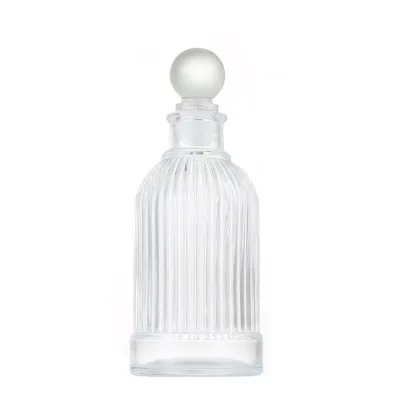
Comprehensive Sourcing Guide
Portable Window Lid Aromatherapy Jar Sourcing Guide
Sourcing portable window lid aromatherapy jars requires distinguishing between functional lighting products and dedicated fragrance delivery systems. The available market data indicates a split between jar-style candles designed for home lighting and decorative occasions, and liquid reed diffusers intended for continuous volatilization. Buyers must carefully align their procurement needs with the specific product type, as the former relies on paraffin wax and a burning time of approximately 4.5 hours, while the latter utilizes a liquid form with a service life of one to two months.
Procurement decisions should also account for the diverse usage scenarios listed in current listings, which range from home decoration and holiday events to spa environments and religious ceremonies. While some products are explicitly designed for fresh air and odor removal, others focus on tranquilizing effects or general lighting functions. Understanding these distinct application profiles is essential before engaging with suppliers, as the material composition and intended working method differ significantly between a burning candle jar and a non-flammable reed diffuser system.
Product Scope and Observed Listing Signals
The observed product range reveals a clear segmentation between solid wax candles and liquid fragrance systems, each with unique structural requirements. Listings confirm the availability of paraffin wax candles housed in glass jars, often featuring natural design styles and handmade attributes suitable for weddings and parties. In contrast, other entries describe liquid reed diffusers with circular glass forms, specifically engineered to volatilize fragrance at dosages between 3% and 15% for home use. This distinction dictates the necessary packaging and handling protocols during the sourcing process.
Buyers must verify the specific physical dimensions and packaging standards associated with each product variant to ensure compatibility with their logistics channels. Current data points to specific model standards, such as a 7.8cm by 7.8cm base for certain candle jars and a 200ml capacity for liquid diffusers. Packaging varies from individual paper boxes to bulk carton shipments, with some suppliers offering customized gift boxes. These physical attributes directly influence the unit cost and the efficiency of the supply chain, requiring precise specification matching before finalizing orders.
Technical Specifications to Verify
Technical verification must begin with the core material composition, specifically confirming whether the product utilizes paraffin wax or a liquid fragrance solution. For candle variants, the burning time is a critical performance metric, with observed data indicating a duration of roughly 4.5 hours per unit. Buyers should also validate the fragrance dosage percentages, which range from 3% to 15% depending on the product type, as this directly impacts the intensity and longevity of the scent release in the target environment.
Dimensional accuracy and form factor are equally critical for ensuring the product fits the intended window lid or shelf space. Listings provide specific standard measurements, such as a height of 10.3cm for certain models and a 200ml volume for others, which must be cross-referenced with the buyer's design requirements. Additionally, the working mechanism, whether it is a flame-based lighting function or a passive volatilization process, must be confirmed to ensure the product meets safety and functional expectations for the specific application scenario.
Compliance and Safety Documentation
Safety compliance is paramount when sourcing products intended for home lighting and decoration, particularly those involving open flames or volatile liquids. While specific certification statuses like CE are noted in background data, buyers should not assume universal compliance without requesting current test reports for each specific model. It is essential to verify that the glass jars and wax formulations meet the safety standards required for the destination market, especially given the diverse usage contexts ranging from religious ceremonies to spa environments.
Documentation requests should explicitly cover third-party inspection capabilities, as some suppliers in the observed data list this as a standard service. Buyers must ensure that the supplier can provide evidence of quality control measures that align with international safety norms for flammable materials and glass containers. Without verified documentation, the risk of non-compliance increases, potentially leading to customs delays or product recalls in markets with strict regulations regarding home fragrance and lighting products.
Cost Drivers and Commercial Terms
Commercial terms are heavily influenced by the customization level and the minimum order quantity (MOQ) required by the supplier. The observed MOQ range spans from 100 to 20,000 units, with specific listings indicating a baseline of 1,000 sets for certain customized jar models. Buyers must negotiate these thresholds carefully, as higher customization levels for logos and packaging often necessitate larger order volumes to achieve viable unit economics. The price range observed, from 0.08 to 7.8 USD, reflects the significant variance between basic bulk items and premium, customized gift sets.
Packaging and origin logistics also play a substantial role in the final landed cost. Products originating from different regions, such as Shanghai, Zibo, or Qingdao, may incur varying freight costs and lead times. The choice between standard paper boxes and specialized gift packaging can further impact the per-unit price. Buyers should request detailed breakdowns of these costs to understand how customization, packaging, and shipping terms contribute to the total procurement expense before committing to a specific supplier.
Supplier Qualification and Quality Control
Supplier qualification should prioritize those who explicitly offer third-party inspection services and demonstrate a capacity for OEM customization. The available data highlights suppliers who accept external quality checks, a critical factor for ensuring that the final product matches the agreed-upon specifications for fragrance dosage, burning time, and physical dimensions. Buyers should verify the supplier's ability to handle custom logo designs and packaging requirements, as these are common value-added services in the aromatherapy sector.
Quality control processes must be rigorously defined to prevent defects in glass integrity and wax consistency. Since many products are handmade, there is an inherent variability that requires strict oversight during the production phase. Buyers should establish clear acceptance criteria for the finished goods, including checks on the sealing of liquid diffusers and the uniformity of the candle wax. Engaging suppliers with a proven track record of handling third-party inspections ensures a higher level of reliability and reduces the risk of receiving substandard inventory.
Long-Term Procurement Checks
Establishing a long-term procurement strategy requires regular audits of supplier performance against the initial technical specifications and quality benchmarks. Buyers should monitor the consistency of fragrance dosage and burning times across multiple production batches to ensure that the product maintains its advertised performance over time. Continuous verification of the supplier's ability to meet the agreed-upon MOQs and lead times is essential for maintaining a stable supply chain, especially when scaling up orders for seasonal peaks like holidays or weddings.
Future procurement decisions should also account for potential changes in material standards and regulatory requirements. As the market evolves, suppliers may need to adapt their formulations or packaging to meet new safety or environmental standards. Buyers should maintain open communication channels with their suppliers to stay informed about any updates in production processes or material sourcing. This proactive approach ensures that the product line remains compliant and competitive in the long term, safeguarding the brand's reputation for quality and reliability.
FAQs
Can I customize the logo on the aromatherapy jar?
Yes, customized logos are available for these products. The supplier offers OEM services with customized logo design options. This allows buyers to brand the glass candle jars or reed diffusers with their own identity. Customization is a key feature for businesses seeking unique packaging solutions for their aromatherapy lines.
What is the minimum order quantity for these items?
The minimum order quantity varies by product type. Some items have an MOQ of 1000 sets, while others range from 100 to 20,000 units. Buyers should check specific product models like ODMF17-052607 or JS22061 for exact requirements. This flexibility supports both small trials and large-scale procurement needs.
What materials are used for the aromatherapy containers?
The containers primarily use glass for the jar or diffuser form. The candle wax is specified as paraffin wax with a melting point around 160 degrees. Reed diffusers use a liquid form with a fragrance dosage of 5% to 15%. These materials ensure durability and effective scent release for home decoration and lighting purposes.
What are the standard dimensions for the glass jars?
Standard dimensions vary by model. One model measures 7.8cm by 7.8cm by 10.3cm. Another reed diffuser model is 9.1cm by 9.1cm by 10.4cm. The 200ml liquid diffuser has a circular shape. Buyers can request customized sizes to fit specific branding or retail display requirements for their aromatherapy products.
How long does the candle burn time last?
The burning time for the paraffin wax candles is approximately 4.5 hours. This duration is suitable for home lighting, weddings, parties, and spa decorations. The service life for liquid reed diffusers is typically 1 to 2 months. These metrics help buyers plan inventory and usage scenarios for their customers.
Where are these aromatherapy products manufactured?
These products originate from multiple locations in China, including Shanghai, Zibo, and Qingdao. Each factory may specialize in different types, such as candles or reed diffusers. Buyers can source from these regions to leverage local manufacturing capabilities. The origin information helps in assessing logistics and supply chain efficiency for international orders.