Source Precision Needle Glue Bottle for Medical, Chemical, and Mixing
Find 30 Precision Needle Glue Bottle options from Chinese manufacturers. Compare models like T-04-1 and HPB-027, noting capacities from 3ml to 120ml and features such as screw caps and screen printing for medical and chemical applications.
Key considerations
Products List
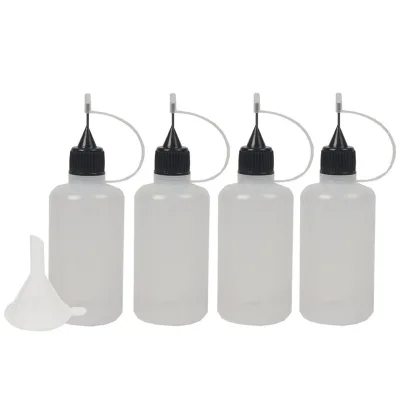
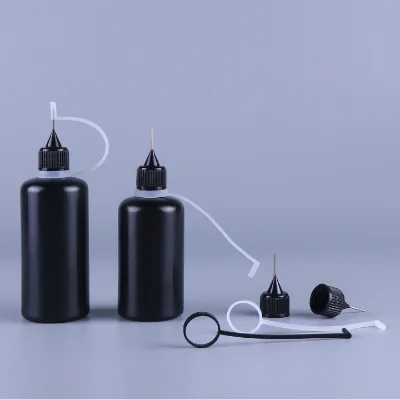


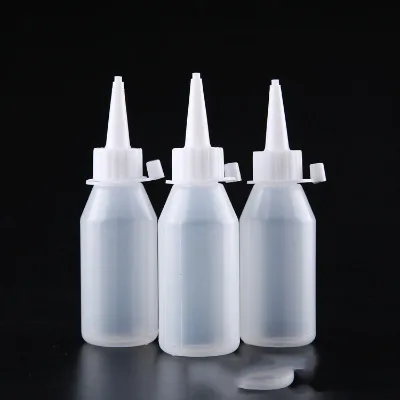


$0.14 - $0.23
MOQ: 5000 Pieces

Comprehensive Sourcing Guide
Strategic Sourcing Guide for Precision Needle Glue Bottles
Understanding Product Architecture and Technical Specifications
When sourcing precision needle glue bottles, buyers must first distinguish between the container architecture and the delivery mechanism, as these components often originate from different manufacturing processes yet must function as a unified system. The core product in this category typically consists of a polyethylene (PE) or similar plastic vessel designed for chemical or medical applications, paired with a specialized dispensing tip or needle assembly. Based on observed market data, the primary material for the bottle body is often PE, offering flexibility and chemical resistance essential for handling adhesives. The collar material, which secures the needle or cap, is frequently specified as plastic, ensuring a tight seal against leakage.
The technical specifications for these units vary significantly based on the intended application volume. Observed data indicates a wide range of capacities, including 3ml, 5ml, 10ml, 15ml, 20ml, 30ml, 50ml, 60ml, 100ml, and 120ml. This granularity allows procurement teams to select the exact volume required for specific dispensing tasks, whether for micro-electronics assembly or general industrial bonding. The wall thickness is a critical structural parameter, with specific models observed at 0.1 mm, a dimension that balances material cost with the pressure resistance needed during needle insertion or dispensing.
The sealing mechanism is another vital technical attribute. Buyers will encounter products utilizing screw caps or press caps, depending on the required reusability and dispensing speed. The sealing type directly influences the leak-proof integrity of the glue bottle. Furthermore, the surface handling often involves screen printing, which allows for the application of volume markings, hazard warnings, or branding directly onto the translucent, white, or frost-colored bottles. The color of the bottle itself, ranging from transparent to white, black, or frost, is not merely aesthetic; it often serves to protect light-sensitive adhesives from degradation or to facilitate visual inspection of the remaining fluid volume.
Compliance Framework and Certification Verification
In the B2B procurement of medical and industrial precision devices, certification status is a primary filter for supplier qualification. The market data indicates that certain models carry certifications such as ISOCE and adhere to standards like CE ISO. These designations suggest that the manufacturing processes and the final product quality meet specific international safety and quality benchmarks. However, buyers must treat these certifications as observations of specific product lines rather than universal attributes of all precision needle glue bottles. A supplier may offer ISO-certified medical-grade bottles while their industrial-grade counterparts may only meet general plastic molding standards.
The standard "8g bottle" or "5ml bottle" mentioned in product listings often refers to a specific industry standard or a model-specific designation rather than a universal regulatory standard. Procurement teams must verify if the "CE ISO" reference applies to the entire production line or specific batches. For medical applications, where the product is labeled for "Mixing Potions" or "Medical" use, the verification of sterilization protocols and biocompatibility becomes paramount. The presence of a "Quality Guarantee" period, such as a five-year term observed in some listings, implies a manufacturer's confidence in the durability and non-degradation of the plastic material over time, but this must be validated against the specific storage conditions of the buyer's facility.
Buyers should also scrutinize the "Industrial Use" classification. While some products are explicitly marked for medical applications, others are designated for general chemical use. The distinction is crucial because the chemical resistance of the PE material must be validated against the specific solvent or adhesive being dispensed. A bottle certified for water-based adhesives may not be suitable for aggressive solvents without additional testing. Therefore, the certification check must extend beyond the label to include Material Safety Data Sheets (MSDS) compatibility reports provided by the supplier.
Cost Drivers and Economic Parameters
The pricing structure for precision needle glue bottles is influenced by a complex interplay of material costs, customization levels, and order volume. The observed price range in the market spans from $0.01 to $3.50 USD per unit. This wide variance is not indicative of quality differences alone but reflects the diversity in specifications, such as volume capacity, color, and the complexity of the needle assembly. A basic 3ml white bottle with a standard screw cap will sit at the lower end of this spectrum, while a customized 100ml frost bottle with a specialized press cap and screen-printed markings will command a higher price.
The Minimum Order Quantity (MOQ) is a significant economic factor, with observed ranges extending from 1 unit to 100,000 units. This flexibility allows small businesses to test product performance with low-risk orders, while large-scale manufacturers can leverage economies of scale. The "Supply Ability" of suppliers, often cited as 200,000 pieces per day, suggests that high-volume orders can be fulfilled rapidly, provided the customization requirements do not necessitate a change in the production mold. Customization, which is listed as "Available," is a primary cost driver. Requests for specific colors, custom branding, or unique bottle shapes will increase the unit cost and potentially extend the lead time.
Lead times also play a role in the total cost of ownership. While some suppliers offer a delivery window of 20 days, this can fluctuate based on the complexity of the order and the current capacity of the manufacturing facility. Buyers should factor in the "Port of dispatch" locations, such as Tianjin, Shanghai, Huangpu, or Ningbo, when calculating logistics costs. The proximity of the port to the buyer's distribution center can significantly impact freight expenses. Additionally, the packaging details, which may include poly bags, cartons, or custom requests, add to the overall cost. Bulk packaging in standard cartons is generally more economical than custom blister packs or individual PE packages, which are often reserved for medical-grade applications requiring higher hygiene standards.
Typical Applications and Functional Requirements
The functional requirements of precision needle glue bottles are dictated by the specific industry application. The data highlights two primary sectors: medical and industrial chemical use. In the medical field, these bottles are utilized for "Mixing Potions," suggesting applications in pharmaceutical compounding or laboratory settings where precise dosing is critical. The "Needle" attribute is often listed as "Without Needle," indicating that the bottle is designed to accept a separate needle assembly, or the needle is integrated into the cap system. This modularity allows for the use of different needle gauges depending on the viscosity of the fluid being dispensed.
For industrial applications, the "Chemical" designation points to the use of these bottles in manufacturing environments where adhesives, sealants, or solvents are applied. The "Disposable" feature is a key characteristic, ensuring that cross-contamination is minimized between batches or production runs. This is particularly important in high-precision manufacturing where even microscopic residue can compromise product quality. The "Group" attribute, sometimes listed as "Adult," likely refers to the intended user demographic or the safety classification of the product, ensuring it is suitable for professional handling rather than consumer use.
The shape of the bottle, described as "High Bottle" in some listings, is engineered to facilitate gravity-fed dispensing or to fit into automated dispensing machinery. The "Syringe Use" attribute further clarifies that these bottles can function as part of a syringe system, allowing for controlled pressure application. This versatility makes them suitable for a wide range of tasks, from applying glue to circuit boards to dispensing medical fluids. The "Color" options, including white, black, and transparent, serve functional purposes beyond aesthetics; for instance, black bottles may be used to protect light-sensitive chemicals, while transparent bottles allow for quick visual checks of fluid levels.
Supplier Evaluation and Geographic Considerations
Evaluating suppliers for precision needle glue bottles requires a focus on geographic origin and production capacity. The observed data points to manufacturers located primarily in Hebei and Zhejiang, China. These regions are known for their robust plastic molding industries and supply chain efficiency. The "Place of Origin" is a critical factor, as it influences the logistics, regulatory compliance, and potential trade tariffs associated with the procurement. Suppliers in these regions often have established export channels, with ports like Tianjin and Shanghai serving as major dispatch points.
When assessing a supplier, buyers should verify the "Brand Name" and "Model Number" consistency. For example, brands like "jiegaomei" and "Hopson" appear in the market data, each associated with specific model numbers such as "jiegaomei123," "T-04-1," or "HPB-027." This specificity helps in tracking product history and ensuring that the buyer receives the exact specifications they ordered. The "Customization" availability is a strong indicator of a supplier's flexibility and technical capability. A supplier that can accommodate custom requests for packaging, color, or bottle shape is likely to have a more advanced manufacturing setup and a willingness to engage in a long-term partnership.
The "Quality Guarantee" period, such as the five-year term observed, is a strong signal of supplier confidence. However, buyers should also look for evidence of consistent production quality, such as the ability to maintain the 0.1 mm thickness specification across large batches. The "Selling Units" being listed as "Single item" suggests that the supplier is capable of handling both small and large orders, but the "Supply Ability" of 200,000 pieces per day indicates that they are primarily geared towards high-volume production. Buyers should ensure that the supplier's capacity aligns with their own demand forecasts to avoid supply chain disruptions.
Quality Control and Long-Term Procurement Strategy
Implementing a robust quality control (QC) strategy is essential for maintaining the integrity of precision needle glue bottles. The "Feature" of being "Disposable" necessitates strict QC measures to ensure that each unit is free from defects that could lead to leakage or contamination. Buyers should request detailed inspection reports that cover dimensional accuracy, such as the 0.1 mm thickness, and seal integrity tests for the screw or press caps. The "Surface Handling" via screen printing must also be verified to ensure that markings are legible and do not interfere with the dispensing mechanism.
Long-term procurement considerations involve building a relationship with suppliers who can offer consistent quality and reliable lead times. The "Delivery Days" of 20 days observed in the market data should be treated as a baseline, with the understanding that custom orders may require additional time. Buyers should establish clear communication channels regarding the "Packaging Details," ensuring that the goods are packed in poly bags and cartons that protect the bottles during transit. The "Customization" aspect should be managed through a formalized process to avoid misunderstandings regarding color, volume, or branding requirements.
Finally, buyers must remain vigilant regarding the "Standard" compliance. While "CE ISO" is a common designation, the specific standard, such as "8g bottle" or "5ml bottle," must be clearly defined in the purchase order. This ensures that the supplier understands the exact regulatory and technical requirements of the buyer's market. By combining a thorough understanding of technical specifications, a rigorous certification check, and a strategic approach to supplier evaluation, procurement teams can secure a reliable supply of precision needle glue bottles that meet their operational needs.
| Attribute Category | Key Observations | Verification Requirement |
|---|---|---|
| Material | PE, Plastic Collar | Verify chemical compatibility with adhesive type. |
| Volume | 3ml to 120ml | Confirm exact capacity matches dispensing needs. |
| Sealing | Screw Cap, Press Cap | Test seal integrity under pressure. |
| Certification | ISOCE, CE ISO | Request valid certificates for specific batches. |
| Origin | Hebei, Zhejiang, China | Assess logistics impact based on port of dispatch. |
| Customization | Available (Color, Print) | Define specs clearly to avoid production errors. |
| Lead Time | 20 Days (Typical) | Confirm timeline for custom orders. |
| Packaging | Poly bag, Carton, Blister | Ensure packaging meets shipping and storage standards. |
FAQs
What materials are used for precision needle glue bottles?
The primary material is polyethylene (PE) plastic, offering flexibility and chemical resistance. Some listings also specify plastic for the collar material to ensure a tight seal against leakage during dispensing.
Which certifications are available for these medical and industrial bottles?
Certain models carry ISOCE certification and adhere to CE ISO standards. These designations suggest the manufacturing processes meet specific international safety and quality benchmarks for medical and chemical applications.
Can buyers request customization for bottle color and packaging?
Yes, customization is available for colors like white, black, frost, and transparent. Buyers can also request specific packaging details such as poly bags, cartons, or custom blister packs to meet hygiene or branding needs.
How does the sealing type affect bottle functionality?
Bottles utilize either screw caps or press caps depending on the required reusability and dispensing speed. The sealing type directly influences the leak-proof integrity of the glue bottle during chemical or medical use.
What is the typical lead time for delivery from China?
The standard delivery time is approximately 20 days from dispatch ports like Tianjin or Shanghai. This timeline can fluctuate based on order complexity and the specific customization requirements of the buyer.
Which volume capacities are offered for precision needle glue bottles?
Available volumes range from 3ml up to 120ml, including 5ml, 10ml, 20ml, and 50ml options. This granularity allows procurement teams to select the exact volume required for specific dispensing tasks.
Are these bottles suitable for medical mixing potions?
Yes, specific models are designated for medical applications and mixing potions. These units are often disposable to ensure cross-contamination is minimized between batches or production runs in laboratory settings.