Source Pure Electric SUV Family Car for commuting, travel, and cargo
Compare 30 Pure Electric SUV Family Car options with varying battery capacities, motor powers, and dimensions. Buyers can evaluate specifications like range, seating, and charging times to find suitable models for personal or commercial use.
Key considerations
Products List


New Cars Electric Family Electric Automobile Car EV Car High Speed Electric Cars
$35700.00 - $36100.00
MOQ: 1 Pieces


Electric Powered Family Drive SUV Car with 7 Seats High Speed Long Nedc Range Car
$35700.00 - $36100.00
MOQ: 1 Pieces

Automobile Electric Vehicles Family Car Luxury Car in Electric Version New Cars
$29780.00 - $29980.00
MOQ: 1 Pieces

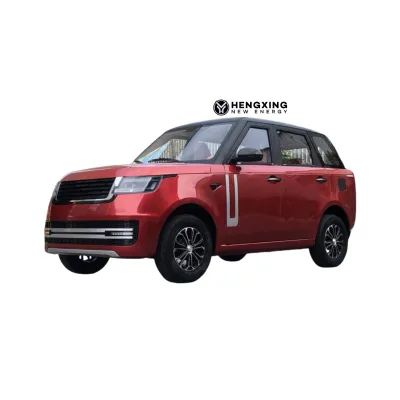


4-Wheel Family Electric Vehicle with Battery, New Energy Car From Manufacturer
$2399.00 - $2499.00
MOQ: 9 Pieces


Electric Vehicles High Speed EV Car Family Car Electric Cars Adults Vehicle
$12000.00 - $20000.00
MOQ: 1 Sets

CE Certificate New Energy Luxury Passenger Vehicle Family Electric Car Adult SUV
$12000.00 - $20000.00
MOQ: 1 Sets


Energy Electric Vehicle Motors Car Automobile Cars Made in China Car SUV Electric
$12000.00 - $20000.00
MOQ: 1 Sets


SUV Electric Carelectric Car Electric Car SUV Electric Car Low Speed Cars
$4080.00 - $4300.00
MOQ: 4 Pieces


Brand New EV Pure Electric Car Over Electric Car SUV New Energy Electric Car
$2500.00 - $3100.00
MOQ: 1 Pieces


2022 Crozz Compact SUV: Pure Electric Vehicle EV Car - Pure Electric SUV
$20000.00 - $200000.00
MOQ: 1 Pieces
Yuncheng City Yanhu District Changchi Auto Service Co., Ltd.


Comprehensive Sourcing Guide
Strategic Sourcing Guide for Pure Electric SUV Family Vehicles
The global shift toward sustainable mobility has elevated the Pure Electric SUV Family Car to a cornerstone of modern B2B procurement strategies. For buyers navigating this sector, the decision matrix extends far beyond basic aesthetics or brand recognition. It requires a rigorous analysis of technical specifications, regulatory compliance, and supply chain reliability. The current market presents a diverse array of options, ranging from compact urban EVs to larger family-oriented SUVs, each with distinct performance profiles and operational requirements. This guide provides a structured framework for evaluating these vehicles, ensuring that procurement decisions are grounded in verified data and aligned with long-term operational goals.
Technical Specifications and Performance Analysis
When evaluating pure electric SUVs, the primary focus must be on the core powertrain and chassis architecture. The observed market data reveals significant variation in dimensions and performance metrics, which directly impacts vehicle utility. For instance, specific models in the current supply pool exhibit a body structure classified as an SUV with a wheelbase of 2765mm, while others offer an extended wheelbase of 2965mm. This difference in chassis length is a critical determinant for interior passenger space and cargo capacity, essential factors for family-oriented vehicles.
The powertrain configuration is equally vital. High-performance variants in the observed dataset feature a maximum motor power of 150kW, paired with a maximum torque of 310 N.M. These figures suggest a capability for robust acceleration and highway merging, suitable for diverse driving conditions. The drive mode is predominantly rear-drive, utilizing a permanent magnet/synchronous motor type. This configuration is standard for modern EVs due to its efficiency and power density. However, buyers must also note the existence of lower-power variants, such as those with a 3500W motor and a maximum speed of 60km/h, which are better suited for specific, low-speed applications rather than general family transportation.
Battery capacity and range are the most critical specifications for family use. The data indicates a battery capacity of 84.8kWh for certain high-range models, supporting a maximum cruising range of 550km. This range is sufficient for most inter-city travel and daily family commutes without frequent recharging. In contrast, other entries list a voltage of 72v, which implies a significantly different power architecture and likely a shorter range. The battery type is consistently identified as Ternary Lithium Battery in the high-performance segment, known for its energy density. Buyers must verify the specific battery chemistry and capacity for any model to ensure it meets the required daily mileage expectations.
| Specification Category | High-Performance Variant | Compact/Low-Speed Variant |
|---|---|---|
| Body Type | Open SUV | Closed / 5-door SUV |
| Dimensions | 459218521629mm | 390017201680mm |
| Wheelbase | 2765mm or 2965mm | Not specified (implied shorter) |
| Motor Power | 150kW | 3500W |
| Max Speed | 160km/h | 60km/h |
| Battery Capacity | 84.8kWh | 72v (Voltage only) |
| Cruising Range | 550km | Not specified |
| Drive Mode | Rear Drive | Not specified |
Compliance and Certification Verification
Navigating the regulatory landscape is a non-negotiable aspect of sourcing electric vehicles. The presence of certifications such as CE and EEC (European Economic Community) indicates that certain models have undergone testing for safety and environmental standards required in specific markets. Additionally, the CCC (China Compulsory Certification) is a mandatory standard for vehicles sold within China, ensuring they meet local safety and emission requirements.
Buyers must treat these certifications as specific to the model and batch, not as universal attributes of the entire product category. For example, while some listings explicitly state CE and EEC compliance, others may only list CCC. The absence of a specific certification in a product listing does not necessarily imply non-compliance, but it requires immediate verification from the supplier. Procurement teams should request valid certification documents for the specific model number, such as the ID. 4 CROZZ PRO or ID. 6 X PURE+, to confirm their eligibility for import and registration in the target market.
Furthermore, the standardization of vehicle dimensions is a key compliance indicator. The observed data lists specific size standards, such as 459218521629mm and 487618481680mm. These dimensions must align with local regulations regarding vehicle length, width, and height, particularly for parking infrastructure and road classification. Buyers should verify that the listed "prod_standard" matches the physical dimensions of the vehicle to avoid regulatory hurdles during customs clearance or vehicle registration.
Cost Drivers and Pricing Dynamics
The pricing structure for pure electric SUVs is influenced by a complex interplay of battery capacity, motor power, and certification status. The observed price range spans from $2,399 to $200,000, a disparity that reflects the vast difference between entry-level, low-speed electric vehicles and premium, long-range family SUVs. The lower end of the spectrum, often associated with 72v systems and 3500W motors, represents a fundamentally different product class compared to the 150kW, 84.8kWh variants.
Buyers must understand that the "unit price" is not the sole cost driver. The Minimum Order Quantity (MOQ) is another critical factor, with observed ranges from 1 to 9 units. For small fleet operators or individual resellers, an MOQ of 1 is advantageous, allowing for risk mitigation and model testing. However, larger orders may unlock volume discounts, though the specific discount tiers are not publicly standardized in the current data.
Other cost drivers include the complexity of the body structure and the availability of customization. While some models offer customized colors, the "prod_packing" attribute indicates that some units are sold without specialized packaging, which can affect logistics costs. Additionally, the origin of the vehicle, specifically "Shandong, China" or general "China" origin, impacts shipping costs and import duties. Buyers should calculate the total landed cost, including freight, insurance, and tariffs, rather than focusing solely on the FOB price.
Typical Applications and Use Cases
The diversity in specifications suggests that pure electric SUVs serve multiple distinct use cases. The high-performance models, with a 550km range and 160km/h top speed, are ideal for general family transportation, inter-city travel, and commercial fleet operations requiring long daily ranges. These vehicles are suitable for ride-hailing services, corporate fleets, and private ownership where range anxiety is a concern.
Conversely, the compact models with a 60km/h maximum speed and 72v voltage are better suited for specific, controlled environments. These vehicles, often described as "4 Wheel Electric Car" with 5 seats, are appropriate for campus shuttles, residential community transport, or short-distance logistics within gated communities. The 5-door SUV structure in some low-speed variants indicates a design focused on accessibility and maneuverability in tight spaces rather than highway performance.
The seating capacity is another differentiator. While most observed models are 5-seaters, the specific "prod_model" names like ID. 4 X PURE+ suggest a focus on family utility. Buyers must align the vehicle's intended application with its technical capabilities. Using a low-speed vehicle for highway commuting would be unsafe and inefficient, while a high-performance SUV might be over-engineered and cost-prohibitive for a small campus shuttle service.
Supplier Evaluation and Origin Verification
Evaluating suppliers requires a focus on transparency and origin verification. The data explicitly lists "China" and "Shandong, China" as places of origin. While this provides a geographic baseline, it does not confirm the specific manufacturing facility or the supplier's reputation. Buyers should avoid naming specific suppliers but must insist on clear documentation regarding the manufacturing location.
The "Brand Name" attribute, such as "Hengxing," appears in some listings, while others list generic model numbers. This inconsistency highlights the prevalence of OEM (Original Equipment Manufacturer) and ODM (Original Design Manufacturer) relationships in the market. Buyers should verify whether the brand name is the actual manufacturer or a trading entity. Requesting factory audits or third-party inspection reports can provide insight into the supplier's production capabilities and quality control processes.
Additionally, the "Customization: Available" attribute suggests that many suppliers are willing to tailor vehicles to specific requirements. This flexibility is a significant advantage for B2B buyers looking to brand vehicles or modify specifications. However, customization can impact lead times and costs. Buyers should clarify the scope of customization, including color, interior layout, and software features, before committing to an order.
Quality Control and Long-Term Procurement
Quality control in the electric vehicle sector must extend beyond the initial inspection. The "Single-Speed Transmission for Electric Vehicles" and "Gear Shift Type" are standard features, but the durability of the battery and motor is paramount. The "Charging time" of 8-10 hours for certain models indicates the charging infrastructure requirements. Buyers must ensure that their operational sites can support this charging time or invest in faster charging solutions.
Long-term procurement considerations include the availability of spare parts and after-sales support. The "Tire size" of 195/70R14 and "Rim Size" of 20 Inch are specific details that affect maintenance costs. Buyers should verify the availability of these parts in their target market to prevent downtime. Furthermore, the "Seat Belt Is Not Fastened" warning for front seats indicates the presence of safety monitoring systems, which are crucial for liability and insurance purposes.
Sustainability and end-of-life management are also growing concerns. The use of Ternary Lithium Batteries requires proper recycling protocols. Buyers should inquire about the supplier's take-back programs or recycling partnerships to ensure compliance with environmental regulations. Finally, the "Selling Units: Single item" attribute suggests that some models are sold individually, which simplifies the procurement process but may limit bulk discounts.
Conclusion
Sourcing pure electric SUV family cars requires a meticulous approach that balances technical performance, regulatory compliance, and cost efficiency. The market offers a wide spectrum of options, from high-range, high-power SUVs to compact, low-speed utility vehicles. By carefully analyzing specifications such as battery capacity, motor power, and dimensions, buyers can select the right vehicle for their specific needs. Verification of certifications like CE, EEC, and CCC is essential to ensure legal compliance, while supplier evaluation must focus on transparency and origin. Ultimately, a successful procurement strategy involves a holistic view of the total cost of ownership, including maintenance, charging infrastructure, and long-term support.
FAQs
What is the maximum cruising range for high-performance pure electric SUV family cars?
The maximum cruising range is 550km for models equipped with an 84.8kWh battery. This range supports inter-city travel and daily commutes without frequent recharging, though lower-speed variants may have different specifications.
Which motor power options are available for pure electric SUV family cars?
High-performance variants feature a maximum motor power of 150kW, while compact models may have a 3500W motor. The 150kW option offers robust acceleration suitable for highway driving, whereas the lower power is for controlled environments.
Can buyers find pure electric SUV family cars with CE certification?
Yes, certain models in the supply pool explicitly hold CE certification. Buyers must verify this certification for specific model numbers like ID. 4 CROZZ PRO to ensure compliance with safety standards in target markets.
What is the typical wheelbase dimension for pure electric SUV family cars?
Observed wheelbases are 2765mm or 2965mm depending on the specific model. This chassis length directly impacts interior passenger space and cargo capacity, which are critical factors for family-oriented vehicle utility.
How does the battery type affect the performance of pure electric SUV family cars?
High-performance models use Ternary Lithium Batteries known for their energy density. This chemistry supports the 84.8kWh capacity and 550km range, whereas other entries list only voltage, implying a different power architecture.
What is the price range for pure electric SUV family cars in the current market?
The observed price range spans from 2399 to 200000 USD. This disparity reflects the difference between entry-level low-speed vehicles and premium long-range family SUVs with higher battery capacities and motor power.
Which suppliers offer customization for pure electric SUV family cars?
Customization is available for attributes like color and interior layout on many models. Buyers should clarify the scope of customization with suppliers, as it may impact lead times and total landed costs.