Source PVC Tarot Cards for Games, Events, and Custom Gifts
Find 30 listings for PVC Tarot Cards with customizable sizes, materials, and surface finishes. Buyers can compare specifications from suppliers in Guangdong, including options for art paper or PVC with various printing types and packaging styles.
Key considerations
Products List


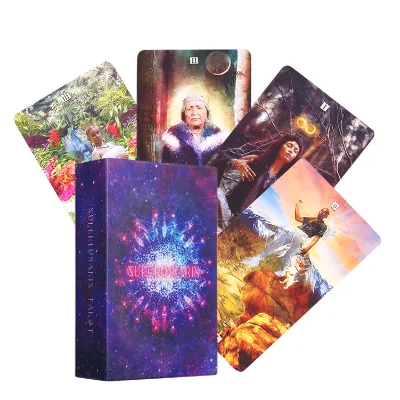
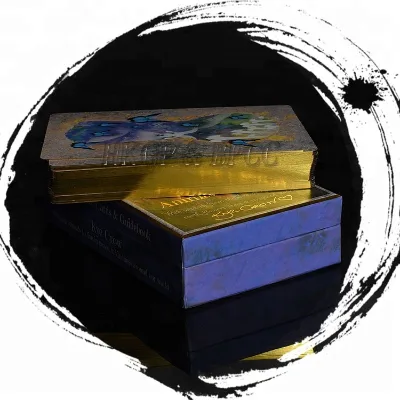
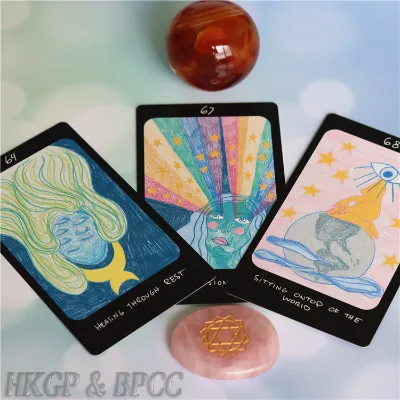
Gold Foil Tarot Cards Custom Logo Print Poker PVC Waterproof Playing Cards
$16.00 - $17.00
MOQ: 1 Pieces


Comprehensive Sourcing Guide
Strategic Sourcing Guide for PVC Tarot Cards
Understanding Material Composition and Technical Specifications
When sourcing custom playing cards, particularly those designated as tarot or poker variants, the distinction between paper and plastic substrates is the primary technical differentiator. The available market data indicates that "Regular Material" options include both coated paper (ranging from 300g to 400g) and Polyvinyl Chloride (PVC) sheets with specific thicknesses. For buyers specifically targeting PVC Tarot Cards, the critical specification to verify is the sheet thickness, which typically falls within the range of 0.3mm to 0.32mm for standard durability, though some listings note a broader operational range of 0.19mm to 0.35mm depending on the specific card stock grade.
The physical dimensions of the cards are equally vital for compatibility with standard gaming tables and shuffling machines. While the data confirms that standard sizes such as 6388mm and 5787mm are prevalent, the "Customized" attribute is a high-confidence fact for this product category. This means that a buyer can request non-standard dimensions, such as 70*120mm, provided the supplier has the necessary die-cutting capabilities. The thickness of the card, often measured in grams per square meter (gsm) for paper or millimeters for PVC, directly influences the "feel" and shuffling quality. A card that is too thin may feel flimsy, while one that is too thick may not shuffle smoothly. Buyers must explicitly request the exact thickness specification in millimeters for the PVC variant to ensure it meets their operational requirements.
Furthermore, the surface finishing process plays a significant role in the tactile experience and longevity of the cards. The observed data lists several finishing techniques, including Varnish, Lamination, UV Coating, and Linen texture. For PVC cards, the application of a "Linen" finish is particularly common as it reduces friction and prevents cards from sticking together during rapid shuffling. The "Coating" specification often cites "Film Lamination," which acts as a protective barrier against moisture and wear. When evaluating a supplier, the buyer should verify which specific finishing method is applied to the PVC substrate, as this determines the card's resistance to bending and its overall lifespan.
Compliance, Certification, and Safety Verification
In the B2B procurement of recreational products like tarot cards, compliance with safety standards is a non-negotiable requirement, especially when the product is marketed for use by adults and older children. The provided facts indicate an "Age Range" of "14 Years & Up" and "Adult Kids," suggesting that the product must adhere to safety regulations regarding small parts and chemical composition. While the specific certification status of individual suppliers is not listed in the source data, buyers must independently verify that the PVC material used is free from harmful phthalates and heavy metals, which are common concerns in plastic-based printing products.
The "Customized" nature of the product means that the final compliance status depends heavily on the raw materials supplied by the manufacturer. If the supplier claims the product meets international safety standards, the buyer should request a valid test report from an accredited third-party laboratory. The data mentions "OEM: Yes," which implies that the supplier is capable of producing private-label goods. In such cases, the buyer is often responsible for ensuring that the final product, including the ink and coating used, complies with the regulations of the destination market. For instance, markets in the European Union and North America have strict regulations regarding the chemical composition of plastic toys and games.
Additionally, the "Packaging" is listed as a "Color Box" or "Corrugated Paperboard Box." The packaging materials themselves must also be compliant with environmental and safety standards. Buyers should verify that the inks used for printing on the packaging are non-toxic and that the cardboard used is sourced from sustainable or recycled materials if sustainability is a procurement goal. The "Product Origin" is noted as Guangdong, China, a major manufacturing hub. While this location offers cost advantages, it also necessitates rigorous due diligence regarding the supplier's adherence to local and international export standards. Buyers should not assume compliance based on the origin alone; specific documentation must be requested and reviewed before finalizing the order.
Cost Drivers and Pricing Structure Analysis
The pricing for custom PVC Tarot Cards is influenced by a complex interplay of material costs, customization levels, and order volume. The observed price range in the market spans from $0.05 to $35,700, a variance that reflects the difference between a single sample unit and a bulk industrial order. The "MOQ" (Minimum Order Quantity) is a critical cost driver, with the data indicating a standard MOQ of 500 sets, though observed ranges extend from 1 to 1000 units. For buyers seeking to minimize unit costs, ordering above the standard MOQ is essential, as the per-unit price typically decreases significantly with volume.
Material selection is the second major cost factor. PVC is generally more expensive than paper due to the raw material cost and the additional processing required for lamination and coating. The data specifies that PVC thickness can vary from 0.3mm to 0.32mm, and thicker sheets will incur higher material costs. Furthermore, the choice of surface finishing adds to the price. A simple Varnish finish is less costly than a multi-step process involving UV Coating and Linen texturing. Buyers must balance their budget against the desired durability and aesthetic quality.
The "Customization" attribute is a significant variable in the pricing structure. While the base price for standard sizes like 63*88mm may be lower, any deviation to custom dimensions or unique artwork requires additional setup fees and die-cutting costs. The "Sample" availability is noted as "Free Charge Ready Made Samples," which can help buyers evaluate the product without incurring initial costs, but custom samples may carry a fee. Additionally, the "Printing" method, listed as "Cmyk/Pms" or "Offset Printing," affects the cost. Offset printing is generally more economical for large runs, while digital printing might be preferred for smaller, highly customized batches, though the data specifically highlights Offset Printing as a standard capability.
Typical Applications and Usage Scenarios
The versatility of PVC Tarot Cards makes them suitable for a wide array of applications, ranging from casual home entertainment to professional gaming environments. The "Usage" attribute explicitly lists "Gift," indicating that these cards are often packaged and sold as premium items for special occasions. The "Application" field further broadens the scope to include "Home," "Outdoor," and "Chess-and-Card Room" settings. This suggests that the cards are designed to withstand varying environmental conditions, a claim supported by the "Waterproof" feature observed in the product attributes.
The "Mode" of operation is listed as "Manual Operation," which is standard for traditional card games. However, the durability of PVC makes these cards ideal for high-frequency use in commercial settings such as casinos, card rooms, or gaming tournaments where paper cards would degrade quickly. The "Board Type" is identified as "Playing Card" or "Poker," and the "Member" count ranges from 4 to 10 players, making them suitable for standard group games. The "Time" required for a session is noted as both "<0.5h" and ">2H," indicating that these cards are versatile enough for quick casual games as well as extended tournament play.
For buyers targeting the gift market, the "Style" of the cards, described as "Fillet" (likely referring to a specific design or edge style), and the "Color" being "Multicolour" are key selling points. The packaging, often a "Color Box," enhances the perceived value, making the product attractive for retail or corporate gifting. The "Teaching Mode" of "Instructions" suggests that some product listings may include guides or tutorials, which can be a value-add for buyers targeting beginners or educational markets. Understanding these diverse applications allows buyers to tailor their procurement strategy to specific market segments, whether they are supplying a local game store or a large-scale event organizer.
Supplier Evaluation and Quality Control Protocols
Evaluating a supplier for PVC Tarot Cards requires a focus on their manufacturing capabilities and quality control processes. The "Product Origin" is consistently listed as Guangdong, China, a region known for its printing and packaging industry. However, the presence of a location does not guarantee quality. Buyers should verify the supplier's "OEM" capabilities, as this indicates they can produce private-label goods to specific brand standards. The "Customized" attribute confirms that the supplier has the flexibility to meet unique design requirements, but this flexibility must be balanced with strict quality control measures.
Quality control should begin with the raw materials. Buyers must request samples of the PVC sheet to verify the thickness and flexibility before placing a bulk order. The "Surface Finishing" options, such as "Varnish, Lamination, UV Coating, Linen," should be inspected for consistency. A high-quality supplier will ensure that the coating is even and that the Linen texture is uniform across all cards. The "Printing" quality, whether "Cmyk/Pms" or "Offset," must be checked for color accuracy and registration. Misaligned colors or faded prints can significantly reduce the perceived value of the product.
The "Packaging" is another critical area for quality control. The "Color Box" or "Corrugated Paperboard Box" must be sturdy enough to protect the cards during shipping. Buyers should inspect the packaging for durability and ensure that the internal structure prevents the cards from shifting or bending. The "Sample" availability is a valuable tool for quality verification. The data notes that "Free Charge Ready Made Samples" are available, which allows buyers to test the product's physical properties, such as the "Waterproof" claim, before committing to a large order.
Long-Term Procurement and Supply Chain Considerations
Sourcing PVC Tarot Cards is not a one-time transaction but a long-term relationship that requires careful supply chain management. The "MOQ" of 500 sets suggests that buyers should plan for recurring orders to maintain inventory levels and secure favorable pricing. The "Lead Time" is not explicitly detailed in the provided facts, but buyers should negotiate clear timelines for production and delivery to avoid stockouts. The "Customization" aspect means that any changes to the design or specifications will require a new production run, so maintaining a stable design is beneficial for long-term cost efficiency.
Sustainability is an emerging consideration in the procurement of plastic products. While the data does not specify the recyclability of the PVC used, buyers should inquire about the environmental impact of the materials and the manufacturing process. The "Material" is listed as "Plastic" or "PVC," and buyers should explore options for recycled PVC or alternative eco-friendly materials if sustainability is a brand priority. The "Packaging" can also be optimized for sustainability by using recycled cardboard or reducing the size of the box to minimize waste.
Finally, the "Brand" aspect, with "Aiopr" mentioned as a potential brand, suggests that buyers may be looking for white-label opportunities. Establishing a strong relationship with a supplier who can consistently deliver high-quality, customized products is essential for building a reputable brand. Buyers should consider the supplier's ability to scale production as their business grows and their capacity to handle rush orders or seasonal demand spikes. By focusing on these long-term factors, buyers can ensure a stable and profitable supply chain for their PVC tarot card products.
FAQs
What materials are used for custom playing cards?
Custom playing cards are available in Art Paper or PVC. PVC options typically range from 0.3mm to 0.32mm thickness, while paper cards use 300g to 400g coated stock. Buyers should specify the exact material grade to ensure durability.
Which card sizes are available for customization?
Standard sizes include 57*87mm, 63*88mm, and 70*120mm. The product attributes confirm that all listed dimensions can be customized to meet specific buyer requirements for gaming tables or special events.
Can I get free samples of ready-made cards?
Yes, free charge ready-made samples are available for inspection. This allows buyers to verify the waterproof feature and surface finishing quality before committing to a bulk order of 500 sets or more.
What printing methods are supported for these cards?
The cards support Cmyk, Pms, and Offset Printing methods. Buyers can choose from various surface finishes like Varnish, Lamination, or UV Coating to enhance the visual appeal and protect the printed design.
How is the product packaged for shipping?
Products are packaged in Color Boxes or Corrugated Paperboard Boxes. The packaging includes the playing cards and ensures protection during transit, suitable for gifting or commercial distribution to retailers.
What is the minimum order quantity for these cards?
The standard MOQ is 500 sets, though observed ranges extend from 1 to 1000 units. Buyers should plan for the 500-set threshold to secure the best pricing and ensure production efficiency.
Where are these custom cards manufactured?
The products originate from Guangdong, China. This region is a major manufacturing hub known for printing capabilities, offering cost advantages while requiring verification of local and international export standards.