Source Quilted Women Jacket for Winter, Travel, and Daily Wear
Compare 30 Quilted Women Jacket options featuring down filling, windproof fabric, and customizable designs. Buyers can review specifications like size, thickness, and packing details from suppliers in China.
Key considerations
Products List


Customized Logo Woman Warm Long Quilted Winter Coat Hooded Women Long Jacket for Women
$17.00 - $25.00
MOQ: 300 pieces


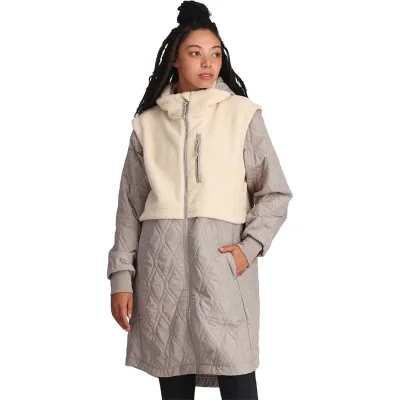


Women's Winter Hooded Long Style Green Padded/Quilted Coat Down Jacket
$19.00 - $23.00
MOQ: 500 Pieces

Women's Long Sleeve Coat with Full-Zip Hooded Quilted Padded Down Jacket
$19.00 - $23.00
MOQ: 500 Pieces

Women Collarless Down Jackets Women Quilted Down Padded Puffer Jacket Ladies
$12.00 - $22.00
MOQ: 1 piece
Comprehensive Sourcing Guide
Strategic Sourcing Guide for Quilted Women Jackets
Understanding Technical Specifications and Material Composition
When sourcing quilted women jackets, the primary objective is to align technical specifications with the intended thermal performance and durability requirements. Based on the observed product data, the market offers a diverse range of configurations, yet specific technical parameters define the quality tier. The core material composition frequently cited involves a blend of synthetic and natural elements. The outer shell is predominantly constructed from 100% Polyester or specific variants such as 210t Polyester 3*3 Ripstop with AC Coating. This ripstop construction is critical for preventing tear propagation, a common failure point in outdoor apparel. The coating mentioned, AC Coating, suggests a treatment designed to enhance water resistance, a feature that aligns with the observed "Windproof" and "Waterproof" attributes in high-performance listings.
The insulation layer is a decisive factor in the jacket's thermal efficiency. The supply data indicates a strong preference for down filling, specifically Duck Down. The observed down content ranges from 80% to 90%, with the remainder consisting of feathers. This ratio directly impacts the warmth-to-weight ratio; a 90% down content generally offers superior loft and compressibility compared to lower percentages. The filling type is explicitly noted as "Duck Down," which buyers must verify against their sustainability or ethical sourcing policies, as alternative fillings like goose down or synthetic alternatives exist in the broader market. The jacket construction utilizes a "Padded" style with "Plain Dyed" or "Pigment Printing" techniques, ensuring colorfastness and a uniform appearance. The closure systems vary, with "Full Zip" and "Closed-end" zippers being standard, often supplemented by snap fasteners for wind flap protection.
| Specification Category | Observed Variants | Sourcing Implication |
|---|---|---|
| Outer Fabric | 210t Polyester Ripstop, 100% Polyester | Verify denier and coating type for water resistance. |
| Insulation | 80%-90% Duck Down | Confirm fill power and cleanliness if not listed. |
| Closure | Full Zip, Snap, Closed-end | Check zipper brand and slider durability. |
| Collar Style | Stand Collar, High Collar, Hooded | Ensure hood is detachable or integrated as required. |
| Fit Type | Regular Straight Fit, Loose | Confirm size grading against target demographic. |
Compliance, Certification, and Standard Verification
In the B2B apparel sector, compliance is not merely a regulatory hurdle but a prerequisite for market access. The supplied data references specific sizing standards, including "S M L XL 2XL 3XL" and extended ranges up to "4XL," alongside "XS S M L XL 2XL 3XL." Some listings explicitly mention adherence to "International/EU/UK Standard" sizing, while others offer "Free Size" or specific single sizes like "S" or "L." Buyers must verify that the supplier's grading system matches the target market's regulatory requirements for labeling. The absence of specific certification names in the raw data necessitates a proactive verification process. Buyers should request documentation confirming compliance with REACH regulations for chemical safety, particularly regarding the AC Coating and dyeing processes used.
Furthermore, the origin of the product is a critical compliance variable. The data indicates origins in "China" and specifically "Fujian, China." While this provides a geographic baseline, it does not guarantee compliance with specific labor or environmental standards. Buyers must inquire about the factory's adherence to social compliance audits (such as SA8000 or BSCI) and environmental management systems (ISO 14001). The "Customized" label attribute suggests that branding and labeling can be tailored, but the content of these labels must meet the destination country's textile labeling laws, including fiber content disclosure and care instructions. The "Sample Time" of 5-7 days indicates a responsive supply chain, but this does not substitute for the time required to validate compliance documentation for bulk orders.
Cost Drivers and Pricing Dynamics
The pricing landscape for quilted women jackets is influenced by a complex interplay of material costs, customization levels, and order volume. The observed price range in the market spans from $6.88 to $58.90 USD. This significant variance is not arbitrary; it reflects differences in material quality, specifically the down content and fabric technology. A jacket priced at the lower end likely utilizes lower fill power down or synthetic blends, whereas the higher price points correspond to the 90% duck down content and specialized ripstop fabrics with advanced coatings. The "Customization" attribute is a major cost driver. While the base product may be available at a lower price, the "Custom" attribute notes a threshold of 500 units, suggesting that branding, custom labels, and specific colorways incur additional costs or require minimum order quantities (MOQs) to be economically viable.
The MOQ range observed is broad, spanning from 1 to 1000 units. This flexibility allows buyers to test the market with small quantities or commit to larger volumes for better unit economics. However, the "Custom" threshold of 500 units implies that significant customization is only cost-effective above this volume. Buyers should anticipate that the unit price will decrease as the order volume increases, provided the design remains within the supplier's standard capabilities. The "Packing" specifications, such as "1PC/Polybag, 10PCS/CTN" or "20PCS/CTN," also impact logistics costs. Different carton configurations affect shipping efficiency and container utilization, which can subtly influence the final landed cost. Payment terms like "T/T, LC, Western Union, Moneygram" offer flexibility but may carry different financial implications depending on the buyer's risk tolerance and credit history.
Typical Applications and Market Segmentation
Quilted women jackets serve a versatile range of applications, driven by their functional attributes of warmth and windproofing. The "Winter" season classification and "Warm" key features position these garments primarily for cold-weather protection. The "Regular Thickened" specification indicates suitability for moderate to severe winter conditions, making them ideal for urban commuting, outdoor leisure activities, and light trekking. The "Unisex" and "Women" gender classifications suggest a dual market approach; while some designs are tailored specifically for women with a "Regular Straight Fit," others are marketed as unisex, expanding the potential customer base.
The "Hooded" feature and "Windproof" capability make these jackets particularly suitable for active use in variable weather conditions. The "Padded" style and "Down" filling provide high thermal efficiency without excessive bulk, allowing for layering in professional or casual settings. The "Customizable" color attribute allows brands to align the product with seasonal trends or corporate branding. The "Free Size" option caters to a specific segment of the market that prioritizes convenience and inclusivity over precise fit, often found in promotional merchandise or fast-fashion lines. Conversely, the availability of specific sizes (S, L, etc.) supports brands targeting customers who require precise sizing for comfort and performance. The "Plain Dyed" and "Pigment Printing" techniques allow for a wide spectrum of aesthetic applications, from solid, professional colors to patterned, fashion-forward designs.
Supplier Evaluation and Production Capabilities
Evaluating a supplier for quilted women jackets requires a deep dive into their production capabilities and operational flexibility. The data highlights "Fujian, China" as a key production hub, a region known for its textile and garment manufacturing infrastructure. Buyers should verify the supplier's capacity to handle the observed "Sample Time" of 5-7 days, as this indicates a streamlined prototyping process. However, sample speed does not guarantee bulk production reliability. The "Customization" availability suggests the supplier can accommodate branding needs, but the "Custom" MOQ of 500 units must be factored into the procurement strategy.
The "Product Name" and "Prod Model" identifiers (e.g., DJ-26072204, WJ1130) indicate a structured inventory system, which is a positive sign of organizational maturity. Buyers should request a detailed breakdown of the production process, specifically how the "210t Polyester" or "100% Polyester" fabric is sourced and treated. The "Technics" listed as "Plain Dyed" and "Pigment Printing" require specific machinery and expertise; verifying the supplier's investment in these technologies ensures consistent color quality. The "Packing" variations (10, 20, or 25 pieces per carton) suggest the supplier has flexible logistics capabilities, but buyers must confirm if these configurations can be adjusted to meet specific shipping requirements. The "Payment Term" options, including "LC" (Letter of Credit), indicate a level of financial sophistication and willingness to engage in formal trade practices, which is essential for large-scale B2B transactions.
Quality Control and Long-Term Procurement Considerations
Maintaining consistent quality in quilted women jackets is paramount, especially given the variability in down content and fabric coatings. The "90% down content" and "80% Down, 20% Feathers" specifications are critical quality markers. Buyers must implement rigorous quality control protocols to verify these ratios, as fill power and cleanliness are not always visible in the final product. The "Ripstop" fabric and "AC Coating" require testing for tear strength and water repellency to ensure they meet the "Windproof" and "Waterproof" claims. The "Full Zip" and "Snap" fastenings should be tested for durability and smooth operation after multiple cycles.
For long-term procurement, the relationship with the supplier must be built on transparency and reliability. The "Customized" label and "Color: customizable" attributes offer opportunities for brand differentiation, but they also introduce complexity. Buyers should establish clear quality standards for customization, including color matching accuracy and label placement precision. The "Sample Time" of 5-7 days is a baseline; buyers should negotiate lead times for bulk production that account for potential delays in material sourcing or production bottlenecks. The "International/EU/UK Standard" sizing reference is a strong indicator of the supplier's capability to meet global market needs, but buyers should still conduct fit testing on actual samples before full-scale production. Finally, the "Polybag" and carton packing standards must be reviewed to ensure they protect the product during transit and meet sustainability goals, as packaging waste is an increasing concern in the global apparel industry.
FAQs
What is the typical down content in these jackets?
The jackets typically contain 80% to 90% duck down filling. The remaining portion consists of feathers, which directly impacts the warmth-to-weight ratio and thermal efficiency of the garment.
Which fabric materials are used for the outer shell?
The outer shell is predominantly constructed from 100% polyester or 210t polyester ripstop with AC coating. This ripstop construction prevents tear propagation while the coating enhances water resistance.
Can buyers request custom labels and colors?
Yes, customization is available for labels and colors. However, significant customization like branding typically requires a minimum order quantity of 500 units to be economically viable for the supplier.
What are the standard size ranges offered?
Standard sizes range from XS to 4XL, including S, M, L, XL, and 2XL. Some listings also offer free size options or adhere to International, EU, and UK sizing standards.
How long does it take to produce a sample?
Sample production typically takes between 5 to 7 days. This timeline indicates a responsive supply chain, though bulk production lead times may vary based on order volume and customization.
What are the common packing configurations for orders?
Packing configurations vary, often using 1 piece per polybag. Cartons typically hold 10, 20, or 25 pieces depending on the specific product model and supplier logistics capabilities.