Source Radiation Detection BGO Scintillation Crystal for PET, CT, and Gamma Spectroscopy
Find and compare 30 Radiation Detection BGO Scintillation Crystal options from Chinese manufacturers. Evaluate specifications such as density, transparency range, and Mohs hardness to select the optimal material for medical imaging and industrial safety applications.
Key considerations
Products List
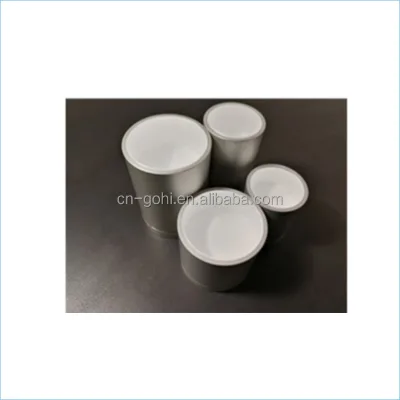
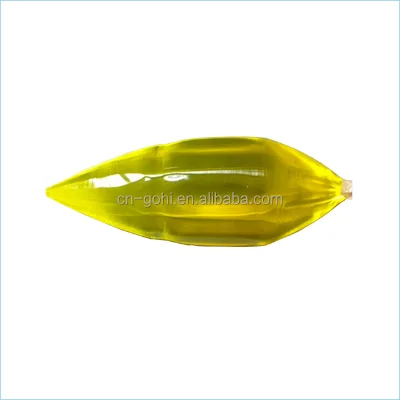
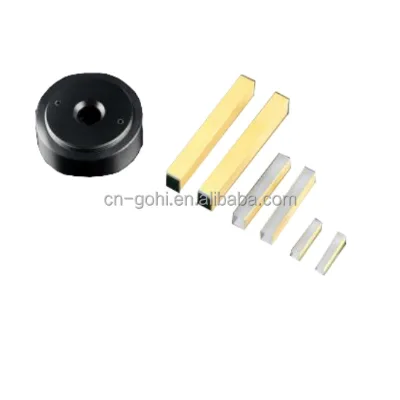
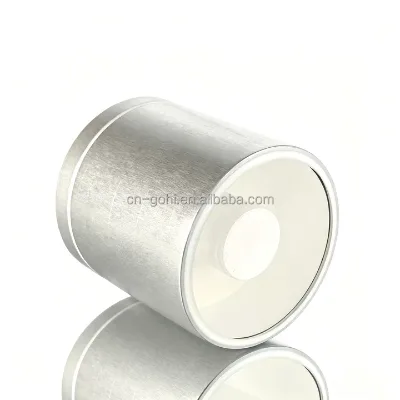
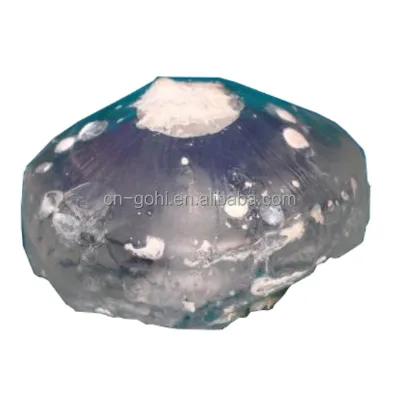
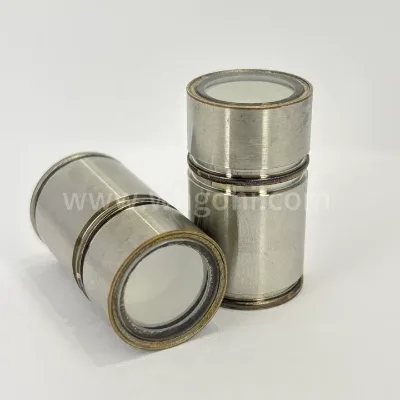


Custom Bbo Crystal for Ultrafast Frequency Doubling of Femtosecond Lasers
$100.00 - $500.00
MOQ: 1 Pieces
Comprehensive Sourcing Guide
Radiation Detection BGO Scintillation Crystal Sourcing Guide
Procuring Bismuth Germanate (BGO) scintillation crystals requires a nuanced understanding of their unique physical properties and their specific role in high-energy physics and medical imaging applications. BGO is widely recognized for its high density and effective atomic number, which provide exceptional stopping power for gamma rays and X-rays. This makes it an ideal choice for applications where compact detector size and high detection efficiency are paramount, such as in positron emission tomography (PET) scanners, environmental monitoring, and security screening systems. Buyers must recognize that while BGO offers superior light output per unit volume compared to some alternatives, its slower decay time and lower light yield compared to LYSO or LSO crystals necessitate careful system-level integration planning.
The sourcing landscape for BGO crystals is characterized by a mix of specialized optical component manufacturers and broader radiation detection equipment suppliers. The market exhibits a wide variance in product specifications, with observed listing prices ranging from $0.23 to $9,999 USD, reflecting differences in crystal quality, dimensions, and surface finishing. Minimum Order Quantities (MOQs) also vary significantly, spanning from single units for R&D purposes to batches of up to 3,000 units for industrial deployment. This variability demands that buyers clearly define their volume requirements and technical tolerances early in the sourcing process to avoid misalignment with supplier capabilities.
Product Scope and Observed Listing Signals
The current market listings for radiation detection components reveal a diverse array of products that may or may not be pure BGO crystals, requiring careful scrutiny of product attributes. For instance, some listings identify products as "Crystals" with specific model numbers like "Ce:YAG" or "BBO," which are distinct materials from BGO. Ce:YAG, for example, is a Cerium-doped Yttrium Aluminum Garnet crystal with a melting point of approximately 1095°C and a density of 4.57 g/cm³, while BBO (Beta Barium Borate) is a nonlinear optical crystal with a trigonal crystal structure and a Mohs hardness of 4. Buyers must distinguish between these materials, as their optical and radiation detection properties differ substantially. Misidentifying a BBO or Ce:YAG crystal as a BGO alternative can lead to significant performance mismatches in high-energy detection applications.
Other listings in the observed data point to complete detection systems rather than raw crystals, such as "Electromagnetic Radiation Detectors" or "Nuclear Radiation Detectors" with specific model numbers like "50mm well type" or "20x35mm." These devices often integrate scintillation materials, photodetectors, and electronics into a single unit. Some of these detectors are capable of identifying multiple radiation types, including Gamma (γ), X-Ray, Neutron, Alpha (α), and Beta (β) radiation, as well as Electromagnetic Fields (EMF). When sourcing BGO specifically, buyers should verify whether the supplier is providing the raw crystal component or a pre-assembled detector module, as the integration requirements, calibration needs, and warranty structures will differ significantly between the two.
Technical Specifications to Verify
When evaluating BGO scintillation crystals, the primary technical parameters to verify are the crystal’s dimensions, clarity, and surface finish, as these directly impact detection efficiency and optical coupling. The transparency range of scintillation materials is critical, with some observed listings specifying ranges such as 190-3500nm, which indicates the spectral window in which the crystal can effectively transmit light. Buyers must ensure that the crystal’s transmission window aligns with the emission spectrum of the BGO material, which typically peaks in the blue-green region. Additionally, the clear aperture, often specified as a percentage (e.g., >=90%), determines the effective area for radiation interaction, while surface quality parameters like scratch-dig ratings (e.g., S/D: 20/10) indicate the level of surface defects that could scatter light and reduce signal resolution.
Structural and optical properties such as refractive index and Mohs hardness are also vital for system design. BGO has a high refractive index, which affects how light is coupled to photodetectors like PMTs or SiPMs, often requiring specific optical grease or index-matching solutions to minimize reflection losses. The Mohs hardness of the crystal, which can vary depending on the specific material (e.g., 8.5 for some crystals vs. 4 for others), influences handling procedures and packaging requirements. Buyers should also verify the crystal structure and space group, as these determine the symmetry and potential birefringence of the material, which can impact polarization-sensitive applications. Confirming these attributes ensures that the crystal will perform predictably within the optical train of the detection system.
Compliance and Safety Documentation
Safety and regulatory compliance are non-negotiable when sourcing materials used in radiation detection, particularly given the potential handling of radioactive sources during testing and deployment. Buyers must ensure that suppliers provide appropriate safety data sheets (SDS) and handling guidelines for the scintillation crystals, which may contain heavy metals like bismuth. While BGO itself is not typically classified as hazardous waste in its solid form, the manufacturing process and associated chemicals may require specific disposal protocols. Documentation should also cover any certifications related to the manufacturing environment, such as ISO standards, which indicate a controlled quality management system that minimizes contamination and ensures batch-to-batch consistency.
Furthermore, buyers should verify that the supplier adheres to international standards for optical components and radiation detectors, if applicable. Some listings mention certifications like ISO, which can serve as a baseline for quality assurance, but buyers should inquire about specific standards relevant to radiation detection, such as those from the International Electrotechnical Commission (IEC) or relevant national standards bodies. For detectors that include electronic components, compliance with electromagnetic compatibility (EMC) standards may also be required, especially if the devices are to be used in sensitive medical or industrial environments. Ensuring that all documentation is up-to-date and verifiable protects the buyer from regulatory liabilities and ensures the safe integration of the components into final products.
Cost Drivers and Commercial Terms
The cost of BGO scintillation crystals is influenced by several factors, including the purity of the bismuth oxide precursor, the growth method used (such as the Czochralski process), and the precision of the cutting and polishing. High-quality BGO crystals with low defect densities and high optical homogeneity command a premium price, reflecting the complexity of the growth process and the yield rates. Buyers should expect price variations based on the crystal’s dimensions and shape, with custom-cut geometries often incurring additional tooling and processing fees. The observed price range of $0.23 to $9,999 USD highlights the disparity between small, standard-sized components and large, high-specification crystals or complete detector assemblies.
Commercial terms, including Minimum Order Quantities (MOQs) and lead times, play a significant role in the total cost of ownership. MOQs ranging from 1 to 3,000 units suggest that suppliers are flexible, catering to both prototype development and mass production needs. However, buyers should negotiate pricing tiers based on volume, as larger orders typically benefit from economies of scale in crystal growth and processing. Lead times can vary depending on the complexity of the order and the supplier’s current production schedule, so it is advisable to establish clear delivery timelines in the purchase agreement. Additionally, buyers should clarify packaging requirements, as BGO crystals are fragile and require specialized packaging to prevent damage during transit, which may add to the overall cost.
Supplier Qualification and Quality Control
Selecting a qualified supplier for BGO scintillation crystals requires a thorough assessment of their manufacturing capabilities and quality control processes. Buyers should prioritize suppliers with a proven track record in crystal growth and optical component manufacturing, as evidenced by their facility certifications and technical expertise. The place of origin, such as Hubei, Beijing, or Changchun in China, may indicate specific industrial clusters with specialized expertise in optical materials, but buyers should verify the supplier’s specific capabilities rather than relying solely on geographic location. Requesting detailed information about the crystal growth furnace, annealing processes, and inspection equipment can provide insight into the supplier’s ability to produce high-quality, defect-free crystals.
Quality control measures should include rigorous optical inspection, dimensional verification, and radiation response testing. Buyers should ask for sample reports or certificates of analysis (CoA) that detail the crystal’s transparency, homogeneity, and light output characteristics. Some suppliers may offer customization options, such as specific coatings (e.g., Ar@1064nm) or surface treatments, which can enhance performance in specific applications. It is also important to verify the supplier’s ability to provide consistent quality across batches, as variations in crystal properties can affect the performance of large-scale detector arrays. Establishing a clear quality agreement with defined acceptance criteria and rejection procedures is essential for maintaining the integrity of the procurement process.
Long-Term Procurement Checks
Establishing a long-term procurement strategy for BGO scintillation crystals involves regular performance monitoring and supplier relationship management. Buyers should implement a system for tracking the performance of received crystals in their detection systems, noting any issues related to light output, resolution, or durability. This data can be used to provide feedback to suppliers and drive continuous improvement in crystal quality. Regular audits of the supplier’s quality management system and production processes can help ensure that standards are maintained over time, especially as production volumes increase or new product variants are introduced.
Additionally, buyers should stay informed about advancements in scintillation materials and detection technologies that may impact the relevance of BGO in their applications. While BGO remains a robust choice for many high-energy detection scenarios, emerging materials may offer improved performance in specific niches. Maintaining a diversified supplier base can mitigate risks associated with supply chain disruptions or single-source dependencies. Finally, buyers should review commercial terms periodically to ensure they remain competitive and aligned with market conditions, negotiating favorable pricing and delivery terms as volumes grow and relationships mature.
FAQs
What is the fusing point of the Ce:YAG crystal?
The fusing point is 1970°C. This high thermal stability ensures the crystal maintains structural integrity under intense operational heat, making it suitable for demanding radiation detection applications requiring consistent performance.
Which radiation types can the detector identify?
The detector identifies Gamma, X-Ray, Neutron, Alpha, Beta, and Electromagnetic Field radiation. This broad detection capability allows for versatile use in various safety and monitoring scenarios where multiple radiation sources may be present.
Can the product be customized for specific needs?
Yes, customization is available for this product. Buyers can request specific modifications to meet unique project requirements, ensuring the final component aligns precisely with their operational specifications and integration needs.
What is the Mohs hardness of the BBO crystal?
The Mohs hardness is 4. This moderate hardness level indicates the material's resistance to scratching and wear, which is a critical factor when selecting crystals for environments with potential physical abrasion or handling stress.
How is the light output measured for this crystal?
The light output is measured at 8000ph/Mev. This metric quantifies the efficiency of the crystal in converting radiation energy into detectable light signals, serving as a key performance indicator for detection sensitivity.
What is the density of the Ce:YAG crystal?
The density is 4.57g/cm3. This physical property influences the crystal's stopping power for radiation, affecting how effectively it absorbs incident particles and converts them into measurable signals for accurate detection.
Which coating is applied to the crystal surface?
The crystal features an Ar@1064nm coating. This specific anti-reflective coating optimizes light transmission at the 1064nm wavelength, enhancing the overall efficiency and signal clarity of the radiation detection system.