Source Rear Bumper Reflector for cars, trucks, and SUVs
Find 30 Rear Bumper Reflector options for cars, trucks, and SUVs. Buyers can compare specifications, certifications, and prices from verified suppliers to select the right part for replacement or repair needs.
Key considerations
Products List


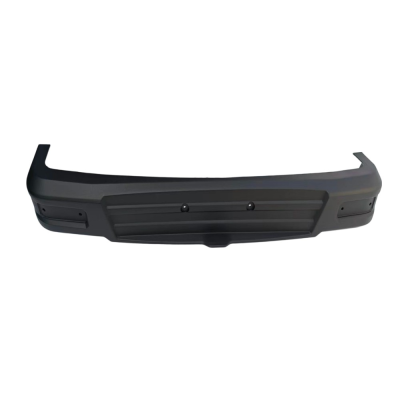


Hot Selling Large Truck Brow Rearview Mirror Reverse Reflector Rain Shield
$0.75 - $0.84
MOQ: 1300 Pieces


Original Auto Rear Bumper Reflector for Mg Spare Parts Wholesale 10156933
$14.12 - $15.29
MOQ: 5 Pieces

Original Auto Rear Bumper Reflector for Mg Spare Parts Wholesale 10156932
$14.12 - $15.29
MOQ: 5 Pieces


Comprehensive Sourcing Guide
Strategic Sourcing Guide for Rear Bumper Reflectors
Understanding Technical Specifications and Material Composition
When sourcing rear bumper reflectors, the primary objective is to identify components that meet specific optical and structural requirements while ensuring compatibility with the target vehicle model. The market offers a diverse array of specifications, and buyers must carefully evaluate the material composition to ensure durability and optical performance. Based on available product data, the core material for these components often involves a combination of PMMA (Polymethyl Methacrylate) and ABS (Acrylonitrile Butadiene Styrene). PMMA is frequently selected for its superior light transmission properties, which are critical for the reflective function of the unit, while ABS provides the necessary structural rigidity to withstand minor impacts and environmental stress.
In addition to composite materials, some listings indicate the use of pure ABS or specialized reflective materials such as reflective lattice structures. The choice of material directly influences the product's resistance to weathering, UV exposure, and physical abrasion. Buyers should verify the specific material grade provided by the supplier, as "Plastic" is a generic term that does not guarantee the longevity required for automotive exterior applications. Furthermore, the physical dimensions of the reflector are a critical specification. Observed standard dimensions in the current market range from compact units measuring 128*92mm to larger assemblies with a diameter of 80mm or specific rectangular profiles. The orientation of the part, often designated as "L" (Left) or "R" (Right), must be strictly matched to the vehicle's mounting points to ensure proper alignment and visibility.
The application of these reflectors is primarily for replacement or repair purposes on passenger cars. The specific model compatibility is often tied to OEM part numbers, such as X01-28730094 or X03-28030046, which serve as unique identifiers for the vehicle manufacturer's original design. When evaluating a potential supplier, the buyer must confirm that the product model, such as BXJ-A15 or BXJ-M11, aligns with the vehicle's make and model. The weight of the component is another observable attribute, with some units listed at approximately 0.1kg, indicating a lightweight design that minimizes the load on the bumper assembly.
Compliance and Certification Verification
Compliance with international and regional safety standards is non-negotiable when sourcing automotive lighting and reflector components. The Rear Bumper Reflector is a safety-critical part, and its failure to meet regulatory requirements can lead to legal liabilities and vehicle rejection during inspections. The supply chain for these parts often involves multiple certification bodies depending on the target market. Available data highlights a robust array of certifications, including CCC (China Compulsory Certification), E-mark, DOT (Department of Transportation), GOST, SONCAP, PVOC, NRCS, GCC, and ARAI.
The presence of CCC certification is a baseline requirement for products manufactured in China intended for the domestic market, while E-mark is essential for vehicles operating within the European Economic Area. DOT certification is mandatory for the United States market, ensuring the reflector meets specific photometric and durability standards. For buyers targeting emerging markets, certifications such as SONCAP (Nigeria), PVOC (Saudi Arabia), and GCC (Gulf Cooperation Council) are often required for customs clearance. The absence of these specific marks on a product listing should trigger a rigorous inquiry into the supplier's ability to provide valid test reports or third-party verification.
Buyers must also verify the product standard codes associated with the physical dimensions and manufacturing processes. Some listings reference standard codes like "DOT" or specific dimensional standards such as 300200180mm or 30013070mm, which may relate to packaging or the physical footprint of the assembly. It is crucial to distinguish between the product's operational standard and its packaging standard. The "New" condition of the product is a standard expectation, but the "High-Quality" designation is a subjective claim that must be backed by the aforementioned certifications. A supplier claiming compliance with DOT or E-mark standards without providing verifiable documentation should be treated with skepticism. The integration of these certifications into the procurement process ensures that the purchased reflectors will not only function correctly but also adhere to the legal safety frameworks of the destination country.
Cost Drivers and Pricing Dynamics
The pricing structure for rear bumper reflectors is influenced by a complex interplay of factors, including material costs, certification expenses, order volume, and customization requirements. The observed price range in the market is exceptionally broad, spanning from $0.18 to $200,000. This vast disparity indicates that the product category encompasses everything from simple, mass-produced replacement units to highly specialized, custom-engineered assemblies or bulk industrial orders. The lower end of the price spectrum likely corresponds to standard, off-the-shelf components with minimal customization, while the higher end may reflect complex OEM replacements, large-scale procurement contracts, or units with specialized features.
Minimum Order Quantity (MOQ) is a significant driver of unit cost. The market data shows an MOQ range from 1 to 5,000 units. Suppliers typically offer lower unit prices for orders that meet or exceed their MOQ thresholds, as this allows for more efficient production runs and reduced overhead per unit. For buyers requiring small quantities, such as single-item replacements, the unit price will naturally be higher due to the lack of economies of scale. Conversely, bulk buyers negotiating for thousands of units can leverage their volume to secure more favorable pricing terms.
Customization is another key cost factor. The availability of customization options allows buyers to tailor the reflector's color, dimensions, or mounting configuration to specific needs. However, these customizations often incur additional setup costs and may extend the lead time. The material composition also plays a role; units utilizing high-grade PMMA+ABS blends or specialized reflective lattice materials may command a premium over standard plastic alternatives. Additionally, the origin of the product, specifically "China" or "Ningbo China," influences logistics costs. While China is a major manufacturing hub with competitive labor costs, shipping fees and import duties for international buyers must be factored into the total cost of ownership.
Typical Applications and Vehicle Compatibility
Rear bumper reflectors serve a vital safety function by enhancing the visibility of vehicles in low-light conditions and during adverse weather. Their primary application is for the replacement or repair of damaged or missing components on passenger cars. The specific "Bumper Position" is a critical identifier, with "Rear Bumper" being the most common location for these reflectors. However, the market also includes variants for the "Front Bumper" and "Side Reflector" applications, indicating a broader ecosystem of lighting components.
Compatibility is determined by the vehicle model and the specific OEM part number. The data indicates that these reflectors are designed for specific models, such as L7, L8, and L9, which may correspond to specific vehicle series or generations. The OEM numbers, such as X01-28040011 or X04-41350011, act as the definitive link between the aftermarket part and the original vehicle design. Buyers must ensure that the product model, such as BXJ-A22 or BXJ-M08, matches the vehicle's requirements precisely. Mismatches in orientation, such as selecting a "Left" (L) unit for a "Right" side application, can render the part useless.
The "Type" of the reflector is another application-specific attribute. Some units are classified as "Auto Mud Guard" or "PMMA" types, suggesting specialized functions beyond simple reflection. The "Usage" category, such as "Side Reflector," further delineates the intended placement on the vehicle. For fleet managers or repair shops, understanding these distinctions is essential for maintaining a consistent inventory that covers a wide range of vehicle models. The "Purpose" of the product is explicitly stated as "for replace/repair," confirming that these are aftermarket solutions designed to restore the vehicle to its original safety standards.
Supplier Evaluation and Production Capabilities
Evaluating a supplier for rear bumper reflectors requires a thorough assessment of their production capabilities, quality control systems, and logistical reliability. The "Condition" of the product is listed as "New," which is a baseline expectation, but the "Quality" is described as "High-Quality," a claim that must be validated through supplier audits and sample testing. Buyers should investigate the supplier's adherence to the stated standards, such as CCC, ISO, and CE, to ensure that their manufacturing processes are compliant and consistent.
The "Delivery Time" is a critical logistical metric, with observed ranges of 1-15 days. This variability suggests that lead times can fluctuate based on order volume, customization requirements, and current production capacity. Suppliers with shorter lead times may offer a competitive advantage for urgent repair needs, while those with longer lead times might be better suited for planned inventory replenishment. The "Packing" method, which can range from "Carton" to "Carton/Pallet" or "Each in a Polybag," impacts the safety of the goods during transit. Proper packaging is essential to prevent damage to the fragile reflective surfaces and plastic housings.
The "Origin" of the product, specifically "China" or "Ningbo China," provides insight into the supply chain's geography. Ningbo is a major port city, which can facilitate efficient export logistics. However, buyers should verify the supplier's actual location and production facility to ensure they are dealing with a legitimate manufacturer rather than a trading company. The "Selling Units" being listed as "Single item" indicates that the supplier is flexible in their sales approach, catering to both individual buyers and bulk purchasers. A robust supplier will demonstrate transparency in their production process and provide clear documentation regarding their certifications and quality control measures.
Quality Control and Long-Term Procurement Considerations
Ensuring the long-term reliability of rear bumper reflectors requires a proactive approach to quality control and supplier relationship management. The "Resistance" attribute, specifically "Waterproof," is a key performance indicator that must be verified. Reflectors exposed to the elements must withstand rain, snow, and car washes without degradation. Buyers should request test reports or evidence of water resistance testing to confirm that the product meets the necessary durability standards. The "Weight" of the unit, such as 0.1kg, should also be consistent across batches to ensure uniformity in the vehicle's balance and mounting.
For long-term procurement, establishing a partnership with a reliable supplier is essential. This involves negotiating favorable terms for repeat orders, securing consistent pricing, and ensuring a steady supply of replacement parts. The "Standard" dimensions, such as 300200180mm or 30013070mm, should be maintained consistently to avoid compatibility issues. Buyers should also consider the "Material" consistency; fluctuations in the PMMA+ABS ratio or the quality of the reflective lattice can affect the product's lifespan.
Finally, the "Certification" status must be maintained over time. Regulatory standards evolve, and a supplier's ability to keep their certifications current is a strong indicator of their commitment to quality. By focusing on these technical and logistical aspects, buyers can mitigate risks and ensure that the rear bumper reflectors they source will perform reliably throughout the vehicle's operational life. The combination of verified specifications, robust certifications, and reliable supplier performance creates a solid foundation for successful B2B procurement in this sector.
FAQs
What certifications are available for rear bumper reflectors?
Available certifications include CCC, ISO, CE, E-mark, DOT, GOST, SONCAP, PVOC, NRCS, GCC, and ARAI. Buyers must verify specific marks for their target region, as CCC is required for China while E-mark is essential for Europe.
Which materials are used for rear bumper reflectors?
Common materials include PMMA, ABS, and a blend of PMMA plus ABS. Some listings also specify reflective lattice structures or pure plastic compositions to ensure durability and optical performance for automotive applications.
Can rear bumper reflectors be customized for specific needs?
Yes, customization is available for these components. Buyers can request specific modifications, though this may affect lead times and unit costs compared to standard off-the-shelf inventory options.
How long is the delivery time for these reflectors?
The typical delivery time ranges from 1 to 15 days. This duration depends on order volume, customization requirements, and the specific production capacity of the selected supplier.
What is the minimum order quantity for rear bumper reflectors?
The minimum order quantity ranges from 1 to 5000 units. Lower MOQs suit single-item replacements, while bulk buyers can leverage larger volumes for better pricing terms.
Where are these rear bumper reflectors manufactured?
Products originate from China, with specific mentions of Ningbo as a production location. This geography influences logistics costs and export efficiency for international buyers.
Which OEM numbers correspond to these reflectors?
Relevant OEM numbers include X01-28730094, X03-28030046, X01-28040011, and X04-41350011. These identifiers ensure compatibility with specific vehicle models like L7, L8, and L9.