Source Rear Bumper Side Grill for Honda, Universal Cars, and Repairs
Compare 30 listings for Rear Bumper Side Grill options including ABS plastic and rubber variants. Buyers can evaluate specifications like dimensions, certifications such as ISO9001 and CE, and customization availability for Honda and universal applications.
Key considerations
Products List


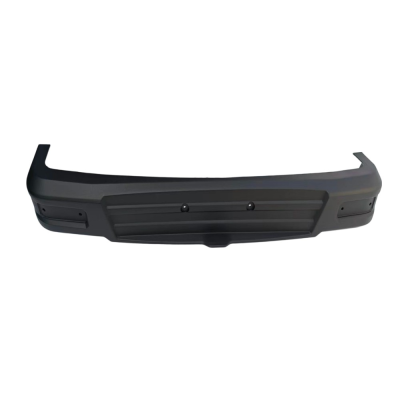


Comprehensive Sourcing Guide
Strategic Sourcing Guide for Rear Bumper Side Grills
The automotive aftermarket and repair sectors rely heavily on the availability of high-quality replacement components, with rear bumper side grills representing a critical category for both aesthetic restoration and functional airflow management. For procurement professionals, navigating the supply chain for these specific automotive parts requires a disciplined approach that prioritizes technical alignment, material integrity, and supplier reliability. This guide synthesizes observed market data and verified product attributes to provide a structured framework for sourcing rear bumper side grills, ensuring that buyers can make informed decisions without relying on unverified claims or speculative data.
Technical Specifications and Material Composition
The foundation of any successful procurement strategy lies in a precise understanding of the technical specifications required for the specific vehicle application. In the current market, rear bumper side grills are not monolithic products; they vary significantly in dimensions, material composition, and structural design. Buyers must first establish the exact dimensional requirements for their target vehicles. Observed product data indicates a wide variance in standard dimensions, ranging from small, intricate components measuring 25mm by 10mm by 12mm to large, structural units reaching 1090mm in length with a width of 250mm and a height of 155mm. Other common configurations include units sized at 560mm by 270mm by 160mm or 1025mm by 800mm by 395mm. When sourcing, it is imperative to verify that the supplier's listed dimensions match the specific vehicle model's mounting points and clearance requirements, as a mismatch can lead to installation failures or compromised vehicle aerodynamics.
Material selection is equally critical, as it dictates the durability, weight, and finish of the final product. The market currently features a mix of materials, with Acrylonitrile Butadiene Styrene (ABS) being a prevalent choice for rigid, painted grills that offer a balance of strength and impact resistance. Some listings explicitly identify the material as ABS, often paired with a black finish to match OEM aesthetics. Conversely, other product categories utilize 100% EPDM (Ethylene Propylene Diene Monomer) rubber, particularly for sealing strips or flexible trim pieces that accompany the main grill structure. These rubber components often feature a 3M self-adhesive backing, which simplifies the installation process by eliminating the need for additional fasteners. Buyers must distinguish between rigid plastic grills designed for structural protection and flexible rubber seals intended for gap filling and weatherproofing. The application context—whether for a Honda-specific model or a universal fitment—will heavily influence the material choice, as universal parts often require more robust materials to accommodate a wider range of mounting tolerances.
Compliance, Certification, and Quality Standards
Navigating the regulatory landscape is a non-negotiable aspect of B2B procurement, particularly when dealing with automotive components that must meet international safety and quality benchmarks. While specific test results for every SKU are not universally disclosed in public listings, buyers should actively verify the presence of recognized quality management certifications. In the observed market, ISO9001 certification is a notable standard held by certain suppliers, indicating a commitment to consistent quality management systems. Additionally, CE certification is frequently cited, which is essential for products entering the European market, signifying compliance with health, safety, and environmental protection standards.
Beyond certifications, the physical standards of the product must be scrutinized. The "prod_standard" attribute often provides critical dimensional data, such as a length of 132mm, width of 30mm, and height of 58mm for specific models, or larger packaging standards like 17cm by 25cm by 18cm. Buyers should treat these figures as observation points rather than universal guarantees. It is the responsibility of the procurement team to confirm that the supplier's actual production adheres to these stated standards. Furthermore, the condition of the product is a key compliance metric; the market predominantly lists items as "New," which implies they are factory-fresh replacements rather than refurbished units. This distinction is vital for warranty purposes and customer satisfaction. When evaluating suppliers, request documentation that proves the product meets the specific "prod_standard" dimensions and material specifications before finalizing any order, ensuring that the delivered goods align with the technical requirements of the end-user.
Cost Drivers and Pricing Dynamics
Understanding the factors that influence the pricing of rear bumper side grills is essential for budgeting and negotiation. The observed price range in the market spans from $1 to $89.79 USD, a variance that reflects differences in material quality, manufacturing complexity, and order volume. Several key drivers contribute to this spread. First, the material cost is a primary factor; grills made from high-grade ABS or specialized EPDM rubber will inherently cost more than those made from lower-grade plastics. Second, the complexity of the design, such as honeycomb patterns or custom molding for specific car models like Honda, adds to the manufacturing expense. Third, the inclusion of value-added services, such as custom logos or specific packaging requirements, can increase the unit price.
Minimum Order Quantity (MOQ) also plays a significant role in the total cost of ownership. The market exhibits an MOQ range from 1 to 100 units. Suppliers offering lower MOQs, such as single-item sales, often charge a premium per unit to cover setup and handling costs. Conversely, bulk orders that meet higher MOQ thresholds typically benefit from economies of scale, resulting in a lower per-unit cost. Buyers should analyze their inventory needs carefully; if the demand is sporadic, the higher per-unit cost of low-MOG suppliers may be justified by reduced inventory holding costs. However, for high-volume distributors, negotiating a higher MOQ to secure a lower price point is a standard strategy. It is crucial to note that price should never be the sole determinant of supplier selection; the cost must be weighed against the reliability of the supply chain, the quality of the material, and the adherence to technical specifications.
Typical Applications and Vehicle Compatibility
The application of rear bumper side grills is diverse, ranging from specific brand replacements to universal fitment solutions. In the observed data, a significant portion of products is tailored for specific manufacturers, with "HONDA" being a prominent application example. These specialized grills are designed to fit precise mounting points and maintain the original aesthetic lines of the vehicle. They often feature a "Front" fitting position designation, which can be confusing in the context of a "rear" bumper search, suggesting that the terminology may vary by supplier or that the part serves a dual function in the vehicle's front/rear assembly. Buyers must carefully cross-reference the "Application" field with their vehicle database to ensure compatibility.
In addition to brand-specific parts, the market offers "Universal" side skirts, rear front, and chin applications. These universal parts are designed to fit a broad range of vehicle models, often requiring minor adjustments during installation. The "Purpose" of these parts is frequently listed as "for replace/repair," indicating their role in restoring damaged vehicles to their original condition. The functional attributes also vary; some grills are designed primarily for "Decoration," enhancing the visual appeal of the car, while others focus on "Protection Car Body," acting as a buffer against minor impacts and road debris. The "Shape" of the grill, whether honeycomb or original, also dictates its application. Honeycomb shapes are popular for their aggressive, sporty look, while original shapes are preferred for maintaining factory aesthetics. Buyers should categorize their inventory needs based on whether they serve the repair market (requiring specific model compatibility) or the customization market (where universal or decorative options are preferred).
Supplier Evaluation and Operational Capabilities
Selecting the right supplier requires a thorough evaluation of their operational capabilities and logistical strengths. The geographic origin of the products is a critical factor in determining shipping costs and lead times. The observed data indicates that many products originate from Ningbo or Guangdong, China, both of which are major manufacturing hubs for automotive components. Suppliers located in these regions often have established supply chains and efficient logistics networks, which can facilitate faster delivery times. However, buyers should verify the specific "Place of Origin" for each order, as some listings may specify "Made in China" generally, while others provide more granular location data.
Packaging standards are another vital aspect of supplier evaluation. The market shows a variety of packaging methods, including "5PCS/Carton," "Corrugated Boxes," "OPP" bags, and "Roll" packaging for rubber strips. The choice of packaging impacts the protection of the goods during transit and the efficiency of warehouse handling. For fragile ABS grills, corrugated boxes with internal dividers are often necessary to prevent breakage. For flexible rubber seals, roll packaging may be more appropriate. Additionally, the availability of customization services, such as "OEM&ODM" and "With Logo" options, indicates a supplier's flexibility in meeting specific client requirements. Buyers should assess whether the supplier can accommodate custom branding or specific packaging requests, as these services can add significant value to the procurement process. Finally, the "Service" level provided by the supplier, including their willingness to support "Easy Installation" through clear instructions or technical support, should be factored into the decision-making process.
Quality Control and Long-Term Procurement Considerations
Ensuring long-term success in sourcing rear bumper side grills requires a robust quality control (QC) framework and a focus on sustainable supplier relationships. Given the variance in materials and dimensions, implementing a strict QC protocol is essential. Buyers should verify that the "Condition" of the product is consistently "New" and that the materials, such as ABS or EPDM rubber, meet the specified standards. For products claiming "Easy Installation," the quality of the adhesive backing, such as the 3M self-adhesive tape mentioned in the data, must be tested to ensure it holds securely under various environmental conditions.
Long-term procurement considerations also involve managing the supply chain's resilience. The "prod_packing" standard of 5PCS/Carton or similar bulk configurations suggests that suppliers are geared towards wholesale distribution. Buyers should aim to establish long-term contracts with suppliers who can guarantee consistent supply and quality over time. This involves regular audits of the supplier's production facilities to ensure they maintain ISO9001 standards and other relevant certifications. Furthermore, buyers should monitor the market for changes in material availability, as fluctuations in the cost of raw materials like ABS or EPDM rubber can impact pricing and lead times. By maintaining open communication with suppliers and staying informed about industry trends, procurement professionals can mitigate risks and ensure a steady flow of high-quality rear bumper side grills for their customers.
Comparative Analysis of Product Attributes
To facilitate a clearer understanding of the market landscape, the following table summarizes the key attributes observed in the current supply base for rear bumper side grills. This comparison highlights the diversity in specifications, materials, and packaging, aiding buyers in making informed selection criteria.
| Attribute Category | Specific Observation | Relevance to Procurement |
|---|---|---|
| Material | ABS, Plastic, 100% EPDM Rubber | Determines durability, weight, and finish; ABS for rigid parts, EPDM for seals. |
| Color | Black | Standard OEM color; verify if custom colors are available. |
| Shape | Honeycomb, Original | Affects aesthetic appeal and airflow; honeycomb is sporty, original is factory-standard. |
| Dimensions | 25x10x12mm to 1090x250x155mm | Critical for fitment; must match vehicle specific mounting points. |
| Application | HONDA, Universal, Car | Determines target market; specific vs. universal fitment strategies. |
| Packaging | 5PCS/Carton, Corrugated, OPP, Roll | Impacts shipping costs and product protection during transit. |
| Certification | ISO9001, CE | Indicates quality management and regulatory compliance. |
| Customization | Available, With Logo (Yes/No) | Adds value for branding; check MOQ requirements for custom orders. |
| Origin | Ningbo, Guangdong, China | Influences lead times and shipping logistics. |
By systematically analyzing these attributes, buyers can construct a procurement strategy that balances cost, quality, and operational efficiency. The goal is to source products that not only meet the immediate technical requirements but also align with the long-term strategic objectives of the business.
FAQs
What materials are used for rear bumper side grills?
Common materials include ABS plastic and 100% EPDM rubber. ABS is used for rigid, painted grills offering strength, while EPDM rubber is selected for flexible sealing strips with self-adhesive backing.
Which certifications should I look for in suppliers?
Look for ISO9001 and CE certifications on product listings. These indicate adherence to quality management systems and compliance with European safety standards for automotive components.
Can I get custom logos on these grills?
Customization is available, but logo options vary by specific product listing. Some items support logos while others do not, so verify the With Logo attribute before ordering.
How are these parts packaged for shipping?
Packaging varies by item type, including 5 pieces per carton, corrugated boxes, OPP bags, or rolls. The method depends on whether the product is a rigid grill or a flexible rubber seal.
What is the typical minimum order quantity?
The minimum order quantity ranges from 1 to 100 units depending on the supplier. Single item sales are available for low-volume needs, while bulk orders often require higher quantities.
Where are these products typically manufactured?
Most products originate from Ningbo or Guangdong, China. Some listings simply state Made in China, but specific cities like Ningbo are noted for automotive component manufacturing.
Are these parts compatible with Honda vehicles?
Yes, specific listings are designed for Honda applications. However, universal fitment options also exist for side skirts and chin areas across various car models.