Source Waterproof Far Infrared Heating Mat for Flooring
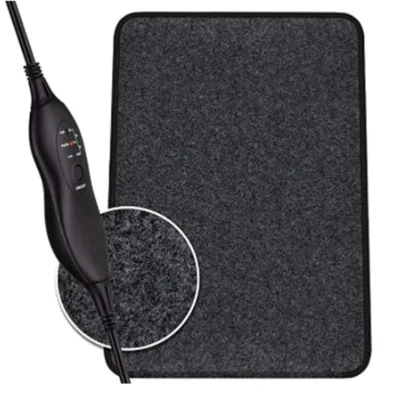
Find 30 Waterproof Far Infrared Heating Mat options featuring graphene heating and smart controls. Compare models with 5mm and 10mm thickness, ISO and CE certifications, and energy-saving modes for floor carpet installation; compare the available evidence and request quotations based on your requirements.
Key considerations
Products List


$75.00 - $88.00
MOQ: 10 Pieces


Comprehensive Sourcing Guide
Waterproof Far Infrared Heating Mat Sourcing Guide
Waterproof far infrared heating mats combine electric heating technology with floor-covering applications, making them attractive to distributors of home comfort products, wellness retailers, and hospitality buyers. Unlike conventional electric blankets, these products are designed for floor use, often with anti-slip features and durable surface materials. Procurement teams approaching this category need to reconcile two supplier profiles that frequently appear side by side in listings: established heating-product manufacturers offering standardized wattage models, and textile or flooring suppliers offering customizable carpet-format products with heating functionality added.
This guide is written for B2B buyers preparing quotations, sample evaluations, and supplier audits. It draws only on attributes observable in current product listings, such as wattage tiers, voltage ratings, control methods, and material descriptions. Because heating products carry inherent safety obligations, the emphasis throughout is on verification: confirming that listed specifications match test documentation, that certifications are current and applicable to the destination market, and that customization claims are backed by real engineering capability rather than marketing copy.
Product Scope and Observed Listing Signals
Current listings in this category cluster into three recognizable formats. The first is a compact mat in the region of 50×100 cm rated at 170W, positioned for personal or localized use and typically packed in cartons. The second is a mid-size format around 100×150 cm rated at 530W, suitable for seating areas or larger floor zones. The third is a large-format product near 150×200 cm rated at 1000W, which functions closer to room-zone heating under flooring or as a substantial heated carpet. Listings commonly state 220V operation, graphene heating elements, and multistage temperature control.
A second listing family overlaps with this category: pure gum rubber sheet and fabric products marketed for flooring use, with anti-slip features, stain resistance, and customization available. These are flooring materials rather than finished heating mats, but they signal that suppliers in adjacent flooring categories may enter the heated-mat space or supply base materials. Buyers should treat product attributes in listings as observations of what is offered, not guarantees that every listing satisfies the same specification, and should request the exact configuration for the model quoted.
Technical Specifications to Verify
Wattage and size are the anchor specifications, and the observed tiers give buyers a useful benchmark: 170W for roughly 50×100 cm, 530W for 100×150 cm, and 1000W for 150×200 cm. When a supplier quotes a custom size, ask how wattage scales with area and whether surface temperature distribution remains even at the edges. Confirm the rated voltage matches the destination market, since the listed 220V suits many regions but not all. Also verify the heating method described as graphene heating is documented in technical datasheets rather than only in marketing text.
Control and safety electronics deserve equal scrutiny. Listings advertise multistage control, heat settings of medium, low, and high, smart and remote control alongside manual operation, timers, auto shut-off, and overheat protection. Request a functional demonstration or video showing each advertised control mode operating on the actual unit, and confirm how overheat protection is implemented, whether through a thermostat, thermal fuse, or sensor circuit. For the waterproof characteristic central to the keyword, ask what ingress protection the construction achieves and how water exposure affects the heating element, connectors, and controller.
Compliance and Safety Documentation
Observed certifications in this category include CE, ROHS, ISO, TUV, and EAC, which map to European, international quality-system, and Eurasian market requirements respectively. Never accept a certification logo in a listing as proof of conformity: request the certificate number, issuing body, scope, and validity dates, then verify them against the certifier's database. Ensure the certificate actually covers the specific model, wattage, and voltage being quoted, because certificates frequently cover only one variant of a product family while suppliers extend the mark to the whole range.
Because these are plug-in electric heating products intended for floor use, buyers exporting to regulated markets should independently establish which product-safety and electromagnetic-compatibility regimes apply and which test reports the supplier can provide, without assuming that listed marks are sufficient. Ask whether the waterproof construction has been evaluated as part of the safety assessment, since water exposure changes the risk profile of a mains-powered product. For shipments to markets requiring additional marks, clarify early who bears testing cost and timeline, as this affects both price and launch dates.
Cost Drivers and Commercial Terms
Observed price points in this category span roughly 1 to 875 USD, an enormous range that reflects differences in product type, size, wattage, and the mix of flooring materials versus finished electronics. Buyers should normalize quotations to a per-square-meter or per-watt basis before comparing suppliers, and should confirm whether prices include controllers, remotes, and packaging. Minimum order quantities observed range from 1 to 100,000 units, suggesting the category spans sample-friendly suppliers and high-volume manufacturers; match the MOQ profile to your distribution stage.
Customization is widely advertised, including custom colors, custom designs, and custom sizes, and each of these affects cost through tooling, material waste, and minimum runs per SKU. Packaging is listed as carton or carton box, with one listing specifying a wooden box; heavier large-format units may justify upgraded packing to reduce freight damage, but confirm who pays for it. Clarify Incoterms, payment terms, and whether quotation validity is tied to raw-material pricing, since natural rubber and electronic components can move independently.
Supplier Qualification and Quality Control
Qualify suppliers by separating heating-assembly competence from textile competence. A credible manufacturer should explain the heating element construction, insulation layers, and waterproofing method, and should volunteer how these interact. Use the observed origin regions, Hebei and Jiangsu (Lianyungang), as orientation for where production clusters, but evaluate each supplier on capability rather than location. Request factory information, production-line photos, and references from buyers in regulated markets, and prioritize suppliers who answer technical questions with documents instead of restating listing text.
Quality control should be defined before the first production order. Agree on an inspection protocol covering incoming materials, in-process electrical testing, and final functional checks of every advertised feature: each heat setting, timer, remote pairing, and overheat cutoff. Specify acceptable variation in thickness, since observed listings state both 5mm and 10mm, and confirm which applies to the quoted model. For customized orders, approve a golden sample and retain a sealed reference. Define AQL sampling levels, defect classification, and remedies for failed lots in the purchase contract, not in email threads.
Long-Term Procurement Checks
Plan for lifecycle and after-sales obligations from the outset. Observed listings mention a 5000-hour lifespan and a 1-year warranty; verify both in writing, including what the warranty covers, whether it covers only element failure or also controllers and workmanship, and how warranty claims are serviced across borders. Ask for spare-part availability, particularly for controllers and connectors, and whether repair guidance or replacement units can be shipped for warranty cases. Establish failure-rate expectations and a process for sharing field-return data with the supplier.
Finally, monitor the relationship on a scheduled basis rather than only at reorder time. Re-verify certification validity annually, since certificates expire and standards are revised. Request updated test reports when the supplier changes components, wattage ratings, or materials, and require advance notification of any change to the heating element or waterproofing construction. Track whether customization capabilities remain consistent across production runs, and periodically benchmark pricing and specifications against new entrants, because the observed breadth of listings in this category suggests active competition and evolving product configurations.
FAQs
What materials are used in the waterproof heating mat?
The product uses natural rubber and blended materials for its construction. It features a pure gum rubber sheet and fabric design. This combination ensures durability while providing the necessary waterproof properties for safe installation on floors.
How is the temperature controlled in this heating system?
Temperature regulation is achieved through multistage control with medium, low, and high heat settings. Users can adjust the environment using smart control, remote control, or manual methods. The system also includes an auto shut-off function for safety.
Can the product be customized for specific floor sizes?
Yes, customization is available for this heating mat product. Buyers can request custom designs and specific dimensions to fit their installation location. The standard sizes include 50 by 100 cm and 150 by 200 cm options for various needs.
What certifications does the waterproof heating mat hold?
The product holds ISO, CE, ROHS, TUV, and EAC certifications. These standards ensure the electric heating system meets international safety and quality requirements. Buyers can verify these credentials when sourcing from manufacturers in China or other origins.
How is the heating mat powered and what is its wattage?
The system operates on a 220V plug-in power source with wattage options like 170W or 1000W. It utilizes graphene heating technology for efficient energy saving. The device includes overheat protection to prevent damage during operation.
What is the expected lifespan of the heating element?
The product has a lifespan of 5000 hours under normal operating conditions. It is designed for long-term use in flooring applications. The warranty period covers one year from the date of purchase to ensure customer satisfaction.
How should the heating mat be cleaned and maintained?
Maintenance requires hand washing to preserve the material integrity and waterproof features. The product is stain resistant and designed for easy care. Avoid harsh chemicals to ensure the graphene heating elements remain functional for their full lifespan.