Source Recyclable Paperboard Cosmetic Box with Ribbon and Handle for Jewelry, Gifts, and Electronics
Explore 30 listings for the Recyclable Paperboard Cosmetic Box with Ribbon and Handle, featuring customizable shapes, eco-friendly materials, and various printing options. Buyers can compare specifications like thickness, surface finishes, and accessory types to find the ideal packaging solution for their specific needs.
Key considerations
Products List


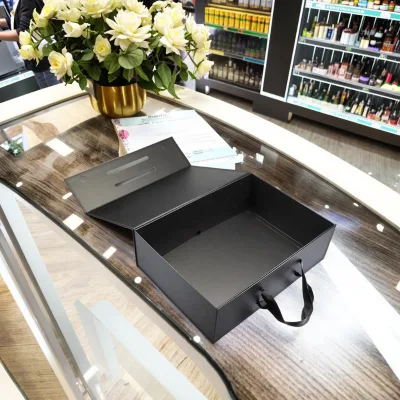


Custom Luxury Folding Cardboard Paper Cosmetic Storage Packaging Box for Gift
$1.58 - $1.88
MOQ: 500 Pieces


Eco-Friendly Rigid Cosmetic Packaging Paper Boxes with Custom Logo Design
$1.19 - $2.59
MOQ: 500 Pieces

Stylish Recyclable with Custom Logo and Stamping Paper Box for Cosmetic
$0.36 - $0.65
MOQ: 3000 Pieces


Cardboard Black Packaging Cosmetic Jar Gift Box Folding for Ribbon Closure
$0.35 - $0.98
MOQ: 3000 Pieces


High Quality Elegant Custom Packing Cosmetics Paper Cardboard Packaging Box
$0.10 - $0.15
MOQ: 2000 Pieces
Comprehensive Sourcing Guide
Strategic Sourcing Guide for Recyclable Paperboard Cosmetic Boxes with Ribbon and Handle
The global demand for sustainable packaging solutions has elevated the importance of recyclable paperboard cosmetic boxes, particularly those featuring integrated ribbon and handle mechanisms. For procurement professionals in the beauty and personal care sectors, sourcing these items requires a nuanced understanding of material science, manufacturing processes, and supply chain logistics. This guide provides a comprehensive framework for evaluating suppliers and specifications based on verified industry data and observed market parameters, ensuring that buyers can make informed decisions without relying on unverified claims.
Material Composition and Structural Integrity
The foundation of a high-quality cosmetic box lies in its material selection. The observed market data indicates that suppliers typically utilize a variety of paper-based substrates, including Art Paper, Cardboard, Rigid Paper, Kraft Paper, and Paperboard. For cosmetic applications, Paperboard and Rigid Paper are often preferred due to their structural rigidity, which protects delicate products during transit and enhances the unboxing experience. The specific "Paper Type" observed ranges from standard Cardboard to Coated Paper, with the latter offering a smoother surface for high-fidelity printing.
A critical technical specification is the thickness of the board. Market observations suggest a standard thickness of 2 mm, though "Custom" dimensions are frequently available to meet specific product dimensions. The shape of the box is another variable; while "Rectangle" is a common standard, suppliers offer "Square," "Circle," "Oval," and fully "Customized" shapes to align with brand identity. The "Custom Shape" attribute confirms that buyers are not limited to off-the-shelf geometries, allowing for unique silhouettes that differentiate products on retail shelves.
When evaluating the structural integrity, buyers must consider the "Insert" options. The supply chain offers various internal supports such as Fabric, Flocking, Foam, Blister, or Plastic inserts. These inserts are essential for securing cosmetic items like bottles, jars, or compacts within the box. The choice of insert material impacts the perceived value and the protective capability of the packaging. For a premium feel, Flocking or Fabric inserts are often selected, whereas Blister or Plastic inserts provide superior protection for fragile glass components.
Design Flexibility and Surface Finishing
Visual appeal is paramount in the cosmetic industry, and the surface finishing options available in the market are extensive. The data highlights "Varnishing" and "Surface Finish" options including Matte Lamination and Glossy Lamination. These processes not only enhance the aesthetic quality but also provide a layer of protection against moisture and handling wear. The "Printing" capabilities are robust, with "Offset Printing" being a standard method to achieve high-quality graphics.
Color customization is a key driver for brand consistency. Suppliers typically support "Cmyk" and "Pantone" color matching, ensuring that the final product aligns precisely with brand guidelines. The "Color" attribute lists standard options like Pink, White, and Black, alongside fully "Custom" color requests. To facilitate this, the required "Artwork Format" includes industry-standard files such as Ai, Pdf, CDR, Psd, and CAD. Buyers must ensure their design teams prepare files in these specific formats to avoid production delays.
The inclusion of a ribbon and handle is a specific functional requirement that elevates the product from a simple container to a gift-ready package. The "Accessories" data confirms the availability of "Ribbon & Bow" and "Magnet" closures. While the core keyword specifies a handle, the "Shape" and "Custom Shape" attributes imply that handles can be die-cut or attached as part of the custom design process. The "Logo Printing" capability ensures that branding is seamlessly integrated into the design, whether through direct printing on the board or via the ribbon itself.
Compliance, Sustainability, and Regulatory Standards
Sustainability is no longer a niche preference but a core requirement for modern cosmetic packaging. The observed product attributes explicitly list "Bio-Degradable," "Eco-Friendly," and "Recyclable" as key features. These claims are supported by the use of materials like Kraft Paper and Recycled Materials, which are noted in the "Feature" attribute. However, buyers must exercise due diligence when verifying these claims. While the product listing states these features, the actual compliance depends on the specific supplier's sourcing of raw materials and their waste management processes.
Regarding regulatory compliance, the "H.S Code" provided is 3919909000. It is important to note that this code typically relates to plastic plates, sheets, film, foil, and strip, which may seem contradictory to a paperboard product. This discrepancy highlights the necessity for buyers to verify the specific HS Code classification with their freight forwarder and the supplier, as misclassification can lead to customs delays or incorrect duty assessments. The "Standard" attribute indicates that products are often "Custom size" or "Customized," meaning there is no single universal standard that applies to every unit. Instead, buyers should request a "Sample" to verify that the physical product meets their specific regulatory requirements for the target market.
The "Features" also mention "Reusable" capabilities, suggesting that the durability of the paperboard allows for multiple uses, extending the product lifecycle beyond the initial purchase. This aligns with global trends toward circular economy principles. Buyers should inquire about the specific recycling protocols of the supplier to ensure that the "Recyclable" claim is backed by actual infrastructure in the destination market.
Cost Drivers and Economic Considerations
The economic landscape for sourcing these boxes is influenced by several variables. The observed "MOQ range" spans from 300 to 10,000 units, offering flexibility for both small startups and large enterprises. This wide range suggests that suppliers are willing to accommodate varying order volumes, though the unit price will naturally fluctuate based on quantity. The "Observed listed price range" in USD is noted as 0.01 to 4.5, indicating a broad spectrum of pricing based on complexity, material quality, and customization level.
Several factors drive the final cost. First, the "Material" choice is a primary cost driver; Rigid Paper and Kraft Paper may carry different price points compared to standard Art Paper. Second, the "Surface Finish" and "Printing" complexity add to the cost. Options like Matte Lamination, Glossy Lamination, and Offset Printing require additional processing steps compared to basic printing. Third, the "Accessories" such as Ribbons, Bows, and specific Inserts (Foam, Flocking) increase the bill of materials. Finally, the "Customization" level, including unique shapes and custom sizes, will invariably cost more than standard rectangular boxes.
Lead times are another critical economic factor. The data indicates a "Sample Time" of 3-7 days and a "Lead Time" of 7-12 work days for production. These timelines are relatively short, which is advantageous for maintaining inventory turnover. However, buyers must account for the "Sample Time" in their product development cycle. The "Sample" attribute notes that "Stock Samples Are Free," which can reduce initial prototyping costs, though custom samples may incur charges.
Supplier Evaluation and Quality Assurance
Selecting the right supplier requires a rigorous evaluation process. The "Location" data points to origins in China, specifically Shenzhen, Guangdong, and Zhejiang. These regions are known for robust manufacturing ecosystems, but buyers should verify the specific factory capabilities. The "Brand Name" AOPA is mentioned in the data, but buyers should not limit their search to a single entity. Instead, they should evaluate suppliers based on their ability to meet the "Custom Order" requirements and their responsiveness to "Artwork Format" specifications.
Quality control is essential to ensure that the "Recyclable" and "Eco-Friendly" claims are genuine. Buyers should request documentation regarding the source of the paperboard and the adhesives used, as some glues can compromise recyclability. The "Product Standard" is listed as "Custom size," which means quality control must be defined by the buyer's specific tolerance levels for dimensions and weight. The "Weight" attribute indicates that the boxes are generally lightweight, with most weighing under 0.5 kg, which is beneficial for shipping costs.
When evaluating suppliers, buyers should verify their "Production Capacity" and "Lead Time" reliability. The "Lead Time" of 7-12 work days is a target, but real-world performance can vary. A reliable supplier will provide a clear timeline and communicate proactively about any potential delays. Additionally, the "Type of Shipping" options (Express, Sea, Air, Combined Transport) should be discussed to ensure the logistics strategy aligns with the urgency of the order and the budget constraints.
Application Scenarios and Long-Term Procurement Strategy
The versatility of these boxes is evident in the "Usage" attribute, which lists applications ranging from Arts and Crafts and Electronic Products to Jewelry, Garment & Shoes, Greeting Cards, Letters, Gifts, Cosmetic, Health Care Products, and Food. This broad applicability suggests that a single supplier can serve multiple product lines, potentially simplifying the supply chain. For cosmetic brands, the "Industrial Use" is explicitly noted as "Cosmetic," confirming that these boxes are designed to meet the aesthetic and protective needs of the beauty industry.
For long-term procurement, buyers should consider the scalability of their packaging strategy. The "Custom Shape" and "Custom Size" options allow for brand evolution without changing the fundamental supplier relationship. As the brand grows, the ability to increase order volumes within the 300-10,000 MOQ range becomes crucial. Buyers should also plan for the "Sample" phase carefully, utilizing the free stock samples to test design concepts before committing to custom production.
The "Features" of being Bio-Degradable and Recyclable position these boxes favorably for brands targeting environmentally conscious consumers. However, this is a long-term asset that requires consistent communication with the supplier to maintain. Buyers should establish a recurring review process to ensure that the materials and processes remain compliant with evolving environmental regulations. By focusing on these strategic elements, procurement professionals can secure a reliable supply of high-quality, sustainable cosmetic packaging that enhances brand value and meets consumer expectations.
Final Procurement Considerations
In conclusion, sourcing recyclable paperboard cosmetic boxes with ribbon and handle involves a careful balance of material selection, design customization, and supplier reliability. The market offers a wide array of options, from standard rectangular boxes to fully customized shapes, with varying levels of surface finishing and accessory integration. Buyers must navigate the technical specifications, such as thickness and material type, while ensuring that sustainability claims are verified through documentation and sample testing.
The economic factors, including MOQs, pricing ranges, and lead times, provide flexibility for businesses of all sizes. However, the complexity of customization and the need for precise quality control require a proactive approach to supplier management. By leveraging the available data on production standards, shipping options, and material features, buyers can build a robust procurement strategy that supports their brand's growth and sustainability goals. Ultimately, the success of the sourcing process depends on clear communication, rigorous quality assurance, and a commitment to maintaining the high standards required in the competitive cosmetic market.
FAQs
Can I customize the shape and size of the box?
Yes, you can request custom shapes including square, circle, oval, or rectangle, and specify exact dimensions. Suppliers offer fully customized sizes to match your product needs, though standard options like 38*28*13.5cm are also available for immediate reference.
What materials are used for these cosmetic boxes?
These boxes are typically made from Art Paper, Cardboard, Rigid Paper, Kraft Paper, or Paperboard. The material choice affects rigidity and print quality, with options like Coated Paper providing a smoother surface for high-fidelity graphics and branding.
How long does it take to receive samples?
Sample production usually takes between 3 to 7 days from the time the order is confirmed. Stock samples are often available for free, while custom samples may require a specific design approval process before manufacturing begins.
What is the minimum order quantity for these boxes?
The minimum order quantity ranges from 300 to 10,000 units depending on the supplier and customization level. This flexible range allows both small startups and large enterprises to source packaging that fits their specific volume requirements.
Are these boxes eco-friendly and recyclable?
Yes, the boxes are designed to be bio-degradable, eco-friendly, and recyclable, often utilizing recycled materials. Buyers should verify specific recycling protocols with the supplier to ensure compliance with local waste management infrastructure in their target market.
What printing and color options are available?
Suppliers offer Offset Printing with CMYK or Pantone color matching to ensure brand consistency. Artwork can be submitted in formats like Ai, Pdf, CDR, or Psd, and surface finishes include Matte or Glossy Lamination and Varnishing for enhanced protection.
What accessories can be added to the box?
You can add accessories such as ribbons, bows, magnets, and various internal inserts like fabric, flocking, foam, or plastic. These additions enhance the unboxing experience and provide necessary structural support for delicate cosmetic items during transit.