Source Recyclable PP Rice Packing Bag for Food, Agriculture, Storage
Find 30 verified options for the Recyclable PP Rice Packing Bag suitable for food, agriculture, and storage. Compare specifications like capacity, material, and customization to identify the best supplier for your needs.
Key considerations
Products List


Polypropylene Rice Bags Rice Packing Bag Factory Price Package PP Woven Material Bag
$0.06 - $0.20
MOQ: 10000 Pieces


Recyclable Colorful Customized Rice Grain PP Woven Protective Packaging Bag
$0.07 - $0.19
MOQ: 20000 Pieces


Recycled PP Woven Rice Bags for Wholesale Rice Packing Bag 25kg Bag Rice Bags for Sale
$0.04 - $0.18
MOQ: 20000 Pieces


Comprehensive Sourcing Guide
Strategic Sourcing Guide for Recyclable PP Rice Packing Bags
Understanding Technical Specifications and Material Composition
When sourcing recyclable PP (polypropylene) rice packing bags, buyers must first establish a clear understanding of the technical parameters that define product performance. The core material is polypropylene, a thermoplastic polymer known for its durability and chemical resistance. In the context of rice packaging, the raw materials are often processed into woven structures, providing the necessary tensile strength to handle heavy loads without tearing. The specific denier range for these woven bags typically spans from 650d to 2000d, indicating the thickness and strength of the individual yarns used in the weaving process. A higher denier generally correlates with a heavier, more robust bag suitable for larger quantities of rice.
The physical construction of the bag is equally critical. The mesh structure, which determines the permeability and structural integrity, often ranges from 77 to 1414 threads per inch. This mesh density influences the bag's ability to contain fine rice grains while allowing for necessary breathability if the product requires it. The surface treatment is another vital specification; options include UV treatment to prevent degradation under sunlight and anti-slip coatings to ensure stability during stacking and transport. The GSM (grams per square meter) of the fabric is a key metric for weight and durability, with observed ranges between 40 and 230 GSM depending on the intended load capacity.
Bag dimensions are highly customizable, with widths ranging from 30cm to 200cm. Standard sizes often cited include 60*90cm, but buyers should verify that the supplier can accommodate specific custom dimensions required for their packaging machinery. The top and bottom closures are also customizable features. Common configurations include a "cool cut" top for easy opening and a folded and stitched bottom to prevent leakage. For applications requiring high capacity, such as 100kg loads, the bag design must incorporate specific reinforcement features to maintain structural integrity under extreme weight.
Compliance, Certification, and Environmental Standards
Compliance with international standards is a non-negotiable aspect of sourcing food-grade packaging. For rice packaging, the primary concern is ensuring the material does not leach harmful substances into the food product. While specific food-grade certifications were not explicitly detailed in the provided product data, the presence of ISO9001 certification indicates that the manufacturer adheres to a recognized quality management system. This certification suggests that the production process is consistent and monitored, which is a prerequisite for maintaining food safety standards.
Buyers must also verify the environmental claims associated with "recyclable" products. The material itself, being polypropylene, is inherently recyclable, but the end-of-life process depends on local infrastructure and the specific additives used in the bag's production. The product data confirms that the bags are labeled as recyclable and moisture-proof, which are essential for preserving rice quality during storage. However, buyers should request specific documentation regarding the recyclability of the finished product, including whether the inks used in the gravure printing process are eco-friendly and whether the bags can be processed in standard recycling streams without contamination.
Regarding food safety, while ISO22000 was mentioned in the background context, it should not be assumed as a guaranteed attribute of every listed product without direct verification. Buyers should explicitly ask suppliers for test reports confirming that the PP woven bags meet the specific food contact regulations of their target market, such as FDA regulations in the United States or EU Framework Regulation (EC) No 1935/2004. The absence of a specific food-grade certification in the provided facts means that the onus is on the buyer to validate that the specific batch of bags is safe for direct food contact.
Cost Drivers and Pricing Dynamics
The pricing of recyclable PP rice packing bags is influenced by several variable factors, primarily the raw material costs of polypropylene, the complexity of the manufacturing process, and the volume of the order. The observed price range for these products is between $0.02 and $3.30 USD per unit. This wide disparity is not indicative of quality differences alone but rather reflects the vast differences in bag specifications, such as size, weight (GSM), and the extent of customization. A simple, small-sized bag with minimal printing will naturally fall at the lower end of this spectrum, while a large, heavy-duty, 100kg capacity bag with multi-color gravure printing and special surface treatments will command a higher price.
Minimum Order Quantity (MOQ) is a significant cost driver. The data indicates an MOQ range from 1 to 100,000 pieces, with a specific high-confidence observation of 10,000 pieces for certain product models. Ordering closer to the MOQ threshold often yields better unit economics, as suppliers can optimize their production runs. However, for buyers with smaller initial requirements, the ability to source samples or smaller batches is crucial for testing the product before committing to a large volume. The lead time, observed at approximately 30 days, also impacts cost planning. Longer lead times may require higher inventory holding costs, whereas suppliers with faster turnaround capabilities might charge a premium for expedited production.
Customization is another major factor affecting the final price. Features such as OEM logos, custom colors, and specific printing types (like gravure printing) add to the production complexity and cost. The standard packing configuration, such as 5000 pieces per pallet or 500-1000 pieces per bale, also influences logistics costs. Buyers should calculate the total landed cost, including shipping and handling, rather than focusing solely on the unit price. The variability in loading capacity, ranging from 5kg to 50kg, further complicates pricing, as heavier bags require more material and more robust manufacturing processes.
Typical Applications and Performance Requirements
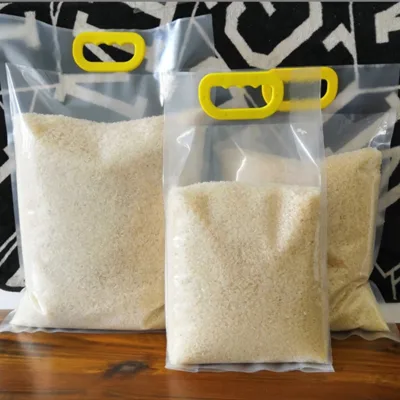
Recyclable PP rice packing bags are designed for a variety of applications, with food packaging being the primary use case. The bags are specifically engineered to protect rice from moisture, pests, and physical damage during storage and transportation. The moisture-proof feature is essential for maintaining the quality of rice, which can spoil if exposed to humidity. The bags are also noted for being stand-up capable, which is beneficial for retail display and consumer convenience.
The versatility of these bags extends beyond just rice. The high loading capacity options, including 20kg, 25kg, 40kg, and even 100kg variants, make them suitable for bulk agricultural products, animal feed, and industrial chemicals. The anti-slip feature ensures that pallets stacked with these bags remain stable, reducing the risk of accidents during warehousing and shipping. The specific application of "Rice Bag" is highlighted in the product keywords, confirming their suitability for this commodity.
Performance requirements vary based on the intended use. For domestic consumption, bags may need to be aesthetically pleasing with high-quality printing and easy-to-open tops. For export or industrial use, the focus shifts to durability, stackability, and resistance to environmental factors. The UV treatment is particularly important for bags that will be stored outdoors or in warehouses with significant sunlight exposure, preventing the plastic from becoming brittle and cracking over time. The ability to customize the fabric color allows manufacturers to brand their products effectively, making these bags a versatile tool for marketing as well as logistics.
Supplier Evaluation and Quality Control Protocols
Evaluating a supplier for PP rice packing bags requires a rigorous assessment of their manufacturing capabilities and quality control systems. The presence of ISO9001 certification is a strong indicator of a supplier's commitment to quality management, but it should be verified through valid documentation. Buyers should also inquire about the supplier's experience with food-grade packaging, as the requirements for rice bags differ from general industrial packaging.
Quality control should be integrated into the procurement process at multiple stages. First, buyers should request samples to verify the physical attributes, such as GSM, mesh density, and tensile strength. The sample testing should include a moisture barrier test to ensure the bag effectively protects the contents from humidity. Additionally, the printing quality should be checked for color accuracy and adhesion, as poor printing can lead to branding issues and regulatory non-compliance.
During mass production, buyers should establish clear acceptance criteria. This includes verifying the raw material composition to ensure it is 100% polypropylene or a verified recycled blend, as specified. The production process should be monitored to ensure consistency in bag dimensions and stitching quality. The bottom of the bag, which is often folded and stitched, must be inspected for any gaps that could lead to leakage. The top closure, whether cool cut or otherwise, should be tested for ease of opening and re-closing if applicable.
Long-Term Procurement and Supply Chain Considerations
Long-term procurement of recyclable PP rice packing bags requires a strategic approach to supply chain management. Buyers should consider the stability of the raw material supply, as fluctuations in polypropylene prices can impact the cost of the final product. Building a long-term relationship with a reliable supplier can help mitigate these risks through fixed-price contracts or volume-based discounts.
Sustainability is a growing concern in the packaging industry. Buyers should prioritize suppliers who are transparent about their recycling processes and who offer bags that are genuinely recyclable in the target market. The "recyclable" claim should be backed by clear guidelines on how the bags should be disposed of or processed after use. Additionally, the customization options, such as OEM logos and custom colors, should be evaluated for their long-term relevance to the buyer's brand strategy.
Logistics and storage are also critical factors. The standard packing configurations, such as 5000 pieces per pallet or bale, should be optimized for the buyer's storage facilities and transportation methods. The lead time of 30 days should be factored into the inventory planning to avoid stockouts. Buyers should also consider the flexibility of the supplier to handle rush orders or changes in demand, as the agricultural market can be subject to seasonal fluctuations.
In conclusion, sourcing recyclable PP rice packing bags involves a careful balance of technical specifications, compliance requirements, cost management, and supplier reliability. By focusing on the key attributes such as material composition, mesh density, and surface treatments, buyers can ensure they procure high-quality packaging that meets their specific needs. The wide range of customization options and loading capacities available in the market allows for tailored solutions that enhance both product protection and brand value.
| Feature Category | Key Specifications & Observations | Verification Requirement |
|---|---|---|
| Material | Polypropylene (PP), 100% PP, Recyclable | Confirm food-grade compliance and recycled content ratio |
| Dimensions | Width 30-200cm, Standard 60*90cm, Customizable | Verify exact dimensions against packaging machinery specs |
| Capacity | 5kg to 100kg (e.g., 20kg, 25kg, 40kg, 50kg) | Test load-bearing capacity for specific rice weight |
| Construction | Woven, Mesh 77-1414, GSM 40-230 | Inspect mesh density and stitching integrity |
| Surface Treatment | UV Treated, Anti-Slip, Moisture Proof | Request test reports for UV resistance and moisture barrier |
| Printing | Gravure Print, Customized, OEM Logo | Check color accuracy and ink adhesion on samples |
| Certification | ISO9001 (Quality Management) | Verify validity of ISO9001 and request food safety docs |
| Logistics | MOQ 1-100,000, Lead Time ~30 Days | Confirm lead time flexibility and pallet/bale packing |
FAQs
What certifications do Recyclable PP Rice Packing Bag suppliers have?
Suppliers typically hold ISO9001 certification for quality management systems. This indicates consistent production monitoring, though specific food-grade certifications like ISO22000 require direct verification from the vendor before purchase.
How much is the minimum order quantity for these bags?
The minimum order quantity ranges from 1 to 100,000 pieces depending on the supplier. A specific high-confidence observation notes an MOQ of 10,000 pieces for certain models, while samples are offered for smaller needs.
Can I customize the logo and printing on these bags?
Yes, customization is available including OEM logos and gravure printing. Buyers can also request custom fabric colors and specific bag sizes to match their branding and packaging machinery requirements.
What is the typical delivery time for bulk orders?
The standard delivery time is approximately 30 days for production and shipping. This lead time should be factored into inventory planning to avoid stockouts during peak agricultural seasons.
What loading capacities are available for these rice bags?
Bags are available in various capacities ranging from 5kg up to 50kg and even 100kg for heavy loads. Specific models support 20kg, 25kg, 40kg, and 50kg, ensuring suitability for different rice quantities.
Are these bags recyclable and moisture-proof?
Yes, the bags are made from polypropylene and are labeled as recyclable and moisture-proof. These features help preserve rice quality during storage by preventing humidity damage and allowing for sustainable disposal.