Source Red And Green Light Illumination Spotting Scope for Hunting, Surveillance, and Target Practice
Explore 30 listings for Red And Green Light Illumination Spotting Scope options featuring adjustable magnification, illuminated reticles, and durable aluminum alloy construction. Buyers can compare specifications including optical coatings, parallax settings, and customization availability to find suitable suppliers.
Key considerations
Products List


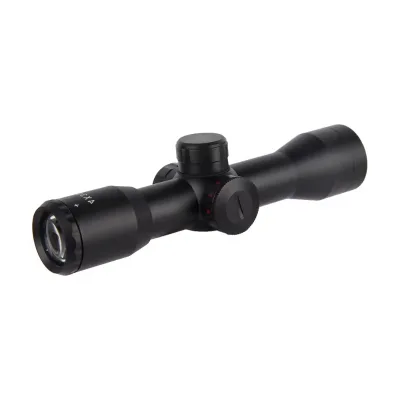


Hot Sale Hunting Enclose Scope Sight 1X20mm Waterproof Optical Scope Sight
$15.30 - $16.30
MOQ: 20 Pieces
Comprehensive Sourcing Guide
Strategic Sourcing Guide for Red and Green Light Illumination Spotting Scopes
Understanding the Core Optical Architecture and Illumination Systems
When sourcing a Red And Green Light Illumination Spotting Scope, buyers must first distinguish between the fundamental optical architectures available in the current market. The supplied product data reveals a diverse landscape where manufacturers offer varying configurations of magnification, reticle construction, and illumination methods. A critical observation from the available product attributes is the existence of scopes with "Red and Green Illumination, Each in 5 Level Control" alongside units offering "Red 11 Level" illumination. This variance indicates that buyers should not assume a uniform standard for reticle brightness or color options across all suppliers.
The optical coating technology is another primary differentiator. Evidence from the product list indicates that some units feature "Fully Multi-Coated Optics," which is a standard indicator of high light transmission and reduced glare. However, other entries list specific optical configurations such as "25.4mm 3-9X40 Red and Green Illumination Scope," suggesting that the physical dimensions and magnification ranges are often tied directly to the illumination system's design. Buyers must verify whether the scope utilizes a First Focal Plane (FFP) or Second Focal Plane (SFP) reticle. The data shows instances of both "First Focal Plane" and "Second" focal plane designs. In an FFP system, the reticle size changes with magnification, which is often preferred for ranging and holdover calculations at varying zoom levels. Conversely, SFP systems maintain a constant reticle size, which may be sufficient for fixed-distance applications.
Furthermore, the physical construction of the reticle is a vital technical specification. The provided facts highlight "Glass Etched Reticle" as a specific attribute. Glass etching is generally superior to wire reticles for durability and precision, as the etched lines are part of the glass itself and do not suffer from the same alignment issues or fragility as wire. When evaluating potential suppliers, procurement teams should explicitly request confirmation of the reticle material and the specific illumination mechanism, as the ability to switch between red and green can be a significant tactical advantage depending on ambient lighting conditions and the user's visual preference.
Technical Specifications and Functional Variability
The technical specifications for red and green illumination spotting scopes vary significantly based on the intended application, ranging from tactical use to general outdoor observation. The supplied data provides a clear snapshot of the functional range available. For instance, magnification capabilities span from a fixed "1X" to variable ranges such as "3-9X40" and "4.5-18x32SFIR." The "40mm" lens diameter appears frequently, often paired with a "3-9X" magnification range, while other models feature a "32mm" lens diameter with a higher magnification range of "4.5-18x." This suggests that buyers must carefully match the lens diameter and magnification to their specific needs; a larger objective lens generally gathers more light, which is crucial for low-light scenarios, while higher magnification is essential for long-range target identification.
Parallax adjustment is another critical technical parameter where buyer verification is essential. The product facts present a dichotomy: some scopes are listed with "Parallax Adjustment: Yes," while others are marked as "Parallax Adjustment: No" or "Fixed." A fixed parallax setting, such as the "Factory Parallax Setting: 33 Yards" noted in the data, is common in scopes designed for specific, shorter-range engagements. In contrast, scopes with adjustable parallax allow the user to eliminate parallax error at varying distances, which is a necessity for precision shooting or long-distance spotting. Buyers should not assume that all red and green illuminated scopes offer adjustable parallax; this must be confirmed in the technical datasheet for each specific model.
The structural integrity and adjustment mechanisms are also defined by specific attributes. The data indicates that many units are constructed from "Aluminium Alloy" with an "Anodizing: Matt" finish, which provides corrosion resistance and a non-reflective surface. Adjustment ranges are quantified in some entries, such as an "All Adjustment Range: 90m-a," though the unit of measurement for the "a" requires clarification from the supplier. Additionally, impact resistance is a key durability metric, with one model citing "1500g Recoil" tolerance. This figure serves as a benchmark for the scope's ability to withstand the shock of firing, but buyers must verify if this rating applies to the specific red and green illumination model they are considering, as recoil ratings can vary between product lines.
Cost Drivers and Pricing Dynamics in the Market
The pricing landscape for red and green illumination spotting scopes is influenced by a complex interplay of optical quality, material costs, and customization capabilities. The observed listed price range in the market spans from $5.1 to $4,348 USD. This vast disparity underscores the importance of defining clear requirements before engaging with suppliers. The lower end of the price spectrum likely corresponds to basic models with fixed parallax, standard coatings, and limited customization options. In contrast, the higher price points are associated with advanced features such as fully multi-coated optics, glass-etched reticles, and specialized illumination systems with multiple brightness levels.
Material costs play a significant role in the final price. Scopes constructed from high-grade "Aluminium Alloy" with anodized finishes generally command a premium over those using lower-quality metals or plastics. The "Glass Etched Reticle" is another cost driver, as the manufacturing process for etched glass is more labor-intensive and technically demanding than wire reticle fabrication. Furthermore, the complexity of the illumination system affects pricing. Models offering "Red and Green Illumination, Each in 5 Level Control" or "Red 11 Level" control involve more sophisticated circuitry and battery management systems than single-color or fixed-brightness units.
Customization is a major factor in cost variability. The product data explicitly states that "Customization: Available" and "Standard: Customization" are common attributes. Buyers who require specific branding, unique packaging, or tailored optical specifications will incur additional costs. The "prod_packing" attribute notes that suppliers typically use "Boxes or Plastic Bags" but can accommodate "Customization." This flexibility allows for branding but adds to the production complexity. Additionally, the "Selling Units: Single Item" designation suggests that while bulk pricing may be available, the base unit cost is the primary driver. Buyers should be aware that the "MOQ range: 1-500" indicates that suppliers are willing to accommodate small orders, but larger volumes may offer better unit economics, though specific volume discounts are not detailed in the provided facts.
Compliance, Certification, and Quality Assurance Protocols
When sourcing optical equipment from international markets, particularly from regions identified as "Hunan, China" or "Guangdong, China" in the product data, compliance and quality assurance become paramount. The supplied facts do not list specific third-party certifications (such as ISO or CE) for the products, nor do they provide test results for environmental sealing or drop tests. Therefore, buyers must treat the "Waterproof" attribute as a claim that requires verification rather than a guaranteed standard. While the data confirms that some products are "Waterproof," the specific IP rating (e.g., IP67 or IP68) is not provided. Procurement teams should request detailed test reports confirming the scope's ability to withstand water immersion, fogging, and dust ingress.
Impact resistance is another area where verification is critical. Although one model lists "1500g Recoil," this is a single data point and may not apply to the entire product line. Buyers should insist on ballistic testing documentation that validates the scope's ability to maintain zero and structural integrity under the recoil forces of the specific firearms they intend to use. The "Impact Resistance" claim must be supported by standardized test data, such as drop tests from specific heights or recoil tests using certified firearms.
Quality control protocols should also extend to the manufacturing process. The "Optical Coating" attribute, specifically "Fully Multi-Coated Optics," is a standard of quality, but buyers should verify the consistency of this coating across the production batch. Variations in coating thickness or application can lead to significant differences in light transmission and color fidelity. Additionally, the "Glass Etched Reticle" must be checked for alignment and clarity. Buyers should request samples or video evidence of the reticle under various lighting conditions to ensure the red and green illumination is uniform and free of hotspots or dead zones.
Supplier Evaluation and Operational Due Diligence
Evaluating suppliers for red and green illumination spotting scopes requires a rigorous due diligence process that goes beyond the initial product listing. The "Country of Origin" and "Place of Origin" fields in the data point to specific regions in China, such as Hunan and Guangdong. While these regions are known for manufacturing, the specific factory capabilities can vary widely. Buyers should verify the supplier's production capacity, quality control infrastructure, and history of delivering optical goods. The "Customization" attribute suggests that many suppliers are flexible, but this flexibility must be balanced with their ability to maintain consistent quality.
Supplier evaluation should also focus on their ability to provide detailed technical documentation. The "prod_model" numbers, such as "3-9X40EG+JG4R" or "LRFFP4.5-18x32SFIR," indicate a level of product specificity. Buyers should ensure that the supplier can provide a complete datasheet for each model, including detailed diagrams, assembly instructions, and maintenance guidelines. The "Brand Name" attribute, such as "Focuhunter," indicates that some suppliers may operate under their own branding, while others may offer OEM services. Buyers must clarify the branding strategy and ensure that the supplier has the legal rights to use any trademarks or logos associated with the product.
Logistics and packaging are also critical factors in supplier evaluation. The "prod_packing" attribute mentions "Use Boxes or Plastic Bags /Customization" and "Paper Paper Box/ Master Ctns." This variability suggests that packaging standards may not be uniform across all suppliers. Buyers should specify their packaging requirements to ensure that the scopes are protected during transit, especially given the delicate nature of optical components. The "Package Wight: 0.08kg" and "Net Weight: 0.35kg" data points highlight the importance of accurate weight specifications for shipping cost calculations. Buyers should verify these weights with the supplier to avoid unexpected logistics costs.
Typical Applications and Long-Term Procurement Strategy
The applications for red and green illumination spotting scopes are diverse, ranging from tactical and military use to outdoor recreation and hunting. The "Use: Outdoor" attribute confirms the general applicability of these devices in various environments. The "Red and Green Illumination" feature is particularly valuable in tactical scenarios where different lighting conditions or camouflage requirements necessitate the ability to switch reticle colors. For example, red illumination is often preferred for low-light conditions, while green may be better for daylight or specific camouflage patterns. The "1X" magnification models are suitable for close-range applications, while the "3-9X" and "4.5-18x" models are better suited for medium to long-range spotting.
Long-term procurement considerations should focus on the lifecycle of the product and the availability of support. The "Customization" attribute implies that buyers may need to work with suppliers for long-term contracts, which requires a stable and reliable partnership. Buyers should also consider the availability of spare parts, such as batteries for the illumination system and replacement lenses. The "Red 11 Level" and "5 Level Control" illumination systems rely on batteries, so the type and availability of these power sources should be verified. Additionally, the "Anodizing: Matt" finish suggests a need for maintenance to prevent corrosion, especially in harsh environments. Buyers should establish a maintenance protocol that includes regular cleaning and inspection of the scope's seals and coatings.
In conclusion, sourcing red and green light illumination spotting scopes requires a meticulous approach that balances technical specifications, cost drivers, and supplier reliability. By carefully evaluating the optical architecture, verifying compliance and quality assurance, and understanding the specific applications, buyers can make informed decisions that meet their operational needs. The wide range of available models, from basic "1X" scopes to advanced "4.5-18x" systems, offers significant flexibility, but it also demands a thorough due diligence process to ensure that the selected product delivers the performance and durability required for its intended use.
FAQs
What illumination levels are available for red and green scopes?
Some models offer red and green illumination with each color in 5 level control, while others provide red illumination in 11 levels. Buyers must verify the specific brightness options for the model they select as options vary by manufacturer.
Which focal plane types are used in these spotting scopes?
Both First Focal Plane and Second Focal Plane designs are available in the current product listings. First Focal Plane reticles change size with magnification, whereas Second Focal Plane reticles remain constant size regardless of zoom level.
Can I find scopes with glass etched reticles?
Yes, glass etched reticles are a specific attribute found in the available product data. This construction method offers superior durability and precision compared to wire reticles, as the lines are part of the glass itself.
How is parallax adjustment handled in these optical devices?
Parallax adjustment varies significantly, with some scopes offering adjustable settings and others featuring a fixed setting. For instance, some units have a factory parallax setting of 33 yards while others allow user adjustment for varying distances.
What materials are used to construct these rifle scopes?
Many units are constructed from aluminium alloy with a matt anodizing finish to ensure corrosion resistance. This material choice provides structural integrity while maintaining a non-reflective surface suitable for tactical and outdoor applications.
Are customization options available for packaging and branding?
Customization is available for both product standards and packaging configurations. Suppliers typically use boxes or plastic bags but can accommodate custom branding and specific packaging requirements upon request from the buyer.
What is the impact resistance rating for these scopes?
One specific model lists an impact resistance rating of 1500g recoil tolerance. Buyers should verify if this rating applies to the specific red and green illumination model they are considering as ratings may vary between product lines.