Source RGB LED Flashing Party Speaker for Karaoke, DJ, and Radio
Source 30 RGB LED Flashing Party Speaker options for Karaoke, DJ, and Radio applications. Compare models like M66 and JPS1206BT featuring Bluetooth 5.0/5.3, USB/SD support, and built-in batteries to find the right portable audio solution; compare the available evidence and request quotations based on your requirements.
Updated
Key considerations
Products List


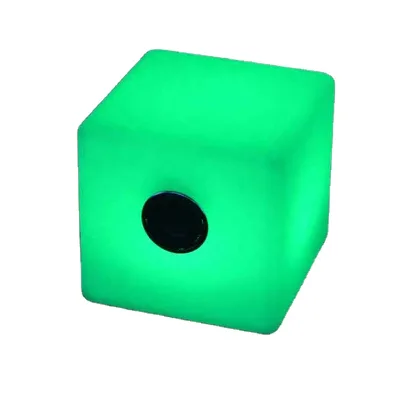
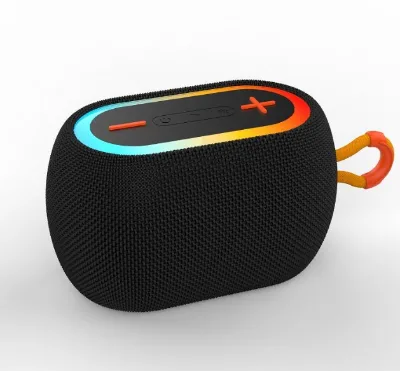
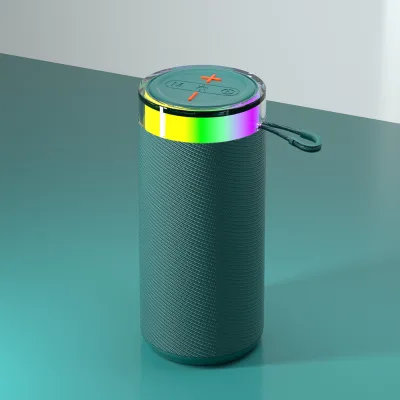
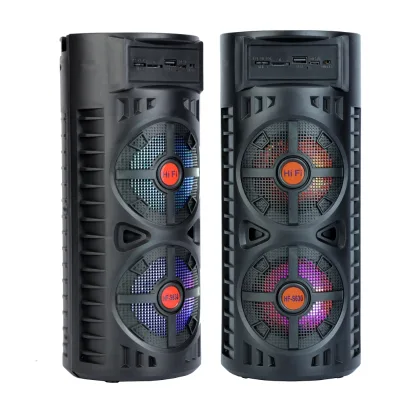
400W Portable Audio Soundbox 8inch Wireless Bluetooth Party Speaker RGB Light
$18.00 - $24.00
MOQ: 50 Pieces






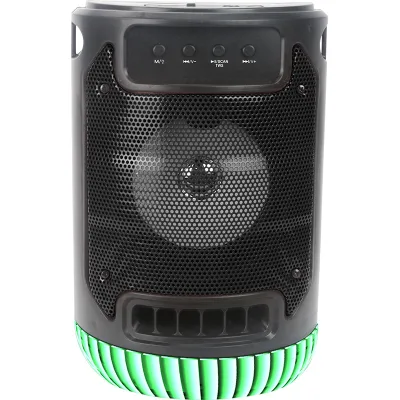
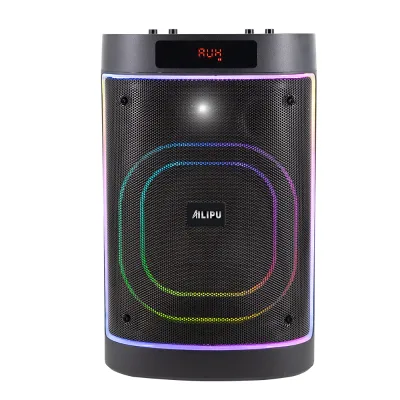
New Design Dual 8 Inch Trolley Professional Speaker Party Speaker with LED Light
$38.00 - $42.00
MOQ: 300 Pieces

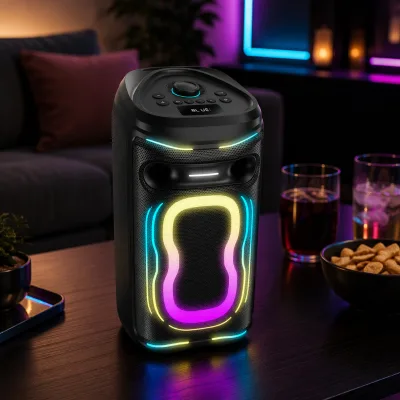
Party Box Rechargeable Audio Speaker with Light Professional Trolley Speaker
$39.00 - $50.00
MOQ: 300 Pieces


Comprehensive Sourcing Guide
RGB LED Flashing Party Speaker Sourcing Guide
Sourcing RGB LED flashing party speakers requires balancing aesthetic appeal with robust audio performance and reliable connectivity. Buyers must navigate a market where visual effects are often prioritized over acoustic fidelity, necessitating careful verification of technical specifications. The core keyword highlights devices designed for dynamic environments, where synchronized lighting enhances the user experience during social gatherings or events. Understanding the distinction between basic portable units and more complex stage-ready systems is essential for aligning procurement with specific use cases.
This guide focuses on evidence-based procurement strategies for these specialized audio devices. It draws upon observed market data to highlight critical attributes such as Bluetooth version, battery capacity, and output power. By adhering to verified facts rather than marketing claims, buyers can mitigate risks associated with inconsistent product quality. The following sections provide a structured approach to evaluating suppliers, verifying technical compliance, and establishing sustainable commercial terms for RGB LED party speakers.
Product Scope and Observed Listing Signals
The observed product range includes mini speakers and larger outdoor units, with models like the M66 and JPS1206BT representing distinct categories. The M66 is a compact unit featuring a 57mm speaker unit, 5W RMS output, and a built-in 18650 1500mAh battery, suitable for portable personal use. In contrast, the JPS1206BT is a heavier, chargeable outdoor speaker with an 8-inch driver plus tweeter, 20W output, and a 7.4V 2000mAh lithium battery, weighing 4.25kgs. These variations indicate a broad scope from personal audio companions to semi-professional event equipment.
Listing signals reveal significant diversity in functionality and design. Some units feature digital displays and LED indicators, while others lack displays entirely. Connectivity options range from Bluetooth 5.0 to 5.3, ensuring modern wireless performance. Special functions commonly include memory card support, USB disk support, and radio capabilities. The presence of OEM branding suggests that many suppliers offer white-label solutions, allowing buyers to customize packaging and potentially branding, which is crucial for private label strategies in the consumer electronics sector.
Technical Specifications to Verify
Buyers must rigorously verify power output and battery specifications to ensure performance matches expectations. Observed data shows output powers ranging from 5W RMS to 30W RMS, with some units claiming 20W. Battery types vary significantly, including 18650 cells and 7.4V lithium packs, with capacities like 1500mAh and 2500mAh. It is critical to confirm whether the battery is rechargeable, as some listings contradict themselves by stating "built-in battery" while also marking "non-rechargeable." Playtime estimates of 4-6 hours should be validated against actual usage conditions to prevent customer dissatisfaction.
Audio quality and connectivity standards are equally important verification points. The SNR (Signal-to-Noise Ratio) is observed in the 91-100dB range, indicating acceptable clarity for party environments. Bluetooth versions 5.0 and 5.3 are prevalent, offering improved stability and range over older standards. Buyers should verify the speaker unit dimensions, such as the 57mm or 8-inch drivers, and impedance values like 4Ω. Additionally, input power requirements, typically 5V 1A, must be compatible with the buyer’s intended charging infrastructure to ensure safe and efficient operation.
Compliance and Safety Documentation
Safety documentation is paramount for battery-powered electronic devices, particularly those with lithium-ion components. Buyers must request proof of compliance with international safety standards for lithium batteries, such as UN38.3 for transportation and IEC 62133 for performance and safety. Although CE certification is mentioned in background context, it should not be assumed as a given; buyers must verify that suppliers provide valid test reports from accredited laboratories. This verification is essential to prevent customs delays and ensure the product meets regulatory requirements in target markets.
Electromagnetic compatibility (EMC) and radio equipment directives are also critical for Bluetooth-enabled speakers. Suppliers should provide documentation confirming compliance with relevant EMC standards to ensure the device does not interfere with other electronics. For outdoor speakers, ingress protection ratings (IP ratings) should be verified if water or dust resistance is claimed. Buyers must ensure that all safety certifications are up-to-date and specifically cover the model being procured, as certifications are often model-specific and not blanket approvals for an entire product line.
Cost Drivers and Commercial Terms
Cost drivers for RGB LED party speakers include component quality, battery capacity, and packaging complexity. Higher output power and larger drivers, such as the 8-inch unit in the JPS1206BT, typically command higher prices than mini speakers like the M66. The inclusion of features like digital displays, advanced Bluetooth versions, and specialized lighting effects also influences pricing. Buyers should analyze the cost structure relative to the observed price range of $3.5 to $355, understanding that lower prices may correlate with reduced battery life or simpler audio components.
Commercial terms such as MOQ (Minimum Order Quantity) and lead times vary significantly across suppliers. Observed MOQs range from 1 to 500 units, offering flexibility for both small-scale testers and large-volume buyers. Packaging options, including gift boxes and carton boxes, affect shipping costs and unit economics. Buyers should negotiate clear terms regarding payment methods, warranty periods, and return policies. It is advisable to request detailed quotations that break down costs for tooling, sampling, and mass production to ensure transparency and avoid hidden fees.
Supplier Qualification and Quality Control
Supplier qualification should focus on manufacturing capabilities and quality assurance processes. Buyers must verify that suppliers have experience in producing electronic audio devices, particularly those with integrated lighting and battery systems. Requesting factory audits or third-party inspection reports can provide insights into production standards and consistency. Suppliers offering OEM services should demonstrate robust design and engineering capabilities to support customization requests, such as logo printing or packaging design, without compromising product integrity.
Quality control measures must be explicitly defined in the procurement agreement. Buyers should establish clear acceptance criteria for audio performance, battery charge cycles, and LED functionality. Implementing pre-shipment inspections is crucial to detect defects before goods leave the factory. Suppliers should provide a defect rate guarantee and a clear process for handling non-conforming products. Building a relationship with suppliers who prioritize quality control reduces the risk of receiving batches with inconsistent performance or premature failure, protecting the buyer’s brand reputation.
Long-Term Procurement Checks
Long-term procurement success depends on continuous monitoring of product performance and supplier reliability. Buyers should track post-launch customer feedback to identify recurring issues with battery life, connectivity, or audio quality. Regularly reviewing supplier performance metrics, such as on-time delivery rates and defect rates, helps maintain high standards. Establishing a feedback loop with the supplier allows for iterative improvements in future production runs, ensuring that the product evolves to meet changing market demands and consumer expectations.
Supply chain resilience is another critical aspect of long-term strategy. Buyers should assess the supplier’s ability to source components consistently, particularly for critical parts like batteries and Bluetooth modules. Diversifying suppliers for key components can mitigate risks associated with supply shortages. Additionally, staying informed about regulatory changes in target markets ensures ongoing compliance. By maintaining a proactive approach to supplier management and product evaluation, buyers can sustain a competitive edge in the dynamic RGB LED party speaker market.
FAQs
Can this speaker play music from a USB drive?
Yes, the device supports USB disk playback for convenient music access. It also features memory card support for additional storage options. This allows users to load playlists directly onto the device without needing a connected phone. The system is designed for versatile media consumption across various portable and stationary setups.
What is the battery capacity and play time?
The speaker includes a built-in 18650 1500mAh battery or a 7.4V 2500mAh lithium option depending on the model. This power source enables approximately 4 to 6 hours of continuous play time. Users can recharge the unit via standard 5V 1A input, ensuring reliable portable audio performance for parties or travel.
Does the speaker support Bluetooth connectivity?
Yes, the unit features Bluetooth 5.3 or 5.0 versions for wireless audio streaming. This ensures stable connections with mobile phones, computers, and portable players. The wireless capability complements the wired USB and memory card functions, providing flexible options for connecting various digital devices to the speaker system for enhanced audio experiences.
What is the output power of the speaker?
The speaker delivers output power ranging from 5W RMS to 30W RMS depending on the specific model. Some units feature a 57mm driver with 5W capacity, while others utilize an 8-inch driver with tweeter for 20W output. This variation allows buyers to select the appropriate volume level for different usage scenarios.
Is the speaker suitable for karaoke use?
Yes, the device is explicitly listed for karaoke, stage/DJ, and TV usage. It supports universal compatible products and includes functions for playing music and radio. The portable design and built-in battery make it ideal for home theater setups or mobile karaoke sessions, providing versatile audio support for various entertainment needs.