Voice Control Mini USB Speaker Suppliers and Manufacturers
Compare 25 verified suppliers offering Voice Control Mini USB Speaker options with ISO 9001 and ISO 14001 certifications. Review response times, lead times, and MOQs to select a factory or trading company for your needs; review the available evidence before requesting comparable quotations from suitable candidates.
Suppliers List

YUOKO ELECTRONICS CO., LIMITED
- Verified by SGS
- Manufacturer/Factory
- China Guangdong
- Lead time23 days
- Avg. response≤ 25h
Main productsMobile Phone Accessories, Cell Phone Batteries, Pd Fast Charger, Energy Battery & BMS, Wall Charger Power Bank, Bt Mini Speaker, Interlligent Battery Equalizer, Interlligent Battery Equirement, Energy Storage Battery, electronic Vehiche Charger
Main marketsSouth America,Eastern Europe,Mid East,North America,Southeast Asia,Eastern Asia,Oceania,Western Europe,Africa


Speaker Wireless Bluetooth Speaker Portable Speakers with Retial Box Outdoor Mini Speakers
$14.49 - $14.74
MOQ: 2000 Pieces


Wireless Bluetooth Speaker portable Mini Bluetooth Speaker Output Power: 6W
$5.56 - $5.65
MOQ: 2000 Pieces

Shenzhen BringYourHope Electronics Co., Ltd.
- Verified by TUVRHEINLAND
- Trading Company
- China Guangdong
- Lead time15 days
- Avg. response≤ 3h
Main productsPower Bank, Bluetooth Speaker, Digital Photo Frame, USB Flash Drive, Memory Card, Travel Adapter, USB Charger, Computer Speaker, Android TV Box, Mini PC
Main marketsOthers(foreignTradeCapacity.exportBusinessCapacityMarketOther),North America
SHENZHEN AIL INDUSTRIAL LIMITED
- Verified by TUVRHEINLAND
- Trading Company,Manufacturer/Factory
- China Guangdong
- Lead time15 days
- Avg. response≤ 5h
Main productsPower Bank, Bluetooth Earbuds, Bluetooth Speaker, Bluetooth Watch, USB Flash Drive, Video Book, Promotional Gifts, USB Fan, Book, T Shirt
Main marketsSouth America,Eastern Europe,Mid East,North America,Southeast Asia,Eastern Asia,Oceania,Western Europe,Africa

- Verified by BV
- Manufacturer/Factory
- China Fujian
- Lead time15 days
- Avg. response≤ 25h
Main productsWater Bottle, Kitchen Ware, Shoes, Plastic Product, Bag, Toy
Main marketsSouth America,Eastern Europe,Mid East,North America,Southeast Asia,Eastern Asia,Oceania,Western Europe,Africa
Shenzhen Sachikoo Yongfa Technology Co., Ltd.
- Verified by TUVRHEINLAND
- Combined
- China Guangdong
- Lead time15 days
- Avg. response≤ 3h
Main productsSafe, Telephone, LED Mirror, Electric Kettle, Mini Fridge, Hairdryer
Main marketsSouth America,Southeast Asia/ Mideast,Europe,Australia,North America

Multi-Function Mini Bluetooth Speaker Home Mini Sound Bluetooth Alarm Clock Speaker
$5.80 - $6.20
MOQ: 50 Pieces


Mini Outdoor Waterproof Wireless Bluetooth Speaker with RGB Flash Lights Super Bass Stereo Sound
$3.50 - $4.10
MOQ: 50 Pieces

Colorful LED Lights Mini Wireless Bt Speaker Waterproof Small Portable Outdoor Speakers
$5.40 - $6.00
MOQ: 50 Pieces


Mini Colorful Portable Bluetooth Speaker with Lanyard Small Travel Speaker
$3.30 - $3.70
MOQ: 50 Pieces

Guangzhou Temeisheng Audio Technic Co Ltd
- Verified by BV
- Combined
- China Guangdong
- Lead time15 days
- Avg. response≤ 5h
Main productsLoudspeaker, Amplifier, Conference System, Portable Speaker, Home Audio, Microphone
Main marketsAustralia


Mini Bluetooth Speaker Professional Speaker Wireless Bluetooth Speaker
$25.00 - $55.00
MOQ: 300 Pieces

Wholesale Bluetooth Speaker Mini Bluetooth Speaker Dual 4 Inch Stereo Speaker
$15.00 - $35.00
MOQ: 300 Pieces
Hongliyuan Technology (Zhongshan) Co., Ltd.
- Trading Company
- Guangdong, China
- Lead time20 days
- Avg. response≤ 1h
Main productsSpeaker Cable,AOC Cable,Power Cable,olar PV Cable,Satellite Multiswitch
Main marketsNorth America(60.00%), Western Europe(10.00%), Southern Europe(5.00%), Northern Europe(5.00%), Mid East(5.00%), Southeast Asia(5.00%), Eastern Europe(5.00%), Domestic Market(1.00%), South Asia(1.00%), Eastern Asia(1.00%), Africa(1.00%), South America(1.00%)
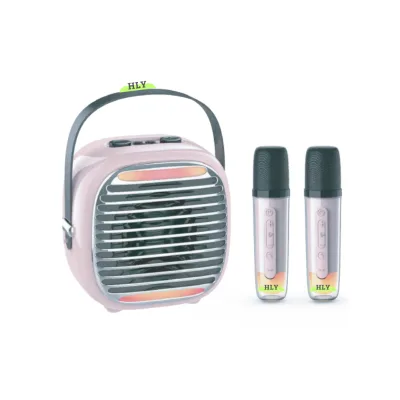
High quality Blue tooth control mini karaoke speaker for Gift Purchasing
$14.00 - $16.00
MOQ: 100 boxes

Ningbo Jumboaudio Industrial Co., Ltd.
- Verified by TUVRHEINLAND
- Combined
- China Zhejiang
- Lead time30 days
- Avg. response≤ 6h
Main productsPortable Speaker Box, Speaker, Subwoofer Speaker Box, HiFi Speaker
Main marketsSouth America,Africa,Southeast Asia/ Mideast,East Asia(Japan/ South Korea),Domestic,Europe,North America


Mini Speaker Audio with RGB Lights Speaker with FM 3600mAh Battery Ipx6
$16.98 - $19.68
MOQ: 100 Pieces


NINGBO HAISHU HOPE-U INTERNATIONAL TRADING CO., LTD.
- Manufacturer/Factory
- China Zhejiang
- Lead time45 days
- Avg. response≤ 7h
Main productsGift, Beauty Device, Bluetooth Speaker, Skin Care, Cosmetics, Promotional Products, Camping Lamp, Fan, Keyboard and Mouse, Humidifier
Main marketsSouth America,Eastern Europe,North America,Southeast Asia,Western Europe
Huizhou Huaxi Technology Co., Ltd.
- Verified by SGS
- Trading Company
- China Guangdong
- Lead time15 days
- Avg. response≤ 5h
Main marketsEurope

Huizhou Simba Technology Co., Ltd.
- Verified by CTI
- Manufacturer/Factory
- China Guangdong
- Lead time15 days
- Avg. response≤ 8h
Main productsSmart Sweeping Robot, Ai Glasses, 4G Smart Watch, Smart Watch, Bluetooth Earphone, Charger, Cable, Bluetooth Speaker, Microphone
Main marketsSouth America,Eastern Europe,Mid East,North America,Southeast Asia,Eastern Asia,Oceania,Western Europe,Africa

Guangzhou Aspor Electronics Co., Ltd.
- Verified by BV
- Combined
- China Guangdong
- Lead time15 days
- Avg. response≤ 4h
Main productsVape, E Cig
Main marketsSouth America,Africa,Southeast Asia/ Mideast,East Asia(Japan/ South Korea),Domestic,Europe,Australia,North America

Factory Wholesale OEM Mini Digital Sound Box Speaker Playing Time 4 Hours Speaker
$14.30 - $15.80
MOQ: 30 Pieces

Bluetooth Speaker Audio Speakers High Quality Wireless Mini Bluetooth Portable Speaker
$9.80 - $10.40
MOQ: 66 Pieces

- Combined
- China Guangdong
- Lead time23 days
- Avg. response≤ 3h
Main productsPromotion Gift, Toy, Flashing Item, Free Gift, Business Gift, Novelty
Main marketsAfrica,Europe,North America


Wireless Bluetooth Speaker Colorful RGB Night Light Outdoor Portable Mini Speaker
$1.52 - $1.60
MOQ: 1000 Pieces

- Verified by SGS
- Trading Company
- China Zhejiang
- Lead time0 days
- Avg. response≤ 16h
Main productsTents, BBQ Grill, Luggage, Kids Toy, Fitness Equpments, Cookware, Kitchen Utensils and Gadgets, Yoga Mat, Bathroom Rugs, Pets Items
Main marketsSouth America,Eastern Europe,Mid East,North America,Southeast Asia,Eastern Asia,Oceania,Western Europe,Africa


High Quality Wireless Portable Mini Bluetooth Speaker with Alarm Clock
$12.40 - $14.40
MOQ: 1000 Pieces
- Verified by BV
- Manufacturer/Factory
- China Guangdong
- Lead time0 days
- Avg. response≤ 7h
Main productsBluetooth Speaker, USB Flash Disk, Bluetooth Headphone, Power Bank, Touch Pen, Memory Card, Data Cable
Main marketsSouth America,Eastern Europe,Mid East,North America,Southeast Asia,Eastern Asia,Oceania,Western Europe,Africa

Portable Speaker: Transparent Mini Bluetooth Speaker with RGB and High Volume
$3.50 - $5.00
MOQ: 100 Pieces

Bluetooth Speaker with RGB Lights - Portable Mini Speaker for Computer/Gaming
$6.50 - $7.00
MOQ: 10 Pieces

Value HiFi Speaker: Small Wireless Mini Bluetooth Speaker with TF Card and Aux Input Capability
$0.79 - $1.18
MOQ: 100 Pieces

Guangzhou Lingyin Electronic Co., Ltd.
- Verified by BV
- Combined
- China Guangdong
- Lead time30 days
- Avg. response≤ 6h
Main productsPRO Audio, Speaker, Amplifier, PA Address System, IP Network System, Wireless Broadcast, Wireless Mic, PA Lectern, Professional Audio, Line Arry
Main marketsOthers(foreignTradeCapacity.exportBusinessCapacityMarketOther),Southeast Asia/ Mideast,Europe,Australia,North America

Zhongshan Tianxin Craft Gift Products Co., Ltd.
- Verified by BV
- Combined
- China Guangdong
- Lead time23 days
- Avg. response≤ 2h
Main productsShirt, Gift, Clothing, USB Flash Drives, Key Chain, Medal, Trophy, Lether Tapeline, Fridge Magnet, Wine Opener
Main marketsSouth America,Africa,Southeast Asia/ Mideast,East Asia(Japan/ South Korea),Europe,Australia,North America
Shenzhen Ainville Electronics Co.,Ltd.
- Verified by SGS
- Trading Company
- China Guangdong
- Lead time15 days
- Avg. response≤ 11h
Main productsEarphone, Phone, Headphone, Wireless Earbud, Bluetooth Earphone, Mobile Phone Accessory, Bluetooth Headphone, Accessory, Mobile Phone Case, Rechargeable Battery
Main marketsSoutheast Asia/ Mideast,Europe,North America

Hot Selling Bluetooth Speaker Audio Black Speakers Wireless Mini Bluetooth Portable Speaker
$27.00 - $30.00
MOQ: 10 Pieces

L117 LED Lighting Loudspeaker Subwoofer Wireless Portable Speakers Mini Bluetooth Speaker
$15.00 - $18.00
MOQ: 10 Pieces
Ullwin (Shanghai) Industrial Co., Ltd
- Verified by SGS
- Trading Company
- China Shanghai
- Lead time30 days
- Avg. response≤ 13h
Main productsMedical & Health Care Products, Cosmetic Packaging
Main marketsSouth America,Africa,Southeast Asia/ Mideast,East Asia(Japan/ South Korea),Europe,Australia,North America


Portable Bluetooth Speakers, Waterproof Wireless Speaker for Home, Party
$11.00 - $13.00
MOQ: 1000 Pieces

1800mAh Waterproof Bluetooth Speaker, Wireless Bluetooth Speaker, Perfect for Home Use
$11.00 - $13.00
MOQ: 1000 Pieces

- Verified by CTI
- Trading Company,Manufacturer/Factory
- China Guangdong
- Lead time105 days
- Avg. response≤ 7h
Main productsBluetooth Speaker, Radio Receiver, Solar Energy, Car Motro Battery, TV DVD, Headphone Headset, Data Cable, Smart Watch
Main marketsSouth America,Eastern Europe,Mid East,North America,Southeast Asia,Eastern Asia,Oceania,Western Europe,Africa

Durable Colorful Light Bluetooth Speaker Audio Speakers Wireless Parlante Mini Portable Speaker
$6.35 - $6.58
MOQ: 1000 Pieces

Multifunction Mini Home Subwoofer Wireless Speaker Portable Bluetooth Small Speaker with Strap
$6.12 - $6.36
MOQ: 1000 Pieces


GUANGZHOU FUGUO ELECTRONICS CO., LTD.
- Verified by BV
- Combined
- China Guangdong
- Lead time30 days
- Avg. response≤ 7h
Main productsDVD Player, Speaker, Amplifier
Main marketsAfrica

Guangzhou EDEN Electronic Co., Ltd.
- Verified by SGS
- Combined
- China Guangdong
- Lead time45 days
- Avg. response≤ 8h
Main productsParty Speaker, Portable Speaker, Trolley Speaker, Private Mould Speaker, Bluetooth Speaker, Wireless Speaker, PA Speaker, Waterproof Speaker, Wooden Speaker
Main marketsSouth America,Africa,Southeast Asia/ Mideast,East Asia(Japan/ South Korea),Europe,Australia,North America

NINGBO FBELE ELECTRONICS CO., LTD.
- Trading Company
- China Zhejiang
- Lead time15 days
- Avg. response≤ 13h
Main productsSolar Cell, Buzzer, Fuse and Fuse Holder, Terminal Block, Switch, Speaker, Telephone Receiver, Siren, Rj, USB Connector
Main marketsSouth America,Southeast Asia/ Mideast,Europe

Guangzhou Baiyun District Jianggao Feiyang Electronic Factory
- Combined
- China Guangdong
- Lead time30 days
- Avg. response≤ 8h
Main productsBluetooth Speaker, Battery Speaker, 2.0 Speaker, Portable Speaker, Multimedia Speaker, Professional Speaker, Active Speaker, Mini Speaker, Professional Audio, Speaker Box
Main marketsEurope

Ningbo Brilliant Dragon Electronic Technology Co., Ltd.
- Verified by TUVRHEINLAND
- Manufacturer/Factory
- China Zhejiang
- Lead time105 days
- Avg. response≤ 12h
Main productsLED Light for Indoor, LED Light for Ourside, Auto / Bicycle Accessories, Security Items, Work Light, Electric Appliance, Personal Items
Main marketsSouth America,Eastern Europe,Mid East,North America,Southeast Asia,Eastern Asia,Oceania,Western Europe,Africa

Mini Portable Wireless Bluetooth Speaker with RGB Lights Hi-Fi Sound and Deep Bass Subwoofer
$10.80 - $11.10
MOQ: 500 Pieces

$10.80 - $11.10
MOQ: 500 Pieces


Comprehensive Sourcing Guide
Voice Control Mini USB Speaker Supplier Concentration and Factory Types
Voice control mini USB speakers sit at the intersection of consumer audio and smart electronics, and the supplier base for this category is dominated by companies in China Guangdong, where audio accessory manufacturing is deeply integrated with battery, charger, and mobile accessory supply chains. A factory located in this province can typically source speaker drivers, Bluetooth modules, USB charging circuits, and plastic or metal housings within a short radius, which supports faster sampling and more flexible customization. When your search results do not reveal supplier locations, identify clusters by checking where production batches, port of loading, or product origins are listed, and by asking each candidate where their tooling partners and component suppliers are based.
The supplier base splits into two types: manufacturers/factories and trading companies. A factory in this category may list an own brand alongside OEM and ODM services, which signals in-house engineering and tooling capability. A trading company, by contrast, typically carries a broad catalog — power banks, USB flash drives, travel adapters, computer speakers — and sources from multiple factories. Neither type is inherently better: factories usually offer deeper customization of acoustic tuning and firmware, while trading companies consolidate mixed-SKU orders and may respond faster on routine questions. Ask both types to disclose whether the voice control module and acoustic assembly are produced in-house or subcontracted, since that determines who controls quality and who is accountable when defects surface.
How to Verify Voice Control Mini USB Speaker Suppliers
Verification for this category starts with third-party verification labels displayed on the supplier profile. Some profiles carry SGS verification and others carry TÜV Rheinland verification; both indicate that an independent body has checked company registration, but they do not certify product safety. For the products themselves, look at listed standards on individual listings — some mini Bluetooth speaker listings reference CE, ROHS, and FCC — and confirm with the supplier that test reports are current, cover the voice control variant you plan to order, and were issued for the exact model rather than a similar product. System certifications such as ISO 9001 and ISO 14001, where displayed, indicate a quality management system and environmental management system respectively, but you should still request the certificate numbers and validity dates.
Beyond paperwork, verify capability directly. Request a functional sample of the voice control speaker so you can test wake-word reliability, USB charging, and audio quality in real conditions. Ask which models are produced on which production lines, and whether customization is genuinely available — several speaker listings in this category explicitly mark customization as available, which is a useful signal but must be confirmed in writing with tooling costs and lead time. Check business scope against the products offered: a supplier listing speakers among mobile phone accessories, chargers, and energy storage batteries is plausible as an audio and accessory manufacturer, but a mismatch between stated main products and the item quoted is a warning sign. Finally, confirm the factory address with a live video walk-through or third-party audit before any deposit.
What to Compare Across Voice Control Mini USB Speaker Suppliers
Build a comparison table using the attributes actually displayed on supplier profiles, since not every supplier shows every field. Useful dimensions include company type (manufacturer versus trading company), location, third-party verification, system certifications, and main products. Response speed is especially practical: one supplier type in this category shows a response time of roughly 2.5 hours while another shows roughly 24.8 hours, and that gap compounds over a sampling cycle when dozens of technical questions accumulate. Lead time also varies meaningfully — some profiles display around 15 days while others show around 23 days — so normalize quoted lead times against your launch schedule rather than accepting the first figure offered.
On the product side, compare MOQ, price bands, and specification depth. In this category, listed MOQs range from as low as 100 pieces for certain computer speaker models to 2,000 pieces for specific mini Bluetooth speaker models, and per-unit price ranges can span from under 4 dollars for basic USB computer speakers to around 30 dollars for a 40W loudspeaker. Use those bands to sanity-check quotes: a voice control model priced far below comparable active speakers may omit the microphone array quality or firmware licensing you assume. Also compare acoustic specifications such as SNR ratings (some listings state 81–90dB), output power, sound channel configuration, and special functions like memory card support, touch control, or radio. Suppliers supporting OEM/ODM under an own brand generally have stronger engineering input, so weight that capability heavily for a voice control product.
Common Voice Control Mini USB Speaker Sourcing Risks
The largest risk in this category is assuming a standard Bluetooth speaker can simply be re-badged as voice controlled. Voice functionality depends on microphone quality, firmware, and possibly third-party voice service licensing, and a supplier whose main products center on batteries, chargers, and generic speakers may not control that software stack. Confirm in writing who owns or licenses the voice firmware, what happens if the voice service provider changes terms, and whether over-the-air updates are possible. A related risk is specification drift: listings may state SNR ranges, output power, or material (plastic versus metal housings) that differ subtly from what arrives, so anchor the order to a signed golden sample.
Secondary risks cluster around compliance and consistency. Mini speakers with built-in rechargeable batteries and radio or wireless functions face destination-market rules on battery transport, wireless emissions, and safety — a supplier without current, model-specific test documentation creates customs and liability exposure. Product-listing details such as MOQ, packing (some listings show carton-box packing on car boards or color boxes), and product origin should be treated as negotiable starting points, not guarantees. Trading companies add a transparency risk: you may not learn which factory actually builds your units, complicating audits and defect investigations. Mitigate by requiring the manufacturing site's identity for the audited production line, staggering payments against inspection milestones, and specifying tolerance limits for acoustic performance in the contract rather than accepting catalog-level specifications as the enforceable standard.
Voice Control Mini USB Speaker Regional Sourcing and Logistics
For this category, the practical sourcing region is Guangdong in southern China, where the concentration of speaker, battery, and mobile accessory manufacturers shortens both the component supply chain and the shipping route. Shenzhen is listed as the product origin on some mini Bluetooth speaker listings, and the broader province hosts the ports and freight-forwarder ecosystem that handle consumer electronics exports daily. Sourcing within this cluster makes factory visits feasible — multiple factories can be audited in one trip — and keeps the voice modules, drivers, and housings physically close to final assembly, which matters when a firmware-hardware integration issue requires engineers from different component vendors in the same room.
Logistically, plan around the product's physical characteristics. Mini speakers are compact and relatively lightweight, but built-in lithium batteries trigger dangerous-goods handling rules for air freight and require UN-certified packaging declarations; sea freight is usually the economical default for production volumes at the MOQ levels typical here. Quoted lead times in this category range from roughly 15 to 23 days, and you should ask whether that figure covers production only or includes pre-shipment inspection and booking, since peak-season vessel space can extend the effective timeline. Consolidation is another lever: suppliers whose catalogs span chargers, power banks, and speakers can combine SKUs into one shipment, but mixing battery and non-battery goods requires correct separation and documentation. Confirm the port of loading, incoterms, and who books freight before signing, and keep a buffer between ex-factory date and your retail or distribution deadline.
Voice Control Mini USB Speaker Commercial Terms and Order Planning
Commercial terms in this category reward buyers who benchmark before negotiating. Displayed price ranges give useful anchors: certain mini Bluetooth speakers list between roughly 5.5 and 11.6 dollars per unit, waterproof models around 7.3 to 7.5 dollars, a 40W loudspeaker between roughly 29.3 and 30 dollars, and basic USB computer speakers from under 2 dollars to about 4 dollars. MOQs are equally varied — from 100 pieces on some computer speaker models to 2,000 pieces on specific mini Bluetooth models — so negotiate MOQ and unit price together: a supplier may accept a trial order below the listed MOQ at a modest surcharge, protecting your cash flow while validating demand.
Structure payments to stay protected without demanding terms no first-order supplier would accept. A common structure is a deposit with balance against a passed pre-shipment inspection; use platform escrow where available rather than direct wire transfers when a supplier's verification status cannot be independently confirmed. Put the agreed price validity period, packing specification, and inspection standard into the proforma invoice, and define what happens if unit price components (voice module, battery cells) move. For order planning, sequence a signed sample, a small pilot batch, then a scaled order, matching reorder quantities to the supplier's actual monthly capacity rather than the MOQ. Finally, calendar the full cycle — sampling, tooling confirmation, mass production against the quoted lead time, inspection, and shipping — and build in slack, because voice firmware debugging is the step most likely to consume unplanned weeks before shipment.
FAQs
What is the minimum order quantity for mini USB speakers?
The minimum order quantity varies by supplier and product model. Some listings require 2000 units for specific Bluetooth speakers, while others accept orders as low as 100 units for computer speakers. Buyers should verify the specific MOQ for their chosen model before placing an order.
How long does it take to receive these speakers after ordering?
Lead times for these products typically range from 15 to 23 days depending on the supplier. Some manufacturers offer faster turnaround times of around 15 days, while others may require up to 23 days for production and shipping. Confirm the exact delivery schedule with the supplier.
Are these speakers available with custom branding options?
Yes, customization is available for many of the listed mini speakers. Suppliers offer OEM and ODM services allowing buyers to add their own brand logos or modify designs. This service is explicitly marked as available for various models including portable and wireless speaker options.
What certifications do these speaker manufacturers hold?
Manufacturers in this category often hold ISO 9001 and ISO 14001 certifications for quality and environmental management. Products may also comply with CE, ROHS, and FCC standards. Verification by agencies like SGS or TUV Rheinland is common for ensuring product safety and quality compliance.
Where are these mini speakers manufactured and shipped from?
Most suppliers are located in Guangdong, China, specifically in Shenzhen. Products originate from this region and are shipped globally. Buyers should confirm the specific origin city and shipping terms with the supplier to ensure accurate logistics planning and cost estimation for their orders.
What is the typical price range for these mini speakers?
Prices vary significantly based on features and specifications. Basic models start around 1.88 dollars, while more advanced units with higher power or metal casings can cost up to 30 dollars. The final price depends on the specific model, customization needs, and order quantity negotiated with the supplier.
How quickly do suppliers typically respond to inquiries?
Response times vary among suppliers, with some responding within a few hours and others taking up to 24 hours. Specific data shows response times around 2.5 hours for some companies and nearly 25 hours for others. Buyers should expect varying reply speeds and follow up if necessary.