Source Semi Mounting Ring for Industrial, Automotive, and Machinery
Compare 30 verified listings for Semi Mounting Ring components including iron alloy and stainless steel options. Buyers can evaluate customization, surface treatments, and certification standards like ISO 9001 across diverse applications.
Key considerations
Products List


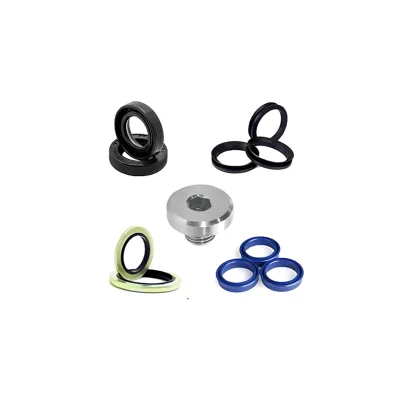


Comprehensive Sourcing Guide
Strategic Sourcing Guide for Semi Mounting Ring Components
Understanding Technical Specifications and Material Variability
When sourcing Semi Mounting Ring components, buyers must first navigate a complex landscape of technical attributes that vary significantly across different product listings. The term "Semi Mounting Ring" often encompasses a diverse array of fasteners, seals, and structural elements, each defined by specific material compositions and dimensional requirements. Based on available market data, the material base for these components is not uniform. Some listings explicitly identify the material as Iron Alloy, which suggests applications requiring high structural integrity and load-bearing capacity. In contrast, other product variants are constructed from NBR (Nitrile Butadiene Rubber) or Stainless Steel, indicating a divergence in intended use cases ranging from sealing and fluid containment to corrosion-resistant structural mounting.
The dimensional specifications for these rings are frequently customized rather than standardized. While some entries reference specific model numbers such as MN-002, DN-042, or JH-RR-1.3, the actual dimensions are often described as "Customized" or "According to the drawing." This implies that the buyer cannot rely on a single off-the-shelf specification sheet. Instead, the procurement process must begin with the submission of precise engineering drawings or detailed requirement documents. The tolerance levels for machining are critical; observed data indicates a tolerance of +/-0.01mm for certain CNC-stamped variants, which is essential for high-precision assemblies. For other types, such as those involving extrusion processes, the tolerance requirements may differ, necessitating a direct verification with the supplier.
Furthermore, the physical configuration of the Semi Mounting Ring varies. Attributes such as "O-Ring," "D Ring," and "Allotype" head types suggest that the term covers both sealing rings and lifting or structural fasteners. The connection method is another vital technical parameter, with "Flange" connections appearing in specific listings, while others utilize extrusion or die forging processes. Surface treatments also play a pivotal role in performance; options include galvanized sheets for corrosion resistance or brushed finishes for aesthetic and functional purposes. Buyers must carefully align these technical observations with their specific application requirements, ensuring that the selected component's material, tolerance, and surface treatment match the operational environment.
Compliance Standards and Certification Verification
Navigating the compliance landscape for Semi Mounting Ring components requires a rigorous approach to verifying standards and certifications. The market data reveals a mix of international and industry-specific standards that suppliers claim to adhere to. Commonly cited standards include DIN, ASME, EN, and GB, alongside general "Standard" classifications. However, the specific standard applied to a product is often contingent upon the customer's drawing or approval. For instance, some listings state that the product standard is "According to the drawing" or "As per approval product drawings," which places the onus on the buyer to define the applicable standard clearly in the purchase order.
Certification status is a critical factor in supplier evaluation, particularly for industries such as automotive, aerospace, and heavy machinery. The observed data highlights several key certifications, including ISO 9001, which appears frequently as a baseline quality management standard. More specialized certifications like TS 16949 (now IATF 16949) are also mentioned, indicating a supplier's capability to meet the stringent quality requirements of the automotive supply chain. Additionally, SGS certification is noted, suggesting third-party verification of product quality.
Buyers must exercise caution when interpreting these certifications. The presence of a certification label does not automatically guarantee that every SKU in a supplier's catalog is certified. It is essential to request current, valid certificates for the specific product line being purchased. The condition of the product is also a factor; some listings explicitly state "Condition: New," which is a basic but necessary verification to avoid sourcing refurbished or used components. When evaluating a supplier, the procurement team should verify that the certification scope covers the specific manufacturing processes involved, such as die forging, machining, or extrusion. If a project requires compliance with a specific regional standard, such as a specific EN or GB variant, the buyer must confirm that the supplier can provide documentation proving adherence to that exact standard, rather than relying on a generic "Standard" claim.
Cost Drivers and Pricing Structure Analysis
The pricing structure for Semi Mounting Ring components is influenced by a multitude of factors, including material costs, manufacturing complexity, and order volume. The observed price range in the market spans from 0 to 5000 USD, a wide variance that reflects the diversity of product types, from simple rubber O-rings to complex, custom-forged steel assemblies. This broad range indicates that price is not a linear function of size but is heavily dependent on the specific material and processing requirements.
Material selection is a primary cost driver. Components made from Stainless Steel or specialized Iron Alloys will inherently carry a higher base material cost compared to those made from NBR or standard carbon steels. Furthermore, the manufacturing process significantly impacts the final price. Processes such as "Die Forging+Maching+Finishing" involve multiple stages of labor and equipment usage, leading to higher unit costs compared to simpler extrusion or stamping methods. The level of customization also plays a crucial role. Products with "Customized" dimensions, colors, or surface treatments require dedicated tooling and setup time, which increases the cost per unit, especially for smaller order quantities.
Minimum Order Quantity (MOQ) is another critical element affecting the total cost of ownership. The observed MOQ range is extensive, spanning from 1 to 300,000 units. Suppliers with high MOQs, such as those requiring 1000 units or more, may offer lower per-unit prices due to economies of scale. Conversely, suppliers offering low MOQs of 1 unit are likely to charge a premium for the flexibility and setup efficiency. Buyers must balance the need for inventory flexibility against the desire for cost efficiency. For large-scale production runs, negotiating based on a higher volume commitment can significantly reduce the unit price. Additionally, supply ability, noted as 5000 units per month for some suppliers, can influence pricing if the buyer requires urgent or large-volume deliveries that strain the supplier's capacity.
Typical Applications and Performance Requirements
The versatility of Semi Mounting Ring components allows them to serve in a wide array of industrial applications, each demanding specific performance characteristics. The observed attributes provide clear insights into potential use cases. For instance, components identified as "Oil Seals" with NBR material and "Temperature" performance attributes are clearly designed for fluid containment and sealing applications in engines, hydraulic systems, or transmission units. The NBR material is particularly suited for resisting oil and fuel degradation, making it ideal for automotive and industrial machinery environments.
In contrast, fasteners and lifting rings, such as those labeled "D Ring" or "Lifting Fasteners," are engineered for structural integrity and load-bearing tasks. These components, often made from Stainless Steel or Iron Alloy, are critical in construction, rigging, and heavy equipment handling. The "High" strength attribute observed in some listings confirms their suitability for demanding mechanical loads. The "Flange" connection type suggests applications where a secure, flat mounting surface is required, such as in pipe fittings or machinery housings.
The performance requirements also extend to environmental resistance. The "Galvanized Sheet" surface treatment and "Brushed" finishes indicate applications where exposure to moisture, chemicals, or abrasion is a concern. In marine or outdoor environments, the corrosion resistance provided by galvanization or stainless steel construction is vital. For high-precision applications, the +/-0.01mm tolerance ensures that the Semi Mounting Ring fits perfectly within tight assembly constraints, preventing leakage or mechanical failure. Buyers should map their specific operational environment—considering factors like temperature extremes, chemical exposure, and mechanical stress—to the observed performance attributes to select the most appropriate component.
Supplier Evaluation and Production Capabilities
Evaluating a supplier for Semi Mounting Ring components requires a holistic assessment of their production capabilities, logistical readiness, and quality assurance systems. The location of the supplier is a significant factor; the data indicates origins in Luoyang and Hebei, China, which are known manufacturing hubs. Buyers should verify the specific factory location to assess logistical lead times and potential shipping costs. The lead time observed ranges from 30 to 50 days, which is a critical parameter for supply chain planning. Buyers must ensure that this lead time aligns with their production schedules and that the supplier has a track record of meeting these timelines consistently.
Production capacity is another key evaluation metric. The "Supply Ability" of 5000 units per month provides a baseline for the supplier's throughput, but buyers should inquire about peak capacity and flexibility during demand surges. The manufacturing methods employed, such as CNC Stamping, Extrusion, and Die Forging, should match the buyer's technical requirements. A supplier capable of handling multiple processes offers greater flexibility for custom orders. Additionally, the packaging methods, ranging from "Plastic Bag+Carton" to "Fiber Wooden Case" and "Pallets/Plywood Case," must be suitable for the product's fragility and the shipping distance. For high-value or precision components, robust packaging like wooden cases is essential to prevent damage during transit.
Quality control is paramount, and the supplier's internal processes should be scrutinized. The presence of certifications like ISO 9001 and TS 16949 suggests a structured quality management system, but buyers should request evidence of in-process inspections and final testing protocols. The ability to provide "Customized" solutions implies a level of engineering support that can be valuable for unique applications. Buyers should also assess the supplier's responsiveness to "Your Requirement" regarding packing and specifications, as this indicates a customer-centric approach.
Long-Term Procurement and Risk Management
Sourcing Semi Mounting Ring components is not merely a transactional activity but a strategic partnership that requires long-term risk management. The variability in product attributes, such as the "Customized" nature of dimensions and the diverse range of materials, necessitates a robust vendor management strategy. Buyers should establish clear communication channels to ensure that any changes in design or specification are promptly addressed. The reliance on "According to the drawing" standards means that the buyer must maintain strict control over the design documentation to prevent misinterpretation and production errors.
Inventory management is another critical consideration. Given the wide MOQ range, buyers must decide whether to maintain a safety stock of standard items or adopt a just-in-time (JIT) approach for custom orders. The lead time of 30-50 days suggests that JIT may be challenging without a buffer stock, especially for critical components. Buyers should negotiate favorable terms regarding lead time flexibility and emergency order handling. Furthermore, the diversity of certifications and standards requires ongoing monitoring to ensure that the supplier maintains compliance as regulations evolve.
Finally, the long-term viability of the supply relationship depends on the supplier's ability to innovate and adapt. The presence of advanced processes like CNC Stamping and Die Forging indicates a supplier capable of evolving with industry demands. Buyers should engage in regular performance reviews, assessing the supplier's ability to meet quality, cost, and delivery targets. By fostering a collaborative relationship and maintaining clear technical and commercial agreements, buyers can mitigate risks and ensure a steady supply of high-quality Semi Mounting Ring components for their operations.
Summary of Key Sourcing Parameters
To facilitate a streamlined procurement process, buyers should reference the following summary of observed parameters when evaluating potential suppliers for Semi Mounting Ring components. This table consolidates the critical technical and commercial attributes identified in the market data.
| Parameter Category | Observed Attributes & Values | Buyer Verification Action |
|---|---|---|
| Material | Iron Alloy, NBR, Stainless Steel | Confirm material grade and suitability for application. |
| Standard | DIN, ASME, EN, GB, Custom/Drawings | Specify exact standard in PO; verify certificate scope. |
| Process | Die Forging, CNC Stamping, Extrusion, Machining | Match process to tolerance and surface finish needs. |
| Certification | ISO 9001, TS 16949, SGS | Request valid, current certificates for specific products. |
| Dimensions | Customized, Model No. (e.g., MN-002, DN-042) | Provide detailed drawings; verify +/-0.01mm tolerance if needed. |
| Surface Treatment | Galvanized, Brushed | Confirm treatment matches environmental exposure requirements. |
| MOQ | 1 to 300,000 (e.g., 1000 for some items) | Negotiate volume tiers to optimize unit cost. |
| Lead Time | 30-50 Days | Plan production schedules accordingly; verify capacity. |
| Packing | Fiber Wooden Case, Plastic Bag, Pallets | Ensure packaging protects product during transit. |
| Origin | Luoyang, Hebei, China | Assess logistics and shipping implications. |
By adhering to these guidelines and leveraging the observed data, buyers can make informed decisions that balance technical requirements, cost efficiency, and supply chain reliability.
FAQs
What materials are used for semi mounting rings?
Semi mounting rings are commonly made from Iron Alloy, NBR, or Stainless Steel. The specific material depends on the application, such as high-strength structural needs or oil sealing requirements, and is often customized according to the buyer's drawing.
Which certifications do suppliers typically hold?
Suppliers often hold ISO 9001, TS 16949, and SGS certifications. These quality standards ensure the products meet international requirements, though buyers should verify that the specific product line is covered by the current valid certificates.
Can I request customized dimensions for these rings?
Yes, dimensions are frequently customized based on the buyer's engineering drawings. While some models have fixed numbers, most listings state that specifications are determined by the drawing or approval product drawings provided by the client.
What is the typical lead time for production?
The typical lead time ranges from 30 to 50 days. This duration accounts for the manufacturing processes involved, such as die forging or CNC stamping, and varies based on order volume and specific customization requirements.
How are these products packaged for shipping?
Packaging options include fiber wooden cases, plastic bags with cartons, or pallets with plywood cases. The specific method depends on the product type and buyer requirements, ensuring protection during transit for both small and large orders.
What is the minimum order quantity for these items?
Minimum order quantities vary significantly, ranging from 1 unit up to 300,000 units. Some suppliers require a minimum of 1000 units, while others offer lower thresholds to accommodate different production scales and inventory needs.
Which standards apply to the manufacturing process?
Products may adhere to DIN, ASME, EN, GB, or general standard classifications. Often, the standard is applied according to the specific drawing or approval provided by the customer rather than a single fixed industry standard.