Source Multiple Colors Glass Seed Beads for Jewelry, Garment, and Handbag
Compare 26 listings of Multiple Colors Glass Seed Beads from verified Chinese manufacturers. Buyers can evaluate sizes, materials, and customization options for jewelry making, garment accessories, and handbag decoration projects; compare the available evidence and request quotations based on your requirements.
Key considerations
Products List






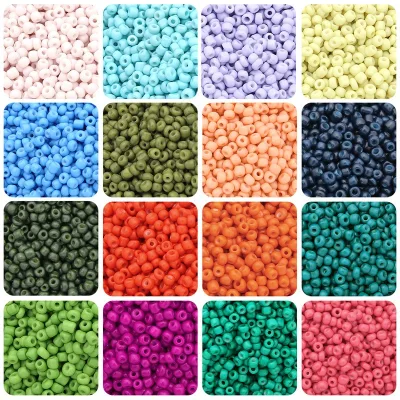
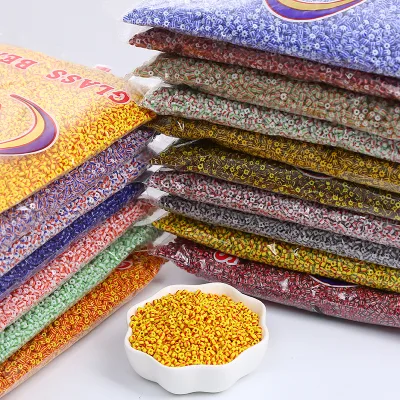
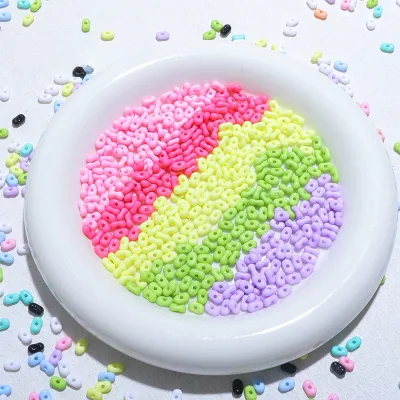
Comprehensive Sourcing Guide
Multiple Colors Glass Seed Beads Sourcing Guide
Multiple Colors Glass Seed Beads are a staple consumable for buyers serving jewelry making, garment decoration, handbag embellishment, artistic craft, and gallery-oriented decoration applications. The listings observed on B2B marketplaces range dramatically in price, from a few cents per unit to well over a thousand dollars, which signals that this keyword covers everything from small sample packets to bulk industrial lots. Buyers entering this category should first decide whether they need assorted-color mixed bags for retail resale or matched single-color production runs for garment and accessory manufacturing, because the two paths lead to different suppliers, packing formats, and minimum order expectations.
This guide is written for procurement teams and small-brand buyers sourcing from Chinese manufacturing hubs. It walks through the product signals visible in current listings, the technical specifications that determine repeat-order success, the compliance documentation to request before committing capital, and the commercial and quality-control practices that separate reliable bead suppliers from inconsistent ones. Every recommendation is anchored to attributes actually observed in the listing data, with open questions flagged explicitly where the listings leave gaps a buyer must close directly.
Product Scope and Observed Listing Signals
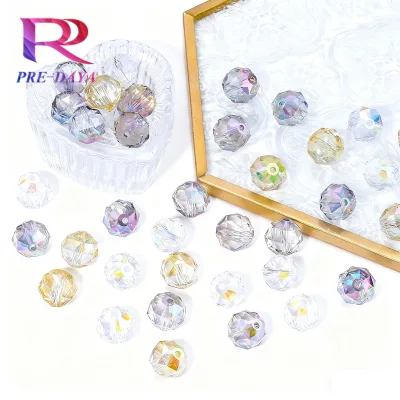
The observed catalog contains 26 products under this keyword, unified by glass or crystal glass materials, plastic components in some variants, polished surface treatment, and bead-type construction. Models cited include "Glass Seed Beads-055M," "Glass Beads-73," and generic "beads" SKUs, with brand attribution such as Bluforest appearing in at least one listing. Origins concentrate in Jiangsu and Zhejiang provinces, the two dominant Chinese centers for small glass craft goods. Shapes span round, drop, and toothed wheel styles, and product types extend from seed beads to crystal and lampwork glass categories.
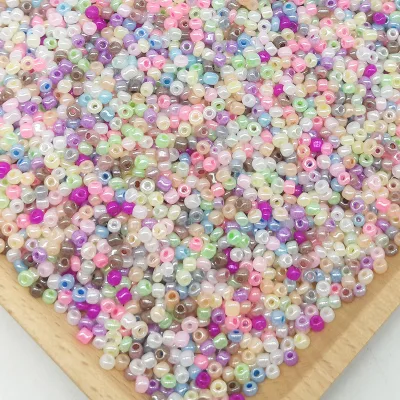
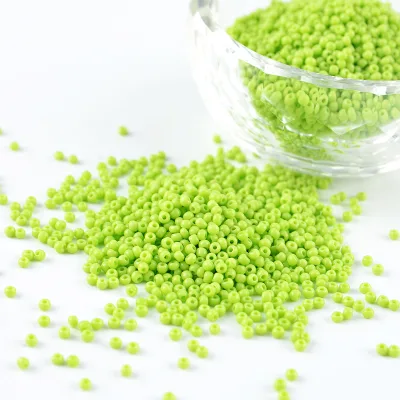
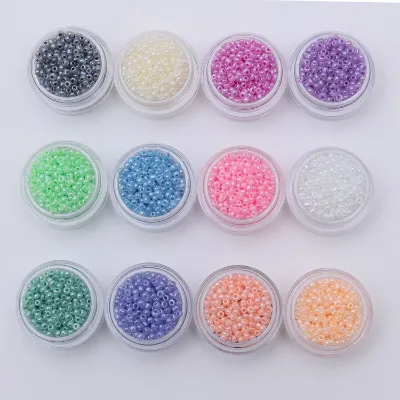
Color is the defining variable across these listings. Observed color attributes include white, lavender, pink, black, red, grey, blue, green, brown, opaque colors, plate colors, colorful assortments, and a generic "choose colors" option that implies buyer-selected palettes. Style descriptors such as "fashion accessories" and "creative craft" confirm the dual-use positioning between garment factories and hobby-retail channels. Packing formats observed include polybag, carton-plus-polybag, and weight-based options of 450g per bag, 500g per bag, and 25kgs loose package, giving buyers a clear indication of bulk-ready fulfillment.
Technical Specifications to Verify
Size grading is the first specification to lock down, and the listings provide unusually precise data here. Observed standards include 15/0, 12/0, 8/0, and 6/0, with diameters given as 15/0 = 1.5mm, 12/0 = 1.9mm, 8/0 = 3.0mm, and 6/0 = 3.6mm, alongside round cut and bugle cuts and dedicated 8/0-and-6/0 or 12/0-8/0-6/0 subsets. Some listings also cite 3mm and 4mm sizes for a "Glass Beads-73" model. Confirm that your supplier's size labels match these millimeter equivalents, since mislabeled 12/0 versus 11/0 beads can silently break existing production patterns.
Beyond size, verify hole diameter and hole consistency, particularly for listings describing "round shape and round hole style" or toothed wheel constructions used in strung garment trims. Material composition should be specified in writing: the listings mix "crystal glass," plain "glass," and "plastic," and one confusingly lists "crystal, glass and glass" as combined material. Ask which glass furnace and coating process applies to plated or "plate colors" and "quartzs glass plating" variants, because coating adhesion determines colorfastness under washing for garment applications. Customization is listed as available, so obtain written confirmation of tolerance, finish, and dye-lot matching before sample approval.
Compliance and Safety Documentation
The supplied listing data contains no certification claims, so buyers must not assume any compliance status and should request documentation directly. For beads destined for children's craft products or wearable garment accessories, establish which destination-market regulations apply and ask suppliers to state plainly whether their products can be tested to those requirements. Reputable glass bead manufacturers can typically arrange third-party testing for lead, cadmium, and other heavy-metal migration in glass substrates and surface coatings, but the buyer initiates and pays for that verification unless contractual terms state otherwise.
Request material safety documentation that distinguishes crystal glass formulations, which historically may contain lead oxide for added brilliance, from ordinary soda-lime or standard crystal compositions. For plated colors, ask whether the plating layers contain nickel or other restricted substances, since direct skin contact in jewelry making is a common regulatory trigger. Obtain a written material declaration listing every coating and glass component, then commission independent testing at a recognized laboratory before the first bulk shipment. Treat any supplier who cannot describe their own material inputs in detail as a qualification risk regardless of price.
Cost Drivers and Commercial Terms
Observed prices span $0.03 to $1,850 across the 26 listings, and observed MOQs range from 1 to 240, indicating that this keyword mixes retail-sample sellers with bulk wholesalers. The wide price spread reflects differences in size grade, color treatment, packing format, and order volume rather than a single commodity price. Weight-based packing options in the listings, such as 450g bags, 500g bags, and 25kg loose packages, suggest that unit economics improve substantially when buyers purchase by weight in bulk rather than per small bag.
Key cost drivers to compare across quotes include: color complexity, since opaque and plated colors typically cost more than transparent tones; size grade, with 15/0 micro-beads requiring more labor-intensive sorting; packaging format; and customization surcharges for bespoke color matching. When requesting quotes, specify the size standard, color list, packing format, and annual volume together so quotations are genuinely comparable. Clarify which Incoterms the quoted price assumes, and confirm whether sample costs are credited against the first bulk order, a common but not universal practice in this category.
Supplier Qualification and Quality Control
Qualify suppliers by triangulating the observed listing attributes: confirmed origins in Jiangsu and Zhejiang, verifiable model numbers, and coherent packing specifications are basic consistency checks. Note that one listing attributes origin to "Jiang Su, China" with variant spelling while another cites Zhejiang, so confirm the actual factory address and whether the seller is a manufacturer or trading company. Ask for photos of the production line, since listings state "machinery" and "machine made" technics, and machine-drawn seed beads should show uniform hole alignment under magnification.
Build a quality-control checklist around the attributes that matter most: hole diameter consistency within a stated tolerance, color match to an approved physical sample or Pantone reference, plating adhesion tested by rubbing or tape pull, chip and breakage rates per kilogram, and weight accuracy of packed bags against the stated 450g, 500g, or 25kg formats. Commission pre-shipment inspection with a defined AQL sampling plan, and retain sealed reference samples from each approved lot. For ongoing programs, rotate inspection focus across these attributes so no defect type escapes notice over successive orders.
Long-Term Procurement Checks
Sustain the relationship through periodic requalification rather than one-time approval. Schedule annual or semi-annual re-testing of heavy-metal migration and plating composition, especially if the supplier changes furnace sources or coating chemists, a change that may occur without notification in commodity glass supply chains. Monitor dye-lot consistency across reorder cycles by comparing incoming lots against your retained golden samples under standardized lighting, and log any color drift systematically so patterns become visible before customers complain.
Track commercial performance metrics with the same discipline: on-time delivery rates, packaging damage rates on arrival, accuracy of the customized color program over time, and responsiveness to claims. Revisit pricing annually against the observed market structure, since the breadth of prices and MOQs in this category means competitive alternatives exist at multiple volume tiers. If your volumes justify it, consider consolidating size grades with one factory while keeping a secondary qualified source for the most critical colors, balancing the customization capability confirmed in listings against the resilience of dual sourcing for garment and jewelry production lines.
FAQs
What sizes are available for Multiple Colors Glass Seed Beads?
Multiple Colors Glass Seed Beads are available in standard sizes 15/0, 12/0, 8/0, and 6/0, with 15/0 measuring about 1.5mm, 12/0 about 1.9mm, 8/0 about 3.0mm, and 6/0 about 3.6mm. Some listings also offer 3mm and 4mm sizes. Round cut and bugle styles may be listed, so confirm the exact size and cut before ordering.
Which colors can I choose for glass seed beads?
You can choose from colors including white, lavender, pink, black, red, grey, blue, green, and brown. Opaque colors and plated colors are also listed, with some products described as colorful. Availability can vary by product listing, so specify your required colors when requesting a quotation and confirm the finish matches your application.
What packaging options are offered for these seed beads?
Packaging options listed include 450g per bag, 500g per bag, and 25kgs loose package, with polybag and carton plus polybag packing also shown. OEM packing is available for some listings. Choose the bag weight that suits your production volume, and confirm whether customized packing is included in the quoted price before placing an order.
Can glass seed beads be customized for my project?
Yes, customization is listed as available for these products. You can request customized standards, colors, and packing according to your project needs, with the product standard described as customized. Provide your size, such as 8/0 or 6/0, color, and packaging requirements when inquiring, and confirm any tooling or sampling arrangements directly with the supplier.
What materials are used for these glass seed beads?
Materials listed include glass, crystal glass, plastic, and combinations of crystal and glass. Some beads feature a quartzs glass plating and a polished surface treatment. Material affects appearance, weight, and cost, so check the material line on each product listing and confirm the exact composition and finish with the supplier before ordering.
What uses are suitable for Multiple Colors Glass Seed Beads?
These beads are used for decoration, jewelry making, garment accessories, handbag decoration, artistic work, handicrafts, and light decoration. Applications include gallery-style craft work and fashion accessories. Shapes listed include round, drop, and toothed wheel styles, so match the shape and size to your technique, whether embroidery, stringing, or bead weaving.